What we do and what's worth doing before we arrive
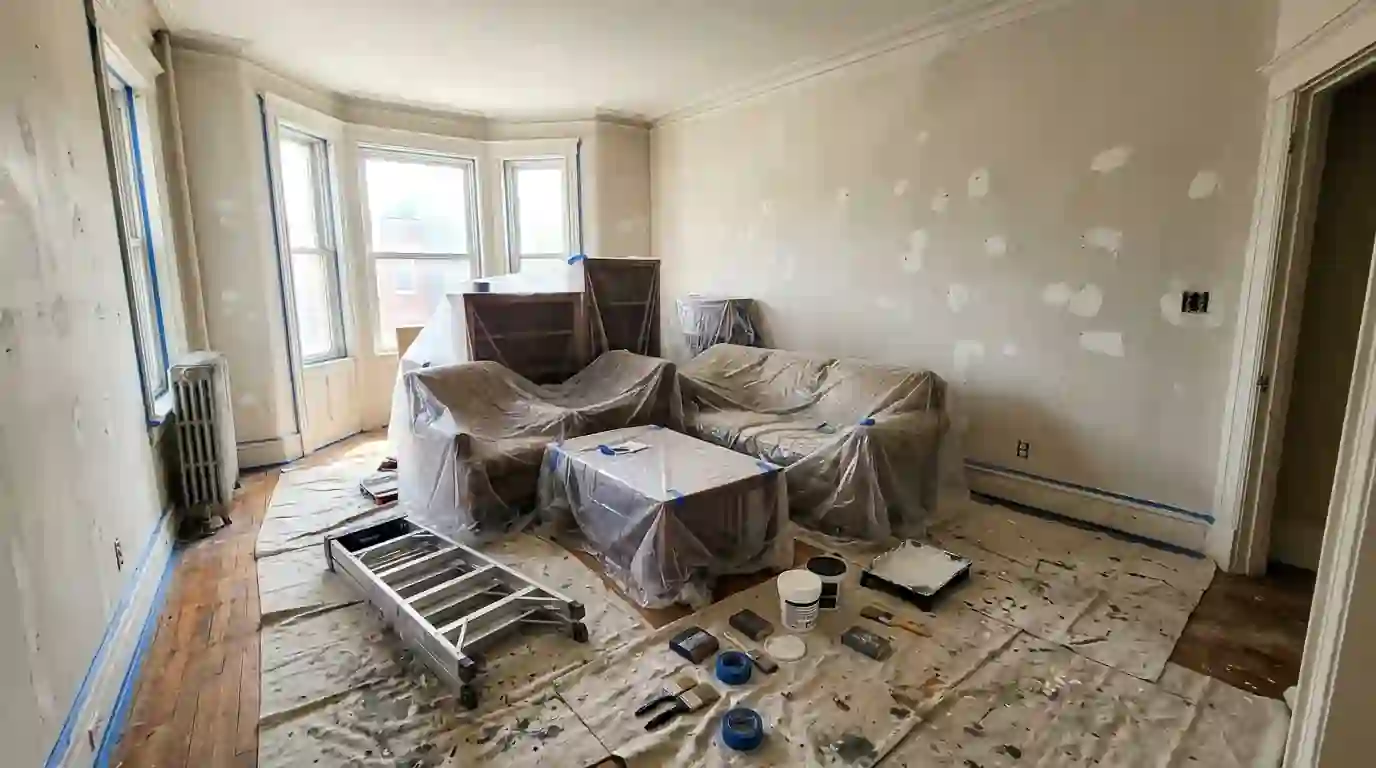
On interior jobs we move furniture to the center of each room, cover floors and furniture, take down switch plates and outlet covers, patch, caulk and protect anything that stays in place. You don't need to empty rooms or tape anything. What helps is clearing the small things we shouldn't handle, and deciding the few things only you can decide.
Small items slow a job more than big ones. A bookshelf with 200 books takes us longer to protect than a sofa. Framed art, collectibles, electronics and anything fragile or personal is better packed by you. That's usually an hour or two per room the day before, and it lowers the risk of anything getting knocked.
The other half of prep is decisions. Colors, sheens and which walls are in or out of scope should be settled before day one. Changes after the paint is opened cost time and sometimes a wasted gallon.
What should you clear out the day before?
Work through this the evening before the job starts. If something is heavy or awkward, leave it and let us know on the walkthrough.
- Take everything off the walls: art, mirrors, shelves, curtain rods and TV mounts you want reinstalled.
- Empty bookshelves, dressers on painted walls and the tops of any furniture we'll be moving.
- Pack small fragile items, lamps, plants and electronics into a room that isn't being painted.
- Clear closets you want painted, including floors, shelves and anything hanging on the back of the door.
- Unplug and move computers, routers and chargers away from outlets on the walls we're painting.
- Take down window treatments, or tell us which blinds stay so we can wrap them.
- Clear a path from the front door to each room, plus a spot for a staging area near the entrance.
- Put pet beds, litter boxes and food bowls somewhere the painters won't need to walk.
Leave large furniture where it is. We move it, and we'd rather do that than have you strain a back the night before.
How a typical interior job runs once we start
This is the usual order for a few rooms in an occupied DC house. Bigger homes repeat it room by room so you keep living space each night.
- Coat 01
Walk the rooms and confirm scope
On the first morning we walk the rooms with you, confirm colors and sheens on each surface and note anything that stays put. It's the last easy moment to change a color or add a closet.
- Coat 02
Move, cover and protect
Furniture goes to the center under plastic. Floors get canvas drop cloths and, on stairs and long halls, rosin paper taped at the edges. Hardware, plates and covers come off and go in labeled bags.
- Coat 03
Patch, sand and caulk
Nail holes, cracks and dents get filled and sanded. Gaps at trim get caulked. In pre-war plaster homes this step takes longest, and larger plaster repairs may need a day to dry before paint.
- Coat 04
Prime what needs it
Patches, stains and bare spots get primer. Water stains get a stain-blocking primer such as Zinsser so they don't bleed through. Glossy old trim gets scuffed and a bonding primer.
- Coat 05
Ceilings, then walls, then trim
We work top down: ceilings first, then walls cut in and rolled, then trim and doors last. Latex walls usually recoat in about four hours, so two coats on walls often fit in one day.
- Coat 06
Reinstall and walk it again
Plates and hardware go back on, furniture returns to place and we walk the rooms with you in daylight to catch any touch-ups before we pack up.
Decisions to settle before day one
These are the questions that most often stall a job in the first hour. Answer them in advance and the crew can start working right away.
Final colors, with names and codes
Write the brand, color name and number for each room. Sample on your own walls first, since colors shift a lot with DC's light and old window glass. A color consultation can help settle tough rooms.
Sheen for each surface
Walls, ceilings, trim and doors usually get different sheens. Our guide on picking sheen by room covers the defaults we use and when to change them.
Ceilings in or out
Repainting walls next to a yellowed ceiling makes the ceiling look worse. Decide up front. A ceiling typically adds $240 to $520 per room, less than coming back later.
Trim and doors
Old trim often looks tired against fresh walls. Trim typically runs $1.85 to $3.90 per linear foot, and doors with frames $165 to $310 each. Adding them on the same visit saves a setup.
Which closets and alcoves
Closets, pantries and stair landings are easy to forget in a walkthrough. Say which are in, so nobody discovers on day two that a closet was expected.
Living at home while we paint
Most of our interior jobs happen in occupied homes. We work room by room so bedrooms and the kitchen are usable each night, and we clean up and re-cover each day. Plan on losing one or two rooms at a time, not the whole house.
Odor is low with today's zero-VOC paint lines, but it's not zero. Keep windows cracked if the weather allows. If someone in the house is pregnant or has asthma, tell us and we'll plan the sequence so they have a closed-off room away from active work. Pets do best in a closed room or out of the house on sanding days.
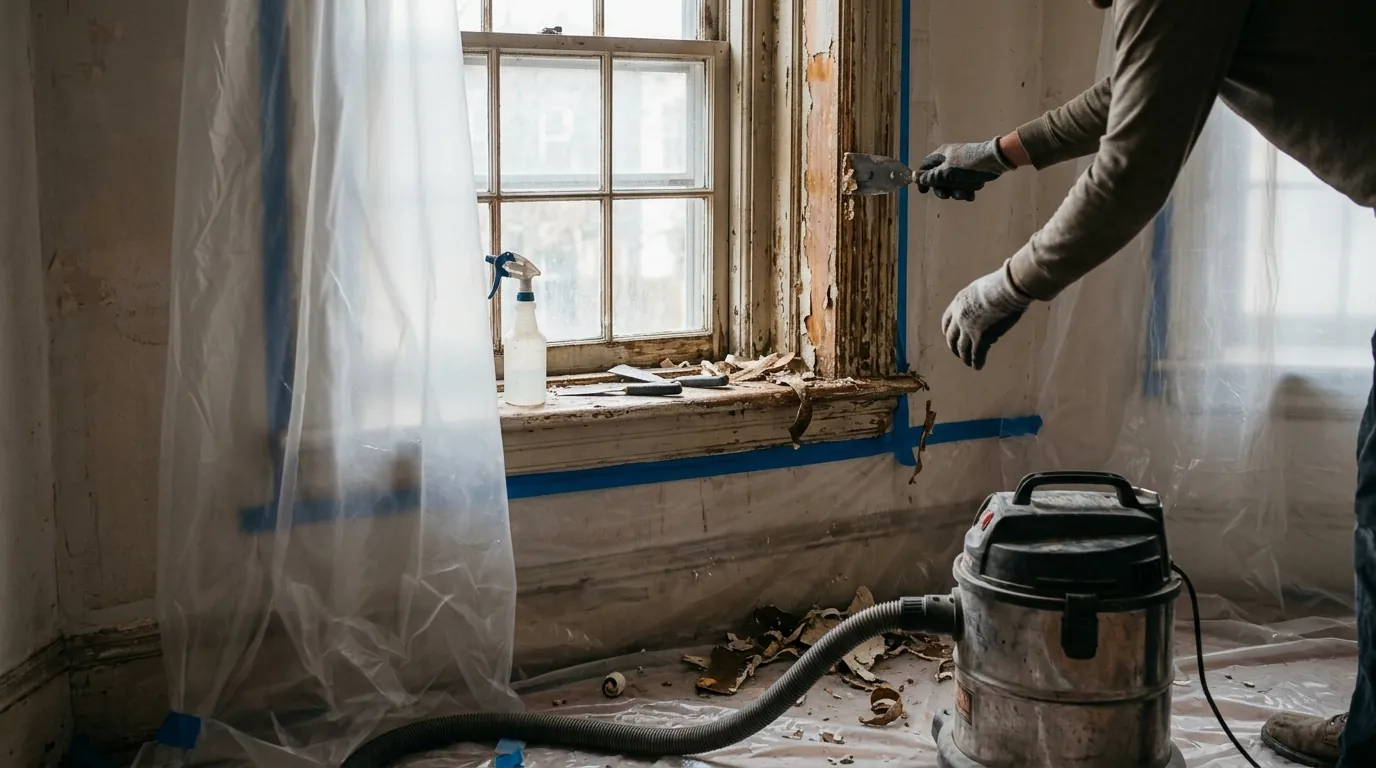
In homes built before 1978, prep that disturbs old paint needs lead-safe practices, including containment and HEPA cleanup. That typically adds $380 to $1,450 per job. We follow EPA RRP lead-safe work practices in those rooms, and children and pregnant family members should stay out of the work area until cleanup is done. Our post on lead paint in pre-1978 homes explains what that looks like.
Rowhouse and condo logistics to plan for
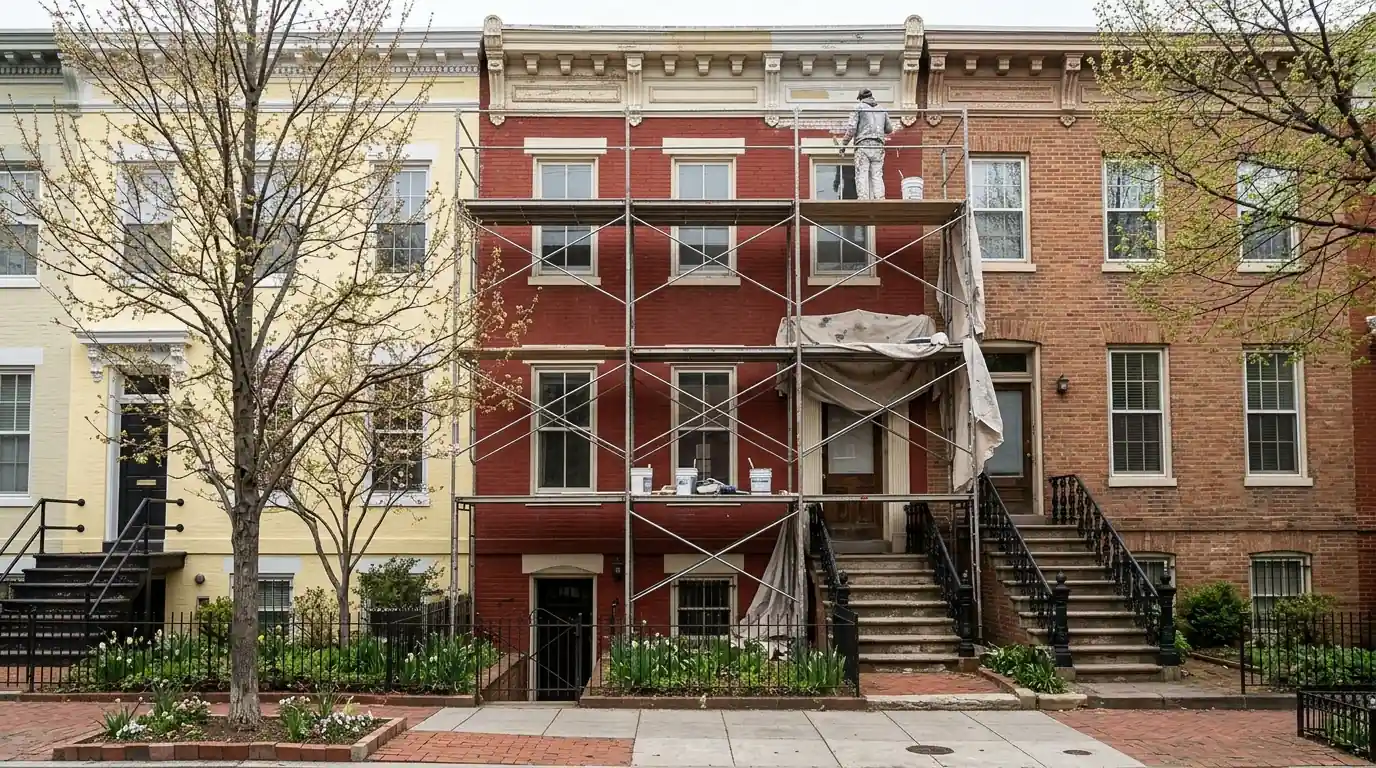
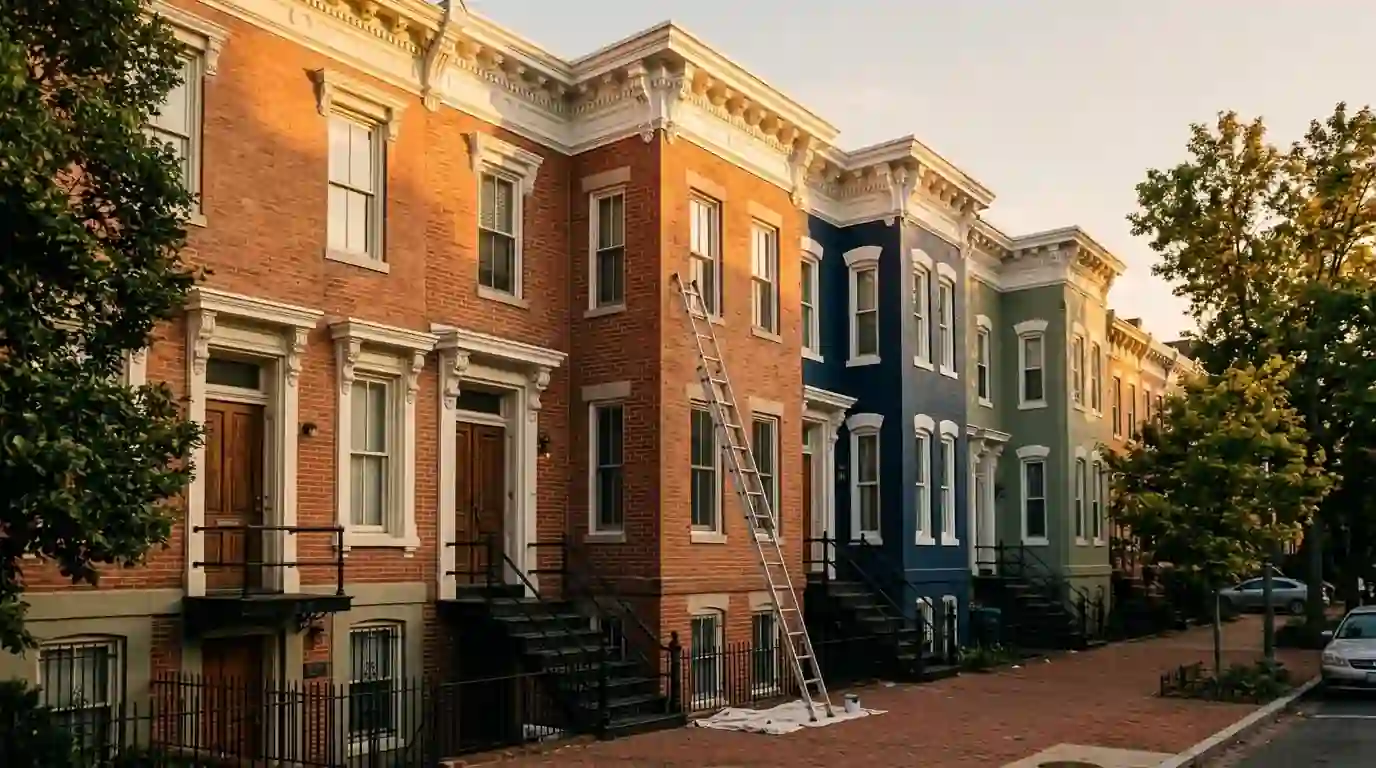
In rowhouses on Capitol Hill, in Bloomingdale or in Brookland, parking is often the first hurdle. If your block has residential permit parking, ask whether you can get a visitor pass, or we can request DDOT emergency no-parking signs for the work van. Narrow stairs mean we may need a door opened or a stair rail covered.
In condos, the building often sets work hours, elevator bookings and insurance paperwork. Start that process two to three weeks out. Our guide to building rules for condo painting lists what most buildings ask for. A one-bedroom unit typically runs $1,950 to $3,900 for interior painting once the building is cleared.
Services mentioned in this guide
Interior House Painting
Walls, ceilings and trim in occupied homes, with furniture moved, floors covered and rooms back in use each night.
Trim & Baseboard Painting
Crown, casings, chair rail and baseboards caulked and brushed out in semi-gloss without a ragged wall line.
Ceiling Painting
Flat ceiling finishes rolled lap-free, stain-blocked first where old leaks or smoke left marks.
Follow-up questions
Do I need to be home while interior painters are working?
Not all day. We need you for the first-morning walkthrough to confirm colors and scope, and for the final walk at the end. In between, many clients go to work and leave a key or code. If something unexpected comes up, such as a hidden water stain, we'll call you before changing anything. Make sure we can reach you during the day.
Should I wash my walls before the painters arrive?
No. Washing is part of our prep, and we use the right cleaner for each surface. Kitchen walls get degreased, bathroom walls get a mildew wash where needed. If you'd like to help, dust the tops of baseboards and door frames and vacuum along the floor edges. That keeps dust out of fresh paint. Don't use a household spray cleaner on the walls the day before, since residue can affect adhesion.
How long should I wait to hang art after painters finish?
Latex wall paint is dry to the touch in about an hour, but it takes two to four weeks to cure fully. You can hang light art the next day. Wait about a week for heavy mirrors or shelves that press flat against the wall, and two weeks before pushing furniture tight to fresh paint. Felt bumpers on frame corners help prevent marks during curing.