Short answer
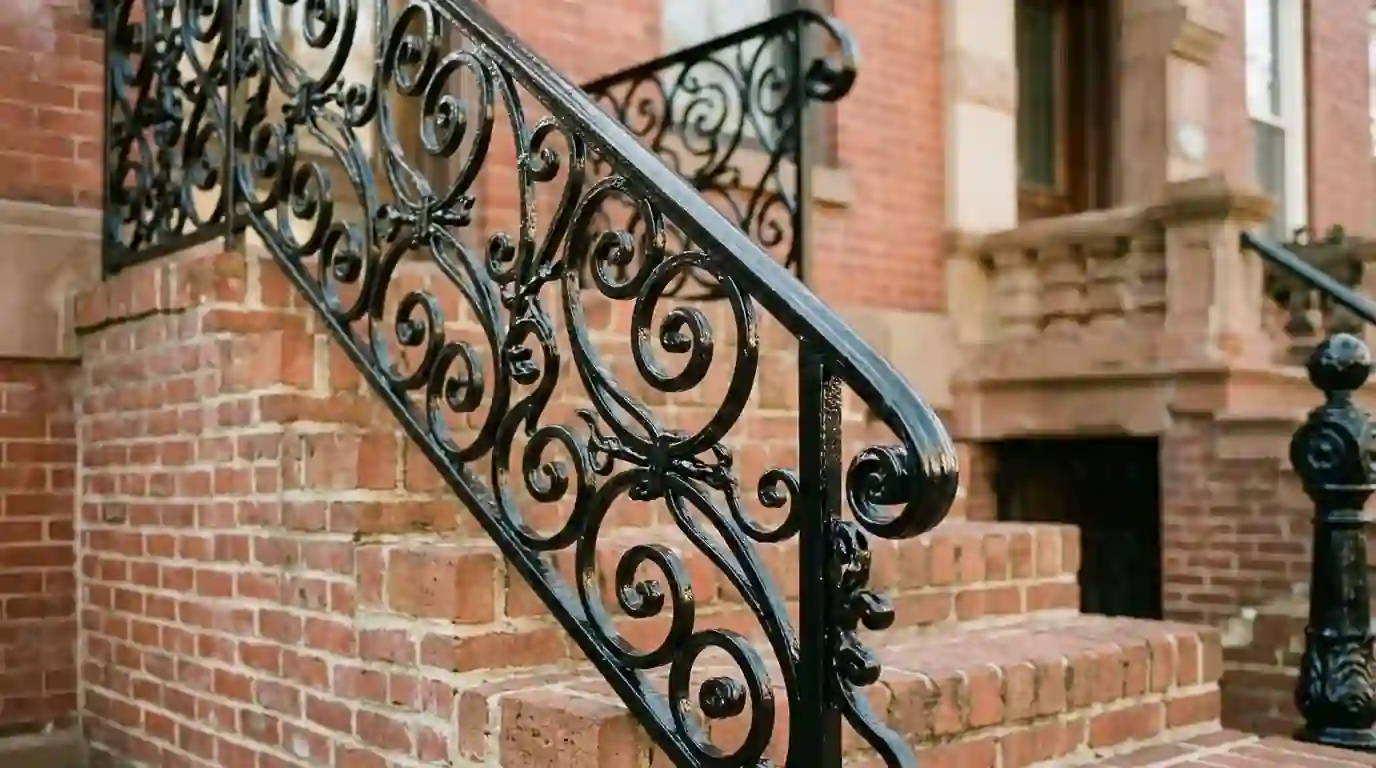
Painting wrought iron railings in DC means wire brushing and grinding loose rust and paint, treating remaining rust with a converter, priming with a rust-inhibiting metal primer and applying two coats of exterior enamel. Typical cost is $14 to $38 per linear foot, depending on rust depth, scrollwork, height and whether the railing sits on stone steps that need protection.
Why DC iron rusts so fast
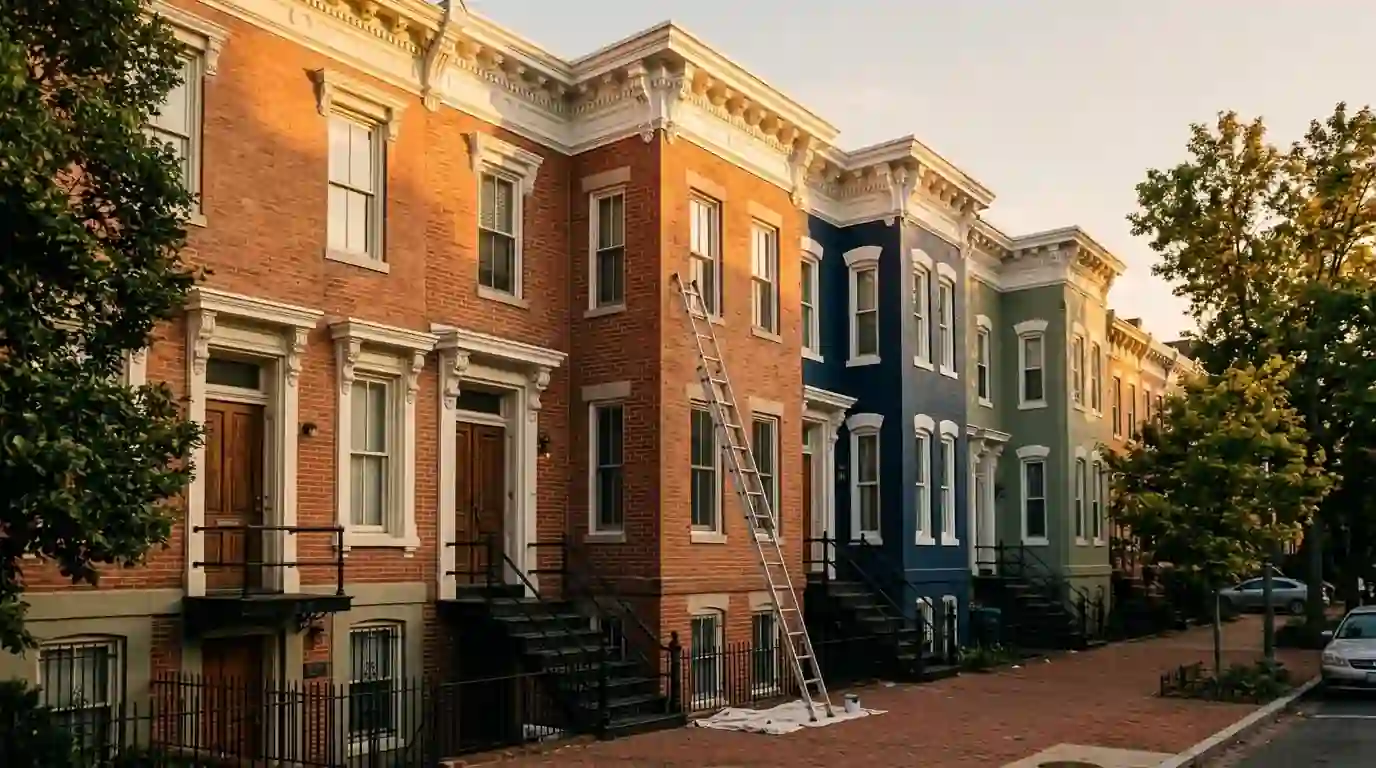
Iron stoop railings, front-yard fences and window grilles are everywhere in Washington, especially on rowhouse blocks in Bloomingdale, Capitol Hill, Petworth and Columbia Heights. Many are original or decades old, and they live through some of the harshest conditions on the house. Summer humidity keeps metal damp for hours after storms, and winter brings road salt and de-icer that splash onto railings from sidewalks and steps.
Rust starts small, at a chip or at the base where water sits, then creeps under the paint and lifts it. By the time it shows as orange streaks on steps or brick, the metal underneath has often been rusting for a year or two. Railing bases set in stone or concrete are the most vulnerable, because water pools around the post and attacks it from the bottom.
Painting in time saves the metal. Once a post rusts through at the base, it needs welding or replacement, which costs far more than a repaint. If your stoop railing is on a rowhouse facade we're already painting, doing both in one visit is the most efficient approach, and Bloomingdale blocks are a common example.
Taking a railing from rust to enamel
Railing work is detail-heavy. Each piece gets its own attention, from top rail to post base.
- Coat 01
Protect steps and brick
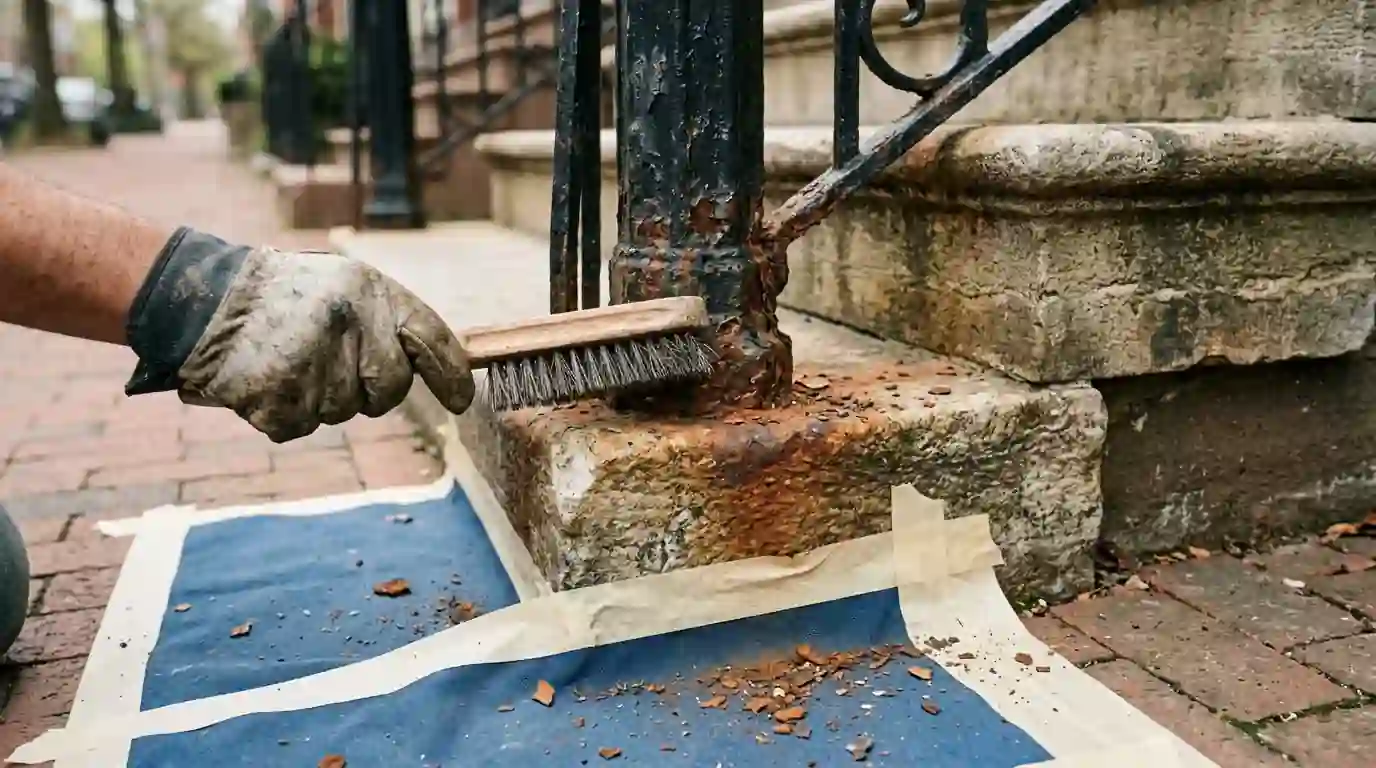
We cover stone or concrete steps, brick and nearby plants with drop cloths and tape. Rust and paint chips stain stone easily, so protection goes down before any grinding starts. Pre-1978 paint on iron is handled with lead-safe containment.
- Coat 02
Remove loose rust and paint
Wire wheels, grinders with flap discs and hand wire brushes take off scale and failing paint. Scrollwork and pickets get extra hand work to reach inside curls and joints.
- Coat 03
Convert remaining rust
Tight surface rust that can't be removed gets a rust converter, which turns it into a stable, paintable layer. We let it cure fully, usually a few hours to overnight depending on humidity.
- Coat 04
Seal the post bases
Where posts meet stone or concrete, we clean out the joint and seal it so water stops collecting. Cracked or crumbling bases get flagged for masonry repair.
- Coat 05
Prime with a metal primer
A rust-inhibiting primer goes on every bare and converted spot, then the whole railing gets a full primer coat for uniform adhesion. Primer is brushed into every joint and underside.
- Coat 06
Two coats of exterior enamel
We brush two coats of exterior enamel, usually gloss or semi-gloss black, letting the first dry before the second. Mitts and small brushes reach pickets and scrolls without drips.
- Coat 07
Final cleanup
Drop cloths come up, steps are checked for stains and we do a final walk around the railing to touch up any missed spots on undersides.
Iron railing and fence painting prices in DC
Most railing jobs are priced by the linear foot, adjusted for complexity.
| Job | Typical range | What moves the price |
|---|---|---|
| Stoop railing, per linear ft | $14 to $38 | Rust depth, scrollwork, number of posts |
| Typical rowhouse stoop, both sides | $385 to $1,190 | Step count, height, ornate newel posts |
| Front-yard iron fence, per linear ft | $17 to $36 | Picket spacing, finials, fence height |
| Window grilles and security bars, each | $95 to $240 | Size, pattern, access from ladder |
| Rust converter and post-base sealing | $65 to $185 per post | Rust severity, joint condition |
| Lead-safe containment add-on | $380 to $1,450 | Railing length, step protection, debris collection |
These are typical DC ranges, not a quote; a walkthrough sets your price.
Rust signs that shouldn't wait
Some railing problems are cosmetic and some are structural. These ones call for prompt attention.
Orange streaks on steps
Rust bleeding onto stone or brick means active rust under the paint. The stain gets harder to remove the longer it sits.
Bubbling at the base
Paint lifting where posts meet steps means water is pooling and rust is spreading upward. This is where railings fail first.
Flaking on the top rail
Hands wear paint off the top rail, then rain gets in. A railing used every day needs a durable enamel there.
Loose or wobbly posts
A railing that moves may have rusted through at the base or loosened in crumbling masonry. That needs repair, not only paint.
Pitted metal
Deep pits under the paint mean rust has eaten into the iron. Grinding and filling may be needed before priming.
Coatings and tools for ironwork
Iron needs products made for metal, not leftover house paint.
- Rust-Oleum rust converter for tight rust that can't be fully ground off.
- A rust-inhibiting alkyd or zinc-rich primer on bare and converted metal.
- Sherwin-Williams or Rust-Oleum exterior enamel in gloss or semi-gloss for a hard, wipeable finish.
- Wire wheels, flap discs and hand brushes for removing rust from flat and curved pieces.
- Painter's mitts and small sash brushes for pickets, scrolls and undersides.
What to know before we paint your railing
A few things make railing day go smoothly.
- Plan to use another entrance for a day if your stoop is the only one with the railing.
- Move doormats, planters and bikes off the steps and away from the fence line.
- Tell us if the railing is shared with a neighbor's stoop, so we can talk about painting both.
- Painting needs a dry day with temperatures above about 50 F, so we may shift the date for rain.
- If you want a color other than black, we'll show you samples first, since some historic blocks favor traditional dark colors.
Iron fences often sit near wood fences or porches; see fence staining and painting and porch painting for those.
Where we do this work most often
We take this job across the District and close-in Maryland and Virginia. These are the neighborhoods and cities we cover most, with a ZIP for each.
Questions we hear about this
How long does a painted iron railing last in DC?
With proper rust removal, primer and two coats of enamel, a stoop railing usually holds up 4 to 7 years before needing touch-ups. The top rail and post bases wear first. Spot touch-ups when you see the first chips extend the life of the full coating considerably.
Can you paint a rusty railing without removing it?
Almost always, yes. We prep and paint railings in place, protecting the steps and brick around them. Removal only makes sense if the railing needs welding repairs or a shop finish like powder coating, which is a different process and price.
Do you sandblast iron railings in DC?
We don't sandblast railings on site, because it throws abrasive and old paint, possibly with lead, across sidewalks and neighbors' property. Grinding, wire brushing and rust conversion give a sound surface for paint without that mess.
Is it urgent to paint a rusting stoop railing?
If rust is at the base or the railing feels loose, yes. Rust at the base can weaken posts until a railing fails when someone leans on it. Call (771) 247-4038 and we can look at it and give you a schedule. Painting runs on normal work hours, but we answer the phone any time.
Can iron railings be painted a color other than black?
Sure. Dark green, deep red, bronze and gray all work on iron. Historic blocks often favor black or dark colors, and repainting metal generally isn't reviewed in DC, but check with the DC Historic Preservation Office if you're unsure. A color consultation can help you pick one that suits your facade.