Short answer
Commercial painting in DC usually means a walkthrough, a phased schedule built around business hours, protection of fixtures and stock, then prep and two finish coats with durable, low-odor products. Interior work typically runs $1.40 to $3.70 per sq ft. After-hours scheduling, high ceilings, lifts and building rules affect the final price more than wall area does.
Painting while your doors stay open
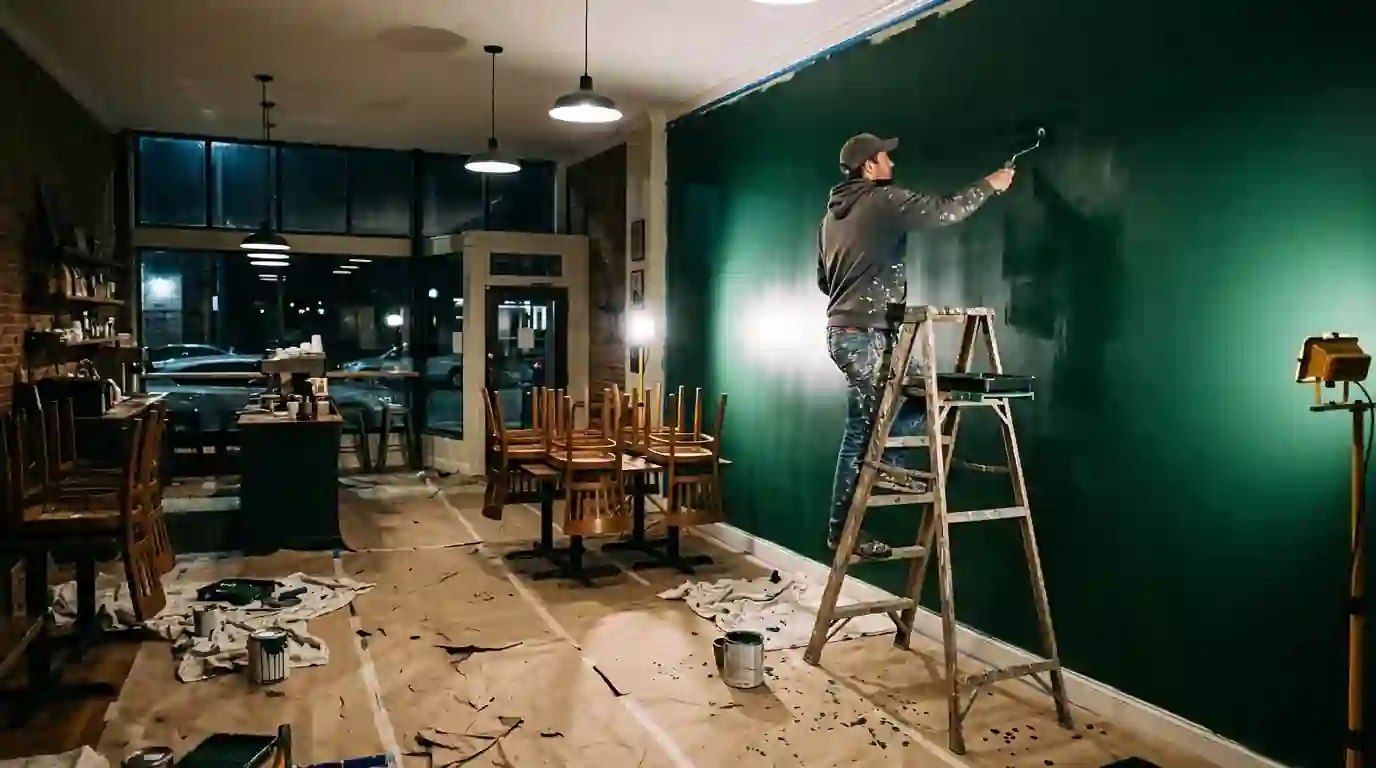
Most of the businesses we paint can't afford a dark day. A coffee shop on Capitol Hill, a salon in Brookland or a corner market near the Georgetown waterfront makes its money during exactly the hours painters would like to work. So we start after you close, finish before you open and leave the space swept with furniture back in place. Larger jobs get split into zones so only one area is ever off-limits.
DC business corridors add their own logistics. H Street NE, 14th Street, U Street, Connecticut Avenue and the strips along Georgia Avenue all have tight curb space and loading rules. We plan deliveries for early morning, request DDOT emergency no-parking signs when we need a curb spot, and keep ladders and drop cloths inside the property line. Building managers in mixed-use properties usually want certificates of insurance, set work hours and elevator reservations, so we line those up before the first night.
Low odor matters when food is served or people arrive a few hours later. We choose zero-VOC or low-VOC coatings and run fans to exhaust air, so the space smells like nothing by morning.
Signs a business space is due for paint
Customers notice wear long before owners do. These are the common giveaways.
Scuffed walls at hip height
Chairs, carts and bags leave gray marks along every walkway. Washable eggshell or scrubbable matte finishes make those marks wipe off instead of soaking in.
Faded or peeling storefront
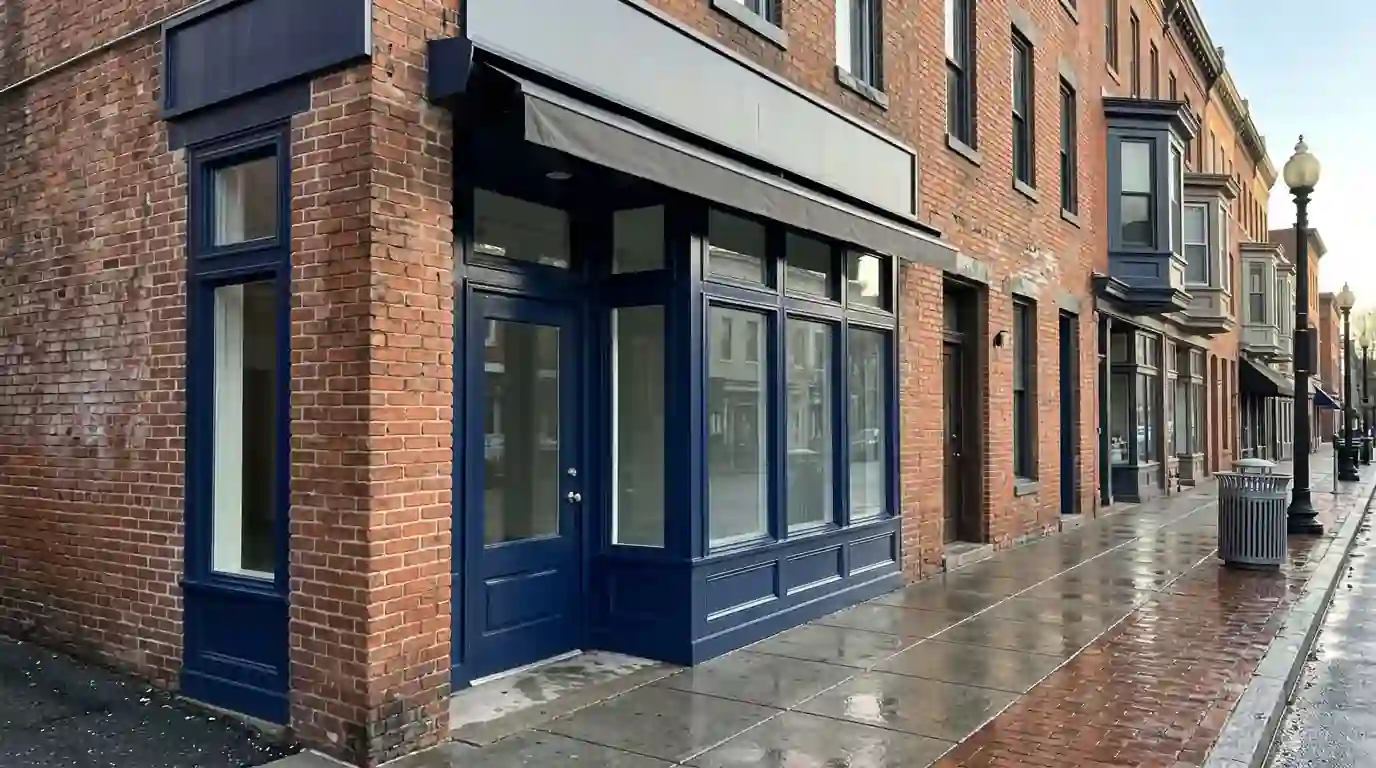
Street-facing doors, window frames and sign bands fade fast in afternoon sun. A tired storefront drags down the whole block and makes the business look closed.
Kitchen walls with grease film
Back-of-house walls in restaurants collect grease that ordinary paint won't stick to. We degrease and use semi-gloss enamel that stands up to cleaning.
Rebrand or new tenant
New colors and logos need walls that match. We work from brand color codes and test samples under your lighting before committing.
Health or code inspection notes
Cracked, flaking or water-stained surfaces sometimes come up on inspections. Fixing and repainting them promptly keeps the issue off the next report.
Ceiling stains from old leaks
Brown rings on drop ceilings and drywall look worse to customers than they are. A stain-blocking primer and fresh coat clear them, once the leak is fixed.
How an after-hours commercial repaint runs
Here is how a typical retail or restaurant job moves from walkthrough to final punch list.
- Coat 01
Walkthrough during business hours
We see the space as customers do, measure walls and ceilings and note fixtures, signage and equipment. You tell us your open hours, slow nights and any events we must work around.
- Coat 02
Phase plan and building paperwork
We split the space into zones, set nightly goals and confirm with your landlord or building manager what they need: insurance certificates, access cards, alarm codes and elevator time.
- Coat 03
Night-one protection
Displays, shelving and equipment are moved or wrapped, floors are covered with taped-down drop cloth or rosin paper, and outlet covers and signs come down and get labeled.
- Coat 04
Prep and spot priming
Holes are filled, dents in drywall corners repaired and grease or stains cleaned. Patches and bare spots get a primer suited to the surface, often a stain-blocking primer on ceilings.
- Coat 05
Finish coats by sprayer and roller
In empty rooms and high ceilings we spray with an airless rig and back-roll; occupied zones get roller and brush only. Two coats is standard, with dry times planned into each night.
- Coat 06
Morning reset
Before you open, covers come off, furniture goes back, floors are vacuumed and a fan keeps air moving. We leave a note on what's finished and what's next.
- Coat 07
Final punch list
Once every zone is done, we walk the space with you in daylight and fix anything missed, from a dull touch-up to a paint line on trim.
Commercial painting costs in Washington, DC
Square footage is a starting point. Access, timing and finishes change the number more than on residential jobs.
| Commercial job | Typical range | What moves the price |
|---|---|---|
| Retail or restaurant interior walls | $1.40 to $3.70 per sq ft | Ceiling height, color changes, fixture count and how much after-hours time the schedule needs |
| Storefront exterior, doors and window frames | $1,450 to $4,850 | Metal or wood frames, sign bands, sidewalk setup and whether lifts are needed |
| Open ceilings, sprayed with ducts and joists | $1.65 to $3.45 per sq ft | Height, mechanical runs to mask, and dryfall versus standard ceiling paint |
| Restaurant kitchen walls, degrease and enamel | $1,250 to $3,680 | Grease level, equipment to move or protect and stainless trim to mask |
| Common areas, lobbies and hallways | $2,150 to $8,640 | Number of floors, doors and frames, and elevator or stair access limits |
These are typical ranges, not a quote; we set the price after a walkthrough and a look at your schedule.
Coatings that hold up to public traffic
Commercial walls get touched, bumped and scrubbed far more than home walls, so the product list is different.
- Scrubbable matte or eggshell wall paints, such as Sherwin-Williams' commercial lines or Benjamin Moore's scuff-resistant formulas, for sales floors and dining rooms.
- Semi-gloss or gloss enamel for kitchens, restrooms, door frames and anything that gets wiped down daily.
- Dryfall coatings for open ceilings, which settle as dust if they overspray onto floors and fixtures below.
- Direct-to-metal enamels for storefront frames, steel doors and railings that face the street.
- Stain-blocking primers from Zinsser for water marks, smoke stains and graffiti on exterior walls.
- Zero-VOC or low-VOC products throughout, so staff and customers aren't greeted by a paint smell.
Who we paint for across the region
Our commercial work is small to mid-size: shops, cafes and restaurants, salons, studios, clinics, churches and mixed-use buildings with apartments upstairs. Many owners first call us for an office painting job or a property repaint, then bring us back for their storefront. Landlords with ground-floor retail and units above often combine commercial work with rental turnover painting upstairs.
Exteriors on commercial buildings in historic districts follow the same rules as homes. Painting previously unpainted brick generally needs review by the DC Historic Preservation Office, and Georgetown exteriors go before the Old Georgetown Board, so check with them before choosing a new storefront color on masonry. Repainting already-painted wood or metal in a new color is generally not reviewed in DC. Our guide on painting brick in a historic district goes into more detail.
Where we do this work most often
We take this job across the District and close-in Maryland and Virginia. These are the neighborhoods and cities we cover most, with a ZIP for each.
Questions we hear about this
Can you paint my restaurant without closing for a day?
In most cases, yes. We start after the last table clears, work in zones and reset the dining room before morning prep. Kitchens are scheduled for your slowest night or a day you're already closed. Low-odor coatings and fans keep the space smelling clean by opening.
Do you work weekends and overnight in DC commercial buildings?
We do, and most commercial jobs are scheduled that way. Building managers set the allowed hours, and some buildings limit noise or elevator use at night, so we confirm those rules first. We answer the phone 24/7 if you need to talk through a schedule.
Can you match our brand colors exactly?
We work from paint codes or brand standards and have samples mixed and checked under your actual lighting, since store lights change how a color reads. Exact digital colors don't always translate to paint, so we test on the wall before committing.
Do you need my landlord's approval to repaint a leased storefront?
Usually your lease decides that, so check it first. Many landlords want to approve exterior colors and require insurance certificates from anyone working on site. We can talk with the building manager directly about access and hours once you have approval.
How long does a typical retail repaint in DC take?
A small shop of 1,200 to 2,000 sq ft usually takes two to four nights. Bigger spaces or ones with open ceilings take longer, and we plan phases so customers never see work in progress. Call (771) 247-4038 to set up a walkthrough and we'll sketch out the nights.