Short answer
Siding painting in DC starts with identifying the material, then washing, scraping or deglossing, spot priming with the right primer, and applying two coats of exterior acrylic. Wood may need tannin-blocking primer, aluminum a bonding primer, fiber cement an alkali-resistant one. Typical cost is $2.20 to $4.70 per square foot, depending on material, condition and height.
How each siding material fails
The first job at any walkthrough is figuring out what your siding is made of, because it decides the whole prep plan.
Wood clapboard
Old-growth pine and poplar on older DC homes hold paint well when dry, but peel where water gets behind laps. Expect scraping, sanding and oil primer on bare spots.
Cedar shingles and shakes
Cedar bleeds tannin through light paint as brown stains. It also cups and splits with age. Stain-blocking primer and careful nailing of loose shingles come first.
Fiber cement board
Durable and stable, but factory primer can be thin and edges absorb water if left unsealed. It needs clean, dry surfaces and an alkali-resistant primer at cut edges and repairs.
Aluminum siding
Mid-century aluminum oxidizes into a heavy chalk that rejects new paint. It needs thorough washing and a bonding primer, and dents can't be fixed with paint.
Vinyl siding
It can be painted with vinyl-safe colors, but going darker than the original can cause warping in sun. We'll tell you honestly when painting vinyl isn't worth it.
Preparing and painting siding, one material at a time
The steps are similar across materials, but the details change. Here's how a siding job usually unfolds.
- Coat 01
Identify and test
We confirm the material, look for previous coatings and do tape-pull adhesion tests on each elevation. On older wood siding we assume lead in old layers and plan containment accordingly.
- Coat 02
Clean for the substrate
Wood and fiber cement get a mildewcide wash and gentle rinse. Aluminum gets a scrub with a degreasing cleaner to remove chalk, checked by a rub test before moving on.
- Coat 03
Scrape, sand and fix
Peeling wood is scraped and feather-sanded, loose shingles are refastened, and split boards are glued or replaced. Fiber cement cracks and nail holes get filled with a cementitious patch.
- Coat 04
Prime what needs it
Bare wood gets oil primer, cedar gets a stain-blocker, aluminum gets an adhesion primer and cut fiber cement edges get a masonry or alkali-resistant primer. Each needs dry conditions, usually 4 to 24 hours before topcoat.
- Coat 05
Caulk the right joints
Trim-to-siding joints and butt joints are sealed with a paintable elastomeric sealant. We leave siding laps open so water that does get in can drain out.
- Coat 06
Two topcoats from top down
We roll or spray and back-brush each course, working from the top of each wall down and following shade around the house. Two coats give the film thickness siding needs on DC's sunny exposures.
Siding on DC houses and why the weather matters
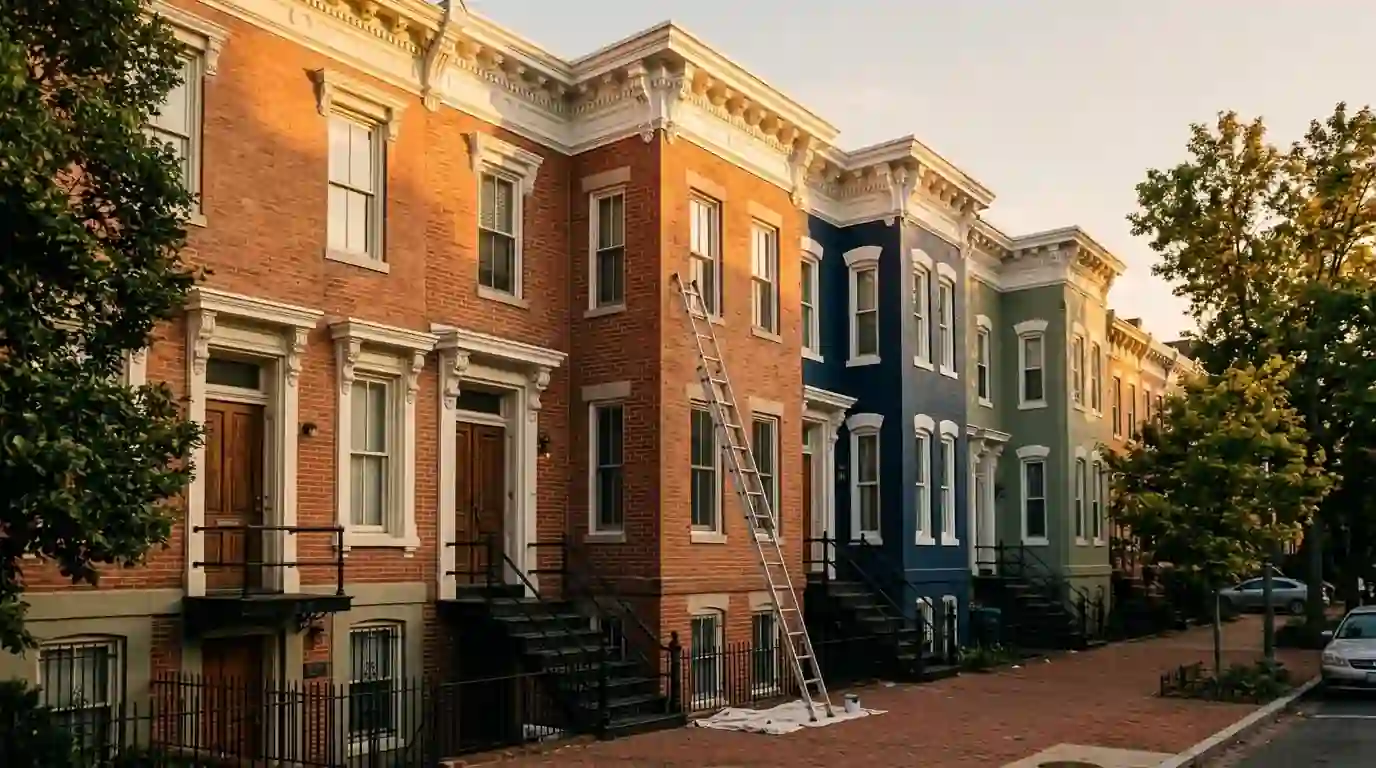
Siding shows up all over the District, from early 1900s wood-frame houses in Brookland and Takoma to mid-century Colonials in the far Northeast and Northwest, many of which got aluminum or vinyl over the original wood. On some houses you'll find wood clapboard on the front, shingles on the gables and aluminum on an addition. We price and prep each section separately.
DC weather is hard on siding. Summer heat and humidity drive moisture into the wood, then freeze-thaw winters lift paint at every open joint. South and west walls take the most punishment from sun, while north walls under trees stay damp and grow mildew. A good siding repaint accounts for both. We typically schedule siding work between April and October, when nights stay mild enough for paint to cure properly.
It's also worth checking what's under aluminum or vinyl if you're thinking about removing it. Original wood siding is sometimes intact and paintable, but more often it's been damaged by nails and trapped moisture. We can open a small inspection area if you'd like to know before deciding.
Getting the yard and walls ready for siding work
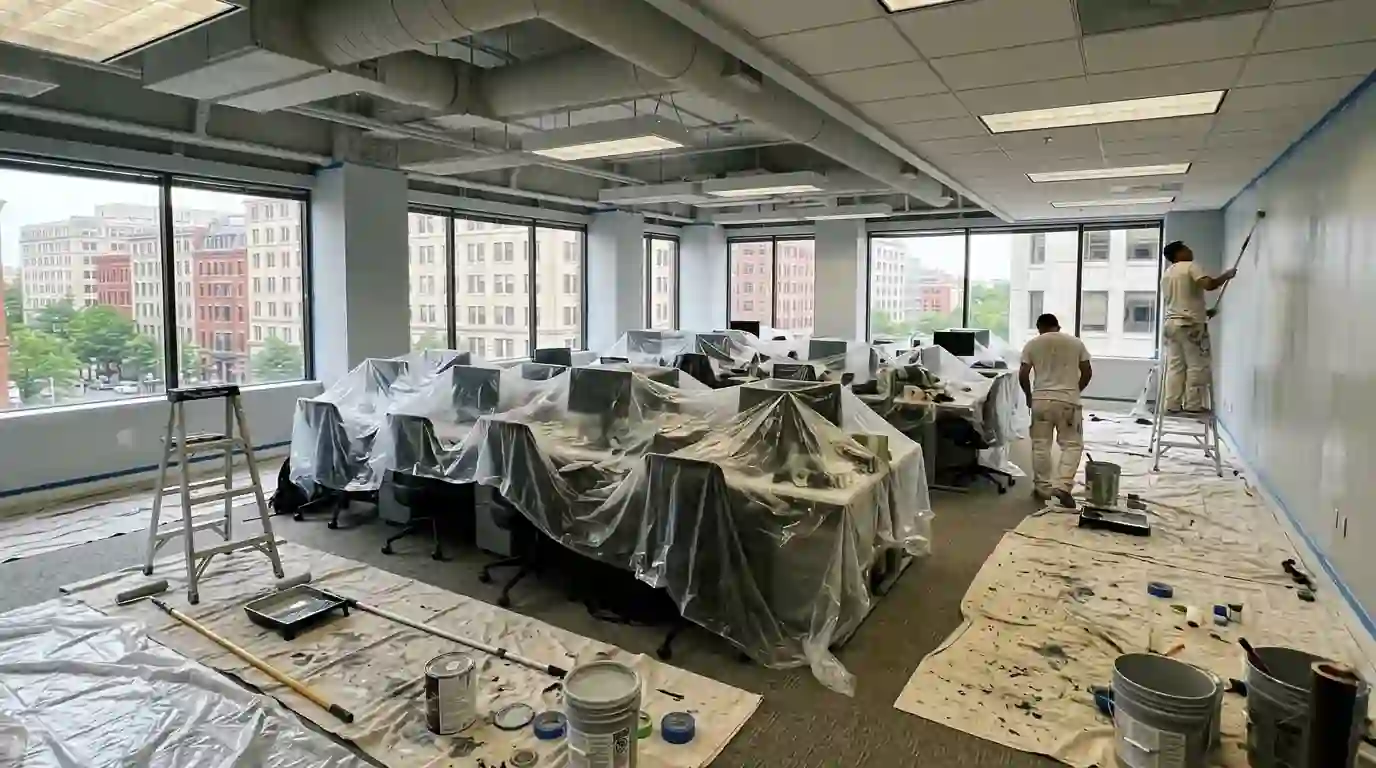
Siding painting puts ladders and drop cloths along every wall, so a little clearing helps us move faster.
- Cut back shrubs, vines and tree limbs so they sit at least two feet off the siding.
- Move grills, hoses, trash bins and patio furniture away from the house.
- Shut off lawn sprinklers that hit the walls for a few days before and during the work.
- Tell us about wall-mounted cameras, lights and cable lines we should work around.
- Keep windows closed on the side being sprayed, and expect us to cover vents and AC units briefly.
- Let neighbors on narrow side yards know we may need to set a ladder near the property line.
Most siding jobs on a two-story house take five to eight working days, weather permitting.
Siding painting costs in Washington, DC
Square footage drives the base price. Condition and material move it from there.
| Siding type | Typical range | What moves the price |
|---|---|---|
| Wood clapboard, per sq ft | $2.45 to $4.70 | Peeling extent, lead containment, trim detail |
| Cedar shingles, per sq ft | $2.80 to $4.65 | Loose or split shingles, tannin primer, gable height |
| Fiber cement, per sq ft | $2.20 to $3.85 | Condition of factory primer, color change |
| Aluminum siding, per sq ft | $2.35 to $3.90 | Chalk removal effort, dents, bonding primer |
| Two-story house, siding only | $4,860 to $11,950 | Total area, number of stories, access around plantings |
| Pre-wash before painting | $285 to $640 | House size, mildew, chalky aluminum |
Typical DC ranges and not a quote; the walkthrough sets your final price.
Primers and paints matched to each siding
The topcoat matters, but the primer under it is what makes each material hold paint.
- Oil-based exterior primer or a premium bonding primer on bare and weathered wood.
- Zinsser stain-blocking primer on cedar and redwood to lock tannins in place.
- Alkali-resistant masonry primer on fiber cement cut edges and repairs.
- Sherwin-Williams Emerald, Benjamin Moore Aura or a similar premium 100 percent acrylic topcoat for flexibility through temperature swings.
- Vinyl-safe color formulations when painting vinyl siding, to avoid heat warping.
- Wooster and Purdy brushes for back-brushing laps after spraying, so paint gets under the edges.
For trim, soffits and porches on the same house, see our full exterior house painting service.
Where we do this work most often
We take this job across the District and close-in Maryland and Virginia. These are the neighborhoods and cities we cover most, with a ZIP for each.
Questions we hear about this
Can you paint aluminum siding on an older DC house?
Yes. Aluminum takes paint well once the chalky oxidation is scrubbed off and a bonding primer goes on. It won't fix dents, and very dark colors may show oil-canning on wide panels. Most aluminum siding repaints we do in DC last 8 to 10 years before needing attention again.
Should cedar shingle siding be painted or stained?
Either can work. Solid stain soaks in, shows texture and is easier to refresh, while paint gives a crisper color but needs stain-blocking primer and more prep when it fails. If your shingles are already painted, staying with paint is usually simpler. Our deck staining crew uses the same stains on shingles.
Is painting vinyl siding a good idea?
It can be, if the vinyl is in good shape and you stay at or lighter than the original color using vinyl-safe paint. Going dark can cause panels to warp in summer sun. If the vinyl is brittle or faded beyond reason, replacement may make more sense than paint.
How often does wood siding need painting in DC?
Usually every 7 to 10 years for a quality two-coat job, sooner on south and west walls. Keeping gutters clear, trimming plants back and fixing failed caulk extends that. Our post on how long exterior paint lasts gives more detail.
Do you replace damaged siding boards before painting?
We replace or repair a few damaged boards or shingles as part of prep, and handle soft areas with wood rot repair. Larger replacement projects are priced separately. Call (771) 247-4038 to book a walkthrough and we'll mark everything that needs attention.