Short answer
Our Michigan Park work is mostly exterior: wood trim, eaves, porch posts and siding on brick and frame houses from roughly the 1920s through the 1950s. Rot repair comes up on almost every job. We walk the house, probe suspect wood, price repairs and painting together, then book the work for a dry stretch of weather.
Where Michigan Park trim tends to rot first
On these mid-century houses the rot is rarely random. It follows the same handful of spots, and each one has a reason.
Window sills facing south and west
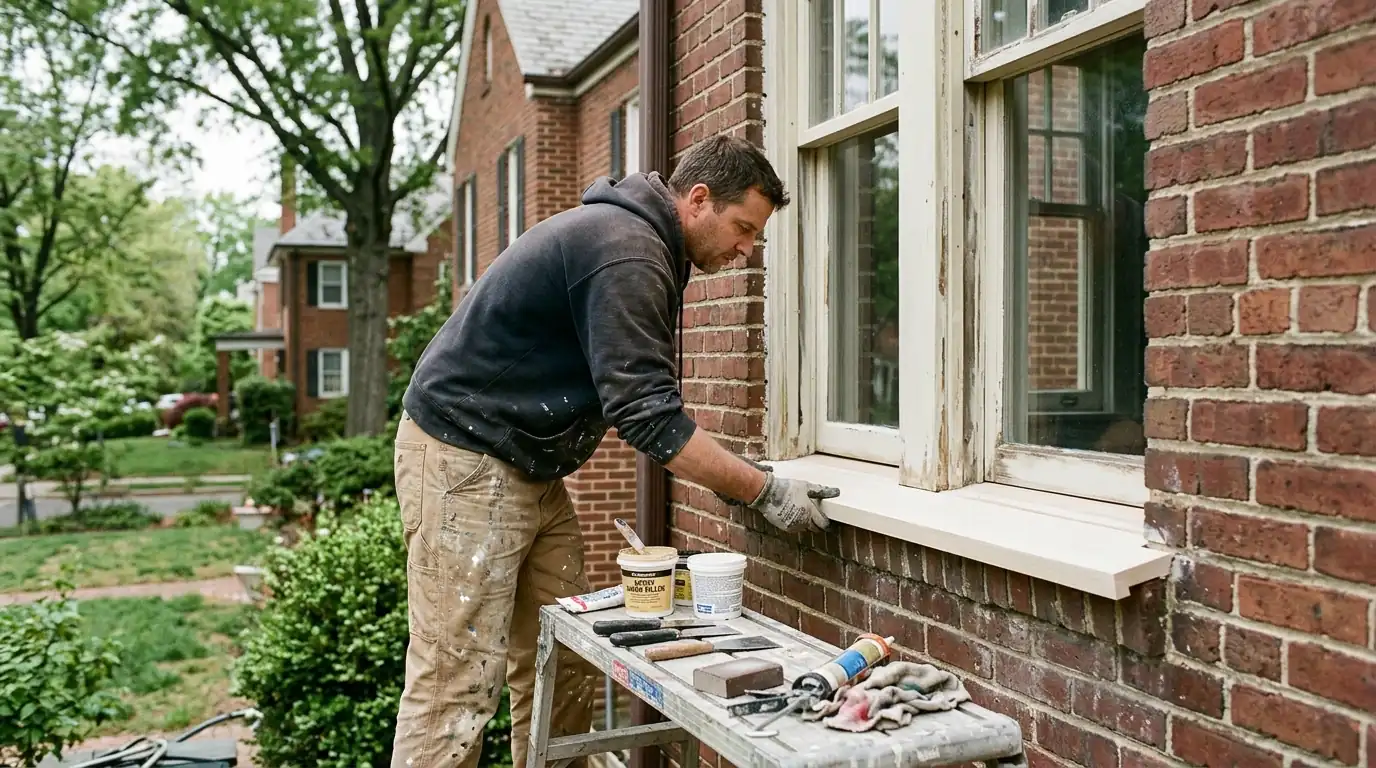
Flat sills hold standing water after storms and bake in afternoon sun. Paint cracks along the grain, water soaks in and the sill softens from the front edge back. We consolidate shallow damage and replace sills that are soft through.
Fascia behind clogged gutters
Large street trees drop leaves and seeds into gutters every fall and spring. Overflow runs down the back of the fascia board where you can't see it. By the time paint bubbles on the face, the wood behind is often gone.
Bottoms of porch posts
Square wood posts on front stoops and small porches sit on concrete that holds water. The end grain wicks it up, and rot climbs from the base. We cut out the bad section and splice in new wood or fit a new base.
Door thresholds and brick mold
The trim around back and side doors takes splash from steps and stoops. Joints open, water gets behind the casing, and the bottom few inches go soft. We rebuild these sections before any caulk or paint goes on.
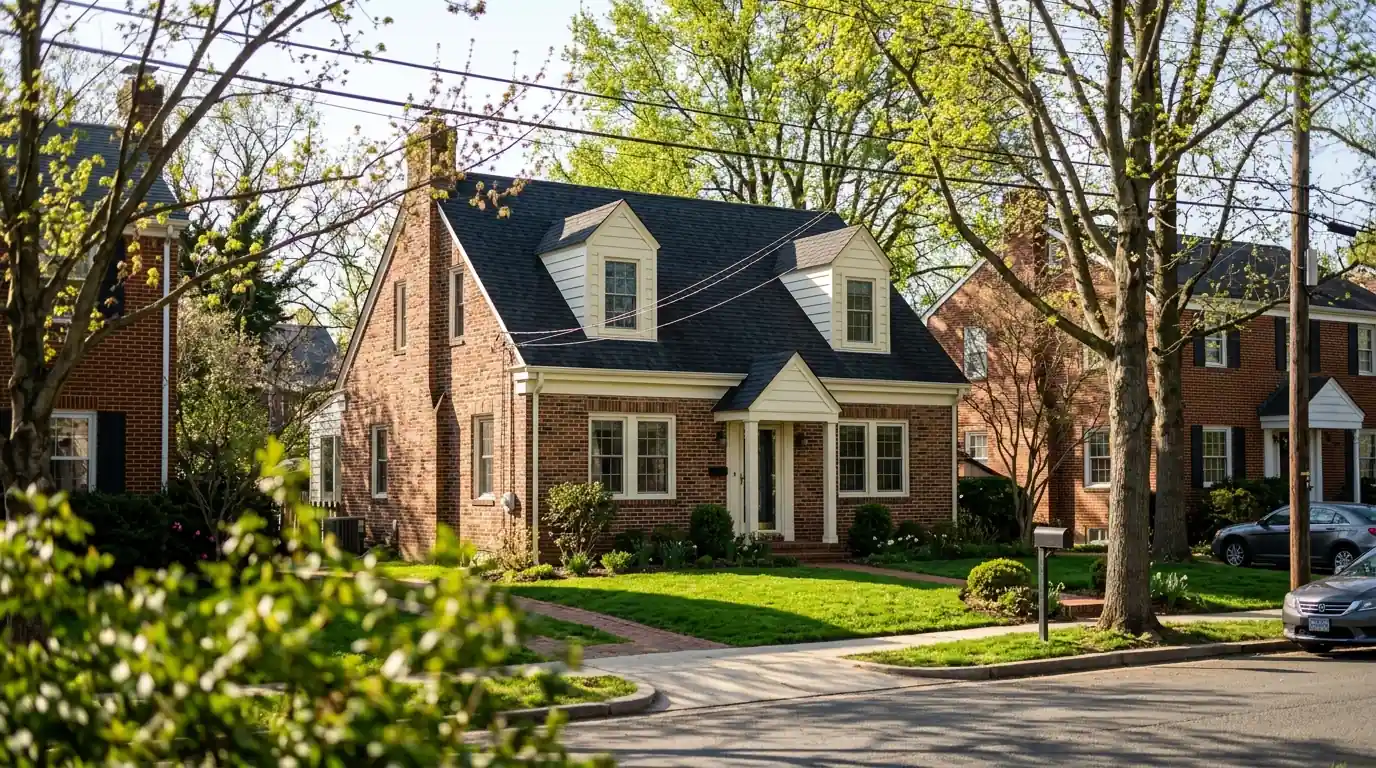
Dormer cheeks on Cape Cods
Dormer side walls take hard weather and are easy to skip during a quick repaint. Peeling shingles and soft trim up there are common, so we inspect them from a ladder rather than guessing from the yard.
Brick Colonials, Cape Cods and the streets off Michigan Avenue NE
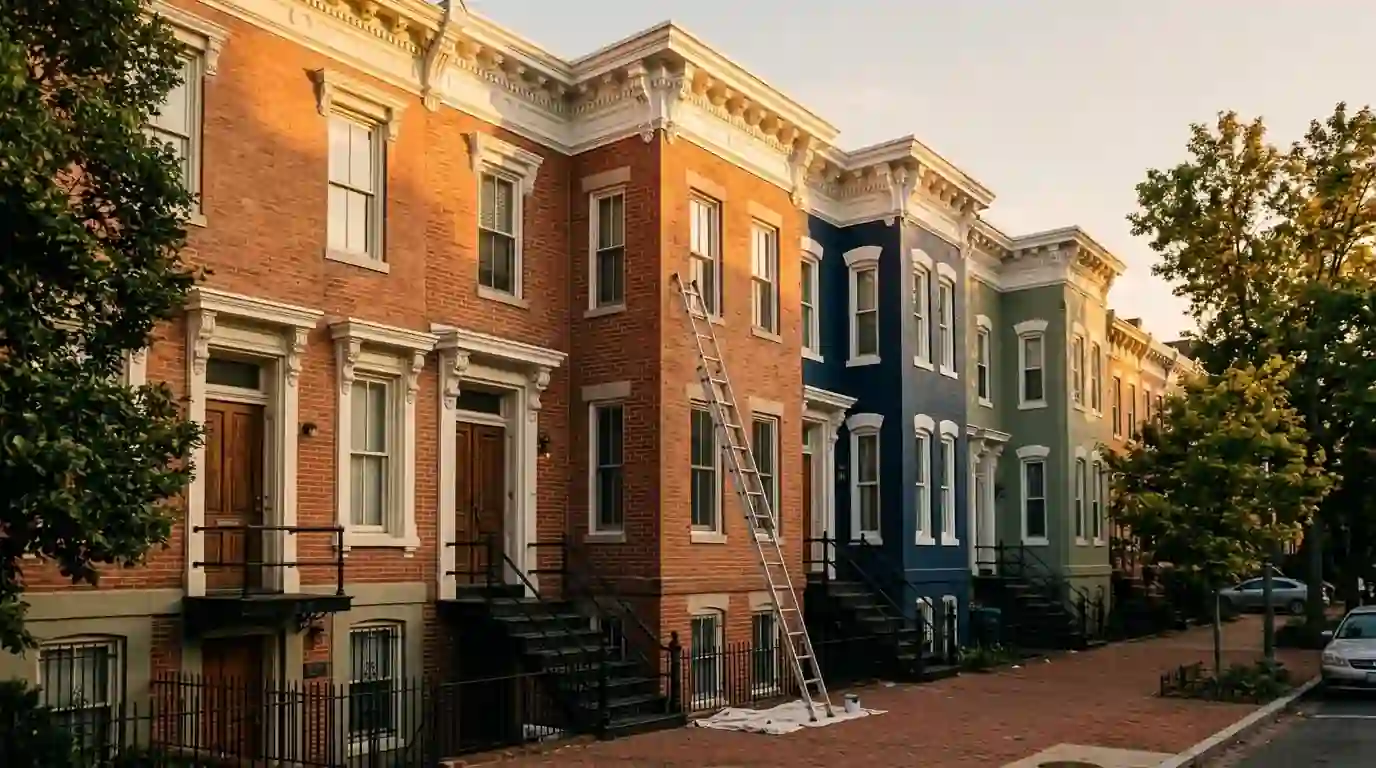
Michigan Park lies north of Michigan Avenue NE and runs up toward Riggs Road, with South Dakota Avenue cutting through it and Fort Totten Park close by on the west. Most of the houses went up between the 1920s and the 1950s, and the mix is broad: brick center-hall Colonials, brick semi-detached pairs, Cape Cods with dormers, and frame houses in wood or later aluminum siding. Lots are larger than in the rowhouse parts of DC, with front lawns, rear yards and driveways.
The brick on most of these houses has never been painted, and for good reason. What does need paint is everything made of wood: soffits, fascia, rake boards, window trim, porch posts and the occasional gable end in clapboard. Many houses also have aluminum or vinyl siding added later, and older aluminum siding takes paint well once it's cleaned and primed with the right product.
Because the houses here were built before 1978, older layers of trim paint often contain lead. We test where we plan to scrape and set up lead-safe containment where it's needed. If your trim is in good shape and only needs color, our exterior house painting service handles a straight repaint without repair work.
How we repair rot and repaint trim on a Michigan Park house
A typical job here is a brick house where the wood trim needs repair in a few spots and paint everywhere.
- Coat 01
Probe and mark
At the walkthrough we press an awl into sills, fascia, posts and door trim. Soft spots get marked with tape so you can see exactly what we plan to repair and what we're leaving alone.
- Coat 02
Price repairs and paint together
Rot repair typically runs $240 to $1,150 per area depending on size and access. We list each repair separately in the written price so you can see where the money goes and choose what to do now.
- Coat 03
Cut out or consolidate
Shallow rot is dug out, hardened with a wood consolidant and filled with a two-part epoxy filler. Deep rot is cut back to sound wood and replaced with a matching profile, primed on all sides before install.
- Coat 04
Scrape, sand and prime
Loose paint across the rest of the trim is wet scraped and sanded smooth at the edges. Bare wood and new pieces get primer the same day so they don't absorb moisture overnight.
- Coat 05
Caulk and seal joints
Every joint where water could get in, including sill ends, casing tops and fascia seams, is sealed with a paintable elastomeric caulk. Our caulking and weatherproofing work covers the full exterior when you want it.
- Coat 06
Two finish coats and cleanup
Two coats of exterior acrylic go on all trim. We remove sheeting, vacuum debris and walk the house with you before we pack up the ladders.
Scheduling exterior work in Michigan Park
Access here is easier than in denser parts of the city, but a few things still affect timing.
- Driveways and wide streets mean we can usually park and unload without temporary no-parking signs.
- Semi-detached houses share a wall line with the neighbor, so we talk with you about where the trim color stops on shared elements.
- Rot repair needs dry wood, so we often schedule repairs a day or two after a rain clears rather than the morning after.
- Exterior painting here generally runs from April through October, with July storms causing the most reschedules.
- Michigan Park is not a historic district, so color changes on painted trim don't need review.
Neighbors across Michigan Avenue in Brookland and east toward Woodridge have very similar houses and similar repair needs.
Most requested here
Exterior House Painting
Siding, trim, soffits and porches scraped, primed and painted on a schedule built around DC weather.
Wood Rot Repair
Soft sills, fascia and porch trim cut out or consolidated and rebuilt so new paint is not wasted.
Caulking & Weatherproofing
Failed joints at trim, windows and siding laps raked out and resealed before water gets behind paint.
Siding Painting
Wood, fiber cement and aluminum siding painted with the primer each material needs to hold paint.
Window Sash & Trim Painting
Glazing checked, sashes and frames painted, and windows left operable instead of painted shut.
Lead-Safe Painting
Containment, wet scraping and HEPA cleanup when older paint is disturbed in homes built before 1978.
Porch Painting
Porch floors, steps, columns and haint-blue ceilings painted with floor-rated enamels that handle traffic.
Interior House Painting
Walls, ceilings and trim in occupied homes, with furniture moved, floors covered and rooms back in use each night.
Close by
ZIP codes we cover here: 20017. We also paint in these neighboring areas.
Questions from Michigan Park homeowners
Should I fix rot before repainting my Michigan Park house?
Yes, in almost every case. Paint over soft wood lets water keep moving into the board, and the new coat starts peeling within a season or two. Fixing rot first costs more up front, but the paint then lasts its normal life. We price both together so you can decide what to fix now and what to watch.
Can you paint aluminum siding on a Michigan Park home?
Yes. A lot of houses here had aluminum siding added decades ago, and it's often faded and chalky. We wash off the chalk, spot prime any bare metal and apply two coats of exterior acrylic. Typical siding painting costs run $2.20 to $4.70 per square foot, depending on height and condition.
How soon can you start an exterior job in Michigan Park?
Our office is a short drive away in Brookland, so walkthroughs here are easy to fit in. Start dates depend on the season and weather; spring and early fall book up first. Call (771) 247-4038 any time to set up a walkthrough, and we'll give you a realistic start window after we see the house.