Short answer
Painting a historic DC home means testing what's already on the walls and trim, repairing plaster and wood instead of replacing them, keeping original windows working, and choosing primers that bond to old oil paint. Pricing follows the work: interior plaster patching runs $185 to $640 per area, window sashes $135 to $290 each, and exteriors $5,600 to $14,800.
What an old DC house asks of a painter
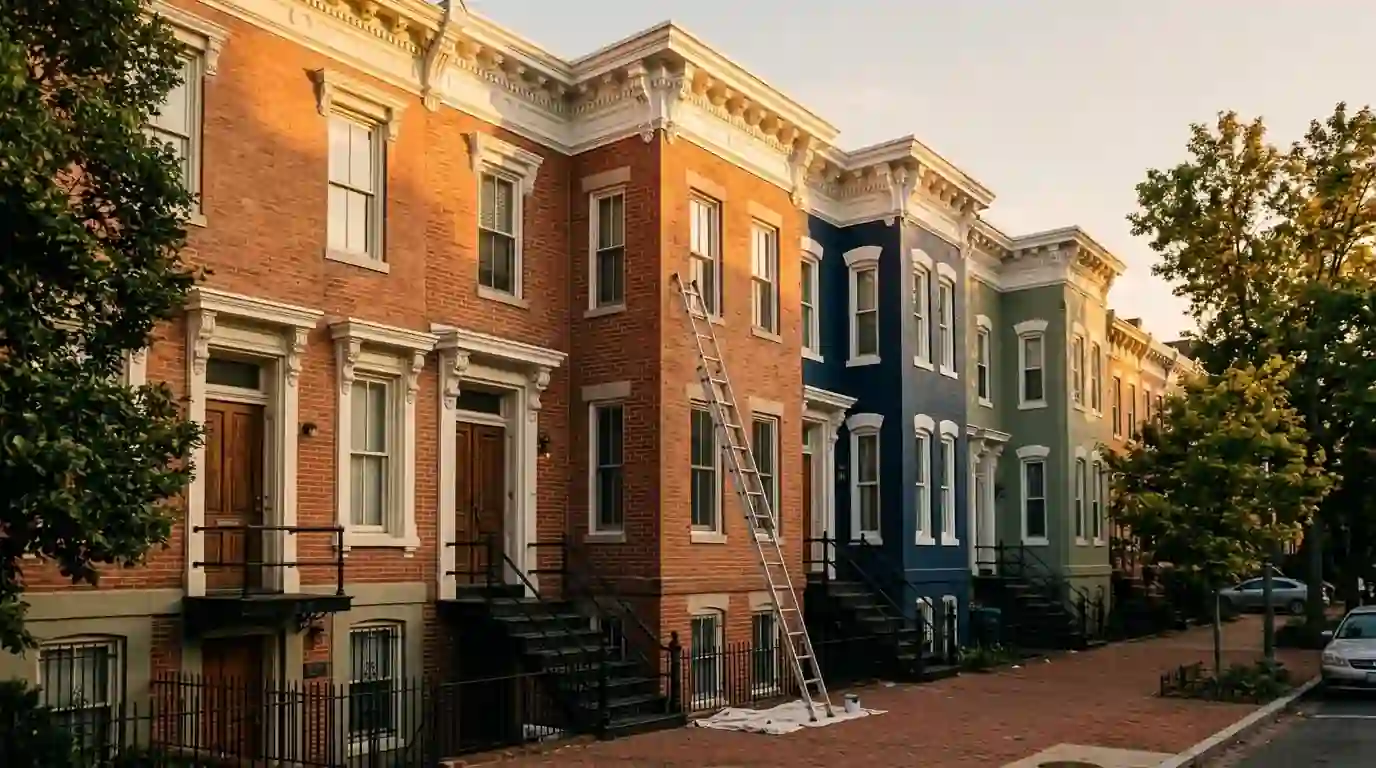
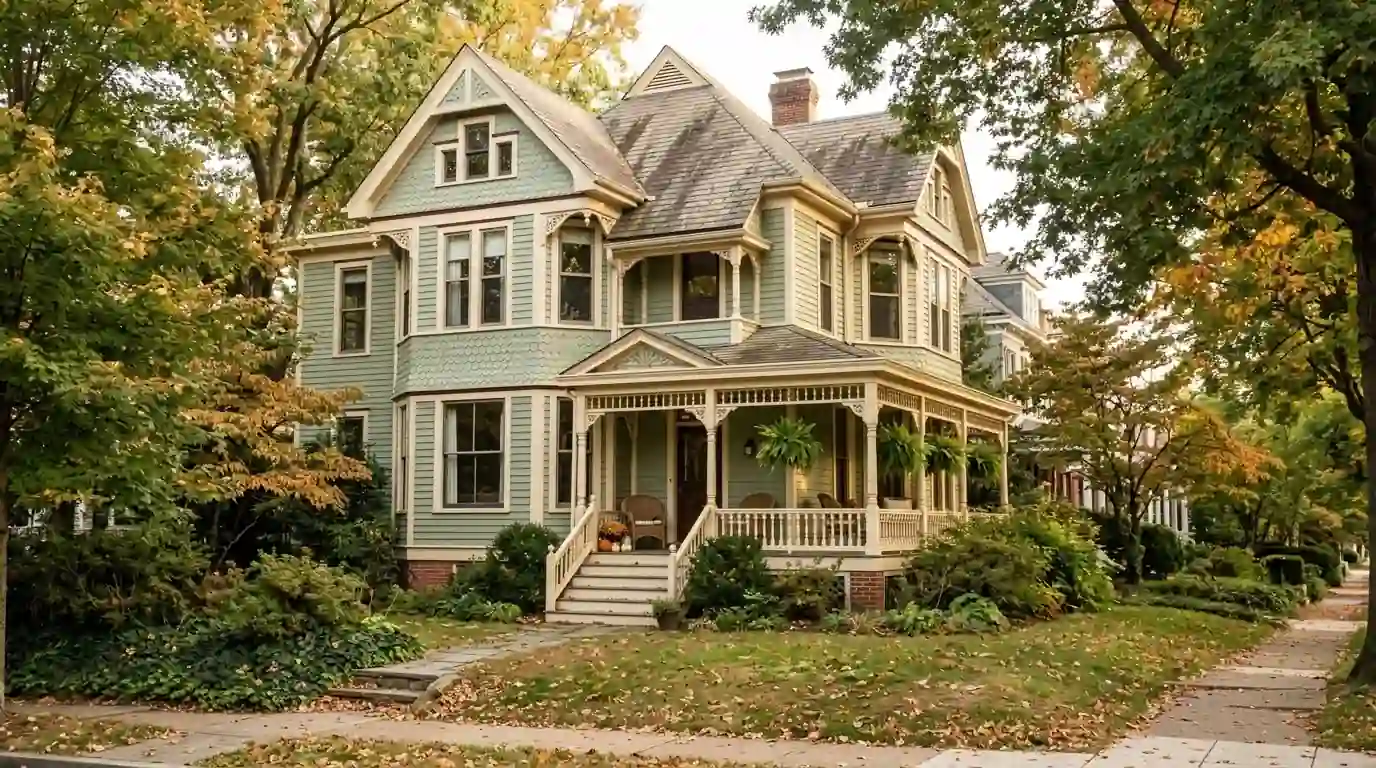
A large share of Washington's houses went up before 1950, and the ones we're called to most often are older still: Federal and Victorian rowhouses in Georgetown and on Capitol Hill, Queen Anne frames in Cleveland Park, and Craftsman bungalows near Takoma. Under the current paint you'll usually find oil-based layers, sometimes calcimine on ceilings and almost certainly lead somewhere. Each of those changes how prep is done.
The bigger change is attitude. On a newer house you might swap a soft sill or a cracked wall for a new one. On a historic house we start by asking what can be saved. Lime plaster can be re-anchored and skim coated, old-growth pine trim can be consolidated and patched, and original wavy-glass sash can be reglazed and painted to run smoothly again. That work takes longer, but the result still looks like the house it is.
Historic districts add one more consideration. In DC, repainting surfaces that are already painted is generally not reviewed, even with a new color, while painting previously unpainted masonry generally does need review. Georgetown exterior changes go before the Old Georgetown Board. We'll tell you when a plan might fall into that category, and you'd check with the DC Historic Preservation Office before work begins.
How we take an old house from tired to cared for
The sequence below is for a full historic repaint. Smaller jobs use the parts that apply.
- Coat 01
Survey the layers
We scrape a small window through the paint in a few spots to read the history: oil, latex, calcimine or milk paint. Pre-1978 surfaces are treated as lead-containing unless a test says otherwise, and you see the findings before the scope is final.
- Coat 02
Stabilize, don't replace
Loose plaster is reattached with plaster washers and adhesive, cracks are taped and filled, and soft wood is hardened with epoxy consolidant. We replace a piece only when nothing sound is left to save.
- Coat 03
Free the windows
Painted-shut sashes are cut loose, parting beads removed where needed, failing glazing putty replaced and the sash painted without coating the channels, so the window still slides when we're done.
- Coat 04
Prime for old oil
Latex will peel off glossy old oil paint. We scuff-sand and use a bonding or oil-based primer such as Zinsser Cover Stain, and a shellac primer over water stains or calcimine residue.
- Coat 05
Finish in suitable sheens
Two topcoats go on by brush on trim and moldings to keep crisp profiles, and by roller on plaster walls in a flat or matte sheen that hides the slight waves old plaster always has.
- Coat 06
Clean to lead-safe standards
Plastic is folded inward, debris bagged, and surfaces HEPA-vacuumed and wet-wiped. We walk the rooms with you, open and close every window we touched and leave labeled touch-up paint.
Old-house details that need special handling
These are the parts of a historic DC home where a standard repaint goes wrong.
Horsehair and lime plaster
Plaster flexes and cracks along lath lines. We tape and skim with setting compounds rather than spreading premixed patch, which shrinks. Bigger failures go to our plaster wall repair work before paint.
Original double-hung sash
Old wood windows are often the first thing a quick painter seals shut. We paint them in place or out of the frame and leave them operable. See window sash and trim painting for the full process.
Crown, casings and medallions
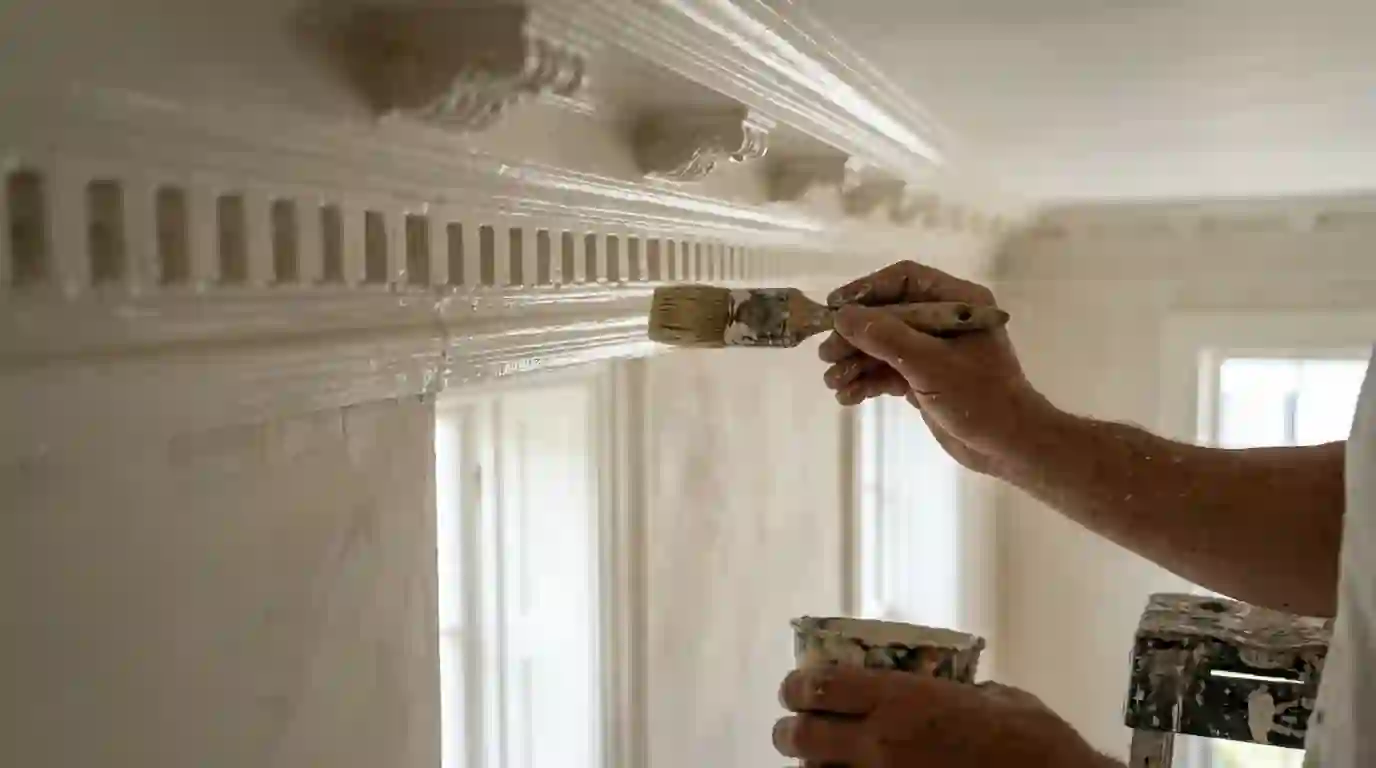
Decades of paint fill in molding detail. Where it has gone soft and blurry, we can strip back select profiles before repainting so the shadows show again.
Calcimine ceilings
Old water-based ceiling coatings rub off like chalk and reject new paint. We wash off what we can and seal the rest with an oil or shellac primer before finishing.
Cornices and porches
Exterior ornament holds water and hides rot. We probe, consolidate and rebuild before painting, and pair it with a porch floor and ceiling repaint when the floor and ceiling are due too.
Price ranges for historic house painting in DC
Older homes cost more mostly because of prep and repair, not paint.
| Job | Typical range | What moves the price |
|---|---|---|
| Plaster crack and patch, per area | $185 to $640 | Loose plaster needing re-anchoring, ceiling versus wall |
| Skim coat one plaster room | $1,150 to $2,800 | Ceiling height, molding count, number of failing areas |
| Window sash, painted and freed, each | $135 to $290 | Glazing condition, painted-shut sash, storm windows |
| Trim and molding, per linear foot | $2.35 to $4.85 | Profile depth, selective stripping, number of old layers |
| Detached historic exterior | $6,420 to $14,800 | Ornament, height, wood repair, lead containment |
| Lead-safe containment add-on | $380 to $1,450 | Rooms or elevations disturbed and cleanup testing |
Ranges are typical for DC and not a quote; your price comes after a walkthrough.
Paint and primer choices that respect old materials
We match products to the substrate rather than defaulting to one brand. On old trim, an oil-based primer bites into decades of glossy enamel, and a waterborne alkyd topcoat like Benjamin Moore Advance levels out brush marks without yellowing the way true oil does. On plaster walls a high-quality matte or flat acrylic keeps the surface quiet, and for owners wanting a deeper, chalky look, Farrow & Ball or Fine Paints of Europe give that period depth.
Masonry gets breathable coatings only. A brick wall that was painted a century ago needs to keep moving moisture outward, so we use mineral or breathable masonry paint and, where it suits the house, limewash for brick. Sealing old soft brick under a plastic film is how spalling starts. For more on how these finishes age side by side, our post on limewash versus paint walks through it.
Where we do this work most often
We take this job across the District and close-in Maryland and Virginia. These are the neighborhoods and cities we cover most, with a ZIP for each.
Questions we hear about this
Do I need approval to change paint colors on a historic DC home?
Generally, repainting surfaces that are already painted, including trim, doors and painted brick, is not reviewed in DC even if the color changes. Painting brick or stone that has never been painted generally is reviewed, and Georgetown exterior changes go to the Old Georgetown Board. Check with the DC Historic Preservation Office for your address before you commit to a plan.
Will you replace my old plaster walls with drywall?
Not unless the plaster is beyond saving, which is less common than people think. Most cracked or bulging plaster can be re-anchored and skim coated, and it keeps the sound, feel and molding lines of the original room. If a section has truly failed, we'll show you before suggesting a patch in another material.
Can original wood windows in an old house be painted without sealing them shut?
Yes. We cut sashes free, paint them with the window partly open, keep paint off the channels and parting beads, and work them up and down as the coat cures. Glazing is checked and replaced where it has dried out. When we leave, every window we touched should open and close.
Is historic home painting slower than a normal repaint?
It usually takes longer, mostly in prep. Plaster repairs need setting time between coats, and window work is detailed. A typical room in an old house might take a day longer than in a newer one. Call (771) 247-4038 and we'll give you a realistic schedule after seeing the house.
How do you handle lead paint in a pre-war house when painting?
We assume painted surfaces in pre-1978 homes contain lead unless testing shows otherwise. That means containment, misting before scraping, no open-flame burning or dry power sanding, HEPA vacuums and wet cleanup. The details are on our lead-safe painting page.