Short answer
Our Palisades work is mostly exterior: wood clapboard, cedar shake and fiber cement siding, plus trim, porches and decks. Moisture from the river valley and heavy tree cover drive most of the problems. A visit starts with a walkthrough of all four sides, a siding material check and a written price.
Why siding fails early on Palisades houses
The setting above the river is the reason most Palisades siding fails sooner than in drier parts of the city.
Mildew on tree-shaded walls
Lots here are thick with trees, and walls facing the woods rarely see direct sun. Mildew grows on and under the paint. We wash with a mildewcide and use a paint with mildew resistance for those sides.
Cedar shake bleeding through
Cedar shingles hold natural tannins that stain light paint brown. We prime with a stain-blocking primer before the finish coats so the color stays clean.
Peeling at the lowest courses
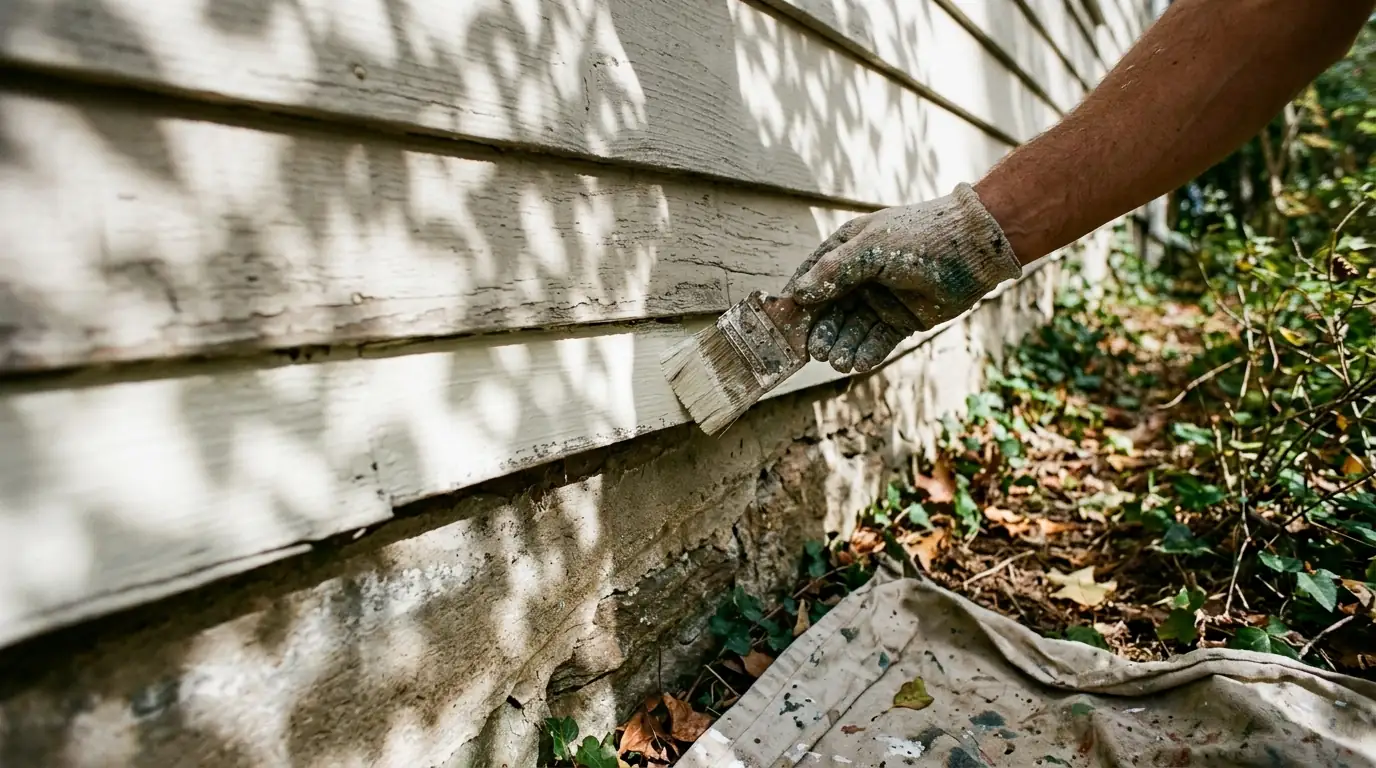
Siding near the ground on sloped lots catches splashback and runoff from the uphill side. Paint lifts and boards soften at the bottom. We check for rot and recommend wood rot repair where boards are soft.
Faded paint on the river side
Walls facing open views to the south and west take full afternoon sun off the valley. Paint chalks and fades quickly. A quality acrylic with good UV resistance lasts noticeably longer on those walls.
Caulk failure at fiber cement joints
Newer houses with fiber cement siding often have butt joints that open as caulk ages. Water then wicks into board edges. We recaulk with a paintable sealant made for fiber cement.
Bungalows, Colonials and new builds above the Potomac
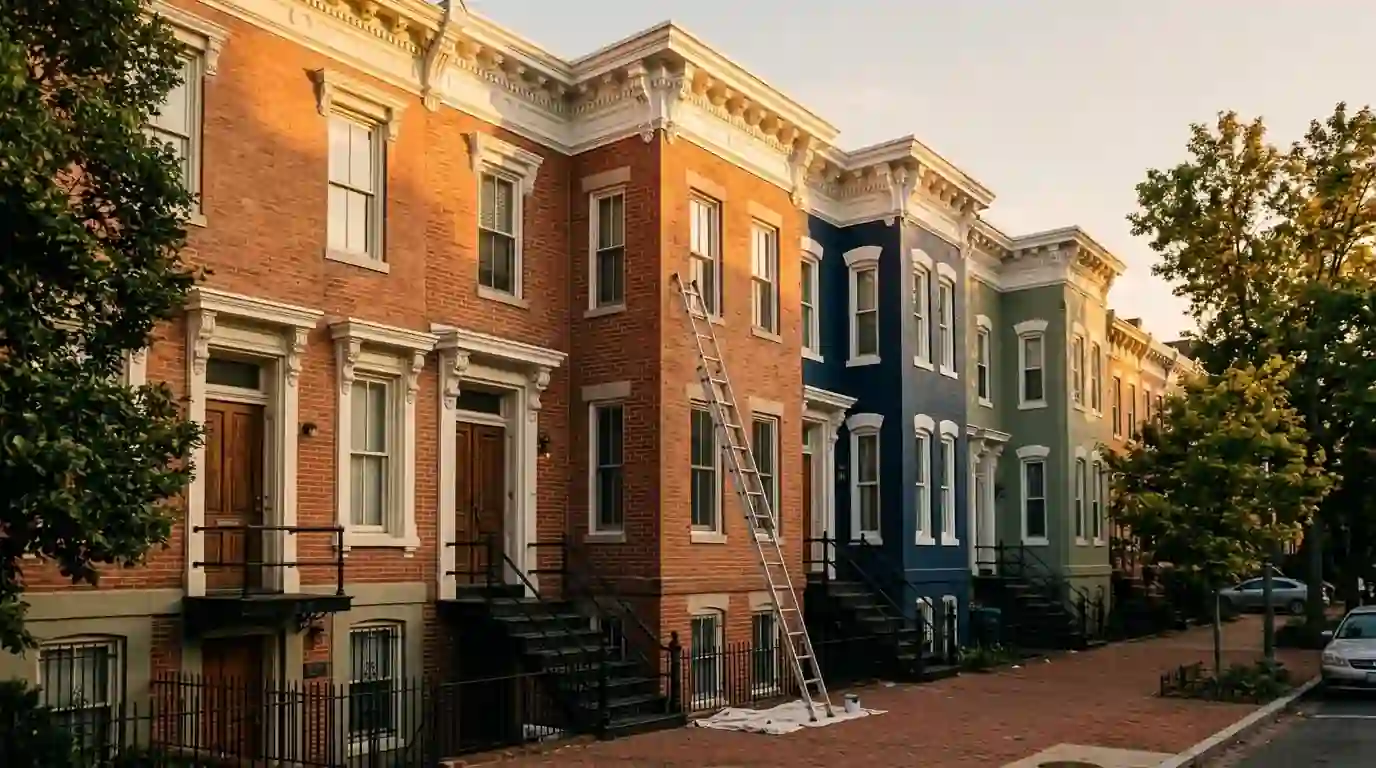
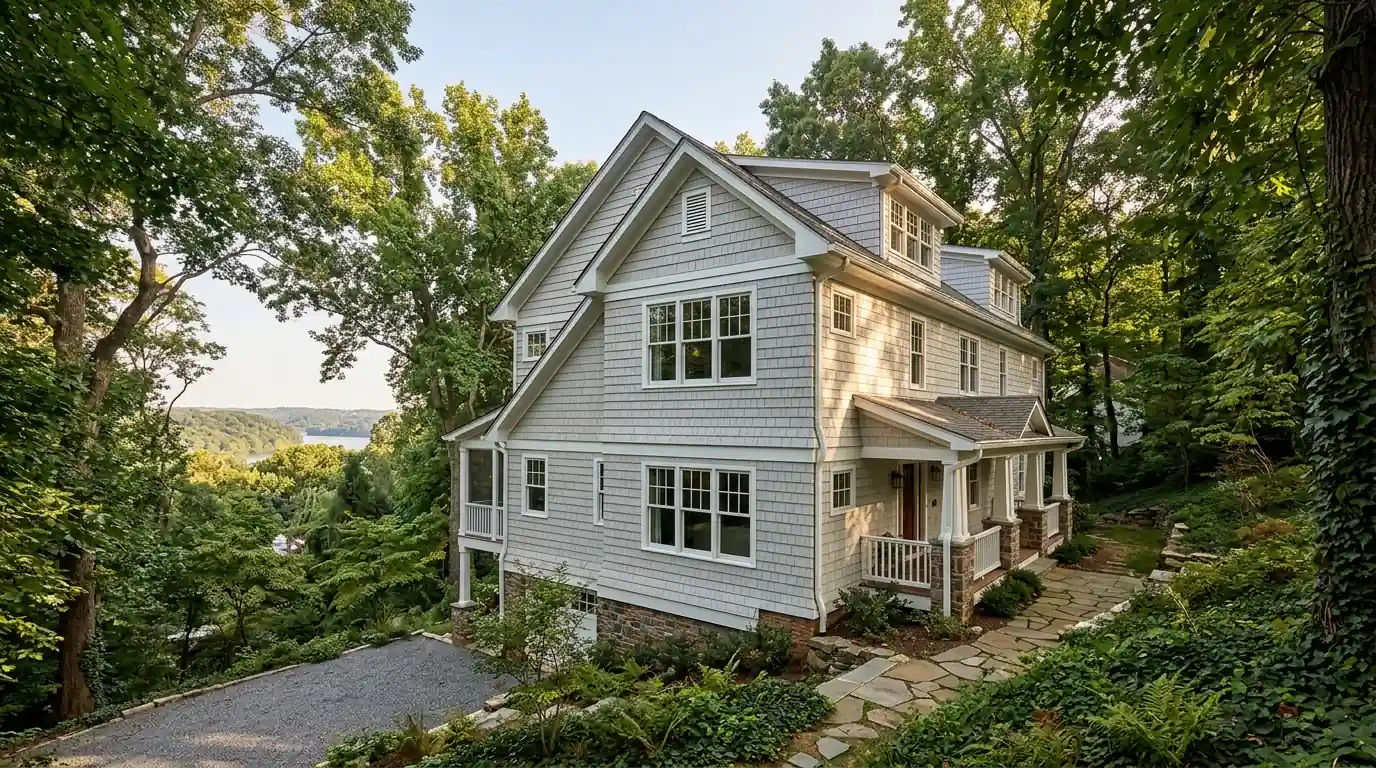
The Palisades stretches along MacArthur Boulevard from Foxhall Road toward the Maryland line, between the C&O Canal and the Potomac on one side and Battery Kemble Park on the other. It began as a streetcar suburb in the early 1900s, and many of the first houses were bungalows and small frame houses. Later decades added brick and frame Colonials, Cape Cods and mid-century houses, and many lots now hold large new houses built after older ones were torn down.
That range means we see every kind of siding here. Older houses usually have wood clapboard or cedar shake, sometimes covered by aluminum later. Newer houses use fiber cement, which takes paint well when prepped right. Brick appears on many Colonials, usually with painted wood trim and porches. Decks are common, since many lots slope toward the river.
Houses built before 1978 may have lead in older siding and trim layers, so we test where we'll scrape. For full repaints, our siding painting page explains how primer choice changes by material.
How a full siding repaint runs in the Palisades
The typical project here is a detached house with wood or fiber cement siding that needs all four sides repainted.
- Coat 01
Walkthrough and material check
We identify the siding on each wall, note rot, mildew and caulk failure, and test older paint for lead. You get a written price that lists repairs and painting separately.
- Coat 02
Wash and dry
Siding is cleaned with a mildewcide and rinsed at low pressure. Shaded walls can need several dry days before they're ready, so we often start on the sunny side.
- Coat 03
Scrape, repair and caulk
Loose paint is scraped and sanded at the edges. Soft boards are replaced, and joints at trim, windows and siding laps are recaulked once primer is down.
- Coat 04
Prime the right way
Bare wood gets an oil-based or acrylic primer, cedar gets a stain-blocking primer and fiber cement gets a primer suited to masonry-like surfaces. Matching primer to material is what makes the paint last.
- Coat 05
Two finish coats
Two coats of exterior acrylic go on siding and trim. Siding painting typically runs $2.20 to $4.70 per square foot, and a full detached exterior typically runs $5,600 to $14,800.
- Coat 06
Walk the house together
We walk all four sides with you, check trim lines and touch up anything you point out before we remove sheeting and pack up.
Access, slopes and timing in the Palisades
Most of what shapes a Palisades schedule comes from the terrain and the trees.
- Many lots slope steeply toward the river, so rear walls can need scaffolding or ladder levelers.
- Driveways usually give us space to park, and MacArthur Boulevard has room for work vehicles on many blocks.
- Tree cover means shaded walls dry slowly, so we book exterior work mainly from May through September.
- Fall leaf drop can land on wet paint, so October jobs are planned around calm, dry days.
- The Palisades is not a historic district, so color changes on painted siding are your decision.
If you have a deck that also needs work, our deck staining can be booked alongside the house.
Most requested here
Exterior House Painting
Siding, trim, soffits and porches scraped, primed and painted on a schedule built around DC weather.
Siding Painting
Wood, fiber cement and aluminum siding painted with the primer each material needs to hold paint.
Deck Staining
Decks cleaned, brightened and stained with penetrating or solid stain matched to the age of the boards.
Wood Rot Repair
Soft sills, fascia and porch trim cut out or consolidated and rebuilt so new paint is not wasted.
Pressure Washing
Siding, brick, decks and porches washed at the right pressure so the next coat bonds to clean material.
Caulking & Weatherproofing
Failed joints at trim, windows and siding laps raked out and resealed before water gets behind paint.
Window Sash & Trim Painting
Glazing checked, sashes and frames painted, and windows left operable instead of painted shut.
Close by
ZIP codes we cover here: 20016. We also paint in these neighboring areas.
Questions from Palisades homeowners
What paint lasts longest on Palisades siding?
A high-quality 100 percent acrylic exterior paint generally lasts longest on wood and fiber cement siding here. On shaded walls, a paint with mildew resistance helps, and on the sunny river side, good UV resistance matters more. Primer choice matters just as much as the finish coat.
Can you paint a new fiber cement house in the Palisades?
Yes. Many newer Palisades houses use fiber cement, which often comes factory primed or painted. Factory finishes fade and can be repainted once they chalk. We clean, recaulk butt joints and apply two coats of exterior acrylic. Call (771) 247-4038 to set up a walkthrough.
How do you paint the back of a Palisades house on a steep lot?
We look at the slope during the walkthrough and plan for ladder levelers, staging or a small scaffold on the downhill side. The plan affects time and price, so it's listed in the written estimate. Safe access on these lots is the slowest part of many jobs, so we don't rush it.