Short answer
Our Georgetown work splits between interiors (plaster walls, deep moldings, paneled doors and stair halls) and exterior wood and iron on rowhouse facades. Many jobs pair the two. We walk the house, test old paint for lead, flag anything that may need Old Georgetown Board review and give you a written price with each part listed.
Old Georgetown Board review, parking and access
Georgetown has its own review layer on top of the city's. These points describe how things generally work; check with the DC Historic Preservation Office and the Old Georgetown Board before planning exterior changes.
- Exterior changes visible from public space in Georgetown generally go before the Old Georgetown Board, so we raise any exterior color change or material question with you early.
- Painting brick that has never been painted is generally reviewed and often discouraged, so check with the Board first.
- Like-for-like repainting of already-painted trim, doors and shutters is the simplest exterior work here, but confirm with the Board if you're unsure.
- Street parking is very tight, especially near M Street and Wisconsin Avenue, so we generally request DDOT temporary no-parking signs for the work days.
- Narrow brick sidewalks mean ladders and drop cloths need careful staging so pedestrians can pass.
- Interior painting doesn't go before the Board, so many owners schedule interiors in winter and exteriors once any review is settled.
Federal rowhouses, Victorian bays and brick sidewalks
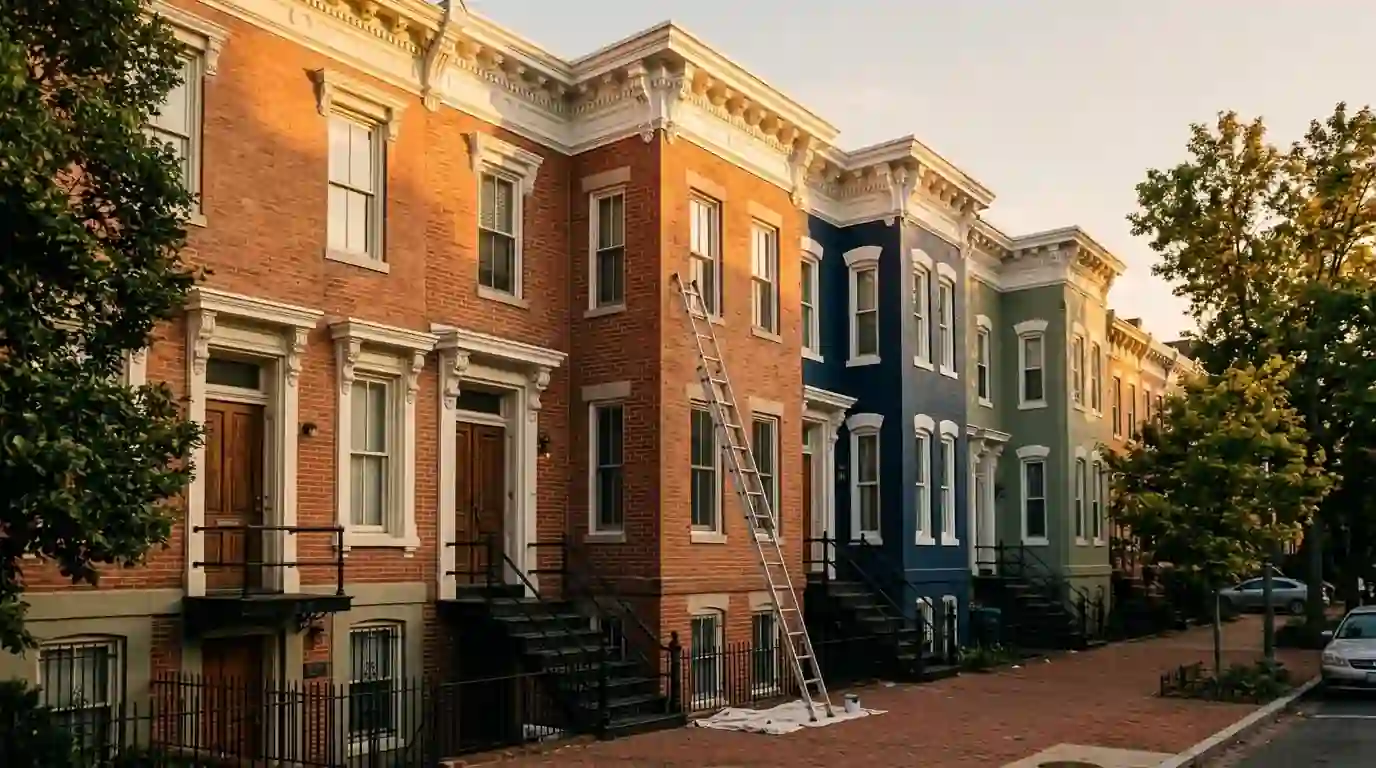
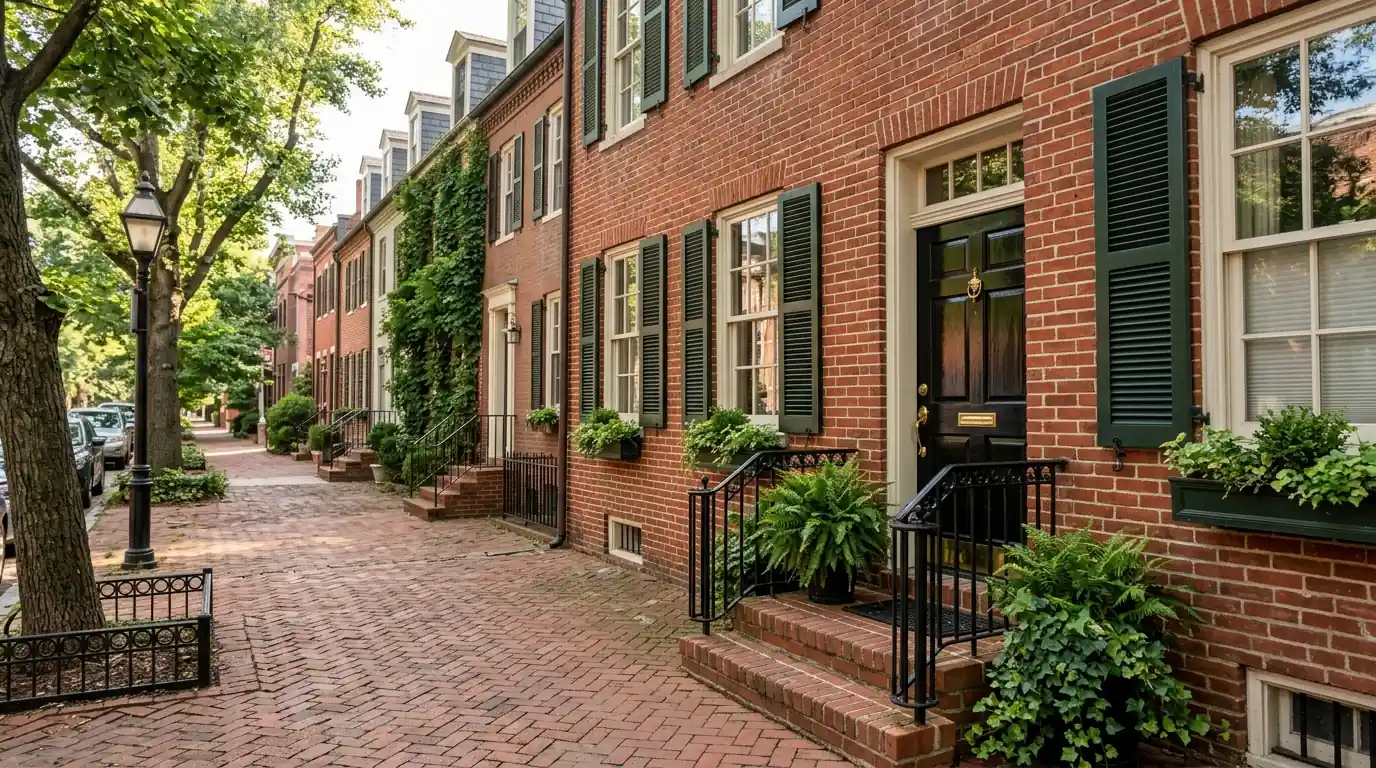
Georgetown was a port town long before Washington existed, and its streets still show layers of building from the late 1700s onward. Narrow Federal rowhouses with flat brick fronts, six-over-six windows and paneled doors sit next to Italianate and Second Empire houses with tall windows, bracketed cornices and bay fronts. Larger freestanding houses line the streets near Dumbarton Oaks and Book Hill, while the blocks closer to the C&O Canal and the Potomac are denser and older.
For paint, this means a lot of old wood and plaster. Exteriors carry wood cornices, window frames, shutters, paneled doors with fanlights, and iron railings and boot scrapers at the stoops. Some facades are painted brick, often in historic colors, and many are left in natural brick. Inside, you'll find lime plaster walls, deep window reveals, wide baseboards, chair rails and carved mantels, all under many coats of paint.
That history also means lead. Nearly every Georgetown house has lead paint somewhere in its trim, windows or doors, so we plan for it in every room and on every facade. Our historic home painting page explains the methods we use on old materials.
What goes wrong with paint in a Georgetown house
These problems come up most often in Georgetown rowhouses, inside and out.
Built-up paint on moldings
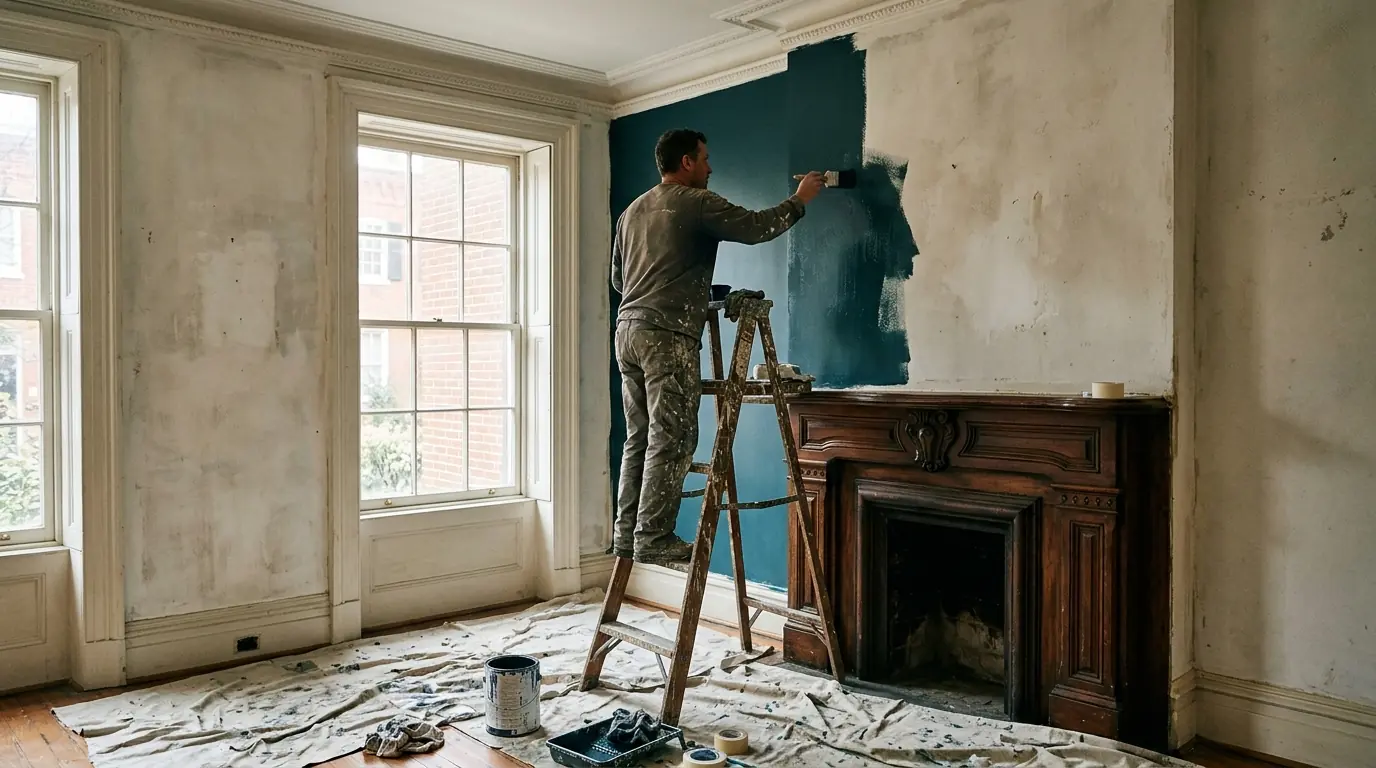
Two centuries of coats fill in the detail on crown moldings, mantels and door panels until the profile goes soft. Where you want the detail back, we strip the worst areas using lead-safe methods before repainting.
Cracked lime plaster
Lime plaster cracks along lath lines and around openings as old houses settle. We cut, tape and skim with compatible materials instead of covering walls in drywall. See our plaster repair service for the method.
Rusting stoop railings
Iron railings and fences at the front steps rust at joints and where they meet the stone. We grind off rust, treat it, prime and finish with a durable enamel through our iron railing painting work.
Peeling painted brick facades
Brick painted long ago with modern paint can trap moisture and peel. We remove loose paint and recoat with a breathable system, after checking with you on any review needed for the work.
Shutters coming apart
Louvered wood shutters hold water in every slat. Joints open and paint fails first at the bottom rail. We take them down, repair joints and paint them flat before rehanging.
How an interior repaint runs in a Georgetown rowhouse
The typical Georgetown job is a multi-floor interior: parlor, stair hall, bedrooms and trim, often in an occupied house.
- Coat 01
Walkthrough by floor
We go floor by floor, note plaster cracks, stained ceilings and trim condition, and test old paint where we'll be sanding. You get a written price that lists plaster, walls, ceilings and trim separately.
- Coat 02
Protect floors and stairs
Old wood floors and stair treads get padded cover. Banisters and newels are wrapped. Furniture is moved to room centers and covered, and narrow halls are kept clear for you.
- Coat 03
Plaster first
Cracks are cut out and taped, loose sections reattached with plaster washers, and skim coats applied where needed. Plaster patches dry fully before primer goes on, which can take a day or two.
- Coat 04
Lead-safe trim prep
Window trim, doors and baseboards are wet sanded or scraped inside plastic containment, with HEPA cleanup each day. This adds time, but keeps dust out of the rest of the house.
- Coat 05
Paint in order
Ceilings first, then walls, then trim and doors. Deep historic colors may take an extra coat to read evenly, especially in the tall parlor rooms.
- Coat 06
Final walk
We walk each floor with you in daylight, mark touch-ups, fix them and put rooms back in order.
Most requested here
Historic Home Painting
Pre-war plaster, old-growth wood trim and original windows painted with methods that respect the house.
Interior House Painting
Walls, ceilings and trim in occupied homes, with furniture moved, floors covered and rooms back in use each night.
Plaster Repair
Cracked and sagging plaster re-anchored and skim coated so pre-war walls stay plaster, not drywall.
Rowhouse Exterior Painting
Front facades, cornices, bays and porch fronts painted with shared party-wall edges and sidewalk access in mind.
Iron Railing & Fence Painting
Rust ground off, converted and primed before stoop railings and iron fences get a durable enamel coat.
Lead-Safe Painting
Containment, wet scraping and HEPA cleanup when older paint is disturbed in homes built before 1978.
Window Sash & Trim Painting
Glazing checked, sashes and frames painted, and windows left operable instead of painted shut.
Trim & Baseboard Painting
Crown, casings, chair rail and baseboards caulked and brushed out in semi-gloss without a ragged wall line.
Close by
ZIP codes we cover here: 20007. We also paint in these neighboring areas.
Questions from Georgetown homeowners
Do I need Old Georgetown Board approval to paint my front door?
It depends on what changes. Repainting a door in the same color is generally simple, while a color change on a visible facade element may go before the Board. Requirements can change, so check with the DC Historic Preservation Office and the Old Georgetown Board before choosing a new exterior color. We'll plan the schedule around any review.
Can you paint a Georgetown interior without disturbing the original plaster?
Yes. We repair plaster rather than replace it, using setting compounds and skim coats that bond to old lime plaster. Walls stay plaster and keep their feel. Patch areas typically run $185 to $640, and a full skim coat in a room typically runs $1,150 to $2,800.
How do you handle parking for a Georgetown painting job?
We generally request DDOT temporary no-parking signs in front of the house so a work vehicle can park for the job. Narrow streets and brick sidewalks mean we stage equipment carefully and keep the walk passable. Call (771) 247-4038 to set up a walkthrough and we'll plan access with you.