What sheen changes on a painted wall
Sheen is how much light a dried paint film reflects. Manufacturers measure it with a gloss meter, and the bands run roughly like this: flat under 5, matte 5 to 10, eggshell 10 to 25, satin 25 to 40, semi-gloss 40 to 70 and gloss above 70. Those bands vary by brand, so a Benjamin Moore eggshell and a Sherwin-Williams eggshell won't look identical on the same wall.
Two things move with sheen. The first is washability: more resin at the surface means a tighter film that shrugs off scrubbing. The second is how much the wall shows its flaws. A higher sheen bounces light off every ridge, patch and roller lap, so the same plaster wall that looks calm in flat can look lumpy in satin.
Every sheen choice is a trade between cleaning and hiding. Our rule in DC houses is simple: pick the lowest sheen the room's traffic will allow. Newer scrubbable matte lines have narrowed the gap a lot, which is why we now use matte in rooms that needed eggshell ten years ago.
Which sheen goes in which room?
These are the defaults we start from on most interior jobs in DC rowhouses and detached homes. Your light, your walls and how you live can push any row up or down one step.
| Room or surface | Our default sheen | When we change it |
|---|---|---|
| Ceilings | Flat | Satin only in a bathroom with no exhaust fan and a history of peeling |
| Living and dining rooms | Matte or eggshell | Flat on wavy plaster; eggshell if kids and dogs share the room |
| Bedrooms | Matte | Eggshell in a child's room where crayons and hands reach the walls |
| Hallways and stairwells | Eggshell or scrubbable matte | Satin in a narrow rowhouse stair where shoulders and bags rub the walls daily |
| Kitchens | Satin | Eggshell if strong side light rakes across the walls |
| Bathrooms | Satin | Semi-gloss in a basement bath or any bath without a working fan |
| Trim, doors and cabinets | Semi-gloss | Satin for a softer look on painted paneling or flat modern doors |
These are starting defaults, not fixed rules; on the walkthrough we check your light and wall condition before settling sheen room by room.
Sheen mistakes we fix on DC repaints
Most sheen problems we see weren't caused by a bad product. They came from the wrong sheen on the wrong surface, or from mixing sheens during touch-up.
Satin on old plaster
Satin over a pre-war plaster wall with hairline cracks and old patches shows every repair from across the room. Dropping to matte usually fixes it, but only after another full coat over the whole wall.
Flat paint in a busy hallway
Flat paint burnishes when it's rubbed, leaving shiny streaks at hip height along stairs and halls. You can't wash those out. The wall needs a repaint in a scrubbable matte or eggshell.
Touch-ups that flash
Touch-up paint dries to a slightly different sheen than the original coat, especially in eggshell and satin. On a wall lit from the side, patches flash. We repaint corner to corner rather than dabbing spots.
Semi-gloss on broad walls
Some owners go glossy everywhere so walls wipe clean. In a living room it looks like a hospital corridor and magnifies every drywall seam. Semi-gloss belongs on trim, doors and cabinet boxes.
Two sheens on one long wall
Rowhouses that have lost interior walls often have one long open space. Switching from matte to eggshell halfway along the same plane leaves a visible line. Keep one sheen per continuous wall.
Gloss over old gloss without sanding
New semi-gloss over old oil semi-gloss on trim peels in strips if the surface wasn't scuffed and primed with a bonding primer. Shine on shine doesn't grip, no matter how good the paint is.
How older DC walls change the sheen decision
Most of the homes we paint in Capitol Hill, Petworth and Brookland were built before 1950, and many still have lime or horsehair plaster. Plaster is hard and handsome, but it is rarely flat. A century of settling, patching and repainting leaves soft waves you only notice when light rakes across them, usually from a west window late in the day.
On those walls we go one step lower than the table above: matte where we'd normally pick eggshell, flat where we'd pick matte. If you really need washability, we fix the wall first. A skim coat over a living room typically runs $1,150 to $2,800, and smaller plaster repairs at cracks and old patches typically run $185 to $640 per area. Once the surface is true, a higher sheen stops being a liability.
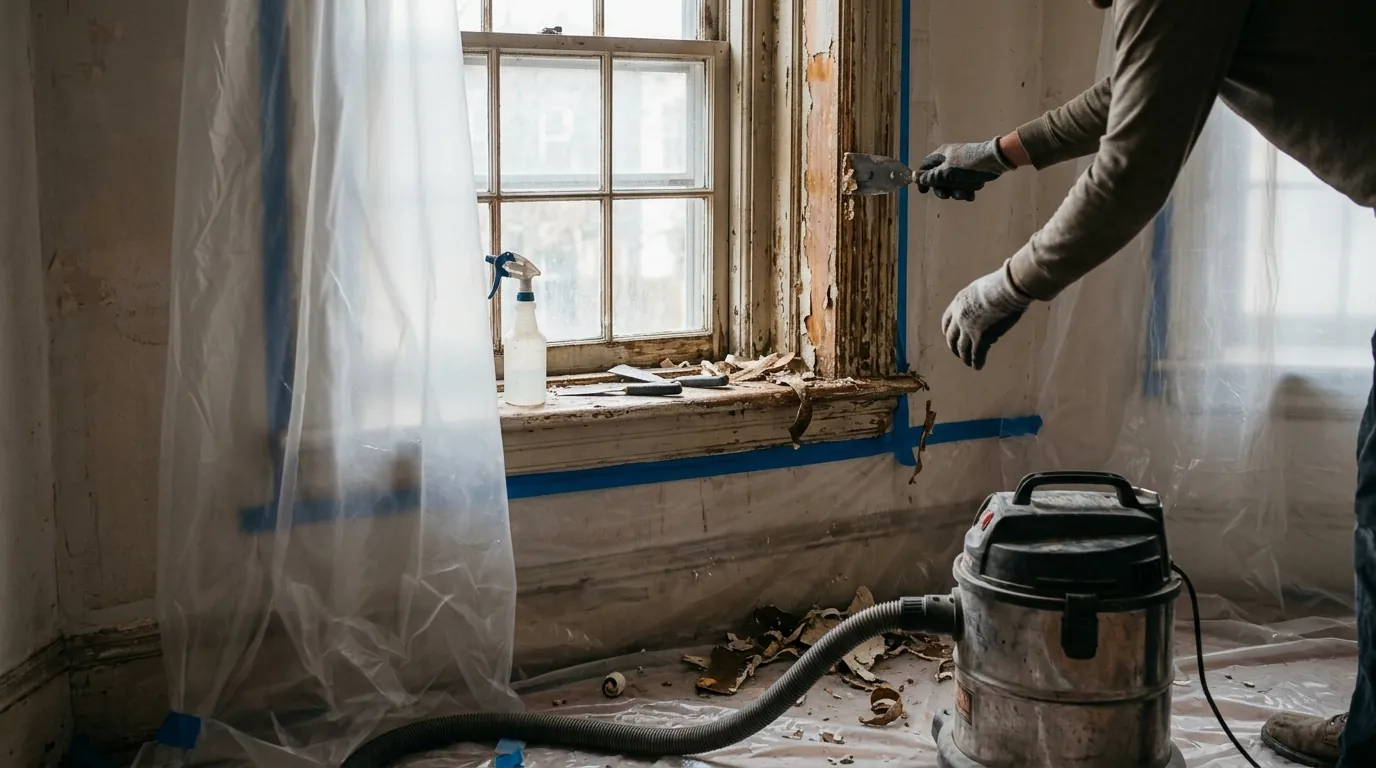
Trim in pre-war houses has its own issue: many layers of old oil paint, often with lead in the bottom coats. Before semi-gloss goes on, we test, scuff and prime with a bonding primer. If the paint is failing and the house predates 1978, we switch to lead-safe work practices for the prep.
How do you test a sheen before you commit?
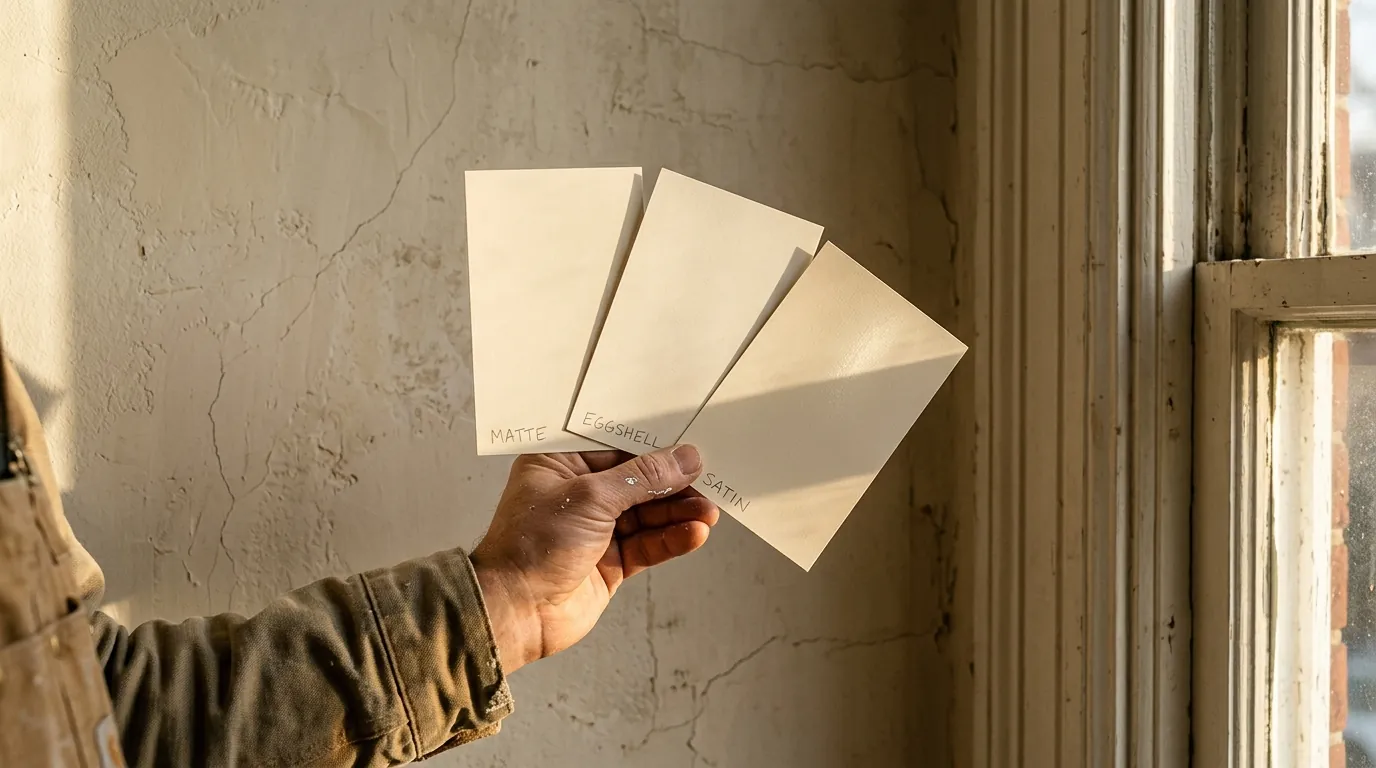
Color chips don't show sheen at all. A few cheap tests before the job starts will save you from living with a finish you dislike.
- Buy sample quarts in the exact sheen you're considering, not the sample-pot default, which is often matte.
- Paint boards at least 12 by 18 inches with two coats, because a single coat dries flatter than the finished wall will.
- Let each board dry a full 24 hours before judging, since sheen keeps rising for several days as the film cures.
- Hold the board flat against the wall beside the window, where raking light exaggerates sheen the most.
- Check the board at noon, at dusk and under evening lamps, because warm bulbs make satin look shinier.
- Rub the board with a damp cloth and a little dish soap to see how it marks before choosing paint for busy rooms.
- Set it beside the trim sheen you've picked so the contrast between walls and trim reads the way you want.
If you'd rather have someone walk the rooms with you, a color consultation visit typically runs $145 to $285 and covers sheen along with color.
What sheen means for your painting budget
Sheen itself barely changes the price of the paint. A gallon of eggshell and a gallon of matte in the same line usually cost within a few dollars of each other. What changes the cost is prep. Higher sheens demand smoother walls, more sanding between coats and more patching, because every flaw becomes visible.
For reference, two coats on bedroom walls typically run $485 to $860 for interior painting in DC, and trim runs $1.85 to $3.90 per linear foot depending on how much caulking and sanding it needs. Moving a room from matte to satin can add a few hours of surface prep, so settle sheen before you get a price, not after. If you're scheduling a repaint, our guide on getting ready for painters covers what to clear out first.
Services mentioned in this guide
Interior House Painting
Walls, ceilings and trim in occupied homes, with furniture moved, floors covered and rooms back in use each night.
Trim & Baseboard Painting
Crown, casings, chair rail and baseboards caulked and brushed out in semi-gloss without a ragged wall line.
Paint Color Consultation
Sample boards checked in your own light, with color and sheen picked room by room before any paint is bought.
Follow-up questions
Can eggshell go over existing flat paint without priming?
Usually yes, as long as the flat paint is clean, sound and latex. We wash it, spot prime any patches, then apply two coats of eggshell. The first coat over flat can look blotchy because flat absorbs it unevenly; the second coat evens the sheen. If the flat paint is chalky, powdery or older oil-based, we prime the whole wall first.
Why does new satin trim look shinier than the old trim in the next room?
Fresh paint reads glossier than paint that has aged a few years. Old latex and oil films dull from cleaning, sunlight and grime, so a new satin coat can look a full step brighter. Within a year it settles somewhat. If the mismatch bothers you, painting the trim run to the next natural break, such as a doorway, avoids a side-by-side comparison.
Is matte a poor sheen choice for a small rowhouse kitchen?
Not always. Newer scrubbable mattes hold up to wiping in a kitchen that sees light cooking. Near the range and sink, where grease and splashes land daily, satin still cleans better. A common compromise is satin on the walls closest to the stove and sink and matte across the room, split at a corner so the change doesn't show. For cabinets, we stay with satin or semi-gloss enamel.