Short answer
Window sash painting in DC means wet scraping loose paint lead-safely, replacing failed glazing putty, priming bare wood and brushing two finish coats on sashes, frames, sills and casings. We cut sashes free and move them while the paint cures so they don't dry shut. Typical pricing runs $135 to $290 per sash, with exterior trim at $1.85 to $3.90 per linear foot.
Is your window trim overdue for paint?
Windows fail from the outside in. These are the early signs we look for from the sidewalk and the ladder.
Putty cracked or falling out
When glazing putty shrinks and cracks, rain runs behind the glass and soaks the muntins. Loose putty is the single clearest sign a sash needs work before another coat goes on.
Sills gone gray and fuzzy
A bottom sill that has lost its paint turns gray and soft at the surface within a season or two. Caught early, it sands back to sound wood; left alone, it starts to rot.
Sashes that won't budge
Years of paint bridge the gap between sash and stop, so the window is sealed shut. That is a ventilation problem in summer and an escape problem in a fire.
Alligatored or flaking casings
Thick, crazed paint on brick moldings and casings means many old layers are losing their grip. Painting over it only adds weight to a failing film.
Water marks on the inside stool
Stains or lifting paint on the interior stool usually trace back to a bad sill joint or missing putty outside, not to condensation alone.
Drafts and rattling glass
Glass that rattles in its rabbet has lost its putty bed. Reglazing quiets the sash and cuts drafts before paint seals everything in.
Why old DC windows need more than a fresh coat
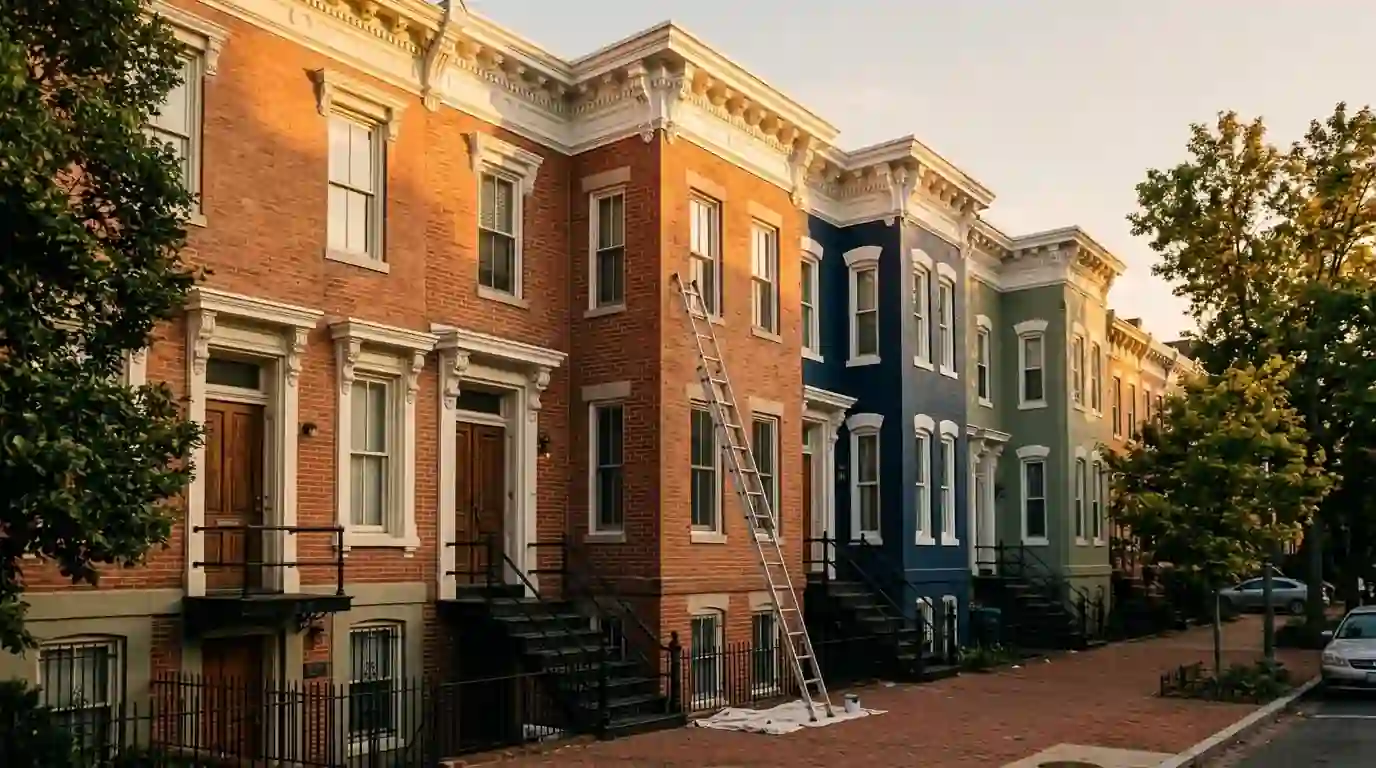
A huge share of DC houses were built before 1950, and many still have their original double-hung sashes in old-growth pine or fir. That wood is denser and more rot resistant than most lumber sold today, which is exactly why it is worth keeping. It does need a sound putty bed, primed end grain and a paint film that is flexible enough to move with the seasons.
Our freeze-thaw winters open small cracks at sill joints, and humid summers keep that wood damp longer than you'd expect. On a Petworth porch-front or a Capitol Hill rowhouse, the sills and lower sash rails take the most water, so that is where we spend the most prep time. Anywhere we find soft wood, we switch to wood rot repair before painting.
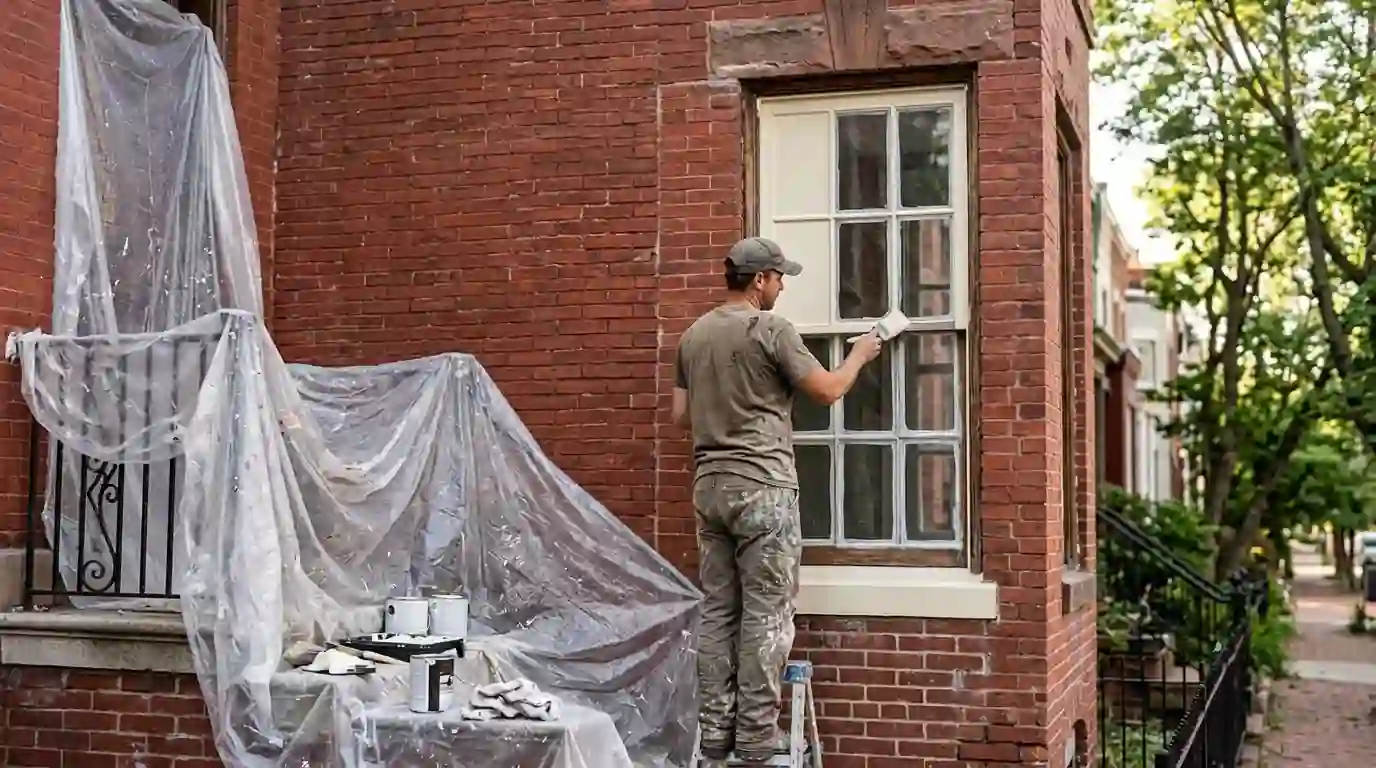
Almost every window in a pre-1978 house carries lead paint in its lower layers, and friction surfaces like sash channels make dust. We follow EPA RRP lead-safe work practices on these jobs, with plastic below each window and HEPA cleanup; our lead-safe painting page explains what that looks like. In historic districts such as Cleveland Park, repainting already painted wood is generally not reviewed, though it's worth checking with the Historic Preservation Office before changing original window materials.
How a sash goes from stuck to working
Most rowhouse fronts take two to four working days, depending on how many sashes need new putty.
- Coat 01
Cut the paint seal and test the sash
We score the paint line between sash and stop with a sharp blade and a sash saw, then work each window gently. Sashes that still won't move get their stops pulled and reset rather than forced.
- Coat 02
Contain and wet scrape
Plastic sheeting goes down under each window, inside and out where needed. We mist the surface and scrape with carbide blades so old paint comes off as damp chips instead of airborne dust.
- Coat 03
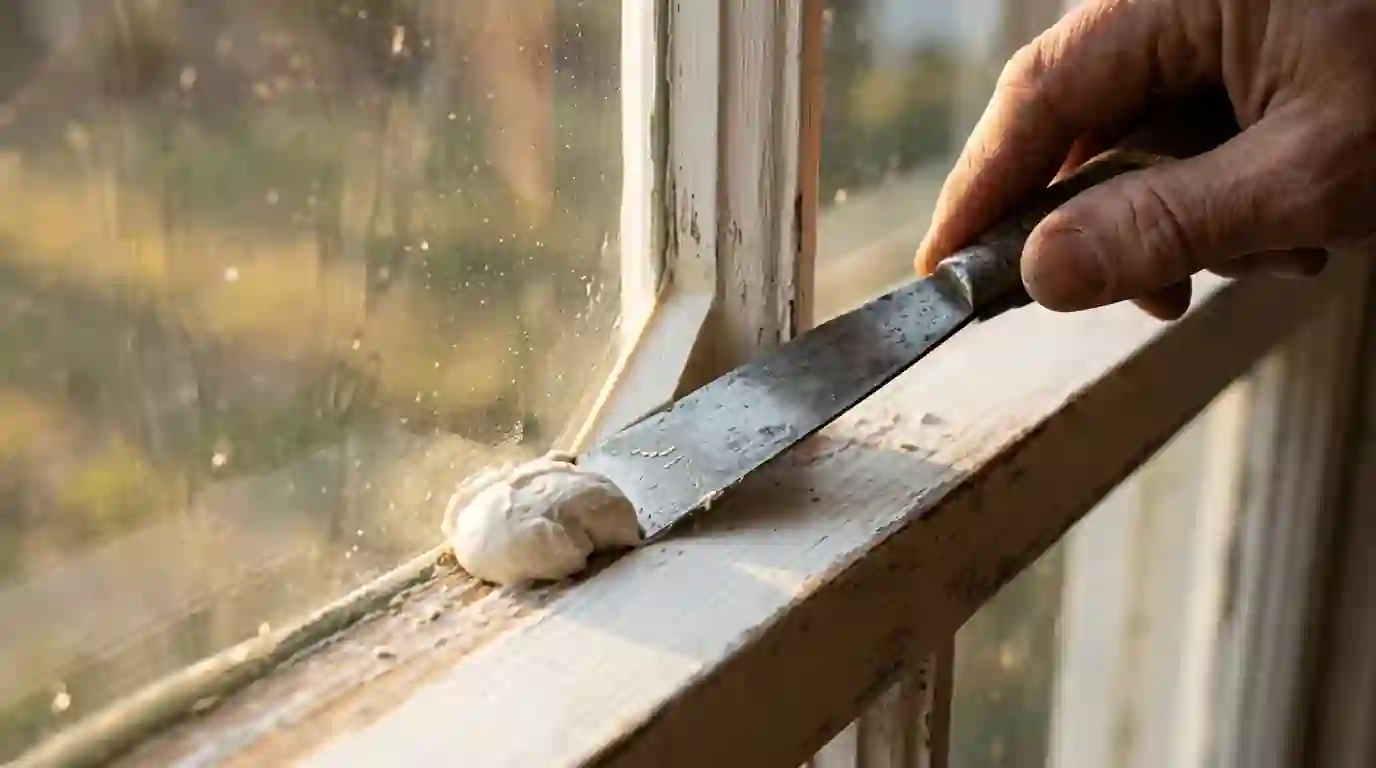
Remove failed putty
Loose and cracked glazing putty is cut out down to the glass edge. Any glazing points that rusted away are replaced so each pane sits tight in its rabbet before new putty goes in.
- Coat 04
Prime the bare wood and rabbets
Bare wood and the empty rabbets get an oil-based primer first, so the wood doesn't pull oil out of fresh putty. Skipping this step is why many reglazing jobs crack in two years.
- Coat 05
Reglaze and let the putty skin
Linseed oil putty is knifed in at a clean bevel and left to skin over, usually a week or more in warm weather. Where schedule matters, we use an acrylic glazing compound that can be painted within a day.
- Coat 06
Brush two finish coats
Two coats of exterior acrylic are brushed on, lapping about one sixteenth of an inch onto the glass to seal the putty edge. Sills get an extra coat because they hold standing water.
- Coat 07
Work the sash and clean the glass
Sashes are moved several times as the paint cures so they don't stick. We scrape paint overspray off the glass with a fresh razor and leave each window locking and opening.
What window and trim painting typically costs in DC
Old windows vary more than any other exterior surface, so these ranges are wide on purpose.
| Job | Typical range | What moves the price |
|---|---|---|
| Paint one double-hung sash and frame, exterior side | $135 to $290 | Number of panes, paint layers, ladder height |
| Reglaze one sash, added to painting | $85 to $175 | Pane count and how much putty has failed |
| Exterior trim and brick molding | $1.85 to $3.90 per linear ft | Profile detail, peeling severity, access |
| Epoxy repair of a soft sill | $240 to $560 | Depth of rot and whether the sill must be replaced |
| Full rowhouse front window set, six windows | $1,460 to $3,280 | Bay windows, third-floor access, glazing work |
| Lead-safe containment and cleanup | $380 to $1,450 per job | Number of openings and interior containment |
These are typical DC ranges, not a quote; we set the price after looking at your windows in person.
Putty, primer and paint that hold up on wood windows
Materials matter more on windows than on almost any other surface, because each one sees sun, rain and constant movement.
- Linseed oil glazing putty for traditional sashes, since it stays flexible for decades when it is painted over properly.
- Acrylic glazing compound when a window must be painted and closed within a day or two.
- An oil-based exterior primer, such as Zinsser Cover Stain, on bare wood and glazing rabbets.
- Two-part epoxy consolidant and filler for sills that are soft but still mostly intact.
- A 100 percent acrylic exterior satin or semi-gloss, like Sherwin-Williams Emerald, for flexibility through freeze-thaw cycles.
- A stiff angled sash brush, often a Purdy, to cut a clean line on the glass without heavy taping.
- New glazing points to replace the rusted ones that let panes rattle loose.
If the joints around your frames are open too, we usually pair this work with caulking and weatherproofing on the same visit.
Getting your windows ready for painting day
A little preparation inside the house saves time and keeps your things clean.
- Clear sills and the area two to three feet in front of each window.
- Take out window air conditioners, or ask us to, before the work day.
- Take down blinds and curtains on the windows we are reglazing.
- Expect some windows to stay open or unlocked for part of a day while paint sets.
- Keep pets and children out of rooms with containment plastic down.
- Plan for at least two dry days with temperatures above 50 F for the finish coats.
Where we do this work most often
We take this job across the District and close-in Maryland and Virginia. These are the neighborhoods and cities we cover most, with a ZIP for each.
Questions we hear about this
Can you paint my DC windows without sealing them shut?
Yes, that is the point of how we work. We cut the old paint line first, keep paint off the sash channels and parting beads, and move every sash several times while the finish cures. Windows that were already painted shut get freed before painting, and we leave each one opening, closing and locking before we pack up.
Does every sash need new glazing putty before painting?
No. We only replace putty that is cracked, loose or missing, and leave sound putty in place under new paint. On a typical rowhouse front, about a third of the sashes need partial reglazing and a few need full reglazing. We show you which ones on the walkthrough, so the price reflects your actual windows.
How long after window painting can I close and lock the sashes?
Acrylic paint is dry to the touch in an hour or two, but it stays soft enough to stick for a day or more in DC humidity. We usually leave sashes cracked open or move them through the first evening. Linseed oil putty under the paint keeps curing for weeks, which is normal and does not affect use.
Do I need approval to change window trim color in a DC historic district?
Repainting already painted wood trim in a new color is generally not reviewed in DC historic districts. Replacing original windows or changing their materials is a different matter, so check with the Historic Preservation Office first. In Georgetown, exterior changes generally go before the Old Georgetown Board, and our historic home painting page covers more.
What happens if you find rot in a window sill during painting?
We stop and show you. Small soft spots get an epoxy consolidant and filler, shaped and primed before paint. If a sill is rotted through, it needs a partial or full replacement, which we price separately. Painting over rot only hides it for a season, and the new paint peels where the wood stays wet.