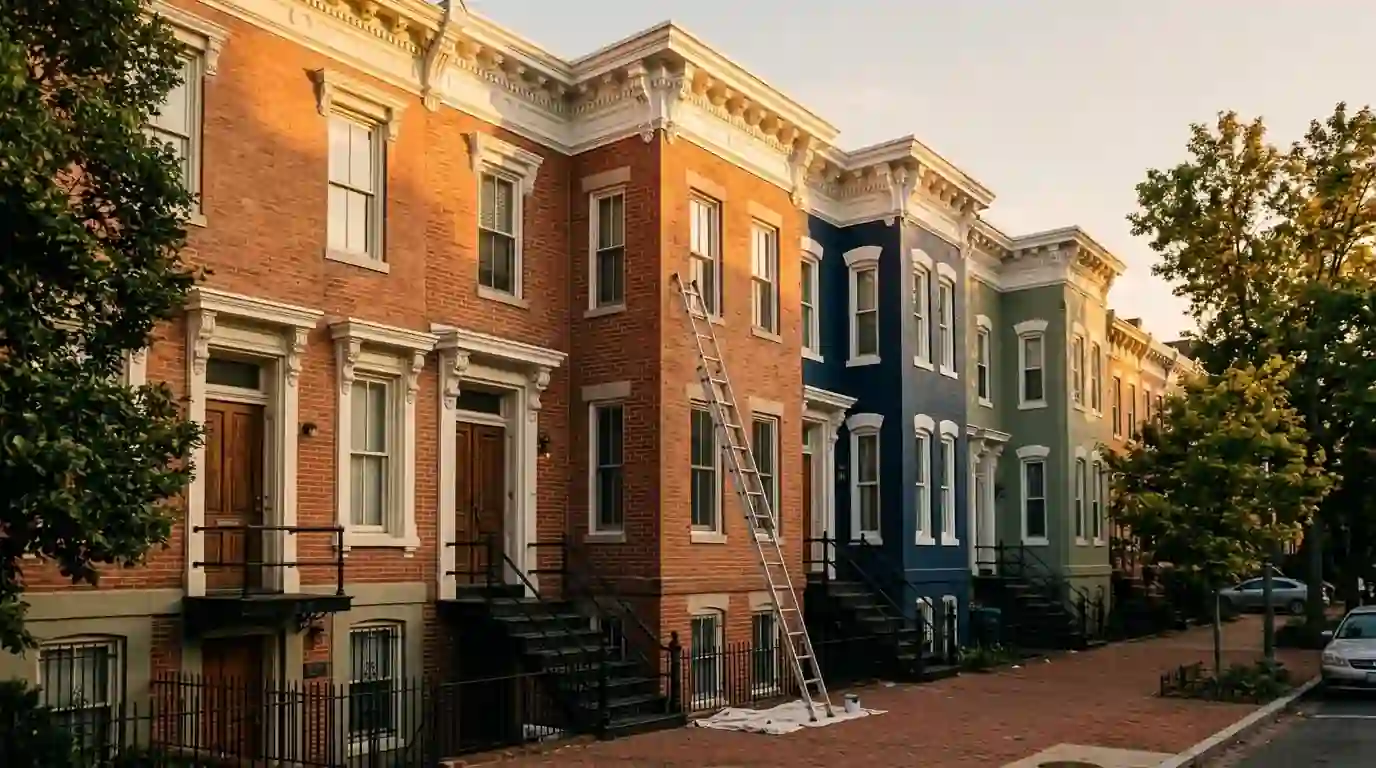
Short answer
Most Shepherd Park calls are for exterior trim, window sashes, porch ceilings and wood siding on the frame houses, plus full exterior repaints on brick Colonials where only the trim and shutters carry paint. A visit starts with a walkthrough of every side of the house. We note peeling, rot and lead concerns, then give you a written price and a start window.
What the houses between 16th Street and Georgia Avenue need from paint
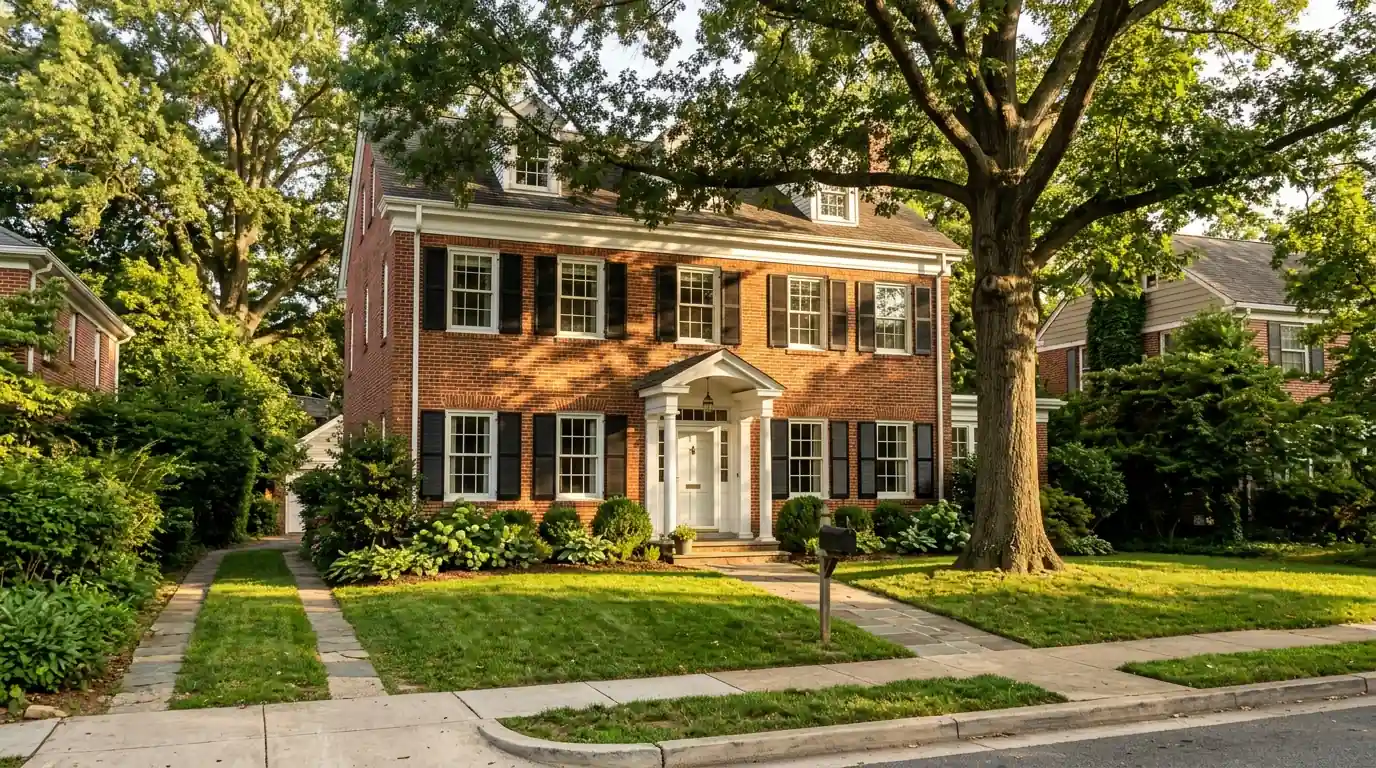
Shepherd Park filled in mostly between the 1910s and the early 1940s, and the housing shows it. You'll find center-hall brick Colonials, Tudor Revival houses with stucco and half-timbering, Dutch Colonials with gambrel roofs and a scattering of frame houses in wood clapboard. The streets west of Georgia Avenue run toward 16th Street and the edge of Rock Creek Park, so many lots carry big oaks and tulip poplars that shade one or two sides of the house all day.
That shade matters more than the age. North-facing clapboard and trim on these lots stay damp after rain, and that is where mildew and peeling start first. The brick itself usually doesn't need paint, but the wood around it does: cornice boards, rake trim, shutters, porch columns and the original double-hung windows. Half-timbered Tudors add boards set into stucco, which move at a different rate from it.
Most homes here were built well before 1978, so we assume lead is present in older layers until a test says otherwise. That shapes how we scrape and clean up, especially near vegetable beds and play areas. The same housing pattern carries across Eastern Avenue into Silver Spring.
Which paint failures show up most on Shepherd Park houses?
These come up on most of our walkthroughs between Georgia Avenue and the park side of the neighborhood.
Mildew on shaded trim
North and west sides under mature trees hold moisture for days. Mildew grows under and through the paint film, so a quick repaint just traps it. We wash with a mildewcide, rinse, and let the wood dry fully before primer.
Peeling at the lowest siding courses
The bottom boards of clapboard catch splashback from beds and overflowing gutters. Paint lifts first along the drip edge and at board ends, where end grain drinks water. We prime the end grain and keep mulch below the first board.
Shutters failing ahead of the house
Wood shutters on brick Colonials hold water in the louvers and joints, so they often peel years before the trim does. Taking them down and painting them flat on sawhorses gives a cleaner, longer lasting coat.
Gaps around Tudor half-timbering
Boards set into stucco open small gaps at their edges. Water gets behind them and the stucco cracks along the line. We seal the joints with a flexible sealant and coat the boards in solid stain or enamel.
Window sashes painted shut
Decades of trim coats glue old sashes into their frames. We cut them free, reglaze where putty is loose, and paint so the sash still slides. Our window sash and trim work covers the full process.
Soft fascia and porch beam ends
Summer storms overflow gutters and soften the ends of fascia boards and porch beams. Paint over rot fails within a season, so we cut out soft wood and rebuild first through our wood rot repair service.
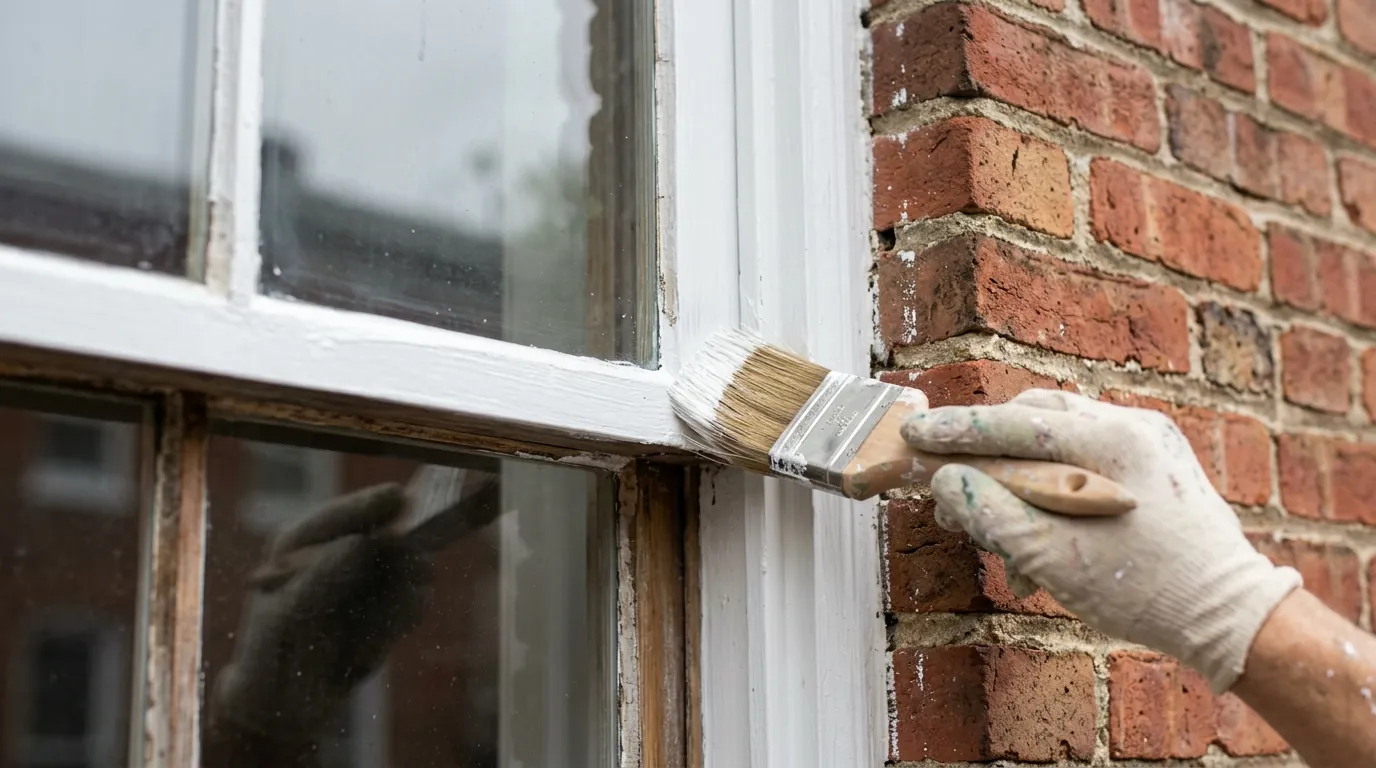
How a full trim and window repaint runs on a Shepherd Park Colonial
The most typical project here is a brick Colonial whose trim, windows, shutters and porch all need paint at once.
- Coat 01
Walkthrough and lead check
We walk every side of the house with you, mark rot, count the windows that still open and test older paint where we'll be scraping. You get a written scope and a typical range before anything goes on the calendar.
- Coat 02
Protecting beds and walks
Plastic goes down along the foundation and over the shrubs closest to the work, with full containment where lead is present. Mature plantings get tied back rather than cut.
- Coat 03
Washing and drying time
Trim, soffits and shutters are washed with a mildewcide and rinsed at low pressure. Shaded sides can need two dry days in spring, so we often start on the sunny side while the north side dries out.
- Coat 04
Scraping, repairs and primer
Loose paint is wet scraped and feathered, rotted ends are replaced, and bare wood gets an oil-based or bonding primer. Gaps at window casings and corner boards are caulked after the primer cures.
- Coat 05
Two finish coats
We brush and roll two coats of exterior acrylic on trim and sashes, usually satin or semi-gloss. Shutters are painted off the house and rehung after the final coat has dried overnight.
- Coat 06
Final walk together
We walk the house with you again, open every sash we painted, touch up anything you point out and haul away debris and sheeting. Full detached exteriors here typically run $5,600 to $14,800 depending on how much wood there is.
Scheduling and access on Shepherd Park lots
Most of these houses have driveways, which makes logistics easier than in the rowhouse neighborhoods, but a few things still shape the plan.
- Driveway space lets us park a work vehicle and stage ladders off the street, so temporary no-parking signs are rarely needed here.
- Tall center-hall houses on sloped lots can need ladder levelers or a small lift for the gable ends, which we note at the walkthrough.
- Shaded sides dry slowly in April and late October, so we usually book exterior work here from mid May through September.
- Repainting already-painted wood in a new color generally isn't reviewed in DC, but check with the DC Historic Preservation Office before painting brick that has never been painted.
- Neighbors on shared driveways get a heads-up about ladders and parking before day one.
For larger jobs that include siding and every elevation, our exterior house painting page explains how we sequence the work.
Most requested here
Exterior House Painting
Siding, trim, soffits and porches scraped, primed and painted on a schedule built around DC weather.
Window Sash & Trim Painting
Glazing checked, sashes and frames painted, and windows left operable instead of painted shut.
Wood Rot Repair
Soft sills, fascia and porch trim cut out or consolidated and rebuilt so new paint is not wasted.
Lead-Safe Painting
Containment, wet scraping and HEPA cleanup when older paint is disturbed in homes built before 1978.
Porch Painting
Porch floors, steps, columns and haint-blue ceilings painted with floor-rated enamels that handle traffic.
Pressure Washing
Siding, brick, decks and porches washed at the right pressure so the next coat bonds to clean material.
Interior House Painting
Walls, ceilings and trim in occupied homes, with furniture moved, floors covered and rooms back in use each night.
Close by
ZIP codes we cover here: 20012. We also paint in these neighboring areas.
Questions from Shepherd Park homeowners
How long does an exterior repaint take on a Shepherd Park Colonial?
Most detached brick Colonials here, where paint covers trim, windows, shutters and a porch, take one to two weeks of working days. Frame houses with full clapboard often take two to three weeks. Rain and slow drying on shaded sides add days, so we give you a start window rather than a fixed finish date.
Do you paint the brick on Shepherd Park houses?
Usually it doesn't need it. Most brick here has never been painted and holds up well bare. If yours was painted decades ago and is peeling, we can clean it and recoat with a breathable masonry paint. If it's unpainted and you want a softer look, limewash is the option we suggest first, because it lets the brick dry out.
Can you repaint a Shepherd Park house that has lead paint?
Yes. Most homes here date from before 1978, so we plan for lead from the start. We follow EPA RRP lead-safe work practices: plastic under the work area, wet scraping, no open-flame burning and HEPA vacuum cleanup. A lead-safe setup typically adds $380 to $1,450 to a job. Call (771) 247-4038 and we'll walk the house with you.
Is October too late to paint trim in Shepherd Park?
Not always. Many trim paints cure well into the 40s, and some are rated to 35 F. The catch here is shade: tree-covered lots lose sun early in fall, and dew sits on north-facing trim until late morning. We plan October trim work with shorter painting windows, roughly mid morning to mid afternoon, and stop when nights drop into the 30s.