Short answer
A color consultation is an in-home visit where we look at your rooms, light, floors and fixed finishes, test large painted samples on the walls and settle on colors and sheens room by room. You get a written schedule you can use with us or anyone. In DC a visit typically runs $145 to $285, and part of it is credited when we paint.
When a second opinion on color saves money
Most people call us after buying a gallon or two that didn't work. These are the moments a consultation pays for itself.
Your gray turned purple
Many grays shift toward purple, blue or green depending on light and nearby colors. We test undertones side by side so you can see which way a color leans in your room before committing.
A whole-house repaint
When every room is changing, colors need to flow from room to room. A planned palette keeps hallways, stairs and open sight lines from looking like a patchwork.
Preparing to list
Sellers want colors that photograph well and feel neutral without looking flat. We pick shades that suit DC buyers and pair them with any rental or turnover work you need.
An exterior on a historic block
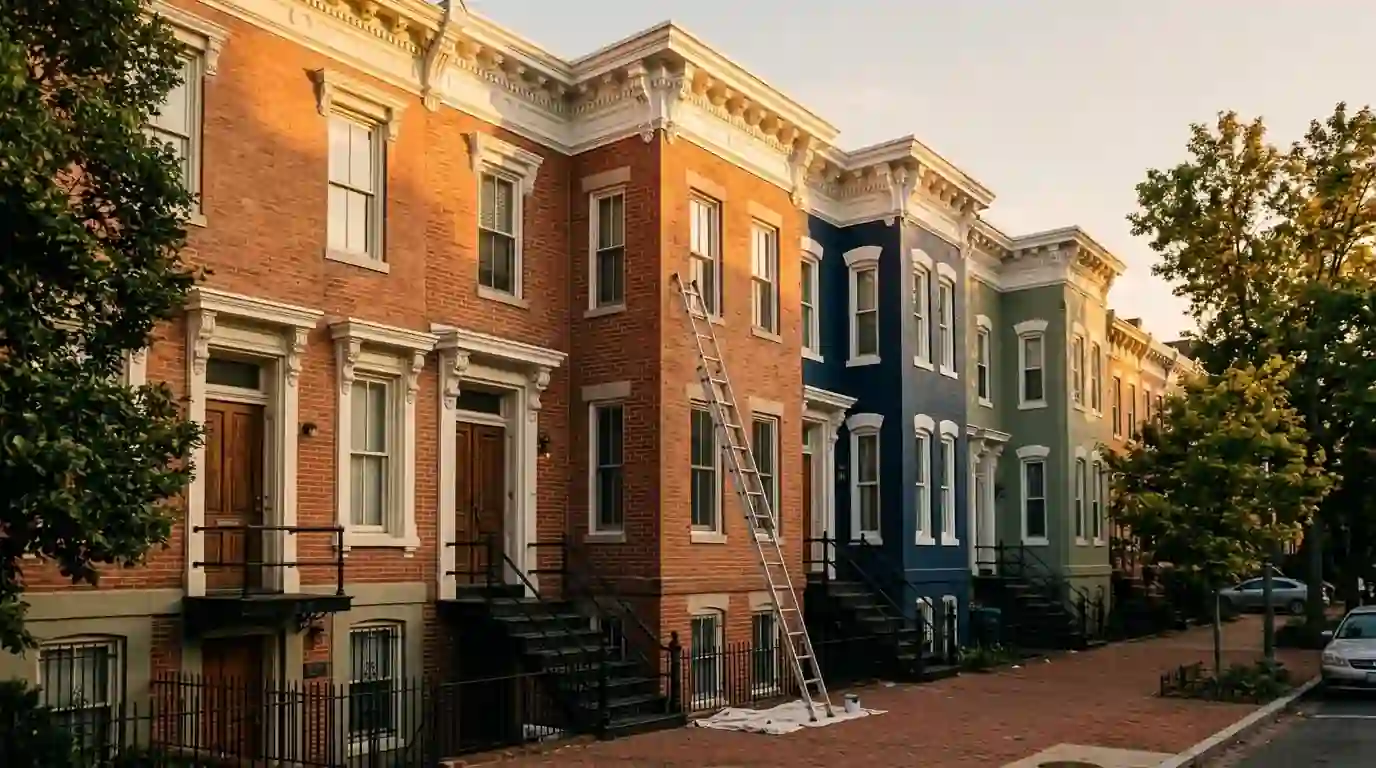
A rowhouse facade shares a streetscape with its neighbors. We look at the block, your brick or siding and any trim details to choose colors that suit the house and its era.
Fixed finishes you can't change
Tile, countertops, wood floors and brick set the starting point. Matching paint to those finishes, rather than to a photo, is where most color plans succeed or fail.
What happens during a color visit
A typical visit lasts 60 to 90 minutes. Here's how we use that time.
- Coat 01
Walk the house with you
We start with a walk-through, asking how you use each room, which rooms connect by sight, and what you love or dislike about the current colors. We note window directions and fixed finishes as we go.
- Coat 02
Read the light
North light is cool and steady, south light is warm and strong, east and west change through the day. We note which rooms get which, because that decides whether a color will look warm or cold.
- Coat 03
Pull a short list
From a few hundred options we narrow to two to four candidates per room, drawing on Benjamin Moore, Sherwin-Williams and Farrow & Ball fan decks, plus any colors you've already been considering.
- Coat 04
Put up real samples
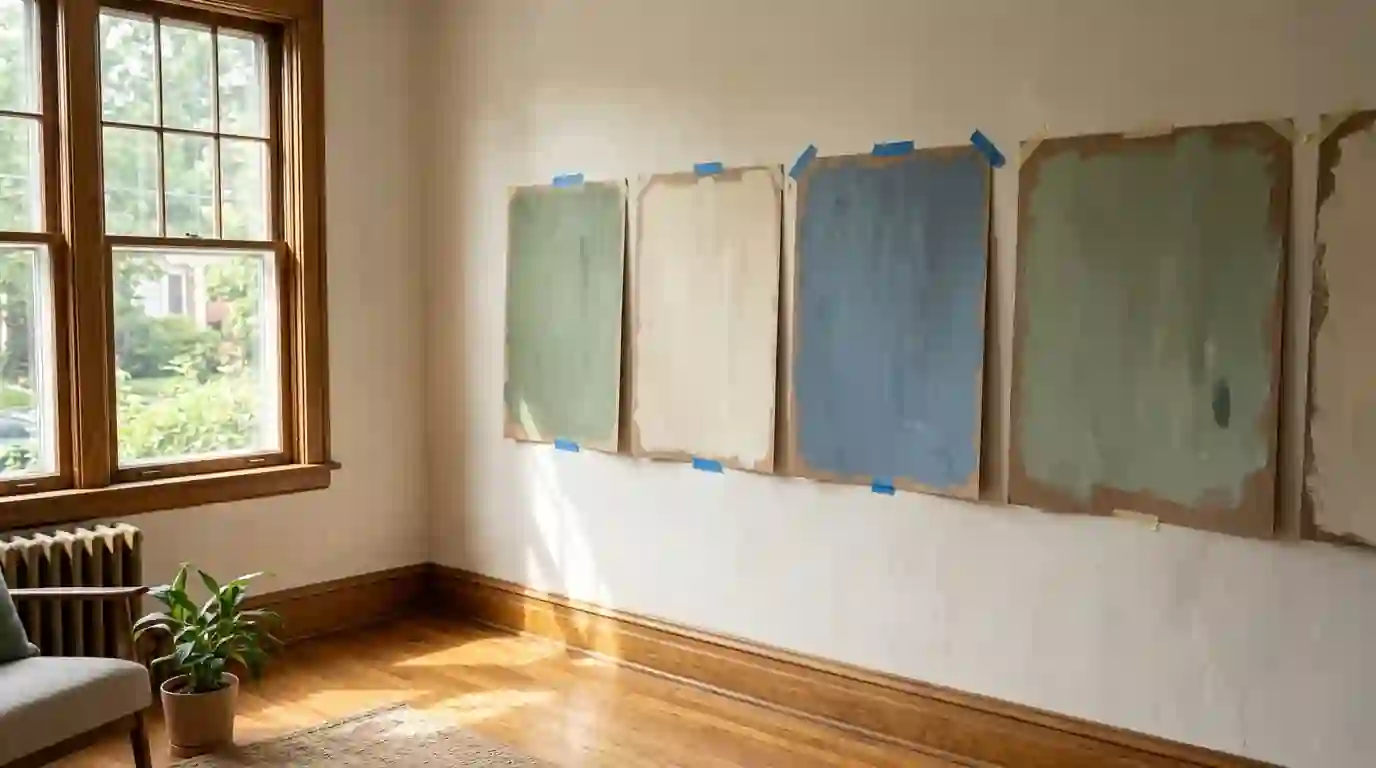
Small chips mislead. We use large painted sample boards, about 12 by 18 inches, and place them on different walls of the room, near trim and floors, so you see each color in context.
- Coat 05
Match sheen to the room
Once colors are settled we pick sheen: flat or matte for most walls, eggshell for halls, satin or semi-gloss for trim and doors. Sheen changes how color reads, so we decide it with the samples.
- Coat 06
Leave a written plan
You get a written schedule listing each room with wall, ceiling, trim and door colors, the brand and formula, and the sheen. Samples stay with you so you can check them over a few days.
How DC houses change the way color reads
Rowhouses are long and narrow, with windows only at the front and back. The middle rooms, often dining rooms and stair halls, get little direct light. Colors that look soft in a bright front room can feel heavy in the middle of the house. We usually pick a slightly lighter version of the same color family for interior rooms, so the house reads as one palette without dark patches.
Older homes also carry color clues of their own. Original oak or heart pine floors push colors warm. Exposed brick walls bring in red and orange. Tall windows with old glass soften light. In detached homes in Chevy Chase DC or Shepherd Park, deep tree cover can tint the light green through summer. We account for all of this when we pick candidates, rather than relying on how a chip looks in a store.
Exterior color in historic districts adds a layer. Repainting already-painted wood or trim in a new color is generally not reviewed in DC, but painting previously unpainted brick usually does need review. If you're in Georgetown, Capitol Hill or another historic district, check with the preservation office before planning masonry color, and see our guide on painting brick on a DC rowhouse.
What a color consultation costs in DC
Consultation pricing depends on how many rooms and surfaces we're planning, and whether the exterior is included.
| Job | Typical range | What moves the price |
|---|---|---|
| Single room or open-plan area | $145 to $185 | Number of samples and fixed finishes to match |
| Whole interior palette | $195 to $285 | Room count and how many sight lines need to flow |
| Exterior color plan | $185 to $265 | Body, trim, door and accent colors, plus masonry considerations |
| Large painted sample boards | $12 to $26 each | Number of colors and whether we prime boards to match your walls |
| Follow-up visit | $95 to $145 | Rechecking samples after you live with them for a few days |
These are typical ranges, not a quote; part of the visit is credited when we paint the rooms we planned.
Getting the most out of your color visit
A little preparation makes the hour more productive.
- Gather any paint chips, photos or rooms you've saved that show colors you like.
- Keep fixed finishes in view, like tile samples, countertop offcuts or a rug you're keeping.
- Book the visit for the time of day you use the main rooms most, if you can.
- Tell us about any rooms you've already tried to paint and what went wrong.
- Tell us if you're planning walls only or also trim, doors and ceilings, so we plan the full scheme.
- Have a rough idea of whether we'll be painting, or whether you plan to do the work yourself.
Ready to set up a visit? Call us at (771) 247-4038; we answer around the clock and book visits on weekdays and Saturdays.
Where we do this work most often
We take this job across the District and close-in Maryland and Virginia. These are the neighborhoods and cities we cover most, with a ZIP for each.
Questions we hear about this
Do I have to hire you to paint after a color consultation in DC?
No. The written plan is yours to use with us, with another painter or for your own weekend work. If we do paint the rooms we planned, part of the consultation fee is credited to the job. Many clients use the plan right away for an interior repaint, while others keep it for later.
Why do you use large sample boards instead of paint chips?
Small chips are too small to judge in a room. Color seen across a large area looks lighter and more saturated than on a chip, and nearby colors distort a chip more. Large boards, moved around the room and checked at different times of day, show what the color will actually do on your walls.
Can you match an existing paint color in my DC house?
Usually yes. We can take a small chip from a hidden spot and have it scanned, or compare it against fan decks to find the closest match. Old paint fades and yellows, so an exact match to the original formula may not match what's on the wall today. We test the match on a board before painting.
Do you help pick exterior colors for rowhouses in historic districts?
Yes. We look at the house's era, its brick or siding, the block and any original details like cornices and iron railings. Repainting already painted wood in a new color is generally not reviewed in DC, but unpainted masonry is a different matter. We'll suggest you check with the preservation office for anything beyond repainting painted surfaces.
How do I choose a white for trim in an older DC home?
Whites vary from cool blue-whites to warm creams. In older homes with warm wood floors and soft light, a slightly warm white usually looks better than a stark one. We test two or three whites next to your wall color and floors. The sheen matters too, and we usually suggest satin or semi-gloss for trim.