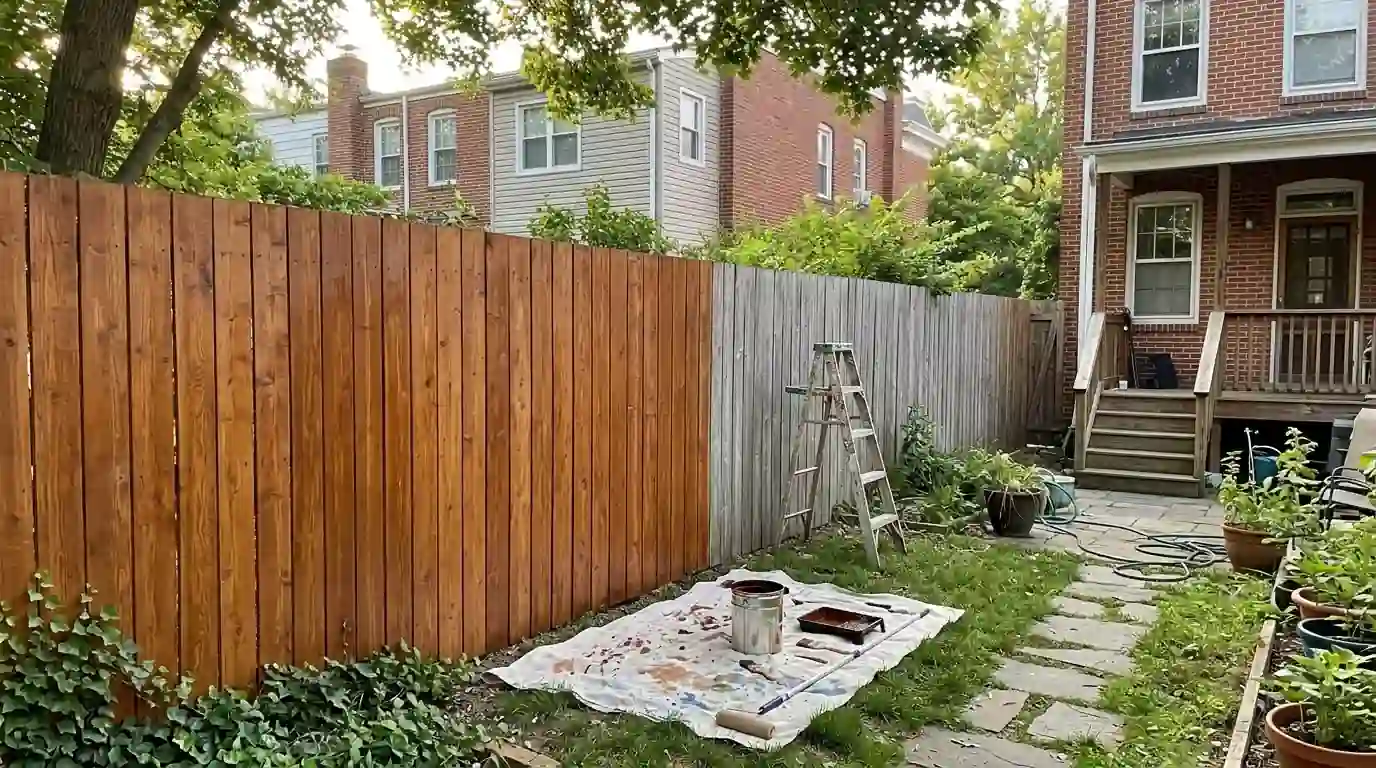
Short answer
Fence staining in DC usually means washing both faces, letting the boards dry, protecting plants and the ground, then spraying and back-brushing a penetrating or solid stain. Typical cost is $4.10 to $9.40 per linear ft for both sides. Height, picket style, access to the neighbor's face and peeling old paint drive where your fence lands in that range.
How a fence gets stained in a single visit
A typical backyard run of 120 to 180 feet takes two or three days, including dry time after the wash.
- Coat 01
Walk the line with you
We check posts for wobble, look for split or missing pickets and settle which faces we're coating. If the far side faces a neighbor or an alley, we talk about access and who should be told before work starts.
- Coat 02
Clear the base and protect plants
Vines, ivy and grass are pulled back from the bottom few inches of the fence. Beds are wetted and covered, and we lay drop cloths along patios, walks and any parked car close to the line.
- Coat 03
Wash at low pressure
An oxygen-based cleaner goes on to loosen mildew and gray fibers, then a rinse at roughly 500 to 900 PSI with a wide fan tip. Higher pressure furs up soft pine and cedar pickets.
- Coat 04
Dry and spot repair
Boards need two dry days in most weather. Meanwhile we reset loose pickets with exterior screws and fill small cracks, and flag any rotted posts that need a carpenter.
- Coat 05
Spray and back-brush both faces
Stain is sprayed in short sections and immediately worked in with a brush, so it reaches into gaps between pickets and along rails. Back-brushing is what makes fence stain last instead of sitting on the surface.
- Coat 06
Final check and cleanup
We walk both sides in daylight looking for missed edges, rail tops and post caps, pull drop cloths and reopen your beds. Gates are left propped until the hinges and latch side are dry.
When a fence is overdue for stain
Fences rarely fail all at once. Look for these along the sunniest stretch first.
Silver-gray boards
UV light breaks down the wood surface, which then washes off in rain. Graying is early weathering, and catching it now means a wash and stain rather than heavy sanding.
Water darkens the wood
Spray a hose on a few pickets. If the boards turn dark and soak it up quickly, the old finish is gone and the wood is taking on moisture every storm.
Green growth at the bottom
Algae and moss along the lower rail point to wood staying damp. It's the area that rots first, especially on fences buried in garden beds.
Peeling paint on pickets
Old painted fences flake as wood swells and shrinks underneath. We scrape and prime those spots or switch you to a solid stain that's more forgiving.
Cupped or split pickets
Boards that curl or crack have been wetting and drying unevenly. Coating both faces evens out that movement and slows the damage.
Fences in DC yards come with tight spaces and shared lines
Most rowhouse yards in the city are narrow strips with a fence along each side and a gate onto the alley. That means your fence often doubles as your neighbor's fence. We usually ask that you talk to them before we start, because staining both faces means standing in their yard or reaching over. If they'd rather not, we'll stain your face fully and the top edges and leave the far side alone.
The alley side takes a beating from trash cans, cars and splash from the gutter, and it's usually where rot starts. On detached lots in places like Shepherd Park or over in Bowie, fences run longer and see more sun, so stain choice and timing matter more there. Either way, we avoid staining in the heat of a July afternoon or before a forecast storm, because humidity and rain spoil fresh stain quickly.
Iron and wood often meet on DC lots, with a decorative iron front fence and a wood privacy fence behind. We can handle both in one visit, with the iron work done under our iron railing and fence painting service.
Fence staining prices you can expect in DC
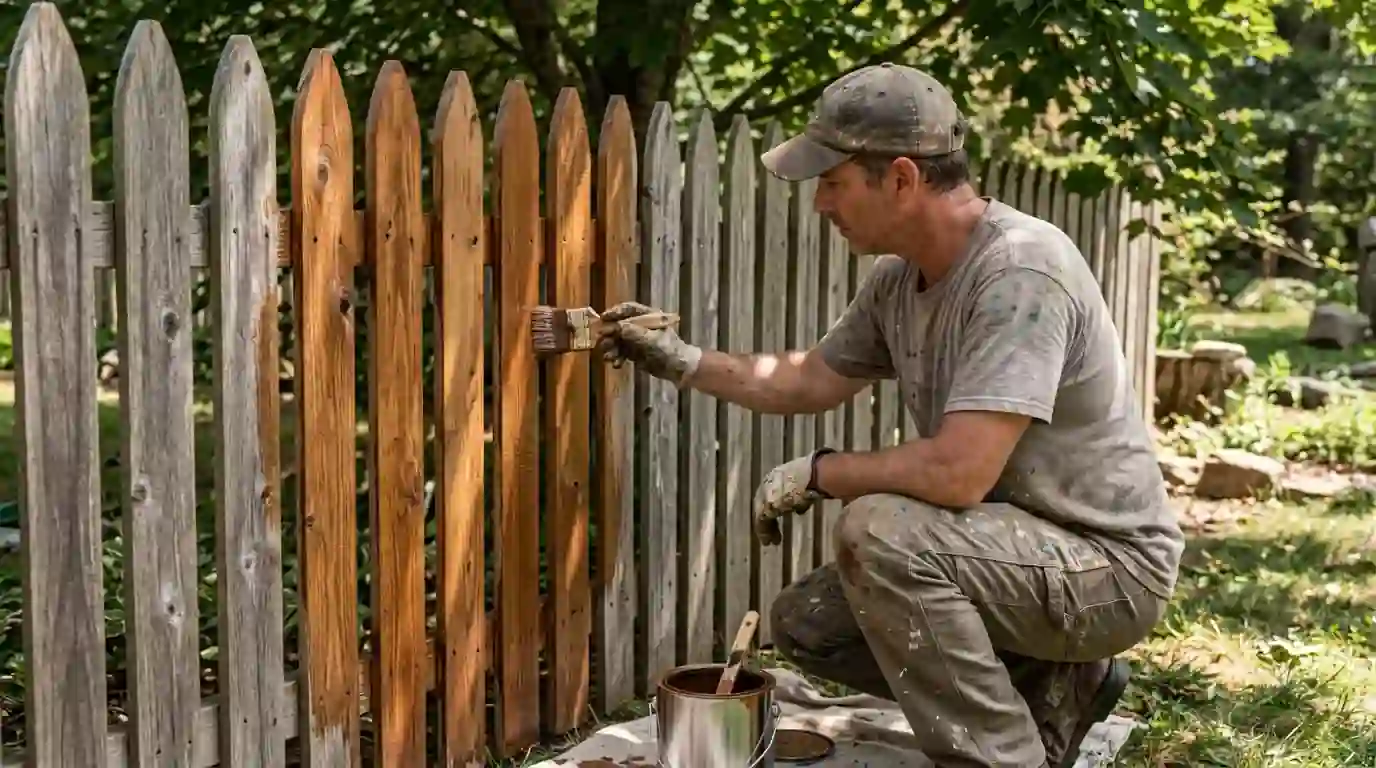
We price per linear foot because height and style make square footage misleading on fences.
| Fence type | Typical range | What moves the price |
|---|---|---|
| 6 ft privacy fence, stain both faces | $5.35 to $9.40 per linear ft | Board-on-board versus flat panels, access to the far face, and how weathered the wood is |
| 4 ft picket fence, both faces | $4.10 to $6.85 per linear ft | Picket spacing and tops, gates, and whether old paint must be scraped |
| One face only (neighbor side skipped) | $2.65 to $5.15 per linear ft | Height and condition, plus staining the top edges so water doesn't sit there |
| Repainting a previously painted fence | $6.20 to $11.40 per linear ft | Scraping, spot priming and lead-safe steps on older painted pickets |
| Gates and arbors | $85 to $265 each | Size, lattice or trim detail, and hardware to mask or remove |
These are typical ranges, not a quote; we set the price after walking the fence line with you.
Stain or paint on a wood fence?
Stain soaks in and wears away slowly, so recoating is just a wash and another coat. Paint looks crisp but forms a film that can peel when moisture gets behind it, and once it flakes the next job means scraping every picket. For most DC fences we recommend a semi-transparent stain on newer wood and a solid stain on older or mismatched boards. Paint makes sense mostly where it matches house trim or an existing painted fence that's still holding well.
For penetrating stains we often use Cabot or Sikkens products, which hold color well in strong sun. Solid stains from Sherwin-Williams or Benjamin Moore come in nearly any color and can be matched to your house. If your deck is due too, deck staining at the same visit keeps the colors consistent, and a pre-stain wash is already built into both jobs.
Before your fence day
A little prep on your end keeps the job moving.
- Trim back shrubs and vines so there's about a foot of clear space along the fence.
- Move trash cans, bikes, grills and planters off the fence line on both sides.
- Let your neighbor know the date if we'll be working from their side.
- Turn off sprinklers for two days before and after staining.
- Keep pets indoors on stain day and until the boards are dry to the touch.
Where we do this work most often
We take this job across the District and close-in Maryland and Virginia. These are the neighborhoods and cities we cover most, with a ZIP for each.
Questions we hear about this
How long does fence stain last in DC weather?
A penetrating semi-transparent stain typically lasts two to four years on a fence, longer in shade and shorter on south-facing runs. Solid stains can go four to six years on vertical boards. Fences hold finish better than decks because water runs off them instead of sitting.
Can you stain a brand-new pressure-treated fence right away?
Usually not right away. New treated lumber often comes wet and needs a few months to dry out. We test with a moisture meter and a water drop: when water soaks in rather than beading, the wood is ready. Cedar can generally be stained much sooner.
Do you need my neighbor's permission to stain their side of the fence?
If we'd be standing in their yard, yes. It's their property even if the fence is yours. We'll stain your side and the tops and leave theirs if they decline, or price both faces if they agree. Many neighbors split the cost of the far side.
Will the stain hurt my plants along the fence?
We wet plants before work, cover beds and rinse them again afterward. Low-pressure spraying and back-brushing keep drift down. Plants growing into the fence need trimming back, since stain can't reach wood they're covering.
Should I stain the fence and deck the same color?
Many owners do for a clean look, but a darker fence can make a deck pop. We'll bring samples on real boards so you can compare. Call (771) 247-4038 to book a walkthrough, and if you're unsure about colors our guide on sheen and finish helps with painted fences.