Short answer
Accent wall painting means taking one wall, or a big color change across a room, from a light shade to a deep or saturated one. We repair the surface, apply a gray-tinted primer, cut sharp corner lines and roll two or three coats. In DC a single accent wall typically costs $265 to $520, depending on size, color depth and wall condition.
Rooms where one bold wall pays off
An accent wall works best when it has a reason to be there. These are the setups that make sense in DC homes.
Behind the bed
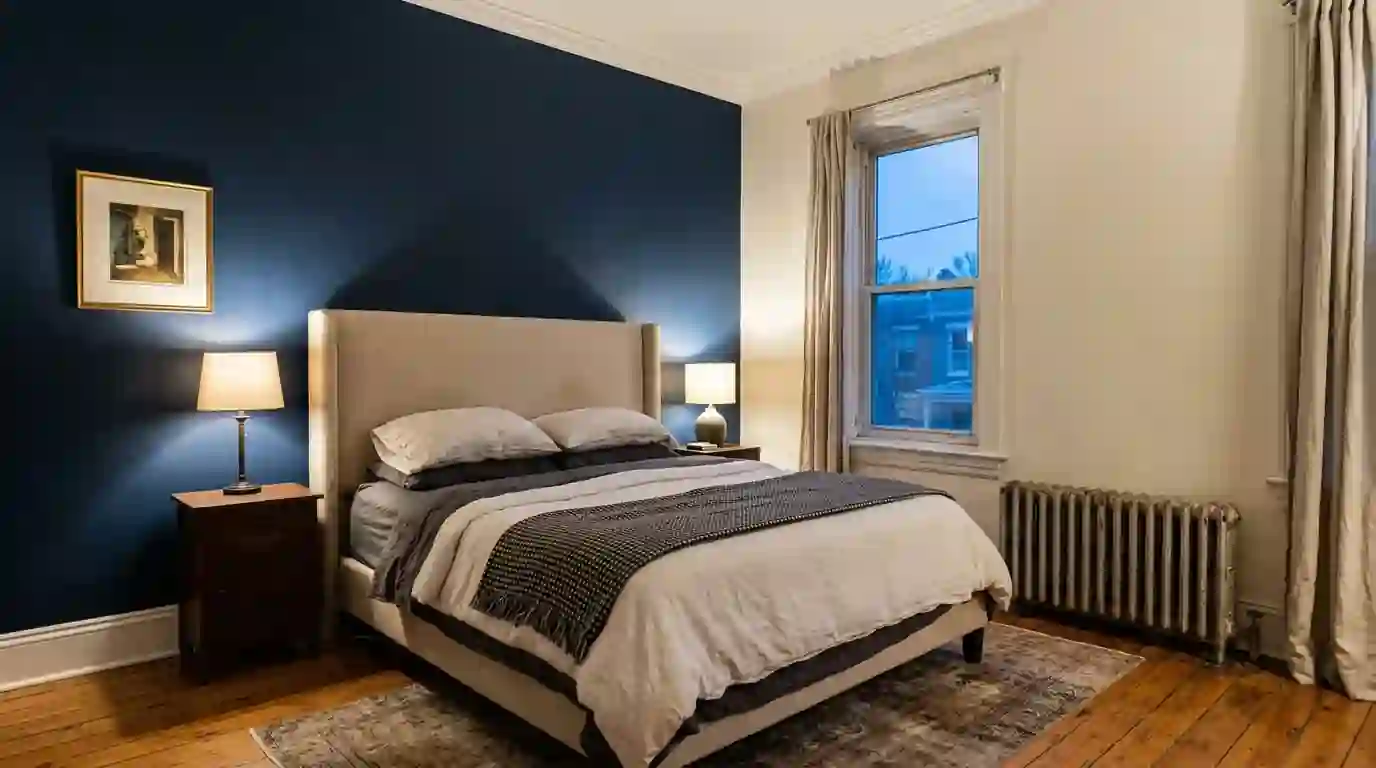
A dark headboard wall in navy, charcoal or forest green anchors a bedroom and hides less-than-perfect plaster in low light. It's the most common accent wall we paint.
The fireplace wall
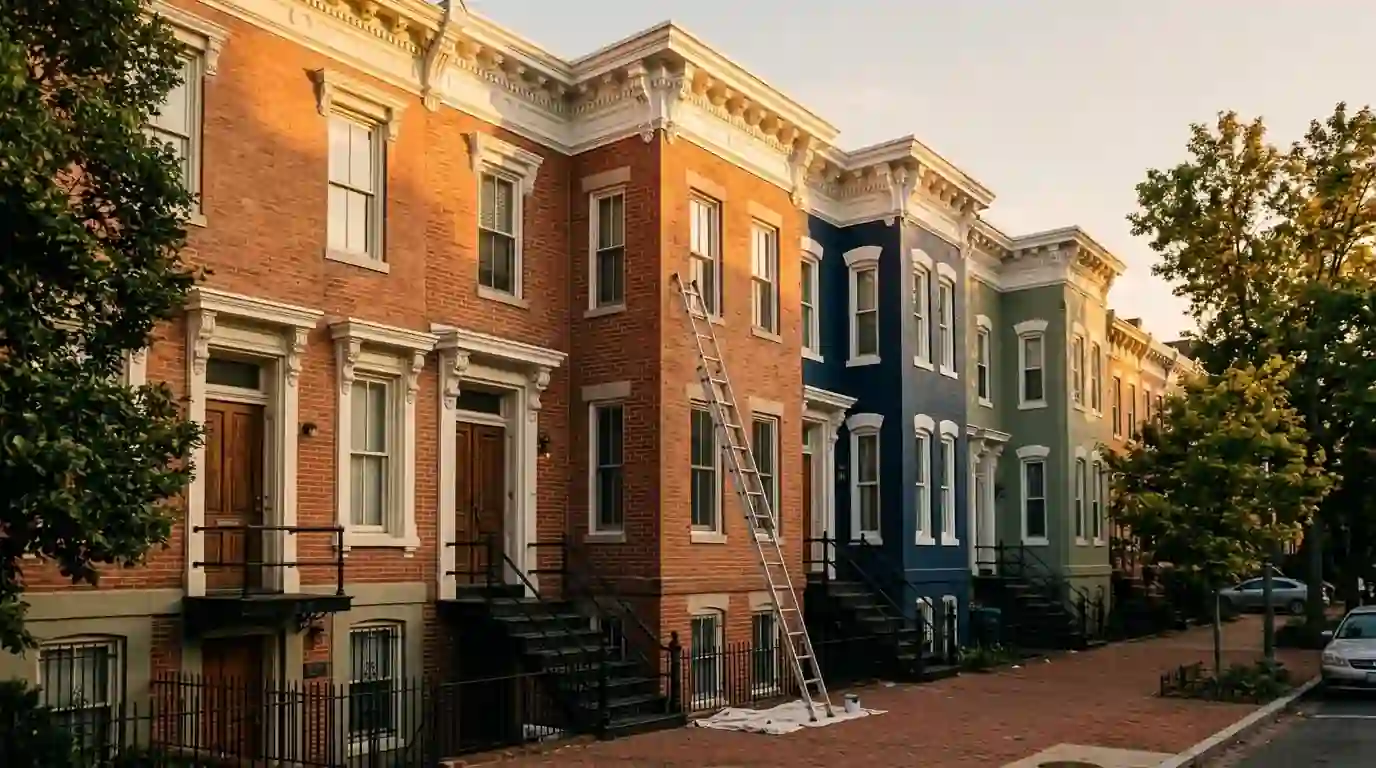
In older rowhouses the chimney breast sticks out into the room. Painting just that wall, or the breast alone, gives the fireplace weight without darkening the whole parlor.
A long open-plan wall
Renovated rowhouses with one long kitchen-to-living wall benefit from a color break. A deep tone on one zone defines the dining area without a partition.
Small home offices
A strong color behind a desk looks good on video calls and makes a spare room feel deliberate. Matte finishes cut glare from screens and window light.
Exposed brick neighbors
Many DC rowhouses have one exposed brick party wall. A warm or earthy color on the opposite wall balances it, rather than another stark white.
Testing a bigger change
Some owners paint one wall to live with a bold color before committing a whole room. It's a low-risk way to decide, especially after a color consultation.
Accent wall pricing in DC
Deep colors cost more in paint and in coats. These ranges cover what we typically see.
| Job | Typical range | What moves the price |
|---|---|---|
| Single accent wall, standard height | $265 to $395 | Wall width, door and window cutouts, and color depth |
| Single wall with 10 to 12 ft ceilings | $355 to $520 | Ladder staging and the extra coat deep colors may need |
| Chimney breast only | $215 to $385 | Mantel and trim to cut around, and plaster patches |
| Full room color change, light to dark | $590 to $1,140 | Number of walls, tinted primer and a likely third coat |
| Geometric or two-tone wall design | $385 to $760 | Tape layout time and the number of crisp lines |
| Plaster crack and patch area | $185 to $640 | How much the wall needs before dark color shows every flaw |
These are typical ranges, not a quote; we confirm the price after seeing the wall and your color.
Getting a deep color to look even
Saturated colors are less forgiving than whites. These steps are what keep them from looking patchy.
- Coat 01
Check the wall under raking light
Dark color shows every dent and patch. We hold a light flat against the wall, mark imperfections and fix them first. Old plaster ridges and nail pops get filled and sanded smooth.
- Coat 02
Prime with a tinted base
Deep colors don't hide well over white. We use a primer tinted gray to the right depth for your color, which cuts the number of finish coats and evens out patches.
- Coat 03
Mask and seal the corners
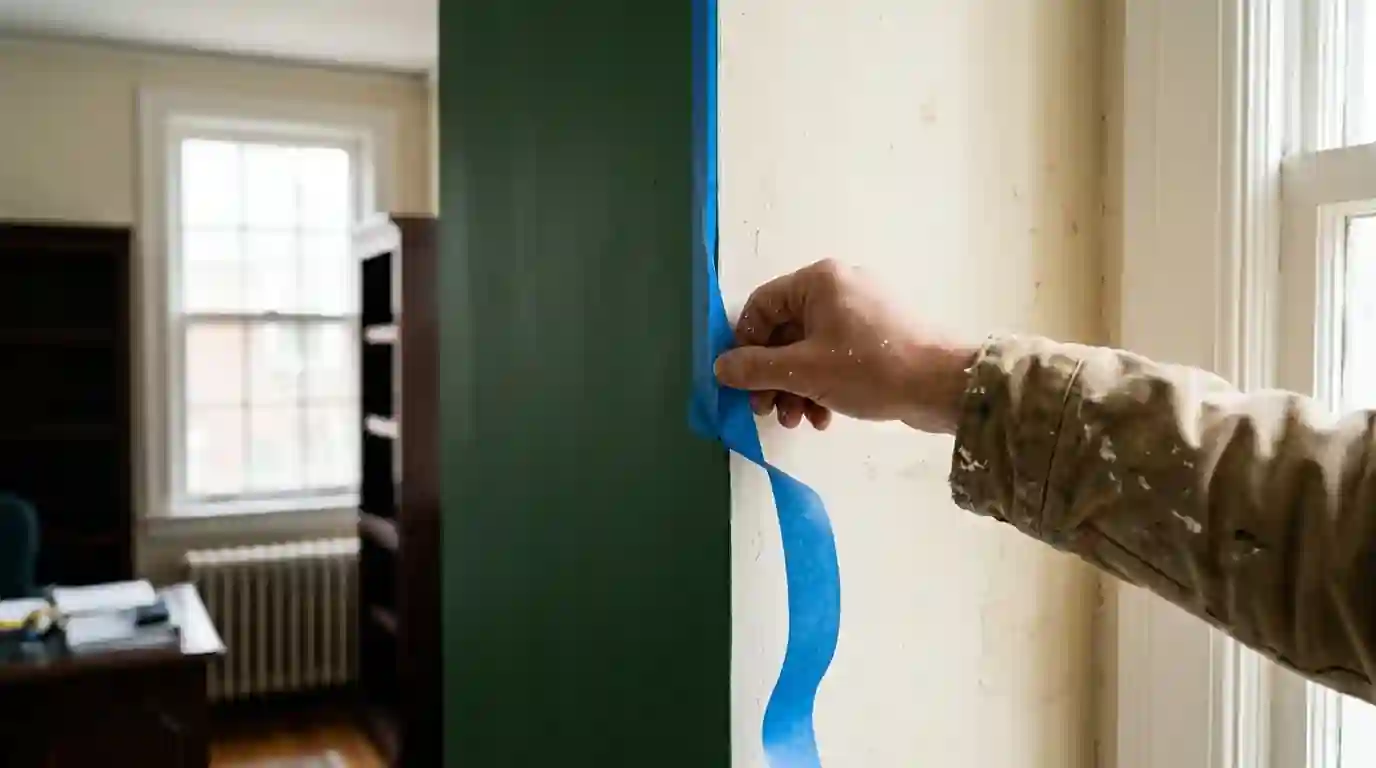
Where the accent meets a lighter wall, we tape the light wall and run a thin bead of the light color along the tape edge. That seals the tape, so the dark coat can't bleed under it.
- Coat 04
Cut in with a steady hand
Ceiling lines, trim edges and outlets are cut in with an angled brush. Deep colors show brush marks, so we cut in sections and roll right after, keeping the edge wet.
- Coat 05
Roll in full-height strokes
We roll top to bottom in long passes with a 3/8-inch microfiber cover and keep a wet edge across the wall. That avoids the stripes deep colors show when a section dries too soon.
- Coat 06
Second or third coat, then pull tape
After drying we judge coverage in daylight and lamp light. Many deep colors need a third coat. Tape comes off while the last coat is still slightly soft for the cleanest line.
Color that behaves in DC light and DC walls
Light changes a dark color more than a light one. In a north-facing rowhouse bedroom in Petworth, a navy can read nearly black much of the day. The same color in a south-facing room in Chevy Chase DC looks bright blue by mid afternoon. We tape large painted samples to the actual wall and ask you to check them morning and evening before we pick the final shade.
Old plaster is also uneven, with gentle waves that a white wall hides. A dark, shiny finish exaggerates those waves. That's why we lean toward matte or flat finishes for accent walls in pre-war homes, and why surface prep gets more time than on a standard repaint. Where the wall is in rough shape, a skim coat through our plaster repair service gives deep colors the flat surface they need.
Humidity plays a role too. On muggy summer days, dark paint dries slower and lap marks are more likely. We run your air conditioning during work, keep doors closed to stabilize the room, and plan the final coat for the morning when it's cooler.
Paints we use for saturated color
Not every paint line handles deep tints well. These are the types we rely on.
- Benjamin Moore Aura and Sherwin-Williams Emerald, which hold heavy colorant loads without going streaky.
- Farrow & Ball Estate Emulsion when you want a chalky, very flat look in an older home.
- Fine Paints of Europe for deep gloss accents on paneled or wood walls.
- Gray-tinted primer matched to the topcoat's depth, so coverage doesn't take four coats.
- Microfiber roller covers, which leave fewer stipple marks with dark paint than standard naps.
- A touch-up jar of your exact color, so small scuffs can be fixed without a visible patch.
Not sure on finish? Our sheen guide explains which sheens flatter deep colors.
Where we do this work most often
We take this job across the District and close-in Maryland and Virginia. These are the neighborhoods and cities we cover most, with a ZIP for each.
Questions we hear about this
How many coats does a dark accent wall need in a DC home?
Usually a tinted primer plus two finish coats. Very saturated reds, yellows and some deep blues need a third. The number depends on the paint line, the color formula and what's underneath. We judge it in daylight after the second coat and add a third if we see any thin spots.
Will a dark accent wall make my small rowhouse room feel smaller?
Not necessarily. A dark wall can make a room feel deeper, especially when it's the far wall from the entry. Problems usually come from choosing a dark color in a room with very little natural light. We check your light before picking the shade, and we can show options during a visit that suit your space.
Can you paint an accent wall on exposed brick in a DC rowhouse?
Interior brick can be painted, but it's a different job: it needs cleaning, a masonry primer and often a breathable paint. It's also hard to undo. For interior brick walls, we often suggest a limewash finish instead, which tones the brick without sealing it.
Is it hard to go back to a light color after a dark accent wall?
It's easy for us, but it takes a step more. We prime the dark wall with a high-hiding primer, then apply two coats of the new color. You won't see the old color through it. It costs a bit more than a standard repaint because of the primer.
Can you add an accent wall during a full interior repaint?
Yes, and it's easy to schedule in. During an interior house painting job, we paint the lighter walls first, then do the accent wall with its tinted primer and extra coats. It adds a little time and paint, but no setup costs, so it's cheaper than doing it separately.