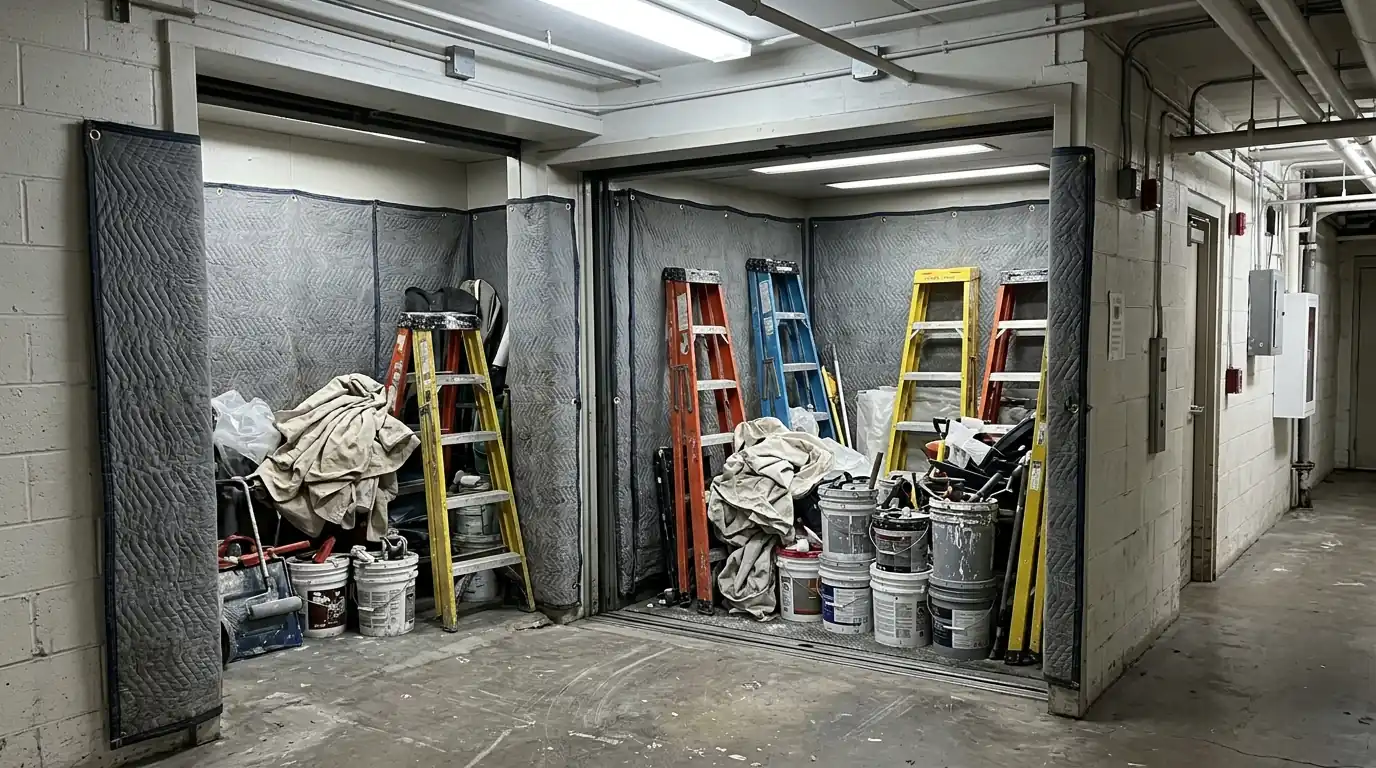
Why the building sets the schedule, not the painter
Painting a one-bedroom condo is two to four days of work. Getting into the building can take longer. Most DC condo and co-op associations route any contractor through a management office, and that office has its own calendar, paperwork and rules about when work can make noise or use the elevator.
We've seen jobs slip a week because a certificate of insurance named the wrong entity, or because the freight elevator was booked for a move-in on our start day. None of that is hard to fix, but it has to happen before the drop cloths come out, not the morning of.
The good news is that the list of things buildings ask for is fairly consistent. Clear it in the right order and the painting itself goes the way it would in a house, only with less parking and more carrying.
What do DC condo buildings usually ask for?
Every association writes its own rules, so treat this as a checklist to compare against your building's documents. Most buildings ask for most of these.
- A certificate of insurance naming the association and management company as certificate holders, often sent a week or more ahead.
- A contractor or alteration request from the unit owner, sometimes with a short description of the work and dates.
- An elevator reservation, often with pads hung by the building, for any day materials or ladders come in.
- Set work hours, commonly something like 9 a.m. to 5 p.m. on weekdays, with weekends limited or off-limits.
- Quiet-hour limits on sanding, scraping and drilling, even inside the allowed work window.
- Loading dock or service entrance use only, with a set place to park while unloading.
- Rules on where paint can be cleaned: many buildings ban washing brushes in unit sinks or trash-room slop sinks.
- Color or finish limits on anything visible from the hallway, such as the corridor side of your front door.
Ask the management office for the current rules in writing. Older copies in the resale packet are often out of date.
How to clear the building in the right order
This is the sequence we use with clients in Dupont, Logan Circle, Navy Yard and the large co-ops along Connecticut Avenue. Starting two to three weeks out is usually enough.
- Coat 01
Get the rules and contact names
Call or visit the management office and ask for the contractor rules, the insurance requirements and the name of the person who approves work. Note whether they want requests from you, from us or both.
- Coat 02
Lock in the painting dates
Pick dates once you know the allowed hours. A unit that takes three days in a house may take four in a building with a 9-to-5 window and an hour lost each day to loading and elevator waits.
- Coat 03
Send insurance details early
We send our certificate to whoever the building names, with the association listed exactly as management asks. Wrong legal names are the most common reason paperwork bounces, so ask for the exact wording.
- Coat 04
Book the elevator for load-in and load-out
Reserve the freight or service elevator for the first morning and the last afternoon at least. Some buildings want a reservation every day ladders move. Confirm the time window in writing.
- Coat 05
Sort parking for the work van
Downtown buildings rarely have spare spaces. We ask about the loading dock, a reserved garage spot or a short-term pass. On streets without a dock, DDOT emergency no-parking signs can be requested for work vehicles.
- Coat 06
Tell your neighbors
A short note to the units beside and below you about the dates and hours heads off most complaints. Sanding and scraping carry through floors more than people expect, especially in older concrete buildings.
What changes inside the unit when you paint a condo
Condos are easier to paint in some ways: fewer rooms, flat drywall in newer buildings and no exterior weather to plan around. The hard parts are space and air. With furniture pushed to the center of a 700-square-foot unit, there's little room to work around it, so we often paint one half and then the other.
Ventilation matters more in a sealed building. We use low-odor, zero-VOC lines from Benjamin Moore or Sherwin-Williams and keep windows cracked where they open. Most latex dries to the touch in an hour and recoats in about four, but odor lingers longer in a unit with a shared air system, so ask whether the building wants hallway doors kept closed.
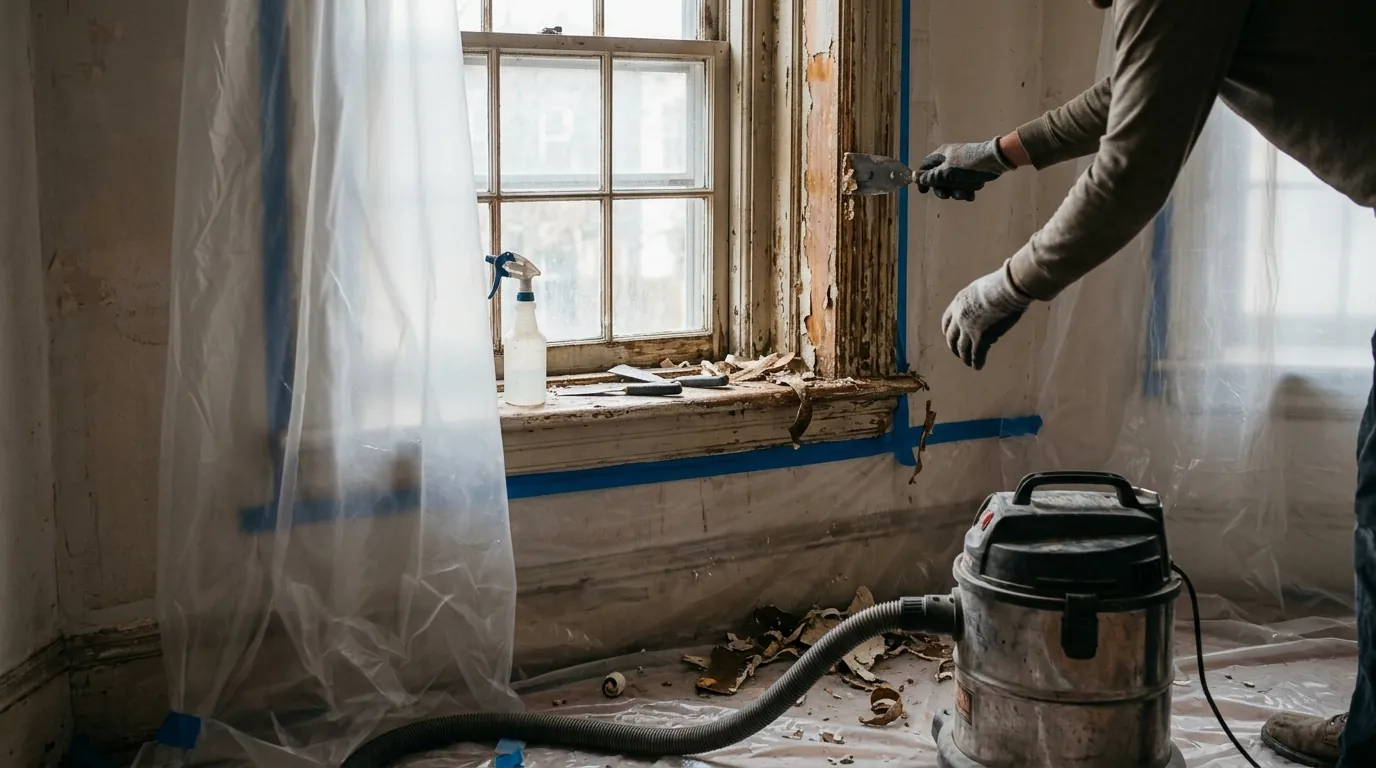
Pre-war co-ops on Connecticut Avenue and in Cleveland Park are different again. Many have plaster walls, deep moldings and old oil paint on trim, sometimes with lead in the bottom layers. Those units get a lead test, plaster repair where needed and the same prep we'd do in a rowhouse.
What condo painting typically costs in DC
Condo prices track the size of the unit, the amount of patching and how much time the building's rules add to each day.
| Job | Typical range | What moves the price |
|---|---|---|
| One-bedroom condo, walls and ceilings | $1,950 to $3,900 | Ceiling height, color changes, amount of patching |
| Two-bedroom condo, walls and ceilings | $3,150 to $6,400 | Number of rooms, trim scope, building work-hour limits |
| Trim and doors added | $165 to $310 per door with frame | Panel style, number of coats, old oil paint needing primer |
| Small drywall patches | $165 to $340 each | Size of the hole and how much texture must be matched |
| Accent wall in a deep color | $265 to $520 | Number of coats a saturated color needs to cover evenly |
These are typical ranges, not a quote; a walkthrough of the unit and the building's rules sets the price.
Condo painting mistakes that cost owners time
These come up again and again. All of them are avoidable with a phone call to management before the job starts.
Assuming the hallway door is yours
The corridor face of your entry door usually belongs to the association's look. Many buildings dictate its color and sheen. Paint it differently and you may be asked to repaint it at your own cost.
Skipping the alteration request
Some buildings treat painting as an alteration that needs approval, even with no walls moved. Showing up without approval can mean a concierge turns the painters away at the desk.
Booking on a move-in day
Month-end and first-of-month days fill the freight elevator with moving crews. If your start date lands there, load-in can take hours. Mid-month weekdays are usually easiest.
Forgetting the balcony rules
Painting a balcony wall, railing or door frame is often off-limits or limited to a set color because it's part of the exterior. Ask before planning any outdoor work.
Leaving the unit occupied with no plan
You can live in a condo during a repaint, but you'll need a room to retreat to each day. Our guide to preparing for painters covers what to move first.
Services mentioned in this guide
Condo & Apartment Painting
Unit painting scheduled around building rules, elevator bookings and quiet hours.
Interior House Painting
Walls, ceilings and trim in occupied homes, with furniture moved, floors covered and rooms back in use each night.
Drywall Repair
Holes, cracks, nail pops and water-stained sections patched, textured to match and made paint ready.
Follow-up questions
Does a DC condo board have to approve my paint colors inside the unit?
Usually not for walls inside the unit. Most associations only control what's visible from shared spaces or outside, such as the hallway side of the entry door, balcony surfaces and sometimes window frames. Read your bylaws and rules, and if they're silent, ask management in writing. A short written answer from them prevents an argument later.
Can condo painting happen on a weekend in most DC buildings?
Many buildings ban contractor work on Sundays and limit Saturdays to shorter hours, and some allow no weekend work at all. Others allow quiet work like rolling paint but not sanding. Ask what counts as quiet. We answer calls around the clock, so you can reach us any day to plan dates, but painting follows the building's allowed hours.
Who sends the insurance certificate for a condo painting job?
We send it, but the building decides who it goes to and what it says. Get the exact certificate holder names and address from management and pass them to us, and we'll send it directly. Allow a few business days for review. If the building also wants a copy with your alteration request, we send one to you as well. For condo and apartment painting, this is usually the first task on the job.