Short answer
Cabinet painting means removing doors and drawer fronts, degreasing every surface, scuff sanding, priming with a bonding primer and spraying two enamel topcoats, with cabinet boxes painted in place. In DC we typically charge $95 to $165 per door or drawer front, and most full kitchens fall between $4,350 and $8,900 depending on size and condition.
Why DC kitchens are good candidates for paint
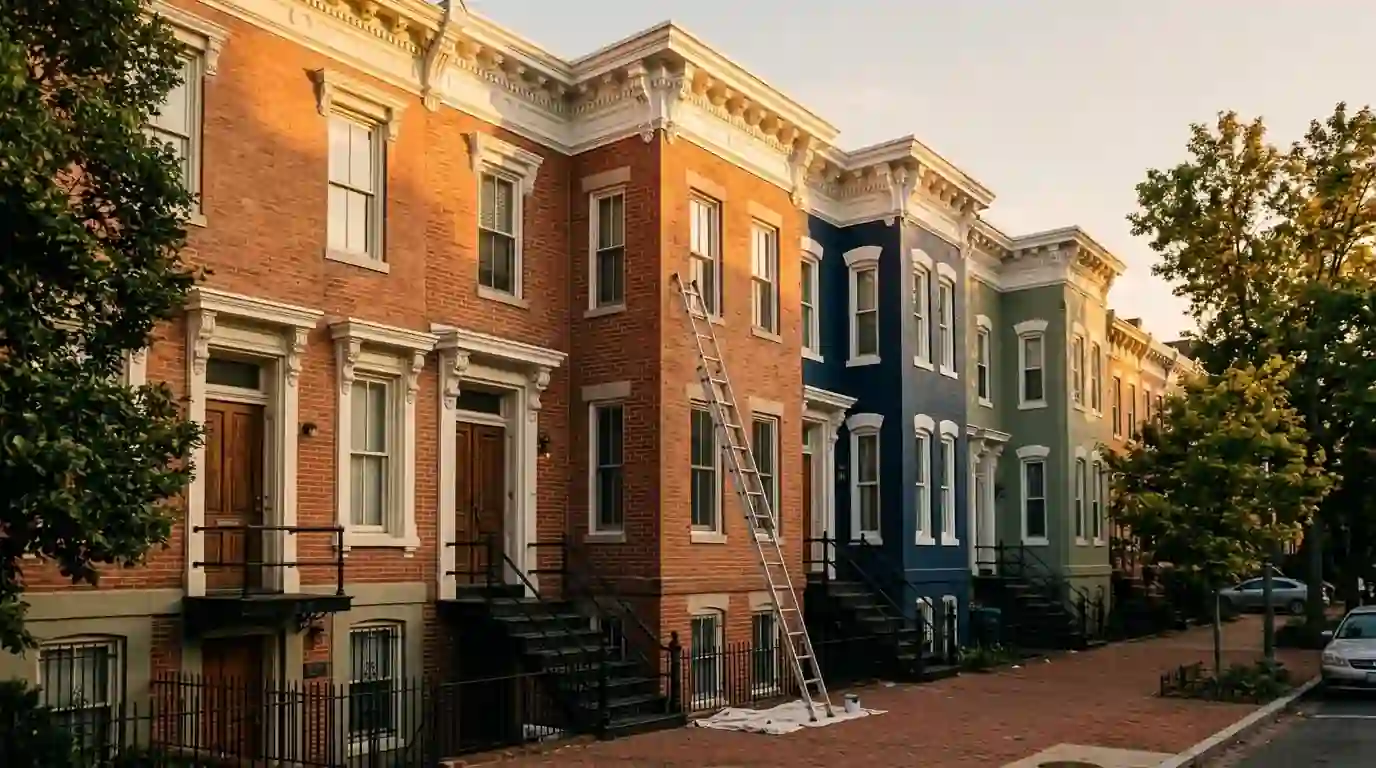
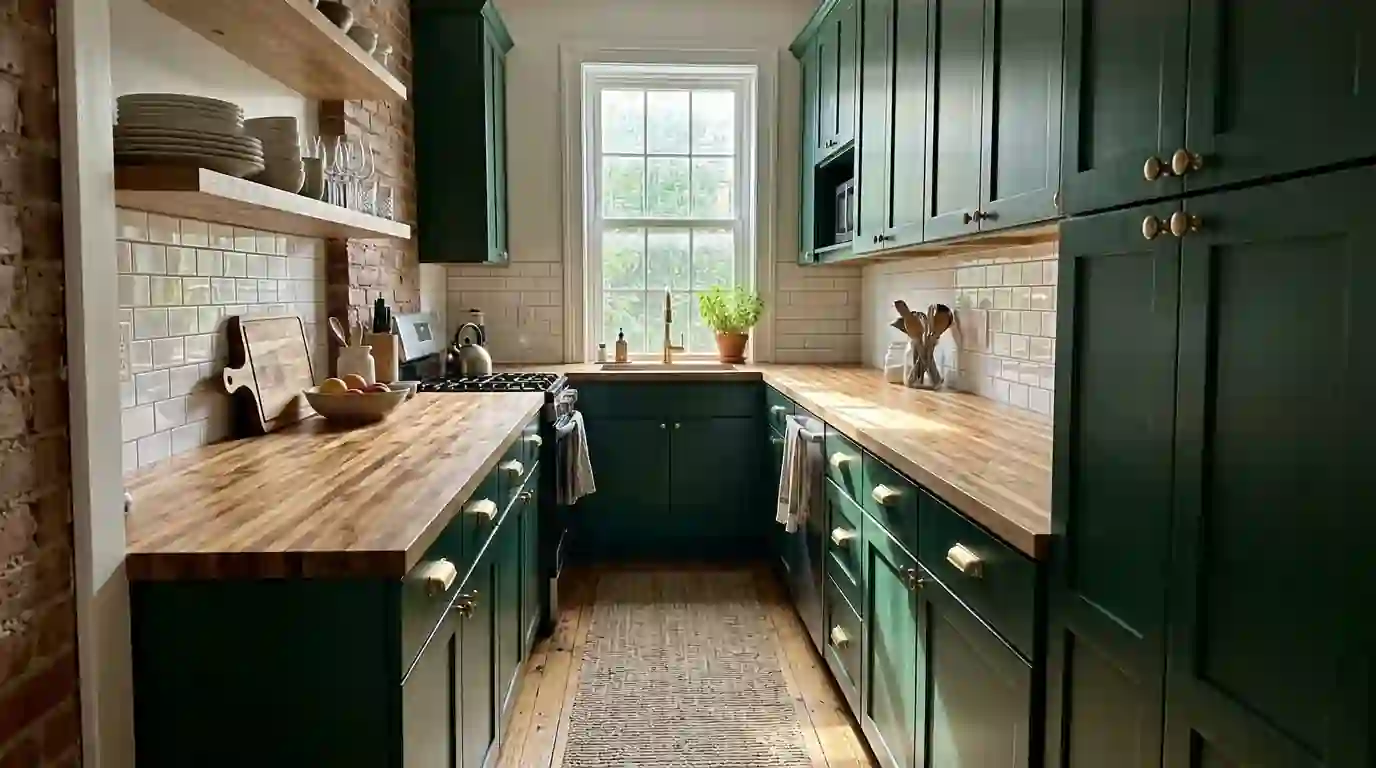
Rowhouse kitchens in Petworth, Bloomingdale and on Capitol Hill are often galley shaped, with cabinets that were built or replaced in the 1980s or 1990s. The boxes are usually sound plywood or solid wood, and the doors are oak, maple or cherry under a yellowed clear coat. Replacing them means demolition, new countertops in many cases, and weeks without a kitchen. Paint keeps the layout, the counters and the budget intact.
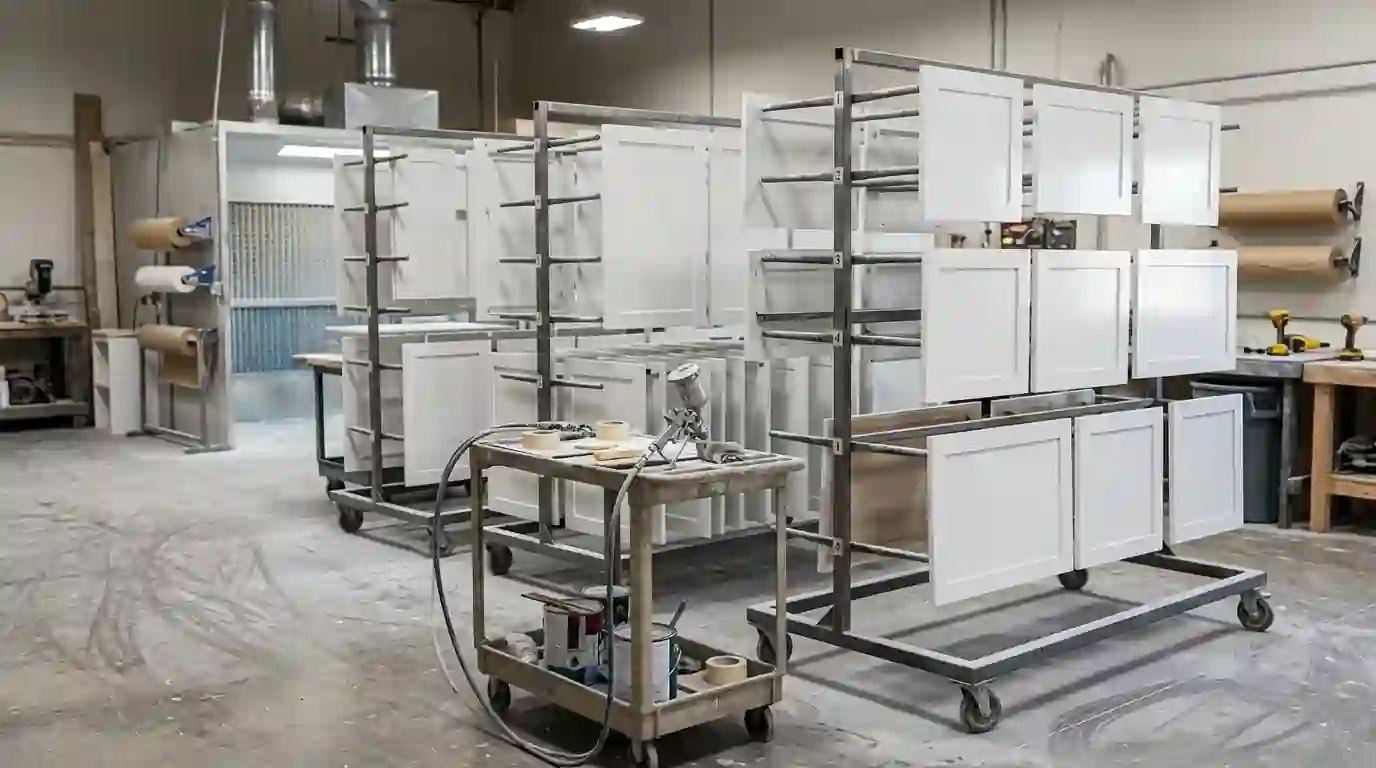
Space is the real constraint. A narrow DC kitchen has no room for a spray booth, so we take doors and drawer fronts to our shop and spray them there, while the boxes are brushed and rolled on site. That split keeps overspray out of your house and means you can still reach your plates and coffee maker most evenings.
Older homes bring one more check. If your cabinets were painted before 1978, we test before sanding. Lead on cabinets is less common than on trim and windows, but when it turns up we switch to lead-safe work practices and contain the kitchen before any dust is made.
Problems a cabinet repaint solves
Paint is not the answer for every cabinet, but it fixes these common complaints for much less than replacement.
Orange oak and honey maple
Clear finishes on oak and maple amber with age and sunlight. A painted finish in a soft white, deep green or navy changes the whole room without touching countertops, plumbing or backsplash tile.
Peeling paint near the sink
Earlier DIY jobs in latex wall paint often peel around handles and under the sink where water splashes. We remove the failing layer, sand to a sound base and use a primer made to grip slick surfaces.
Worn finish around pulls
Hand oils wear through clear coats near knobs, leaving gray patches. Degreasing, sanding and an enamel built for handling fixes the look and keeps it from coming back as fast.
Mismatched cabinets after a remodel
When a kitchen gets a new island or pantry wall, the old cabinets rarely match. Painting everything in one color ties old and new together so the room reads as one design.
Bathroom vanities that look tired
Vanities take steam and splashes daily. The same spray process gives a bath vanity a tougher finish, and it pairs well with a ceiling repaint when the room has mildew spots overhead.
What changes the price of a cabinet repaint?
Cabinet pricing is driven by the count of doors and drawer fronts, then by how much prep each piece needs.
| Job | Typical range | What moves the price |
|---|---|---|
| Per door or drawer front, both sides | $95 to $165 | Raised panels and detailed profiles take longer to sand and spray |
| Small galley kitchen, 18 to 24 pieces | $4,350 to $5,780 | Grain filling on oak and repairs to chipped edges |
| Average DC kitchen, 28 to 38 pieces | $5,640 to $7,420 | Glass doors, open shelving and crown molding on the uppers |
| Large kitchen with island, 40+ pieces | $7,180 to $8,900 | Island end panels, pantry towers and two-tone color plans |
| Bathroom vanity | $640 to $1,280 | Number of doors and drawers, and whether it sits in a tight powder room |
| Lead-safe containment if needed | $380 to $1,450 | Test results and how much of the old finish we must sand |
These are typical ranges, not a quote; we count your pieces and set the price at a walkthrough.
How your cabinets go from stained to sprayed
A cabinet job lives or dies on adhesion, so most of our time goes into the steps before color.
- Coat 01
Label and remove
Every door, drawer front and hinge gets a numbered tag so it returns to the same opening. Hardware goes into marked bags. Doors and fronts are wrapped and loaded for the shop, and countertops and floors are papered.
- Coat 02
Degrease twice
Kitchen cabinets carry cooking oil you can't see. We scrub with a degreaser, rinse, and wipe again with a residue-free cleaner. Skipping this is the main reason painted cabinets peel within a year.
- Coat 03
Scuff sand and fill
We sand with 180 and 220 grit on a Festool sander tied to dust extraction. Dings get filled with two-part filler, and open-grain oak can be grain-filled if you want a smooth, grain-free look.
- Coat 04
Prime for grip
A bonding primer such as Zinsser BIN shellac or a urethane-modified primer goes on first, which blocks tannin bleed from oak and cherry. After it dries we sand lightly with 320 grit to knock down any raised fibers.
- Coat 05
Spray two enamel coats
Doors are sprayed in our shop with a Graco fine-finish sprayer, both sides, with drying time between coats. Boxes in your kitchen get the same enamel by brush and fine foam roller. Each coat needs about 16 hours before the next.
- Coat 06
Cure, rehang and adjust
Doors cure at least two days before they come back. We rehang them, adjust hinges so gaps run even, and install your hardware or new pulls. Then we walk the kitchen with you under the lights you cook by.
Sprayed, brushed or a mix of both?
Finish method shapes how the cabinets look up close. Here's how we decide with you.
Shop spray on doors
Spraying gives the smoothest result, close to factory cabinetry. It needs a clean, ventilated space, which is why doors leave the house. This is our standard for doors and drawer fronts.
Brush and roll on boxes
Face frames and end panels are painted in place with a premium brush and fine roller. A good waterborne enamel levels out so brush marks fade as it dries, and it keeps overspray out of your kitchen.
Full brush finish
Some owners of older homes like a hand-brushed look that matches original built-ins. It's slightly less smooth and a little less costly, and it suits a farmhouse or pantry style.
Two-tone plans
A darker island with lighter perimeter cabinets is popular in DC kitchens. It adds a second color run and some masking but very little prep time, since the work is the same.
Enamels and primers we trust on cabinets
Wall paint is too soft for cabinets. These are the product types we use and why.
- Benjamin Moore Advance, a waterborne alkyd that levels like oil paint and cures hard, for most painted kitchens.
- Sherwin-Williams Emerald Urethane Trim Enamel when you want extra block resistance on doors that close tight.
- Shellac primer on oak, cherry and any knotty wood, because it stops tannin stains that water-based primers let through.
- Two-part wood filler for chipped edges, since it sands crisp and won't shrink back under paint.
- Satin as the default sheen, because it hides fingerprints better than semi-gloss while still wiping clean.
- New soft-close hinges and pulls as an option, installed after paint has cured so nothing scratches the finish.
For a deeper look at durability and cost, read our cabinet painting cost guide.
Where we do this work most often
We take this job across the District and close-in Maryland and Virginia. These are the neighborhoods and cities we cover most, with a ZIP for each.
Questions we hear about this
How long will my kitchen be out of use during cabinet painting?
The boxes are painted in place over two or three days, and you can use the sink and appliances in the evenings with care. Doors are out of the house for about five to seven working days while they're sprayed and cured. Most DC families keep cooking through the job, just without cabinet doors for a week.
Will painted cabinets chip in a busy DC kitchen?
A properly degreased, primed and enamel-coated cabinet holds up well for many years. The finish reaches full hardness in about three weeks, so be gentle at first: no harsh scrubbing and no taping things to the doors. After that, the edges near the trash pull and the sink base see the most wear, and a small touch-up kit we leave with you handles them.
Can you paint laminate or thermofoil cabinets in a DC condo?
Laminate can be painted with an aggressive scuff and a bonding primer, and it holds up reasonably well on vanities and low-traffic uppers. Thermofoil is different: if it's peeling, paint won't stop it, and we'll tell you so. For condo kitchens we also confirm with the building that off-site spraying of doors fits their work rules.
Do you paint the inside of the cabinets too?
By default we paint the outside of the boxes, the face frames, visible end panels and both sides of every door and drawer front. Cabinet interiors and shelves are an add-on, usually done in the same color or a contrasting one for glass-front uppers. Drawer boxes stay unpainted so they slide smoothly.
Is cabinet painting worth it before selling a house in DC?
Often yes. Buyers in older DC neighborhoods expect updated kitchens, and painted cabinets in a neutral color photograph well for listings. It costs far less than new cabinetry and adds only a week to your prep. If you're also repainting walls before listing, pairing it with interior house painting keeps the whole job on one schedule.