Short answer
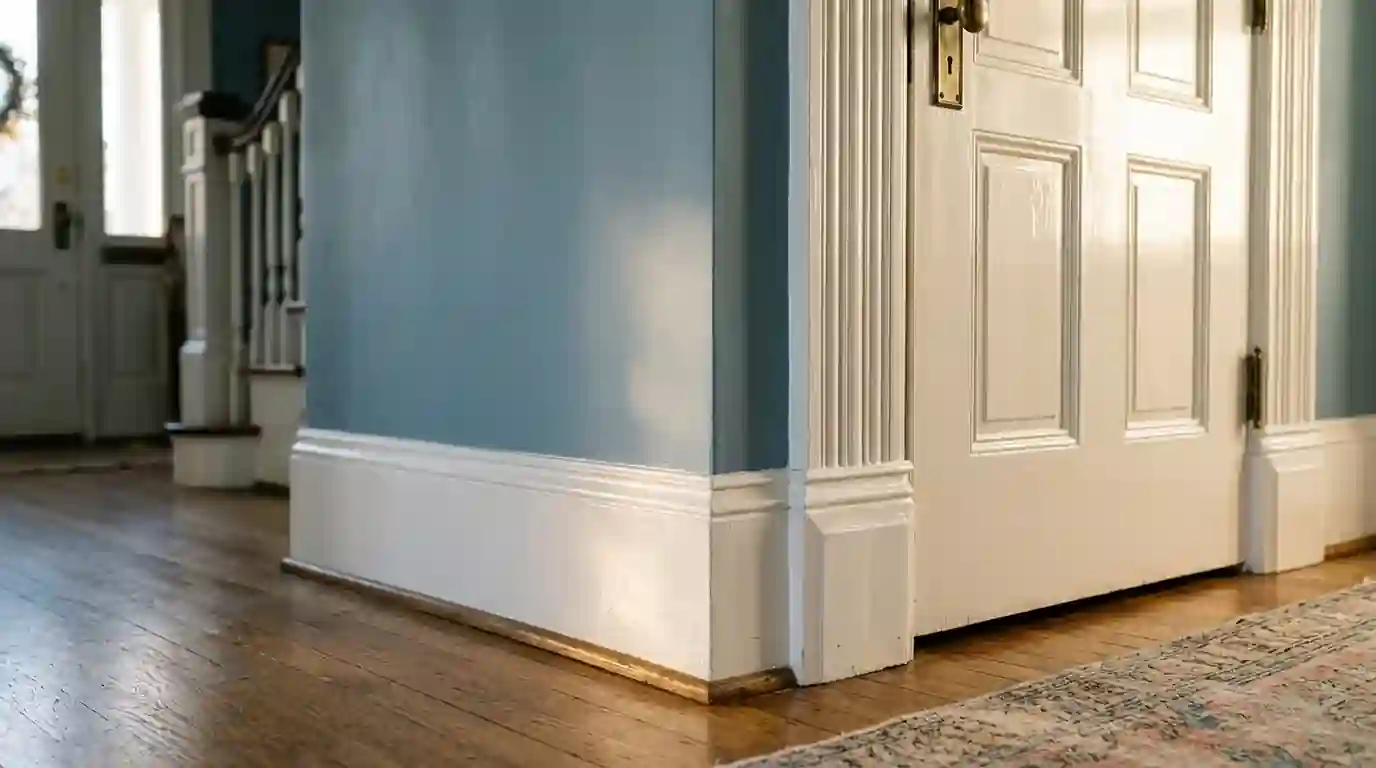
Trim painting covers baseboards, door and window casings, crown, chair rail and picture rail. We clean, test for lead on pre-1978 trim, sand, fill nail holes, caulk gaps, prime where needed and brush two enamel coats. DC pricing usually runs $1.85 to $3.90 per linear foot, set by profile detail, condition and the number of old paint layers.
How we take trim from chipped to crisp
Trim is close-up work: people see it at eye level and touch it daily. These steps are why it stays sharp.
- Coat 01
Test what's on there
Older DC trim often carries oil-based enamel, and on pre-1978 houses it may contain lead. We test with a rubbing alcohol wipe for oil and a lead check where the age calls for one. The results decide our primer and our dust controls.
- Coat 02
Clean off the grime
Baseboards collect floor wax, pet hair and mop residue. We wash them with a degreaser and rinse, because paint over dirt peels at the toe kick within months.
- Coat 03
Sand and fill
We scuff sand with fine sanding sponges that follow profiles without rounding crisp edges. Nail holes and dents get a lightweight filler, and split miters on casings get a two-part filler that won't shrink.
- Coat 04
Caulk every open joint
Gaps between baseboard and wall, at casing miters and along crown get a paintable acrylic caulk tooled smooth with a damp finger. Wide or deep cracks get backer rod first so the caulk doesn't sink.
- Coat 05
Prime for the old finish
Glossy oil enamel gets a bonding primer so waterborne enamel can grip. Bare wood and filled spots get primer too, otherwise they show as dull patches through the topcoat.
- Coat 06
Brush two enamel coats
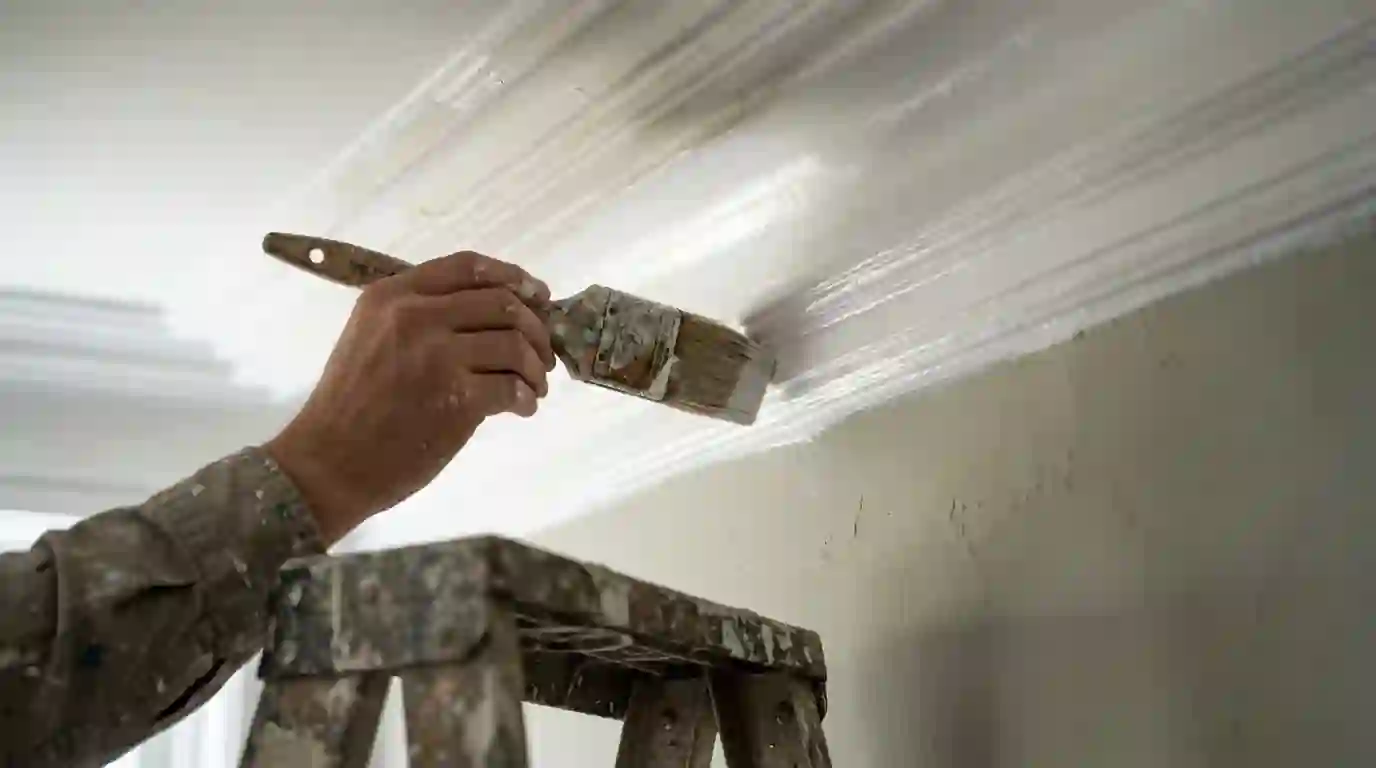
We brush with a Purdy angled sash brush, following the grain of each piece and keeping a wet edge on long runs. Each coat dries overnight. The wall line is freehand cut, with tape only where a floor or wallpaper edge needs it.
Trim in old DC houses is a different animal
Pre-war houses in Georgetown, Cleveland Park and Brookland have tall baseboards, wide casings with back bands and plinth blocks, and crown made of several stacked pieces. That trim is often old-growth pine or poplar with a century of paint on it. The profiles may be softened by twenty coats, and the top layers often sit on oil-based paint that new latex won't grip without the right primer.
Lead is the other reality. In houses built before 1978, painted trim is one of the most likely places to find lead, because it was painted with high-lead enamels for durability. Sanding it without controls spreads dust through the house. We set up plastic, mist before scraping, and HEPA vacuum during and after, following EPA RRP lead-safe work practices. Our page on lead-safe painting covers what that looks like day to day.
Old houses also move. Baseboards pull away from walls as floors settle, and the caulk joints at casings open every winter as the heat dries the wood. We use a caulk with some stretch so those joints stay closed longer, and we'll flag spots where the gap points to a bigger issue, like a floor joist that needs attention.
When your trim is asking for paint
These are the giveaways we notice the moment we walk into a room.
Yellowed enamel
Oil-based white trim yellows with age, especially where light is low behind doors and in closets. Next to freshly painted walls, it looks dingy. A waterborne enamel over the right primer stays white.
Chipped baseboard tops
Vacuums, chair legs and dog nails chip the top edge of baseboards. Once bare wood shows, moisture from mopping gets in and the paint starts lifting along the run.
Open caulk lines
A dark line between casing and wall usually means the caulk has cracked and pulled loose. It collects dust and lets drafts through on exterior walls. Fresh caulk and paint close it up.
Brush marks and drips
Rushed past jobs leave heavy brush ridges and drips frozen on casings. We sand those flat before repainting so the new finish looks smooth rather than layered.
A new wall color
Going from cream walls to a cooler white or a saturated color often makes old trim look off. Painting walls and trim together keeps the contrast intentional.
Typical trim and baseboard costs in DC
Trim is priced by the linear foot, with the profile and the condition doing most of the work on the final figure.
| Job | Typical range | What moves the price |
|---|---|---|
| Baseboards only, per linear ft | $1.85 to $2.70 | Height of the baseboard and how much caulking and filling it needs |
| Door or window casing, per linear ft | $2.15 to $3.40 | Back bands, plinths and rosettes add brush time |
| Crown molding, per linear ft | $2.60 to $3.90 | Built-up profiles, ceiling height and ladder setup |
| Chair rail or picture rail, per linear ft | $1.90 to $2.85 | Whether it's painted in a contrasting color with extra cutting |
| Typical bedroom, all trim | $370 to $690 | Number of windows, closet casings and built-ins |
| Lead-safe containment if needed | $380 to $1,450 | How much painted trim the prep will disturb |
These are typical ranges, not a quote; we measure your trim and confirm the price after a walkthrough.
Enamels, brushes and caulk that hold up on trim
Products matter more on trim than on walls because trim takes impact, cleaning and handling.
- Benjamin Moore Advance or Sherwin-Williams Emerald Urethane, waterborne enamels that level like oil and dry hard without yellowing.
- Semi-gloss for baseboards and casings that get mopped and kicked, satin when you want a softer look on crown.
- A shellac or urethane bonding primer over any old oil-based finish, tested first with an alcohol wipe.
- Siliconized acrylic caulk rated for movement, tooled smooth so the line disappears under paint.
- Purdy and Wooster angled sash brushes in 2 and 2.5 inch sizes, kept just for enamel so no grit ends up in the finish.
- Dust-extracting sanders for flat runs and sanding sponges for profiles, so detail stays crisp.
Not sure which sheen your trim should be? Our sheen guide has a quick room-by-room answer.
Where we do this work most often
We take this job across the District and close-in Maryland and Virginia. These are the neighborhoods and cities we cover most, with a ZIP for each.
Questions we hear about this
Should baseboards be painted the same color as the walls in a DC rowhouse?
It depends on the house and the look you want. Classic DC interiors use white or off-white trim against colored walls, which highlights tall baseboards and wide casings. Painting trim the same color as the walls, in a higher sheen, is a modern approach that can make small rowhouse rooms feel bigger. We can test both on a sample board during a color consultation.
Can you paint over oil-based trim with water-based enamel?
Yes, with the right prep. Waterborne enamel won't grip glossy oil paint on its own, so we clean, sand and apply a bonding primer first. Skipping primer is the main cause of trim paint that scratches off with a fingernail. Once primed, a modern waterborne alkyd gives an oil-like finish without the yellowing or long dry time.
How long before I can put furniture back against freshly painted baseboards?
Enamel is dry to touch in a few hours, but it stays soft for several days. We suggest waiting 48 hours before pushing furniture tight against baseboards and about a week before scrubbing them. Felt pads on chair and table legs help a lot in the first month while the finish cures to full hardness.
Will you strip old trim down to bare wood?
Usually it isn't needed. Most trim takes sanding and a bonding primer well. We strip when layers have built up enough to bury the profile, or when paint is failing badly. In pre-1978 homes that is lead-safe work, done with chemical strippers or low-heat methods inside containment, and it's quoted separately because it's slow.
Do you paint trim during a whole-house repaint or as a separate job?
Both work. During a full interior job we paint ceilings first, then walls, then trim so each surface gets cut cleanly. As a standalone job, trim works well before a sale or after new floors go in, when baseboards are usually scuffed by the installers. We also paint interior doors at the same time since they share the enamel.