Short answer
Lead-safe painting means treating old paint as lead-containing, sealing off the work area with plastic, misting before scraping, never dry sanding or torching, collecting debris in sealed bags, then HEPA vacuuming and wet wiping before a cleaning check. In DC the containment and cleanup typically add $380 to $1,450 to a painting job, depending on how much paint is disturbed.
Who should plan a repaint around lead
Lead paint is most dangerous when it turns to dust. These situations call for lead-safe methods before anyone picks up a scraper.
- Your house was built before 1978, which covers most of DC's rowhouses, bungalows and older Colonials.
- Children under six live in the home or visit often, or someone in the household is pregnant.
- Paint is chipping on window sills, porch floors or stair treads, where friction grinds it into dust.
- You're opening walls, replacing windows or stripping trim as part of a renovation.
- You rent the home out and want a turnover handled with lead dust in mind.
- A test kit or inspection already showed lead in some layers.
If you're not sure what's under your paint, a lead inspector or risk assessor can test it before we start.
Why lead keeps coming up in DC paint jobs
Washington has one of the oldest housing stocks of any American city. Most rowhouses in Capitol Hill, Petworth and Brookland went up decades before lead was banned from residential paint in 1978, and many of them were repainted with lead-based products for years. Even when the top coat is modern latex, the layers beneath often aren't.
Lead becomes a hazard when it's disturbed. Dry scraping, power sanding and heat guns create fine dust and fumes that settle on floors and window wells, where children pick it up on their hands. Friction surfaces like double-hung windows grind paint into dust every time they're opened. That's why the windows, porch floors and stairs in older homes get extra attention.
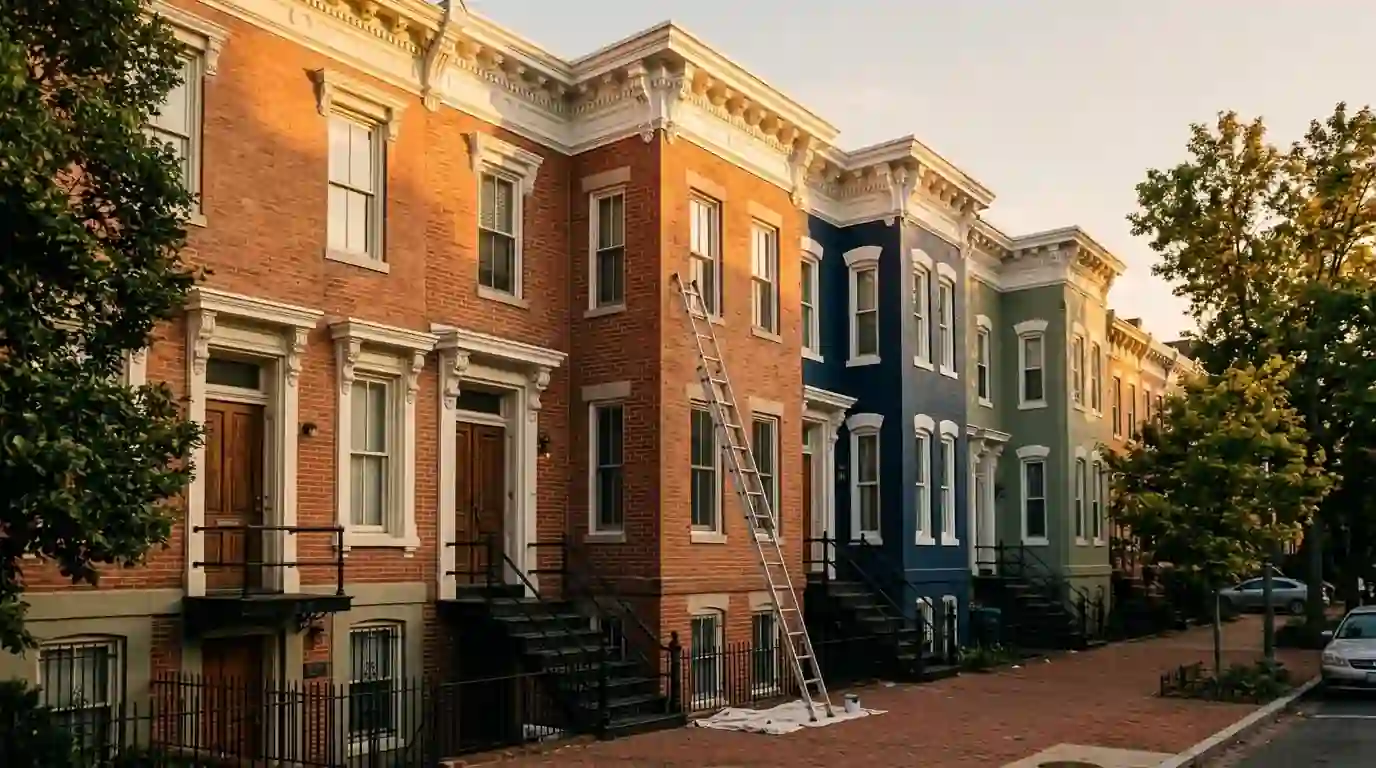
There's also a practical side in DC. Rowhouses share walls and narrow yards, so exterior debris can drift onto a neighbor's property within minutes on a windy day. Containment that extends past the work area, and daily cleanup instead of an end-of-job sweep, keeps the problem on our side of the fence. Our post on lead paint in pre-1978 homes covers what homeowners notice during the work.
What lead-safe work practices look like on your job
These are the EPA RRP practices we follow whenever pre-1978 paint is disturbed, indoors or out.
- Coat 01
Post signs and set the boundary
Warning signs go up at the work area, and occupants and pets stay out until cleanup is done. We plan the route in and out so dust isn't tracked through the house.
- Coat 02
Seal the room or ground
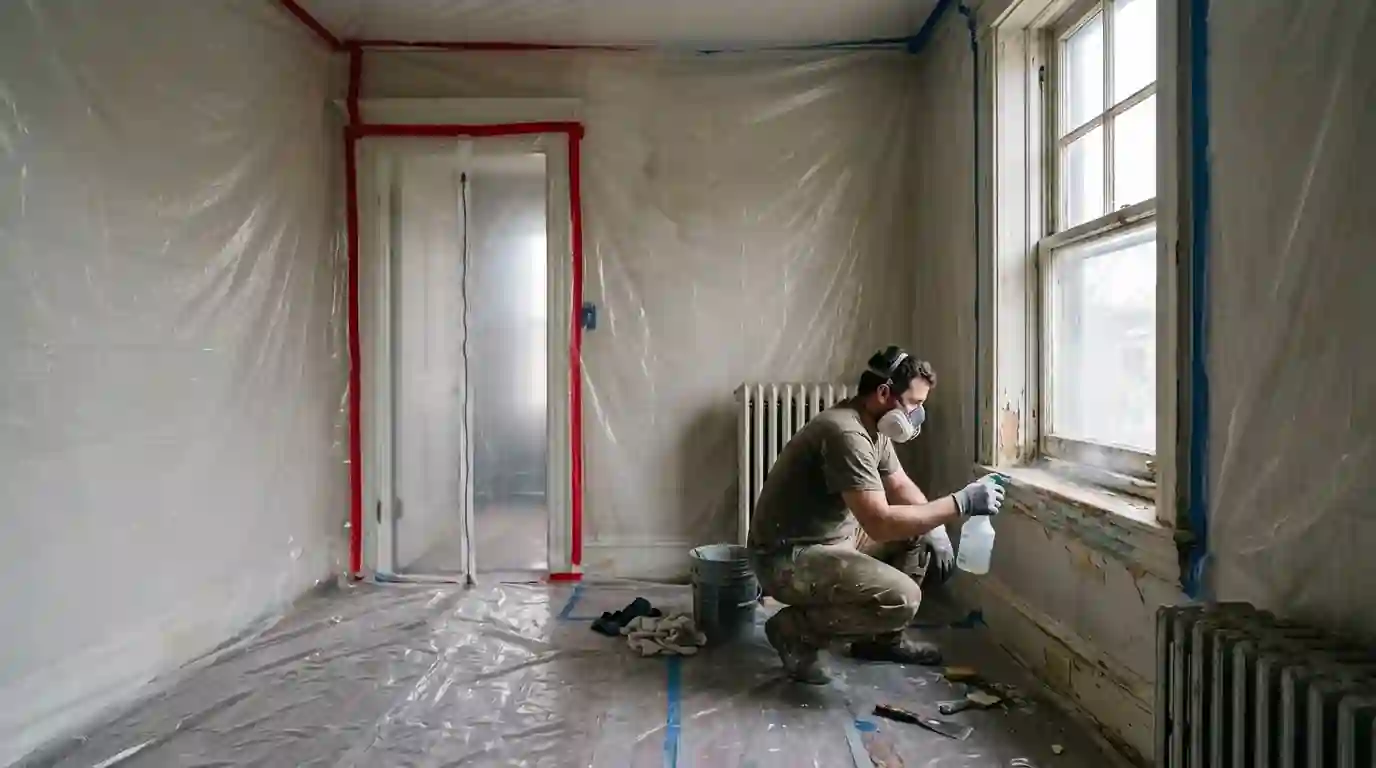
Indoors, we cover floors with plastic taped at the edges, close and cover vents, and seal doorways with zippered plastic. Outdoors, ground sheeting extends well past the wall, and nearby windows and doors are closed and covered.
- Coat 03
Mist before scraping
Surfaces are misted with water before hand scraping so chips fall wet rather than turning to dust. Sanding is done wet or with a HEPA-shrouded sander. Open-flame burning, high-heat guns and dry power sanding are off the table.
- Coat 04
Bag waste as we go
Chips and debris are collected throughout the day, not left on the plastic. Sheeting is misted and folded dirty-side in, then sealed in heavy bags before leaving the work area.
- Coat 05
HEPA vacuum and wet wipe
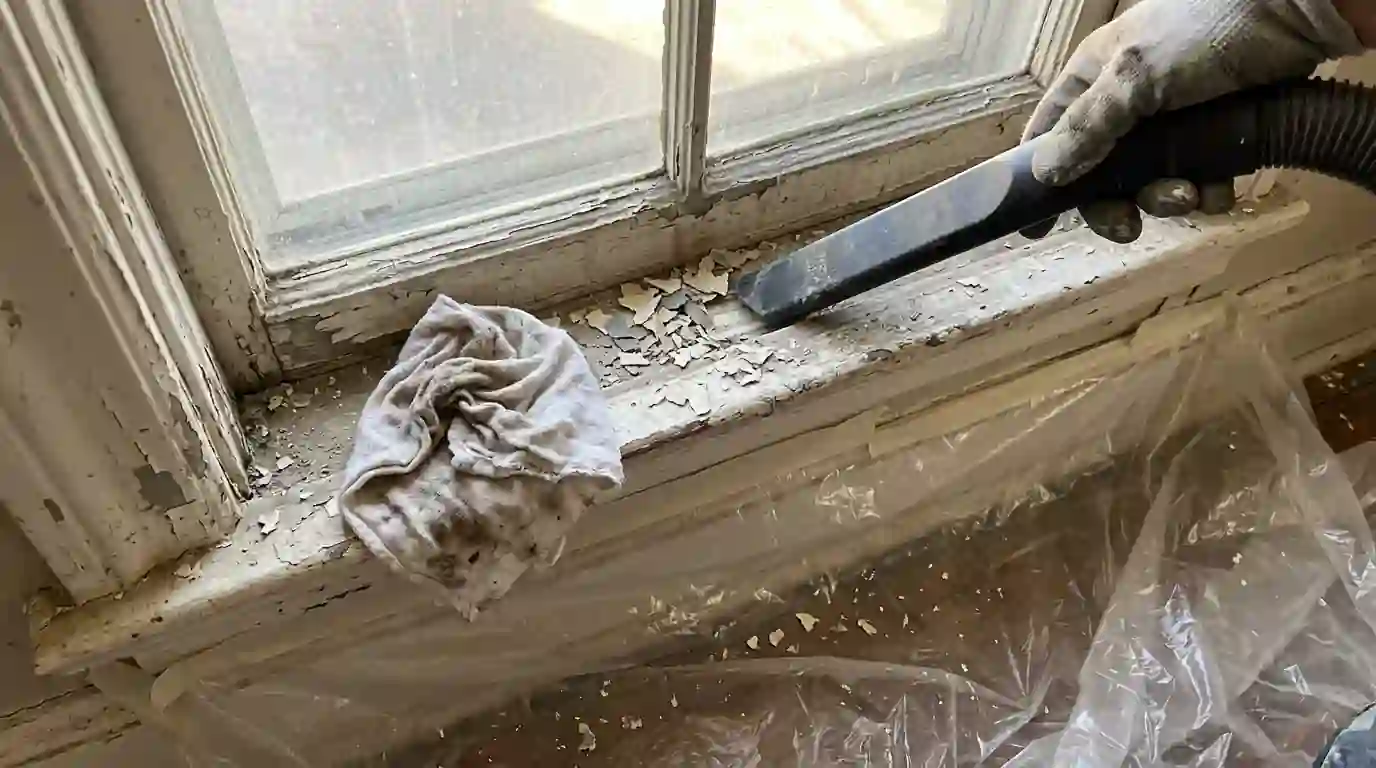
Every surface in the work area gets a HEPA vacuum pass, then a wet wipe with fresh cloths, then a second HEPA pass. Window sills and troughs get extra cleaning because dust settles there.
- Coat 06
Verify the cleanup
We check cleaned surfaces against the EPA cleaning verification card and re-clean anything that doesn't pass. Only then do the plastic and signs come down and the room goes back into use.
- Coat 07
Prime and paint to seal
With prep finished, we prime and paint. A well-adhered new coat encapsulates the remaining old layers, keeping them stable for years.
How much lead-safe prep adds to a DC paint job
Containment and cleanup are priced on top of the painting itself. These are typical add-ons we see in the District.
| Work area | Typical add-on | What moves the price |
|---|---|---|
| Single interior room with windows | $380 to $690 | Number of windows, furniture to move out, vent sealing |
| Whole-floor interior containment | $745 to $1,450 | Rooms affected, doorways to seal, stairway transitions |
| Rowhouse front facade, exterior | $465 to $980 | Sidewalk sheeting, neighbor windows, cornice height |
| Detached house, full exterior | $890 to $1,450 | Perimeter length, plantings, decks and porches to cover |
| Porch floor and steps | $410 to $760 | Square footage, steps, how much paint is loose |
| Window sash scraping, per window | $46 to $118 | Glazing removal, sills and troughs, storm windows |
These are typical ranges, not a quote; the walkthrough sets the final number.
Equipment and products that go on a lead-safe job
Lead-safe work depends more on equipment and habits than on the paint itself.
- Six-mil plastic sheeting, zipper doors and painter's tape that holds on old plaster.
- HEPA vacuums with sealed filters, never a shop vac that blows dust back into the room.
- Spray bottles and pump sprayers for misting, plus wet sanding sponges for trim.
- Disposable coveralls and shoe covers that come off before leaving the contained area.
- Bonding primers like Zinsser or Sherwin-Williams Extreme Bond that grip old glossy paint without heavy sanding.
- Durable topcoats, so painted surfaces don't wear back down to the lead layers quickly.
Encapsulate, stabilize or remove?
Not every lead situation needs the same approach. Here's how we think through it with you.
Paint over sound paint
If the old paint is firmly attached, minimal prep and new coats seal it in. This is the least disruptive option and often the right one for walls and ceilings.
Stabilize failing areas
Peeling or chipping spots are wet scraped back to sound edges, primed and painted. Most repaints in older homes fall into this category, especially exterior house painting.
Treat friction points
Windows, doors and stairs that rub get the most attention. Sash may be stripped and repainted, and rubbing surfaces are adjusted so they stop grinding paint.
Full removal
Taking paint down to bare wood is sometimes needed on badly failed trim. It's slower and costlier, and in many cases replacing a component is better. Formal abatement is a separate trade and not something a painting job replaces.
Where we do this work most often
We take this job across the District and close-in Maryland and Virginia. These are the neighborhoods and cities we cover most, with a ZIP for each.
Questions we hear about this
Does lead-safe painting remove all the lead from my house?
No. Lead-safe painting controls dust while we disturb old paint and leaves surfaces sealed under new coats. It isn't lead abatement, which permanently removes or encloses lead hazards and is a separate regulated process. For many DC homes, keeping paint intact and well maintained is the practical approach.
Can my family stay home during lead-safe interior painting?
Usually, yes, as long as everyone stays out of the contained rooms until cleanup passes. We seal doorways and plan the work so you still have a kitchen and bathroom. Families with young children or a pregnant household member sometimes choose to be away on scraping days.
Do you test for lead before painting a pre-1978 DC home?
We treat pre-1978 painted surfaces as lead-containing unless a test shows otherwise, which is the safer default. If you want to know precisely, an independent lead inspector or risk assessor can test before we start, and we'll plan the scope around the results. Call (771) 247-4038 to talk through your house.
Why can't you just sand or burn off old paint quickly?
Dry sanding and high-heat stripping turn lead paint into fine dust and fumes that spread through the house and are hard to clean up. EPA RRP practices prohibit open-flame burning and limit heat and power sanding for that reason. Wet methods take longer but keep the dust out of your air.
Does lead-safe prep apply to rental turnovers in older DC buildings?
Yes. If a unit was built before 1978 and the work disturbs painted surfaces, the same practices apply. We fold containment and cleanup into rental turnover painting and plaster repair, so the unit is clean when the next tenant moves in.