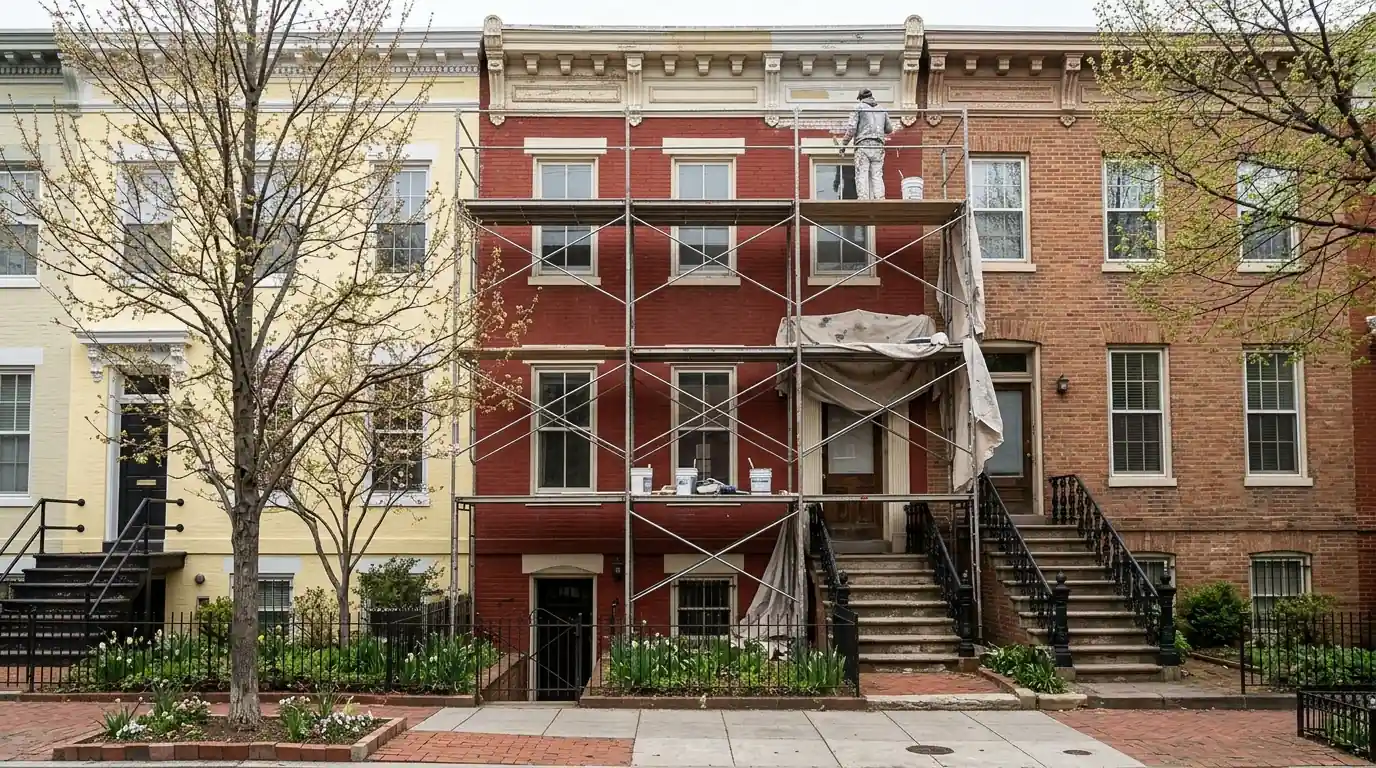
Has your brick been painted before?
That one question decides almost everything else. If the facade already carries paint, repainting it is maintenance, and in most of DC it is generally not something historic review looks at when the color stays in a normal range. If the brick has never been painted, you are changing how a masonry wall handles water, and in historic districts such as Capitol Hill, Bloomingdale and Cleveland Park that change generally needs review by the DC Historic Preservation Office before work starts.
Georgetown adds another layer. Exterior changes there go before the Old Georgetown Board, so on a Georgetown rowhouse we tell owners to check with the board before any first coat on unpainted brick. Outside DC, Alexandria's Old and Historic District has its own Board of Architectural Review, and Takoma Park has a historic district of its own. We don't quote fees or timelines for any of these because they change; we just make sure the question gets asked early.
Unpainted brick that is sound is often best left alone. Old DC brick is soft and was laid in lime mortar, and both need to release moisture. A wall that has stood unpainted for 120 years usually doesn't need a coating to survive another 50.
What we look at on a rowhouse facade before pricing it
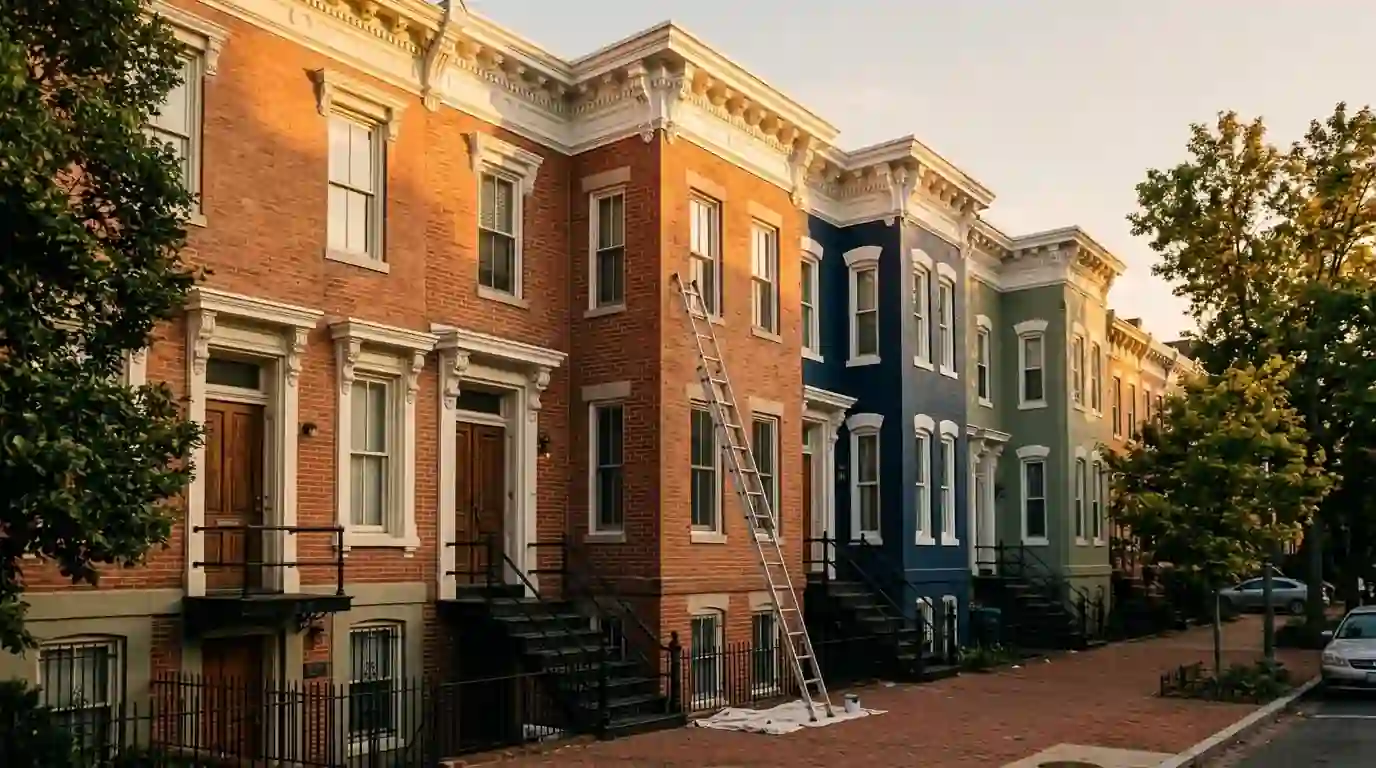
A slow walk along the sidewalk tells us most of what a brick job will involve.
- Mortar joints, since sandy, recessed or missing mortar needs repointing with a lime-based mix before any coating goes on.
- White salt deposits (efflorescence), which mean water is moving through the wall and needs its source found, not a coat of paint over it.
- Peeling patterns, because paint lifting in sheets near the sidewalk or below the cornice usually points to rising damp or a roof leak.
- The existing coating, which we test with a tape pull and a small solvent check to see whether it is latex, oil or an old elastomeric.
- Lead, since nearly every painted DC facade built before 1978 has lead in a lower layer and scraping it calls for containment.
- The party wall edges, where your paint line meets the neighbor's brick and has to stop clean without crossing onto their side.
- Cornices, bay windows and iron stoop railings, which are usually painted in the same visit and can take as long as the brick.
- Sidewalk width and parking, which decide whether we need DDOT emergency no-parking signs for a lift or a staging truck.
Which coating fits older DC brick?
Brick coatings differ mostly in how much water vapor they let through. On old, soft brick, breathability matters more than color range.
Acrylic masonry paint
The standard choice for brick that is already painted with latex. It breathes moderately, comes in any color and recoats easily. Expect roughly 8 to 12 years on a sunny facade before it needs a refresh.
Mineral silicate paint
Products such as Romabio bond chemically with the brick and stay highly vapor-open. They are a strong option on bare or stripped brick, but they will not stick over existing acrylic paint without removing it first.
Limewash
Lime and water that soaks into the surface and weathers away slowly, giving a soft, mottled look. It suits bare brick only. Our limewash for brick page covers how it is mixed and applied.
Elastomeric coatings
Thick, stretchy films made for stucco and concrete block. On soft historic brick they trap moisture behind a rubbery skin and can cause spalling, so we rarely recommend them for DC rowhouse facades.
Masonry stain
A penetrating tint that changes brick color without forming a film. It is useful for blending patched or replaced brick into an older wall, and it is the least likely option to peel.
How a painted brick facade gets redone properly
This is the sequence we follow on an already-painted rowhouse front.
- Coat 01
Set up containment
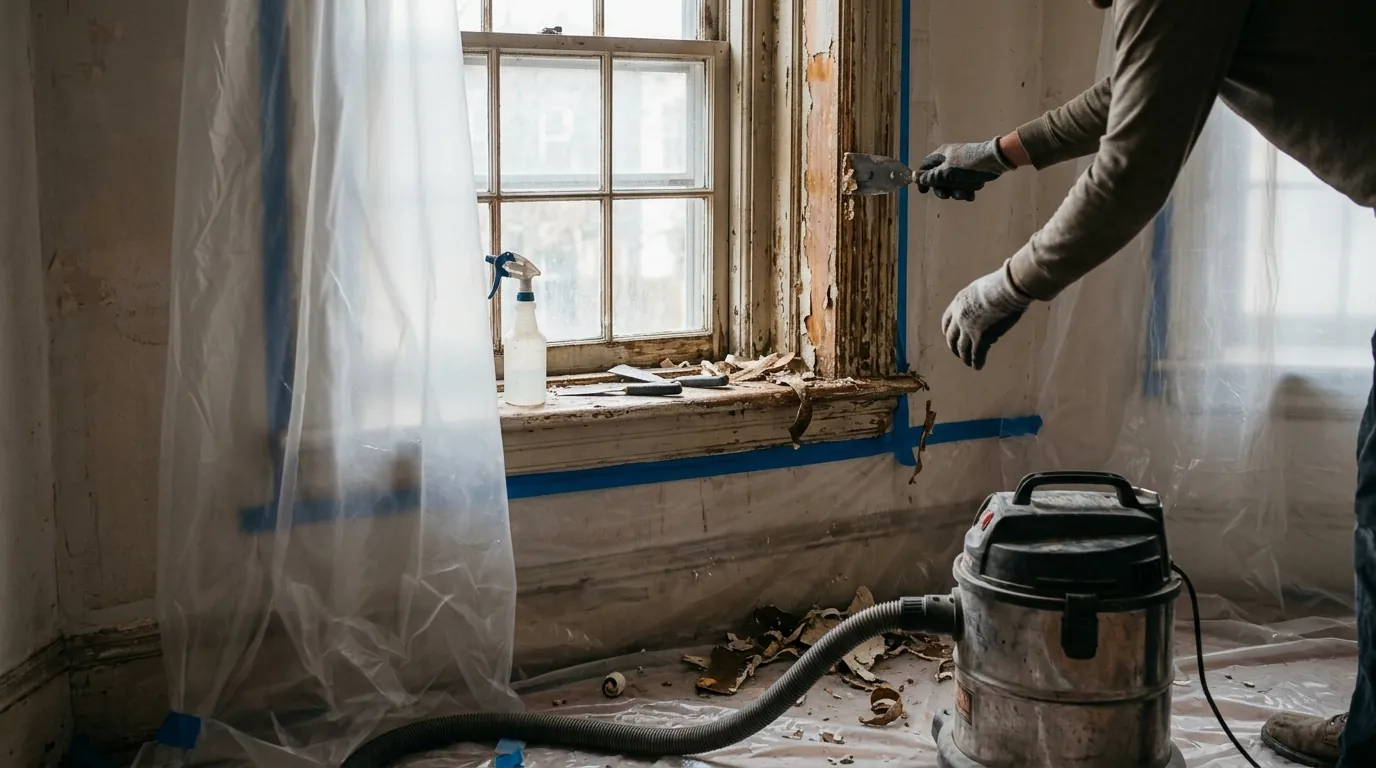
We lay plastic on the sidewalk and areaway, protect the neighbor's steps and mark off the work area. On pre-1978 facades we follow EPA RRP lead-safe work practices from the first scrape.
- Coat 02
Remove loose paint
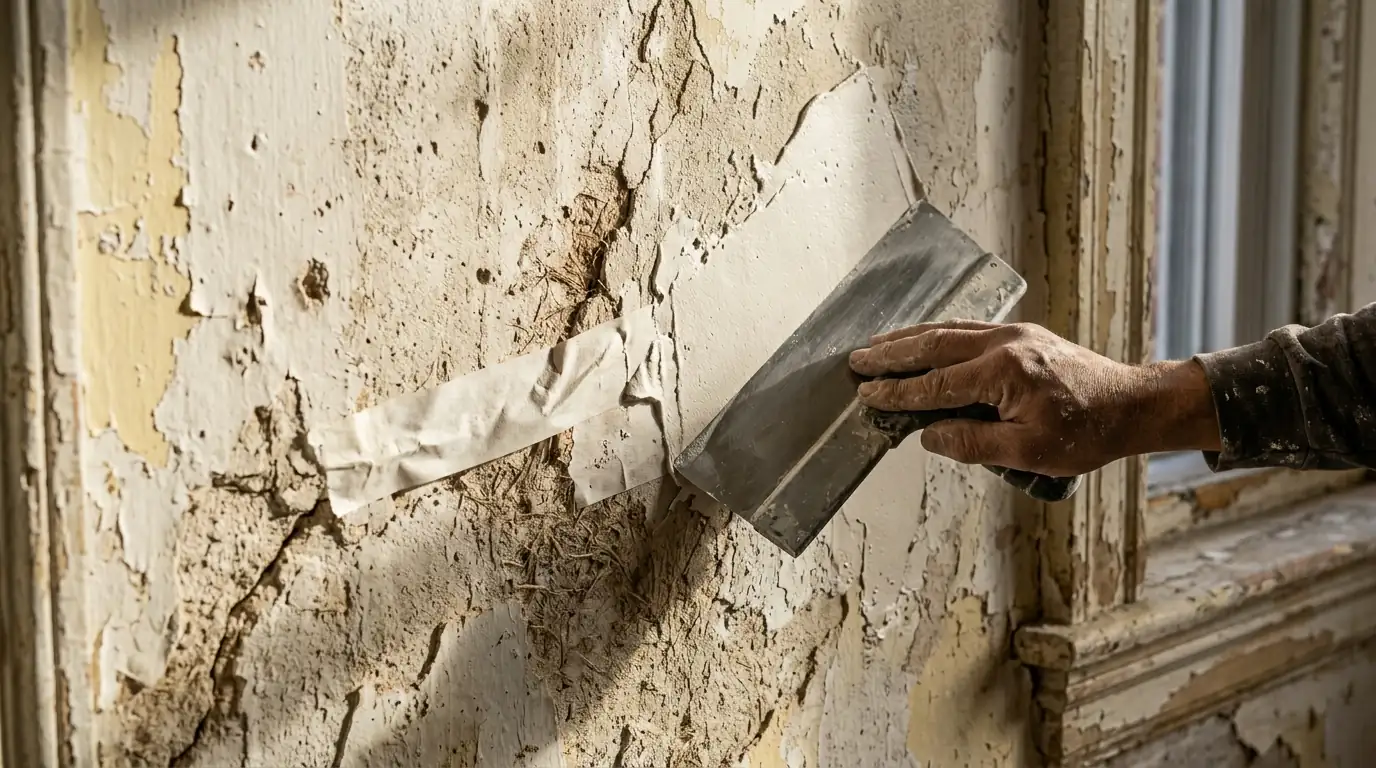
Hand scraping and low-pressure washing take off anything that lifts. We don't sandblast or use high-pressure washing on soft brick, since both strip the fired face and let water in faster.
- Coat 03
Repair the joints
Failed mortar is raked out and repointed with a lime-rich mix that is softer than the brick. New mortar needs to cure, usually about a week, before paint goes over it.
- Coat 04
Prime bare and repaired spots
Patched joints and bare brick get a masonry primer or conditioner so the finish coats absorb evenly. Skipping this leaves blotchy, flashing patches that show in low-angle sun.
- Coat 05
Apply two finish coats
We brush the mortar joints and back-roll the faces, aiming for two full coats with a combined dry film of roughly 3 to 4 mils. Spraying alone tends to bridge the joints and leave pinholes.
- Coat 06
Finish the trim and iron
Cornice, window trim, door surround and stoop railings are done last, so drips and drift from the brick work never land on finished surfaces. We then clean the sidewalk and pull the containment.
What does painting a DC rowhouse facade typically cost?
Prices below are typical for rowhouses across the District and close-in Maryland and Virginia.
| Job | Typical range | What moves the price |
|---|---|---|
| Rowhouse front facade, painted brick | $2,350 to $6,900 | Height, bays, cornice detail and how much paint is failing |
| Brick painting by area | $2.70 to $5.40 per sq ft | Scraping needed, mortar condition and number of coats |
| Limewash on bare brick | $3.10 to $6.20 per sq ft | Number of coats, washing back for an aged look and access |
| Iron stoop railing | $14 to $38 per linear ft | Rust depth, ornament and whether it can be ground to bare metal |
| Lead-safe containment | $380 to $1,450 per job | Facade size, sidewalk protection and cleanup verification |
These are typical ranges, not a quote; a walkthrough of your facade sets the actual price.
Brick mistakes that cost more later
The expensive mistakes on brick usually come from trying to stop water with paint. A facade with failing mortar, a leaking gutter or a cracked coping will push moisture into the wall no matter what is on the surface. Paint over that, and it blisters within a season or two, sometimes taking the brick face with it. Fix the water source first, then coat.
The other mistake is choosing a coating for the color card instead of the wall. Once acrylic is on brick, getting back to bare masonry means chemical stripping, which is slow, messy and priced per square foot. If you are weighing a softer look, our post comparing limewash and paint on brick explains how each one ages on a DC street, and our brick painting page covers prep in more detail.
Services mentioned in this guide
Brick & Masonry Painting
Previously painted brick cleaned, repointed where needed and coated with a breathable masonry system.
Limewash & Mineral Paint for Brick
Soft, breathable limewash and mineral finishes for brick that should age gracefully rather than peel.
Rowhouse Exterior Painting
Front facades, cornices, bays and porch fronts painted with shared party-wall edges and sidewalk access in mind.
Follow-up questions
Can I paint my unpainted rowhouse brick on Capitol Hill?
Possibly, but check with the DC Historic Preservation Office before anything goes on the wall. Painting previously unpainted masonry in a historic district such as Capitol Hill generally needs review, and the outcome depends on the house and the block. Many owners who want a lighter look end up with limewash or a masonry stain instead, which change the color while keeping the brick breathable. We can price both options while you wait to hear back.
My painted brick facade is peeling only near the sidewalk. What does that mean?
Peeling in the bottom two or three feet usually means rising damp: ground water wicking up into the brick and pushing the paint off from behind. Splash-back from the sidewalk adds to it. We check the grade, the areaway drain and whether a non-breathable coating was used low on the wall. Repainting without addressing the moisture tends to fail in the same band within a year or two.
Will painting my rowhouse front change the color line with my neighbor's house?
Yes, and on a shared block that edge is visible from across the street. We stop the paint at the center of the party wall pilaster or at the existing line, mask it carefully and never coat the neighbor's side without their written okay. If the neighbor wants their facade done at the same time, doing both together usually makes the line cleaner and the setup cheaper per house.