Short answer
Wallpaper installation in DC includes checking and repairing the wall, applying a wallpaper primer, measuring and plumbing the first strip, then pasting, booking and hanging each panel with matched seams. Trimming around trim, outlets and ceilings finishes the job. Labor typically runs $3.40 to $8.70 per square foot, depending on paper type, pattern repeat and wall condition.
How a wall goes from bare to papered
Most accent walls take a single day. Full rooms, stairwells and grasscloth often take two or more.
- Coat 01
Check the wall surface
We look for cracks, old paste, loose plaster or gloss paint. Wallpaper shows every bump, so we fill, sand and repair anything that would telegraph through a thin paper.
- Coat 02
Prime with a wallpaper primer
A pigmented wallpaper primer, such as Zinsser Shieldz, goes on and dries. It gives paste something to hold, keeps moisture out of the wall and makes future removal much easier.
- Coat 03
Plan the layout
We find the room's focal point, measure the pattern repeat and decide where the first strip goes so the pattern lands centered and the final, often awkward, seam hides in a corner.
- Coat 04
Plumb the first strip
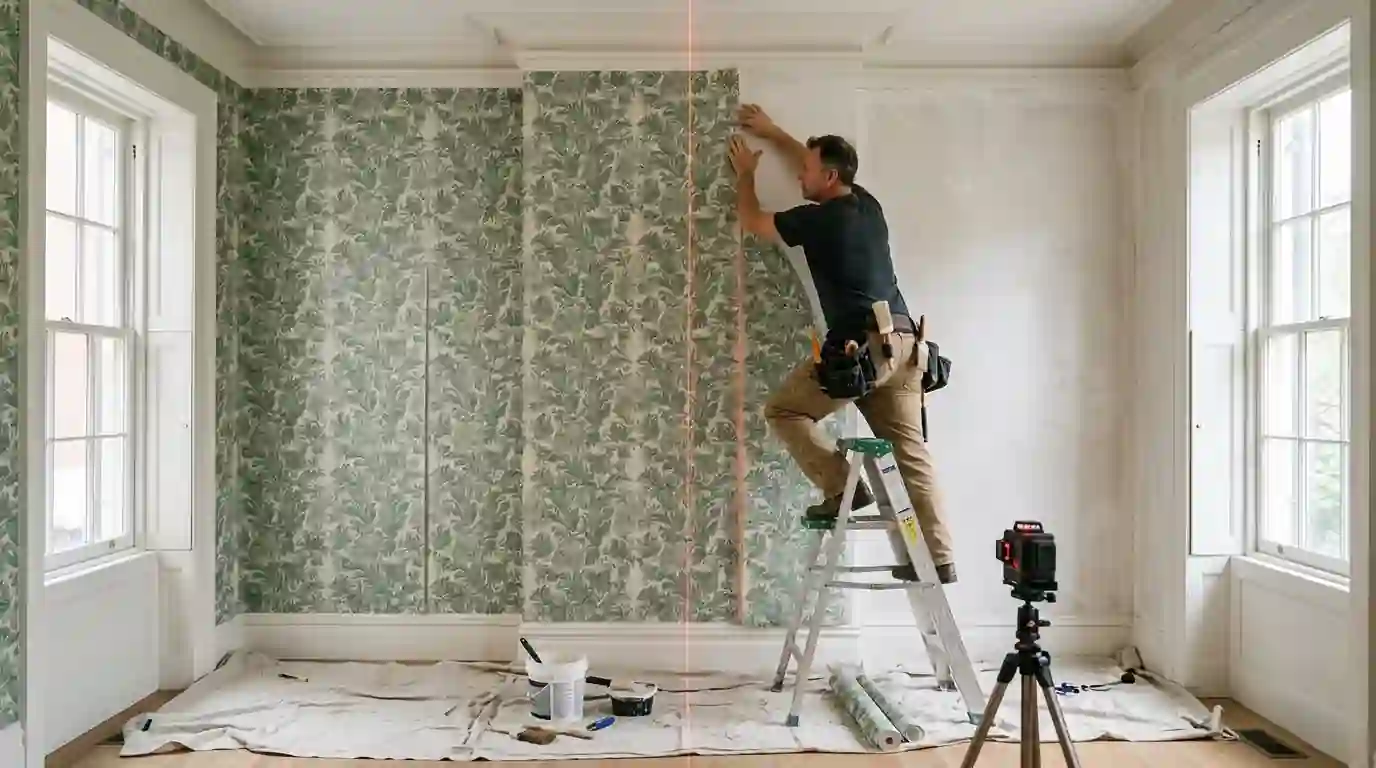
Walls in old DC houses are rarely straight, so we snap a plumb line with a laser or plumb bob. Hanging from a true vertical keeps the pattern from slanting across the room.
- Coat 05
Paste, book and hang
Each strip is pasted or the wall is pasted, depending on the paper. Pre-pasted and traditional papers are booked, folded paste to paste, for several minutes so they relax before hanging.
- Coat 06
Match seams and smooth
Strips are butted tight, pattern matched and smoothed with a plastic smoother from the center out. We roll seams lightly and wipe paste off the face right away.
- Coat 07
Trim and finish edges
Excess paper at the ceiling, baseboard and trim is cut with a sharp blade against a wide knife. Outlet covers go back on, and the room is cleaned before we leave.
Papers we hang and what each one asks for
Not every wallpaper behaves the same, so the method changes with the material.
Traditional pasted papers
Classic patterned papers need careful booking times and steady seams. They suit dining rooms and powder rooms in older DC houses where the look should feel original.
Non-woven paste-the-wall papers
These go up dry against a pasted wall and are dimensionally stable. They are faster to hang and much easier to remove later, which is why we often suggest them.
Grasscloth and natural fibers
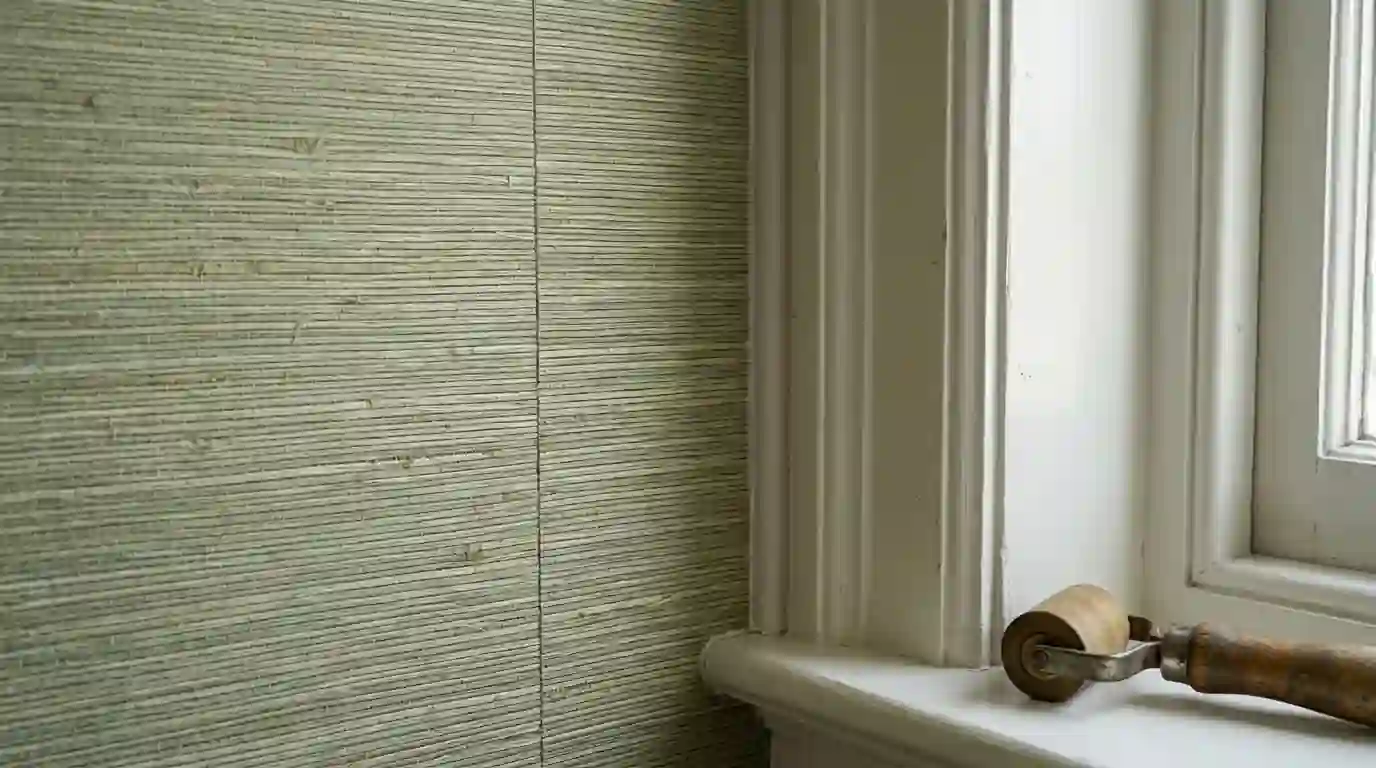
Grasscloth shows seams by design and stains if paste touches the face. It needs a clean, even primer underneath and careful handling, so we budget extra time.
Peel-and-stick accent walls
Self-adhesive papers suit rentals and kids' rooms. They need a smooth, fully cured paint surface to stay put, so we check the wall first.
Murals and panel sets
Murals arrive as numbered panels that must line up in order. Planning the layout before the first panel matters more here than anywhere else.
Vinyl for kitchens and baths
Solid vinyl and coated papers handle moisture and cleaning. They need a strong adhesive and a primer that resists humidity behind the paper.
Getting a room ready for paper hanging
Wallpaper rewards a calm, steady room. These steps help the job go smoothly.
- Have all rolls delivered a few days early so they can sit at room temperature.
- Check that every roll carries the same batch or run number before we arrive.
- Clear the walls of art, shelves, curtains and TV mounts.
- Keep the room's temperature steady and avoid running fans or space heaters on new paper.
- Plan for the room to be out of use for the day, plus one more day if walls need prep.
- Keep pets out, since fresh paste and cut scraps are tempting to curious paws.
Wallpaper hanging prices in Washington, DC
These ranges are for labor; the wallpaper itself is usually bought separately by you.
| Job | Typical range | What moves the price |
|---|---|---|
| Hanging labor per sq ft | $3.40 to $8.70 | Paper type, repeat size, wall height |
| Single accent wall, up to 120 sq ft | $460 to $980 | Pattern matching, outlets, windows |
| Powder room, all walls | $720 to $1,640 | Fixture cutouts, tight corners, grasscloth |
| Dining room with chair rail | $1,180 to $2,690 | Two papers, borders, ceiling height |
| Wall prep and wallpaper primer | $1.10 to $2.40 per sq ft | Patching, skim coating, old paste |
| Removing old paper first | $1.35 to $3.20 per sq ft | Layers, bonding, wall type |
These are typical DC ranges, not a quote; we confirm pricing after seeing the room and the paper.
Hanging paper on crooked old walls
Almost every pre-war house in DC has walls that lean, corners that aren't square and ceilings that dip in the middle. That's part of the charm, but wallpaper exposes it. A floral print can look fine at the door and drift a full inch off the ceiling line by the far corner. We plan around this by choosing a pattern start point, accepting a small mismatch where it'll be least seen, often behind a door or above a closet.
Horsehair and lime plaster are good wallpaper substrates once they're sound and primed. Hairline cracks and old patches, though, show through thinner papers. We fix them first with plaster repair and a skim coat when needed. If old wallpaper is still on the wall, we remove it before hanging, since layering new paper over old rarely holds.
DC's humid summers affect drying. Paste stays wet longer in August, and paper can expand. We keep the room at a steady temperature, avoid running a fan directly on new paper and leave seams undisturbed for a day or two. Rooms in Georgetown and similar historic homes often reward that patience with a finish that looks like it's always been there.
Supplies that help paper last
A few products make the difference between a wall that holds for years and one that lifts in a summer.
- A pigmented wallpaper primer that makes paste grip and future removal clean.
- Clear or clay-based adhesive matched to the paper's weight and the manufacturer's directions.
- A laser level for plumb lines on walls that are anything but plumb.
- Fresh snap-off blades, changed every few cuts, so edges don't tear.
- A seam roller used lightly so embossed or textured papers aren't flattened.
- A clean sponge and bucket to remove paste from the face right after hanging.
If you'd like help choosing a paper that works with your wall colors, our color consultation visit covers wallpaper too.
Where we do this work most often
We take this job across the District and close-in Maryland and Virginia. These are the neighborhoods and cities we cover most, with a ZIP for each.
Questions we hear about this
Do you supply the wallpaper or do I buy it?
Most owners buy their own paper, since choices are personal and many designers sell exclusive lines. We tell you how many rolls to order based on wall size and pattern repeat, and suggest an extra roll for mistakes and future repairs. We'll check that every roll comes from the same run number before we start.
Can you hang grasscloth wallpaper in a Washington, DC dining room?
Yes. Grasscloth looks great in dining rooms and studies but needs careful handling, because paste stains the fibers and seams show naturally. We prime with a tinted primer close to the grasscloth's color, so small gaps don't show, and hang panels in order from the same batch.
Is peel-and-stick wallpaper a good choice for a DC rental?
It can be, especially for an accent wall or a child's room. Peel-and-stick needs a smooth, fully cured painted wall and does not like humidity or textured surfaces. We check the wall first and recommend traditional paper if it won't hold. Landlords often prefer it because removal is easy at turnover.
Can wallpaper go on walls that were just painted?
Yes, but fresh paint should cure for at least a week, and glossy paint needs a scuff and a wallpaper primer first. Paper adhesives can lift soft paint if applied too soon. If you're painting other walls in the room, we'll schedule paint first and paper after, through our interior house painting service.