Short answer
Limewashing brick in DC means washing and wetting the wall, then brushing on two or three thin coats of slaked-lime wash, which bonds into the brick and lets moisture pass. Mineral silicate paint is a longer-lasting cousin. Expect $3.10 to $6.20 per square foot. Limewash generally suits unpainted or previously limewashed brick, and historic-district walls may need review first.
Limewash, mineral paint or masonry paint?
These three finishes look and behave differently. Choosing the right one depends on what's on the brick now and how you want it to age.
Traditional limewash
Slaked lime and natural pigment, thinned to a wash. It soaks into bare brick, gives a soft, mottled finish and wears away slowly over years. Touch-ups blend easily because there's no film edge.
Mineral silicate paint
Potassium silicate binders react with the masonry and bond chemically. It holds color longer than limewash, stays very breathable and resists mildew. A good choice for walls you want to keep a steadier color.
Breathable masonry paint
An acrylic film with high permeability, used on brick that already has paint. It gives the most uniform color but sits on the surface. See brick and masonry painting for that route.
German smear or washed look
Lime mortar or limewash partly wiped back to show brick through. It's a design look more than a protective coating and works best on interior walls and garden features.
Why limewash suits so much of DC's older brick
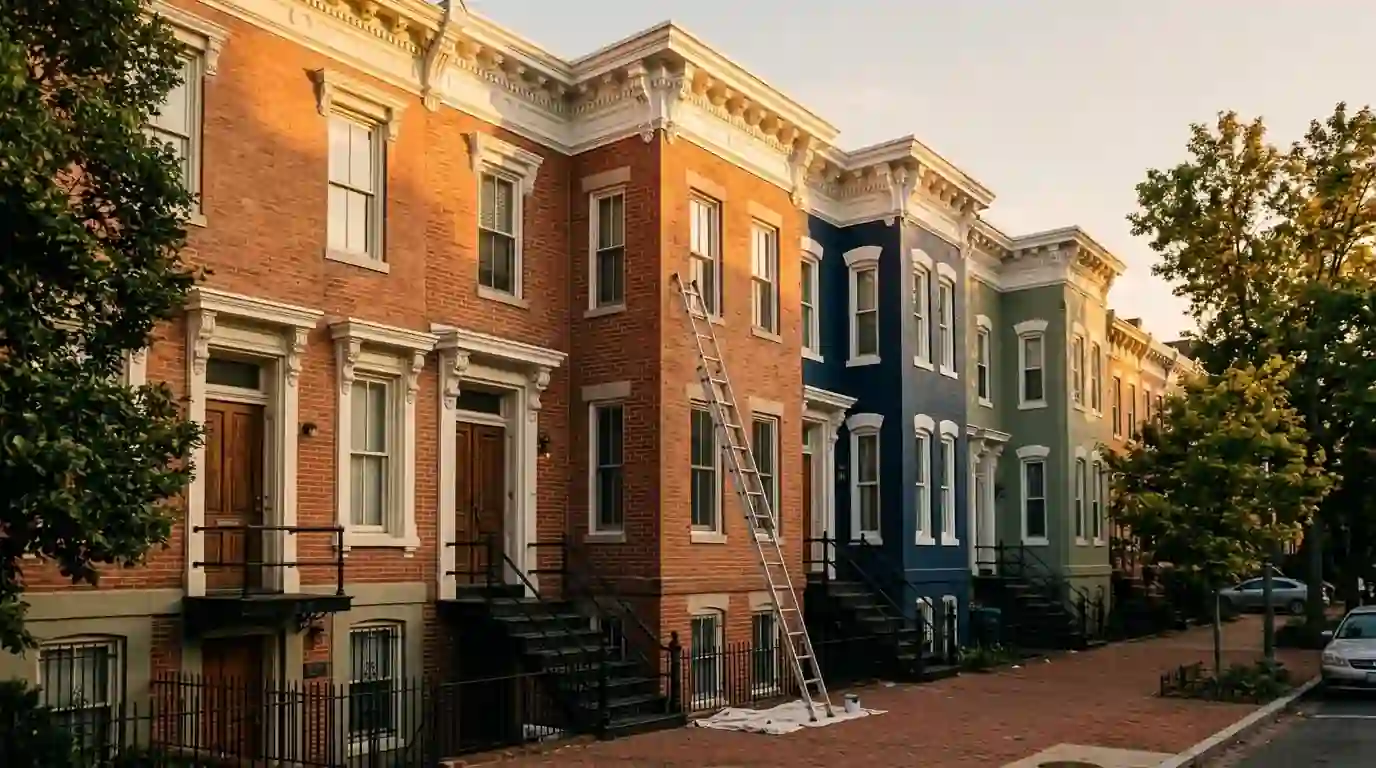
Lime was the mortar and the whitewash of early Washington. The soft brick in Georgetown, on Capitol Hill and in older parts of Alexandria was laid in lime mortar and meant to get wet and dry out again. Limewash belongs to the same family. It's vapor open, alkaline enough to discourage mildew in our humid summers, and it won't trap water behind a film that freezes and pops in January.
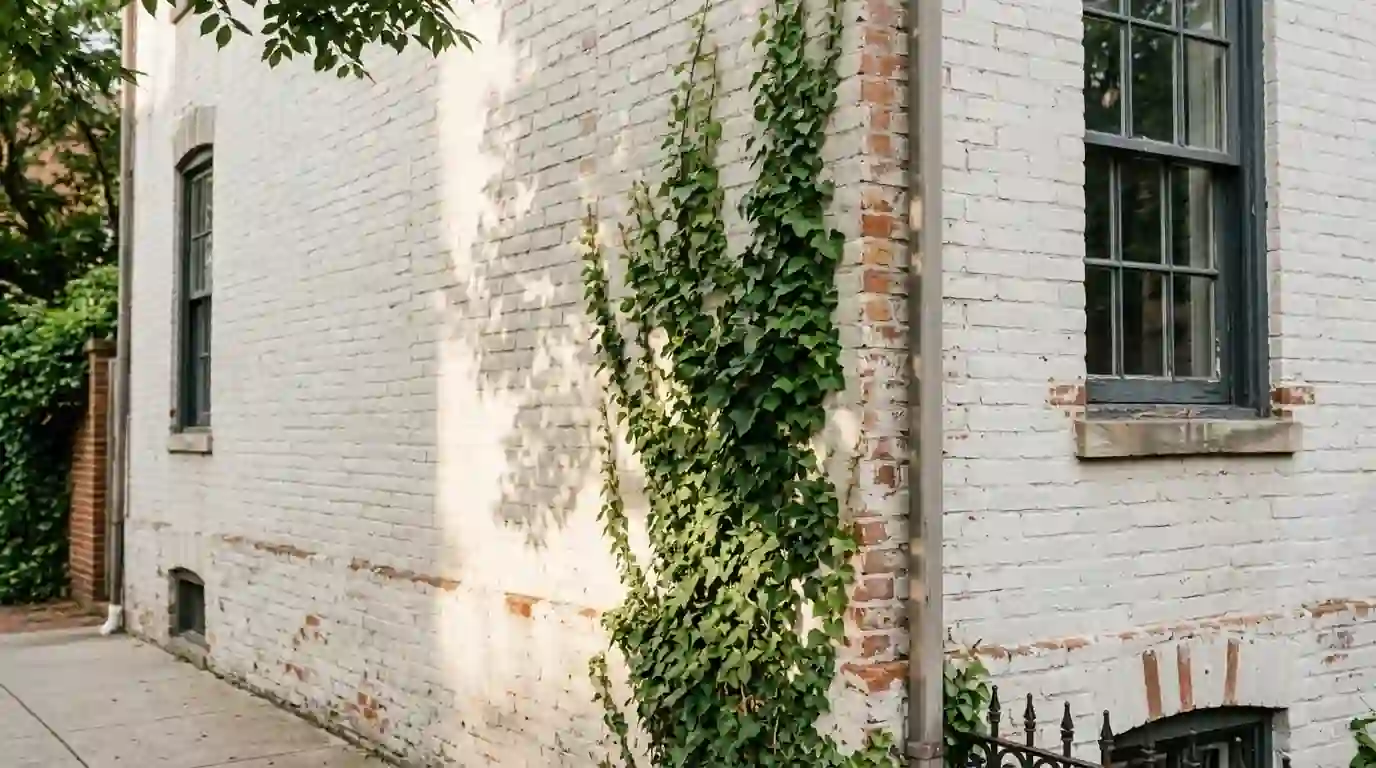
It also ages honestly. Limewash slowly erodes where rain hits hardest, so a wall develops gentle variation over time, with brick showing through on edges and corners. Some owners love that, and others prefer the steadier color of mineral silicate. Either way, there's no peeling to scrape later, just a refresh coat every several years.
The catch is historic review. In DC historic districts, applying any coating to brick that has never been painted generally needs review by the DC Historic Preservation Office, and limewash is usually treated the same as paint for that purpose. Georgetown changes go before the Old Georgetown Board. Check with the preservation office before you plan limewash on unpainted masonry. Our post on limewash or paint on brick compares how each one weathers.
How we limewash a brick wall
Limewash rewards patience. Most of the skill is in wetting, thin coats and timing the weather.
- Coat 01
Sample boards on your wall
We brush small test patches in two or three dilutions on a discreet spot, let them cure for a few days and look at them in morning and afternoon light with you. Limewash dries far lighter than it looks wet.
- Coat 02
Clean and repair
The brick is washed at low pressure to remove dirt, moss and loose material. Any crumbling joints are repointed with lime mortar and given time to set, since limewash on fresh cement mortar won't take evenly.
- Coat 03
Strip incompatible coatings
Limewash won't bond to acrylic paint. Where brick has patches of old film coating, we remove them or switch to a mineral paint that can go over sound paint with the right primer.
- Coat 04
Mist the brick
Just before each coat, we dampen the brick with a sprayer so the lime doesn't dry too fast and crack. Sun-facing walls are worked in the morning or after shade arrives.
- Coat 05
Thin coats with a masonry brush
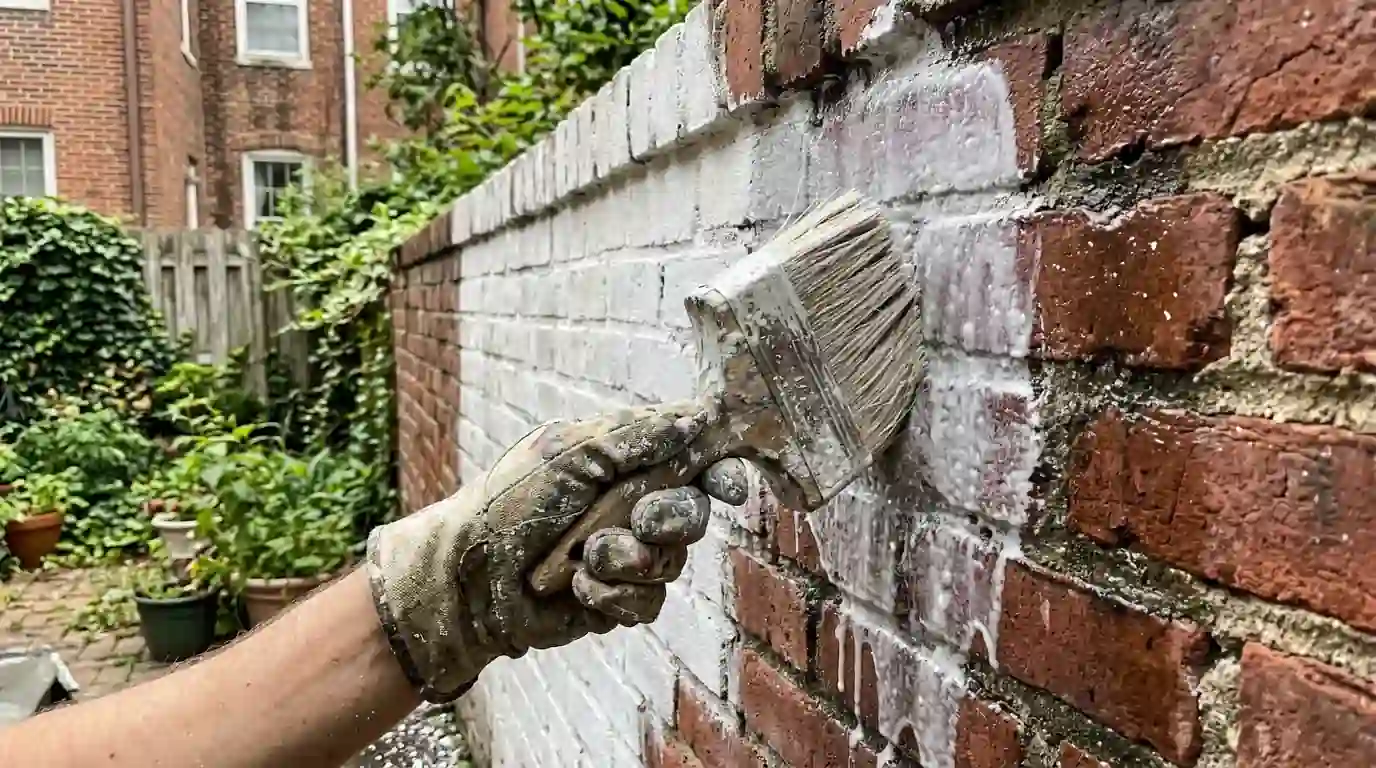
We brush on the first coat with a wide block brush, working it into joints, then add the second and often a third after each one is dry to the touch, usually the next day.
- Coat 06
Cure and protect
Limewash keeps hardening for weeks by drawing carbon dioxide from the air. We avoid work when rain or temperatures under 40 F are expected within 48 hours, and mist again if a hot dry spell hits early.
- Coat 07
Optional wipe-back
For a washed look, we wipe or brush back the wet coat in places to reveal brick. We agree on the amount from a sample panel, not in the moment.
Limewash and mineral paint prices for DC brick
Limewash labor is higher per foot than painting because of wetting and multiple thin coats.
| Job | Typical range | What moves the price |
|---|---|---|
| Limewash exterior brick, per sq ft | $3.10 to $6.20 | Number of coats, wipe-back look, height and access |
| Mineral silicate paint, per sq ft | $3.45 to $5.80 | Primer needs, existing coatings, color depth |
| Rowhouse front, limewash | $2,760 to $6,140 | Cornice and bay detail, sidewalk staging, sample visits |
| Interior brick feature wall | $540 to $1,380 | Wall size, floor protection, sealing the finish |
| Coating removal before limewash | $1.40 to $3.85 per sq ft | Paint type, number of layers, brick softness |
| Limewash refresh coat | $1.65 to $3.20 per sq ft | How much has weathered off, mildew cleaning |
Typical ranges in DC, not a quote; we confirm pricing after seeing the wall.
What goes into the bucket
We keep the material list short and matched to the wall.
- Romabio Classico Limewash, a ready-to-use product from aged lime putty that thins with water to adjust the look.
- Traditional lime putty limewash with natural earth pigments, for owners who want a historic mix.
- Mineral silicate paint for walls that need longer color hold or partly coated surfaces.
- Natural lime mortar for repointing joints so they absorb the wash like the brick does.
- Wide masonry block brushes for application, and pump sprayers for misting.
Living with a limewashed wall
A few expectations help owners enjoy the finish rather than worry about it.
- It looks darker and patchier while wet and evens out over a few days of curing.
- Some powdery residue can rub off on hands or clothes for the first weeks.
- Rain will slowly lighten exposed areas, and that softening is part of the look.
- Expect a refresh coat every 5 to 7 years on exposed walls, longer under porch roofs.
- Mildew is rarer than on paint, but north walls under trees may still need a gentle wash.
Where we do this work most often
We take this job across the District and close-in Maryland and Virginia. These are the neighborhoods and cities we cover most, with a ZIP for each.
Questions we hear about this
Can you limewash brick that's already painted in DC?
Not directly. Limewash needs bare masonry to soak into. Over sound paint we'd use a mineral silicate paint with a compatible primer, or strip the paint first if the brick can tolerate it. We'll test a section and talk through what makes sense for the wall before committing.
Does limewash count as painting brick in a DC historic district?
Generally, yes. Applying a coating to never-painted brick is usually reviewed by the DC Historic Preservation Office, and limewash is treated much like paint. Georgetown work goes to the Old Georgetown Board. Check with the preservation office for your property before scheduling.
How long does limewash last on a DC brick house?
On a sheltered wall it can look good for 7 years or more. Exposed facades facing south or west lighten faster, often within 5 years. Because it wears rather than peels, a refresh is a simple wash-and-coat visit. Call (771) 247-4038 and we can plan the first coat and future touch-ups.
Can you limewash an interior brick fireplace or wall?
Yes, and it's a popular way to lighten dark brick without hiding its texture. We protect floors and furniture, mist the brick and apply thin coats. Many owners combine it with color consultation to choose the tint, or with interior house painting in the same room.
Will limewash hide stains and patched brick?
Somewhat. Two or three coats even out color differences and mismatched repairs, but limewash is translucent by nature, so heavy stains, soot or tar may still show. We clean what we can first and may suggest mineral paint where full coverage matters.