Short answer
Painting a DC basement starts with a moisture test, then cleaning efflorescence, patching mortar, and applying a masonry primer or waterproofing coating before a mildew-resistant finish. Masonry walls typically run $1.80 to $3.90 per sq ft. A finished English basement unit is priced like interior work, and we won't coat over active leaks that need a drainage fix first.
Why paint fails below grade in DC rowhouses
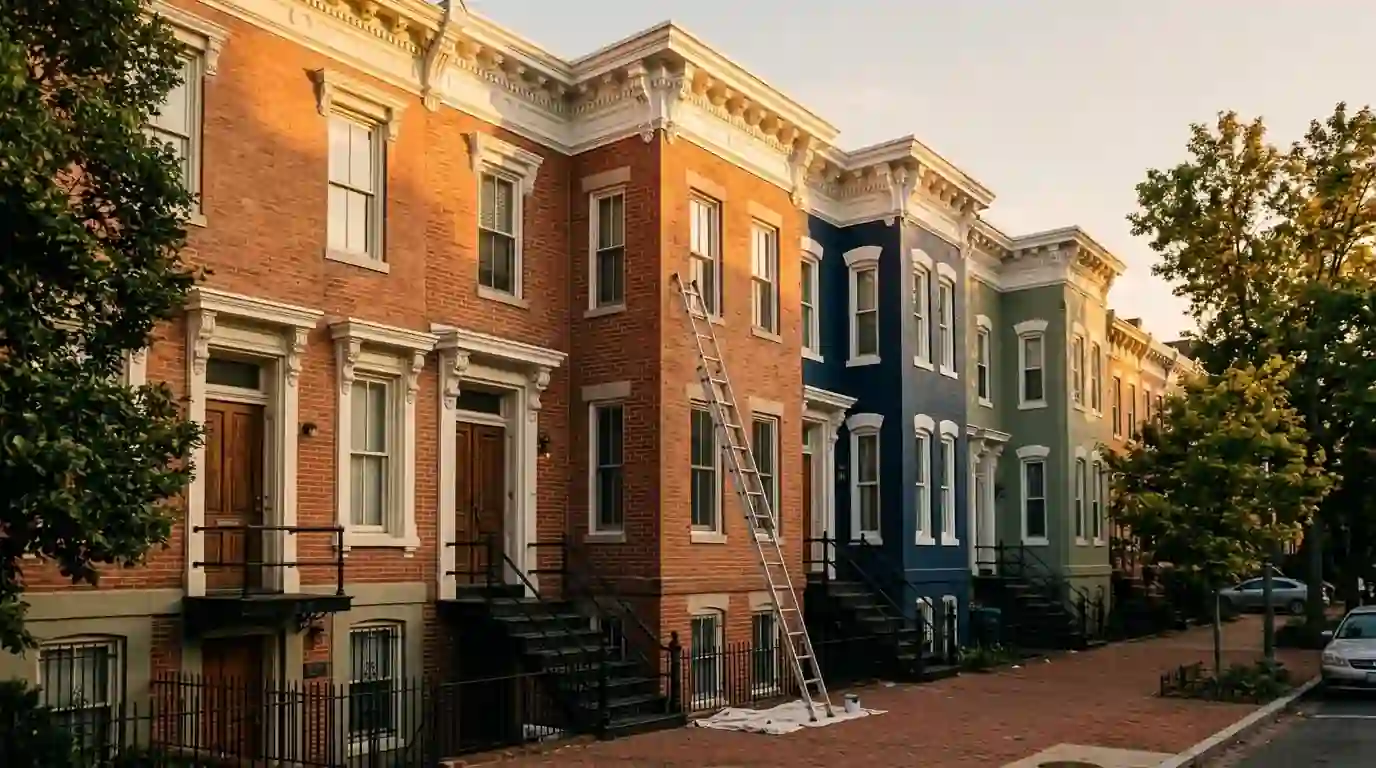
Washington sits on clay soil that holds water after storms, and most pre-war rowhouses have foundation walls of brick or rubble stone with no exterior waterproofing at all. Moisture moves through that masonry as vapor all year. When a nonbreathable paint traps it, the vapor pushes the film off from behind, carrying salts that crystallize as a white crust. That's why so many basements in Petworth and Bloomingdale have paint hanging in curls along the bottom two feet of wall.
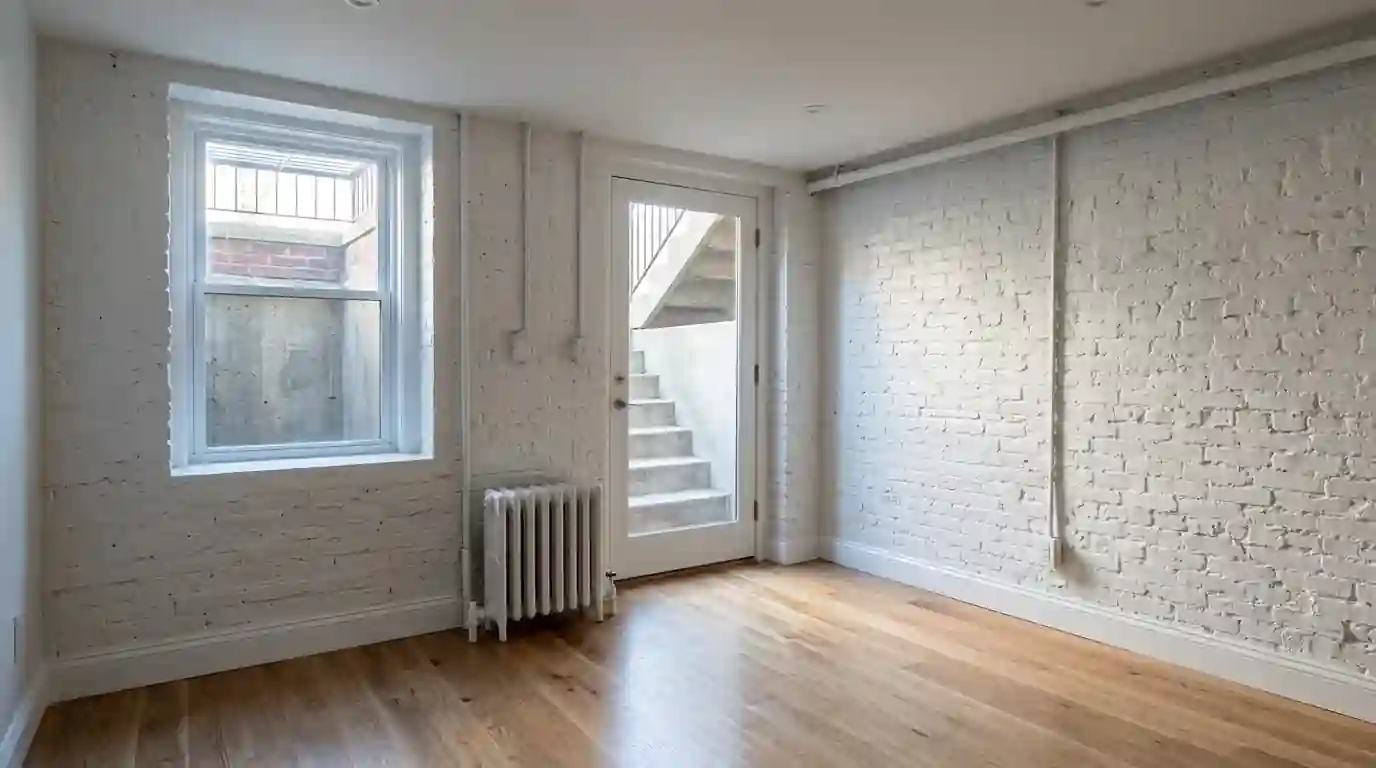
English basements add a second layer. Those half-sunk units under rowhouse stoops are often rented out, so they need to look like a finished apartment while sitting partly below the sidewalk. Front walls under the stoop, areaway steps and window wells take on splash and snowmelt, and the rooms behind them run humid in summer. We treat the masonry first and the finished drywall rooms second, with different products for each.
Older houses also bring old coatings. Cellar walls were often whitewashed or painted with oil-based or cement-based products decades ago, and some of that paint may contain lead. We test before scraping and follow EPA RRP lead-safe work practices where it applies.
Clues your basement walls are ready for a coating
Some of these mean paint will help. A couple mean we fix the water first.
Powdery white deposits
Efflorescence on brick or block shows that water carries salt through the wall. It can be cleaned and the wall sealed, but if it keeps coming back thick, the source outside needs attention too.
Paint bubbles that hold water
Blisters that leak when pressed mean the wall is pushing moisture behind a film that can't breathe. That film has to come off before any new coating will last.
Musty smell and gray spotting
Mildew in corners and behind stored boxes points to high humidity rather than leaks. A mildew-resistant finish plus a dehumidifier usually controls it.
Crumbling mortar joints
Sandy joints in old brick foundations let water in and leave nothing for paint to grip. We repoint small areas with a soft mortar before coating.
A dark, dated rental unit
Gray block walls and brown trim make an English basement feel smaller. A bright, washable finish helps a below-grade unit show well between tenants.
From damp cellar to painted room: the order of work
Most unfinished basements take two to four days, mostly because of cure and dry times between steps.
- Coat 01
Plastic sheet and meter test
We tape an 18-inch square of plastic to the wall for 24 hours and take meter readings. Condensation behind the sheet means water coming through; on the face means room humidity. The answer decides which coating system we use.
- Coat 02
Scrape, wire brush and vacuum
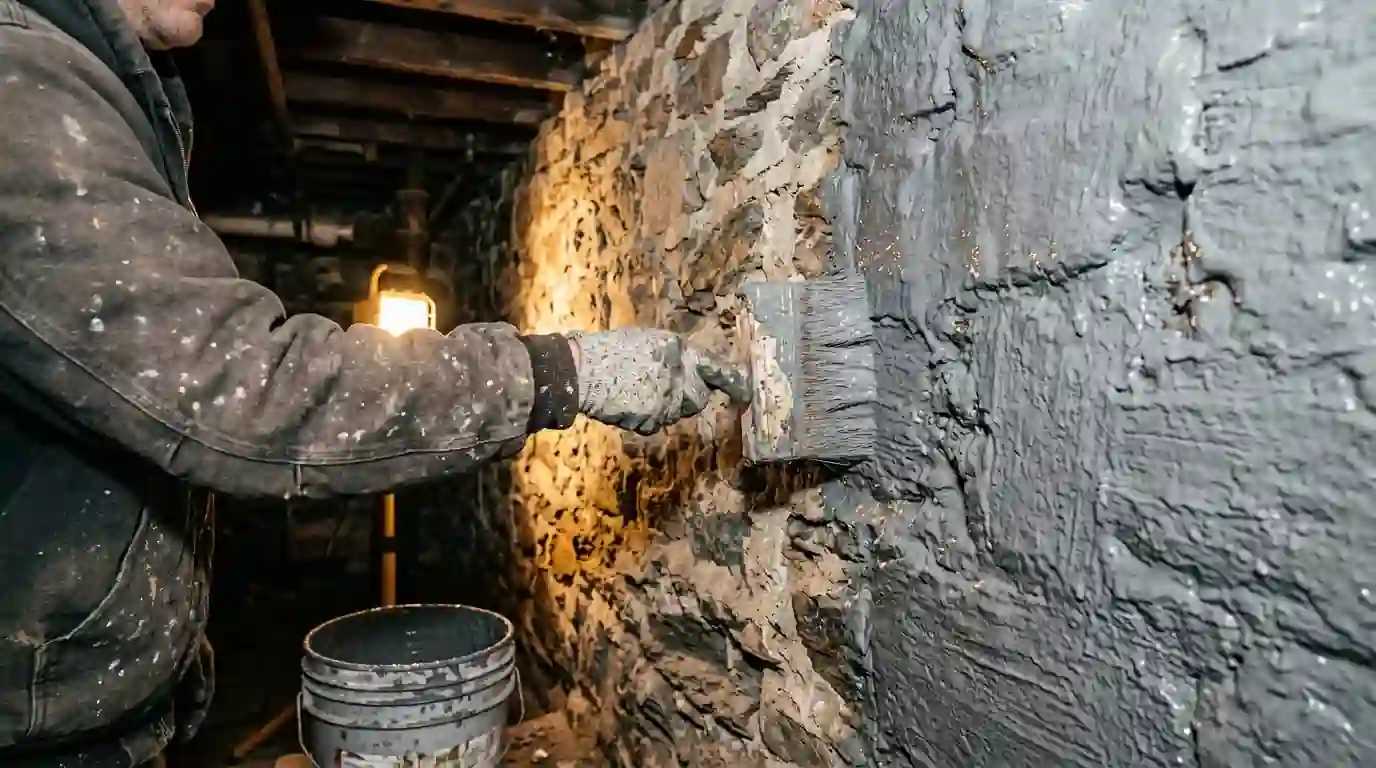
Loose paint, old whitewash and efflorescence come off with scrapers and stiff brushes. We HEPA vacuum the dust and wet clean the wall so no powder is left between masonry and primer.
- Coat 03
Etch and neutralize bare concrete
Smooth poured walls and slab edges get a mild etching solution to open the surface, then a clean water rinse. Fresh concrete needs about 28 days before anything goes on it.
- Coat 04
Patch joints and plug small seeps
Open mortar joints are repointed, and pinhole seeps are plugged with hydraulic cement, which sets in minutes even against light water pressure.
- Coat 05
Prime with a masonry sealer
A penetrating masonry primer or a waterproofing coating goes on by brush and roller, worked into the pores and joints. It needs a full day to cure in a cool basement, longer if the air is damp.
- Coat 06
Finish coats and floor line
Two finish coats in a mildew-resistant acrylic, cut cleanly at the floor and ceiling joists. If the floor is next, we tape off and schedule the slab separately.
- Coat 07
Run the dehumidifier and walk through
We ask you to keep a dehumidifier running around 50 percent humidity for the first week, then walk the room with you to check corners, pipe chases and under the stairs.
What a basement repaint costs in DC
Below-grade prices swing with how much prep the walls need, not just with square footage.
| Basement work | Typical range | What moves the price |
|---|---|---|
| Masonry walls, prime and two coats | $1.80 to $3.90 per sq ft | Old coatings to remove, efflorescence, mortar repair, and how many pipes and wires run along the walls |
| Waterproofing coating on foundation walls | $2.35 to $4.65 per sq ft | Product choice, number of coats, and how much patching and plugging the wall needs first |
| English basement unit, 1BR finished rooms | $1,850 to $3,750 | Ceiling height, trim count, kitchen and bath walls, and whether a tenant is still living there |
| Basement ceiling, joists and ducts sprayed | $1.45 to $2.95 per sq ft | Open joists versus drywall, wires and pipes to mask, and dark or light finish color |
| Lead-safe containment for old coatings | $380 to $1,450 per job | Square footage of disturbed paint, room access, and cleanup and verification needs |
| Basement stairs and railing | $395 to $940 | Number of treads, stringers, a handrail, and whether stairs get a nonslip floor paint |
These are typical ranges, not a quote; a walkthrough and moisture test set your price.
Waterproofing coating or breathable masonry paint?
These two get confused often. They solve different problems, and picking the wrong one is how basement paint fails.
Waterproofing coating
Thick, cement-like or acrylic coatings rated to hold back mild water pressure. Good for block walls that seep a little after storms. They don't fix a grading problem or a broken downspout, and they won't stop a real leak.
Breathable masonry paint
Lets vapor pass out of old brick and stone while giving a clean, washable color. This is usually right for pre-war rubble and soft brick walls, where trapping moisture does more harm than good.
Mildew-resistant interior acrylic
For drywall rooms in finished English basements. It looks like any other wall paint but resists the spotting that a damp below-grade room invites.
When neither is the answer
Standing water, wet floors after every storm or cracks that run water need drainage or foundation work first. We'll say so plainly before you spend money on paint.
Coatings that hold up on damp masonry
For bare block and poured walls with light seepage, we usually reach for a waterproofing masonry coating such as Rust-Oleum's Drylok line or a comparable product, brushed hard into the pores. On old soft brick and stone, a mineral-based option from Romabio lets the wall breathe while still giving a clean color. In finished rooms we use a mildew-resistant interior acrylic from Sherwin-Williams or Benjamin Moore, chosen for washability because basements take scuffs from bikes, laundry baskets and storage.
Primer matters as much as the topcoat. Over old oil paint or water-stained drywall, a stain-blocking primer from Zinsser keeps tannin and rust marks from bleeding through. Once the walls are done, many owners finish the slab too, and an epoxy floor coating gives a sealed, cleanable floor that suits the rest of the room.
Where we do this work most often
We take this job across the District and close-in Maryland and Virginia. These are the neighborhoods and cities we cover most, with a ZIP for each.
Questions we hear about this
Can you paint basement walls that get wet after heavy rain?
We can coat walls with light seepage using a waterproofing product, but paint is not a cure for a leak. If water runs down the wall or pools on the floor after storms, the downspouts, grading or foundation need work first. We'll test, show you what we find and tell you honestly which fix comes first.
How long before we can use the basement after painting?
Most rooms are usable the next day with light traffic, but coatings cure slowly in cool, damp air. Keep furniture a few inches off the walls for a week and run a dehumidifier. Masonry waterproofing coatings typically need a few days before anything leans against them.
Do you paint English basement apartments while a tenant lives there?
Yes, room by room, though it's faster between tenants. We use low-odor products, keep a path to the bathroom and kitchen open and work normal daytime hours. Landlords with several units often pair this with rental turnover painting so the whole place lists at once.
Will basement paint stop the white powder from coming back?
It slows it a lot, but only if the salts are fully removed and the right primer goes on. Efflorescence returning heavily means water is still moving through the wall from outside, so we'll point you to gutters and grading. Call (771) 247-4038 and we'll check the wall in person.
Is it safe to scrape old basement paint in a pre-war DC house?
Basements in homes built before 1978 often have old oil or lead-bearing paint. We test before disturbing it and, when lead is present, contain the area, mist and scrape by hand and HEPA vacuum under EPA RRP lead-safe work practices. Our lead-safe painting page walks through that setup.