Short answer
Wood rot repair in DC starts by probing to find soft wood, then either cutting it out and splicing in new rot-resistant lumber, or drying it, hardening it with epoxy consolidant and rebuilding the shape with epoxy filler. Every repair is primed before painting. A typical repair area costs $240 to $1,150, depending on size, location and whether parts must be milled to match.
Where rot hides on DC houses
Rot almost always starts where water sits or soaks into end grain. These are the spots we check first.
Window sills and lower sash rails
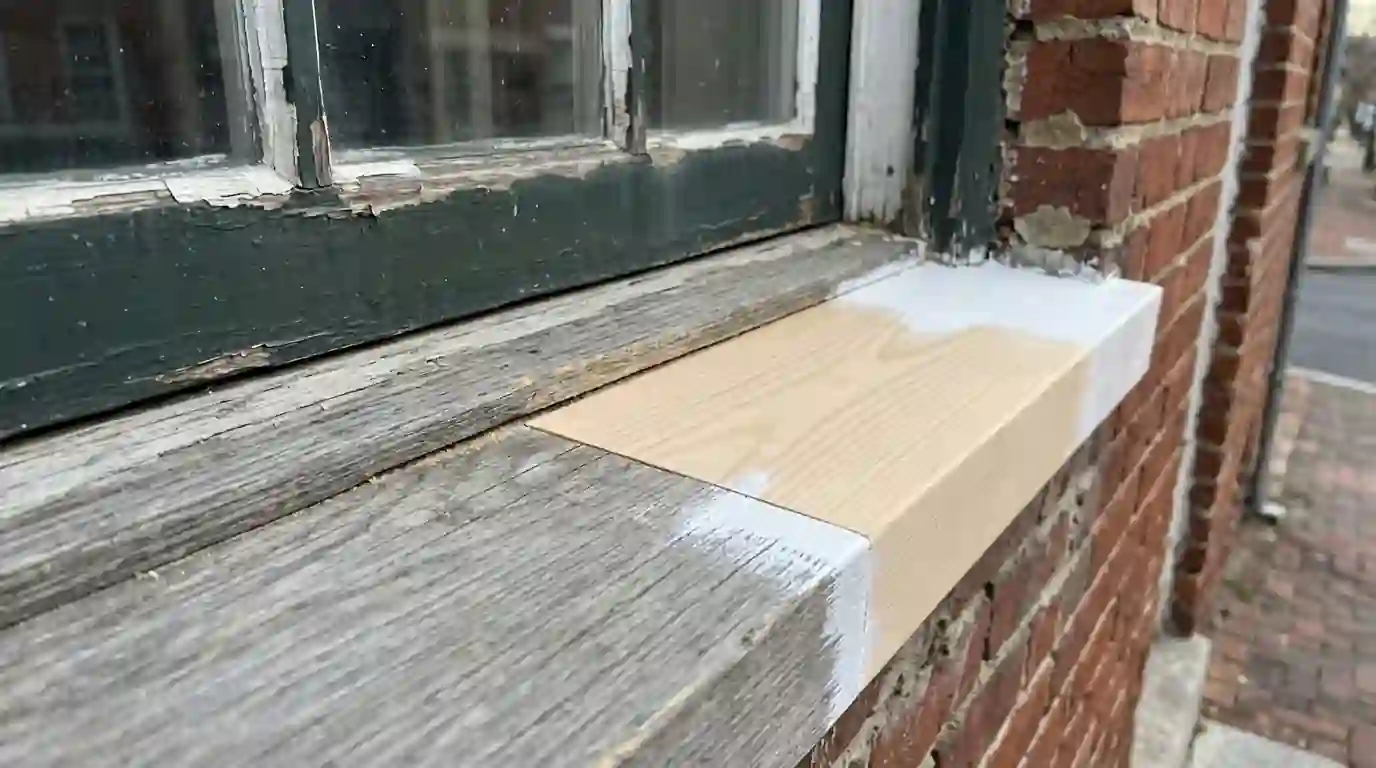
Sills hold standing water, and the bottom rail of a sash soaks it up. On old double-hung windows, both rot long before the rest of the frame shows a problem.
Porch columns and bases
Hollow columns trap moisture at the bottom, where the base meets the porch floor. Rot here can creep up inside the column long before it shows outside.
Fascia and rake boards
Clogged gutters overflow onto fascia, especially on detached houses in Michigan Park and Woodridge, where large trees drop leaves into the gutters each fall.
Porch floor ends and steps
Tongue-and-groove porch boards rot at their exposed ends and around posts. Stair treads and stringers near the ground follow soon after.
Door thresholds and jamb bottoms
Entry door jambs wick water from the stoop. A dark, soft patch at the base of a door frame is one of the most common rot spots we see.
Trim behind failed caulk
Open joints at corner boards and window casings let rain run behind the paint. The wood stays wet for days after every storm and slowly softens.
How we rebuild rotted wood so paint lasts
Most repairs are done during prep for an exterior repaint, so the repaired areas get primed and painted with the rest of the house.
- Coat 01
Probe and mark the damage
We push an awl into suspect areas and tap with a hammer handle. Soft wood gets marked so we know exactly how far the rot reaches, which is often further than the peeling paint suggests.
- Coat 02
Cut out or dig out the soft wood
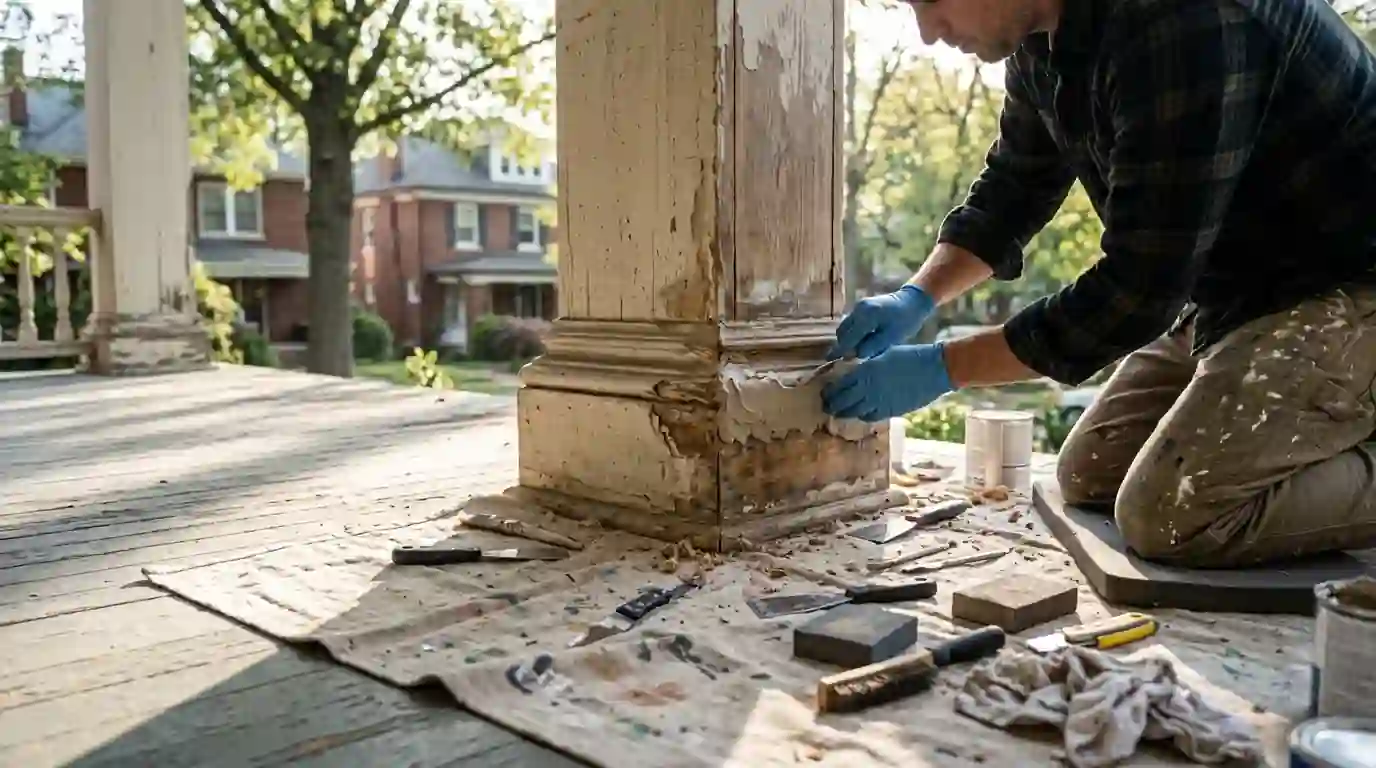
Badly rotted sections are cut back to sound wood with an oscillating saw. For smaller pockets, we dig out loose fibers with a carbide scraper until we reach firm material.
- Coat 03
Dry the wood
Epoxy will not bond to wet wood. We let the area dry, sometimes for a day or two with a heat gun or fan, and check with a moisture meter before going further.
- Coat 04
Harden with consolidant
A thin, penetrating epoxy consolidant is brushed or injected into the remaining wood. It soaks into soft fibers and hardens them so the repair has a firm base.
- Coat 05
Rebuild with filler or a splice
Epoxy filler is pressed in, shaped and left to cure. Larger losses get a spliced-in piece of rot-resistant wood or PVC, glued and fastened, with the joints sealed.
- Coat 06
Sand, prime and seal joints
Once cured, the repair is sanded flush to the original profile. We prime it with an exterior oil primer and caulk the joints so water no longer finds its way in.
Why DC weather keeps rot busy
DC's climate is built for rot. Long, humid summers with heavy afternoon storms keep exterior wood damp, and freeze-thaw winters widen every small crack in paint and caulk. Water gets into end grain, freezes, expands and opens the joint a little more each year. By the time paint peels, the wood underneath has often been wet for a while.
Older houses have an advantage here. The old-growth pine and fir in pre-war sills, cornices and porches is dense and naturally resistant, so rot often stays local instead of spreading. That makes repair worthwhile. We save as much original wood as we can, which matters on historic homes in Takoma and Capitol Hill where profiles are hard to match with modern lumber.
Rot repair also connects with lead safety. Most pre-1978 exterior trim has lead in its lower paint layers, and cutting or sanding it creates dust. We follow EPA RRP lead-safe work practices during repairs, with ground covers and HEPA cleanup. Our lead-safe painting page explains what that involves at your house.
Typical rot repair costs around the District
Most rot repair is priced per area, since every soft spot is a little different.
| Job | Typical range | What moves the price |
|---|---|---|
| Small epoxy repair, one area | $240 to $470 | Depth of rot, curing time, profile shaping |
| Window sill rebuild or partial splice | $360 to $780 | Sill length, horn shape, interior access |
| Fascia or rake board section | $410 to $940 | Height, ladder access, gutter removal |
| Porch column base repair | $520 to $1,150 | Hollow column, load support, plinth replacement |
| Door jamb bottom splice | $290 to $640 | Threshold, weatherstripping, both sides |
| Repaint repaired trim, per linear ft | $1.85 to $3.90 | Profile detail, existing paint condition |
These are typical DC ranges, not a quote; we confirm the price once we've probed the wood.
Epoxy, splice or full replacement?
There's no single fix for rot. Here's how we choose.
Epoxy consolidant and filler
Best for small to medium pockets in otherwise sound wood, especially on original sills and molded trim that would be expensive to replicate. It keeps the original profile.
Dutchman splice
A new piece of matching wood is glued into a cut-out section. It suits long sills, door jambs and trim with a straight run where most of the board is still good.
Replace the whole board
When rot runs through most of a board, replacement is faster and more durable. We use rot-resistant wood or cellular PVC for parts near the ground.
Call in a carpenter
If rot reaches structural framing, posts or sills under a porch, it needs a carpenter. We'll show you what we found and stop at the trim.
Repair materials that hold up outdoors
These are products chosen to bond to old wood and move with it.
- A low-viscosity epoxy consolidant that soaks deep into soft fibers.
- Two-part epoxy wood filler that can be shaped, sanded and painted like wood.
- Rot-resistant species or cellular PVC for parts in constant contact with water.
- Stainless or galvanized fasteners for splices that sit outside.
- An exterior oil-based primer over every repair before paint.
- A paintable elastomeric sealant at joints, so water stays out of the repaired areas.
Once repairs are primed, we paint them with the rest of the trim as part of exterior house painting or a porch painting job.
Where we do this work most often
We take this job across the District and close-in Maryland and Virginia. These are the neighborhoods and cities we cover most, with a ZIP for each.
Questions we hear about this
Can rotted wood be repaired without replacing it?
Often, yes. If the rot is limited to a pocket or the surface layer, we harden what's left with epoxy consolidant and rebuild the shape with epoxy filler. This keeps original sills and trim intact. When rot runs through most of a board, though, replacing that piece is the better long-term choice.
How do you know how far wood rot goes on my DC porch?
We probe every suspect area with an awl and tap with a tool handle. Sound wood resists; rotted wood sinks or sounds dull. On porches, we also check column bases, the underside of floor ends and the stair stringers. Sometimes hidden rot is only clear once paint is scraped, and we tell you right away if the scope changes.
Will wood rot come back after you repair it?
Not if the water source is dealt with. Rot needs moisture, so we seal joints, prime end grain and point out gutters, downspouts or flashing problems that keep wetting the wood. A repair painted and caulked properly can last as long as the surrounding trim. Our caulking and weatherproofing service keeps joints sealed afterward.
Is wood rot repair part of a full exterior repaint in DC?
Usually. We find most rot during prep for an exterior repaint, and it makes sense to fix it before priming. We price rot repair separately on the walkthrough, so you can see what's needed. If we uncover more once paint is scraped, we stop and talk with you before doing extra work.
Can you repair rot on old wood windows instead of replacing them?
Yes, in most cases. Sills and lower sash rails on original windows are prime rot spots, but the old-growth wood around them is often sound. We consolidate and rebuild the soft areas, then reglaze and paint as part of window sash painting. Call (771) 247-4038 if you'd like us to look at a specific window.