Short answer
Renovation painting in DC means inspecting the drywall finish, applying a drywall primer or mist coat, caulking and filling millwork, spraying or rolling two finish coats on walls and ceilings and enameling trim and doors, then handling the punch list after other trades finish. It typically costs $2.40 to $4.90 per sq ft of floor area.
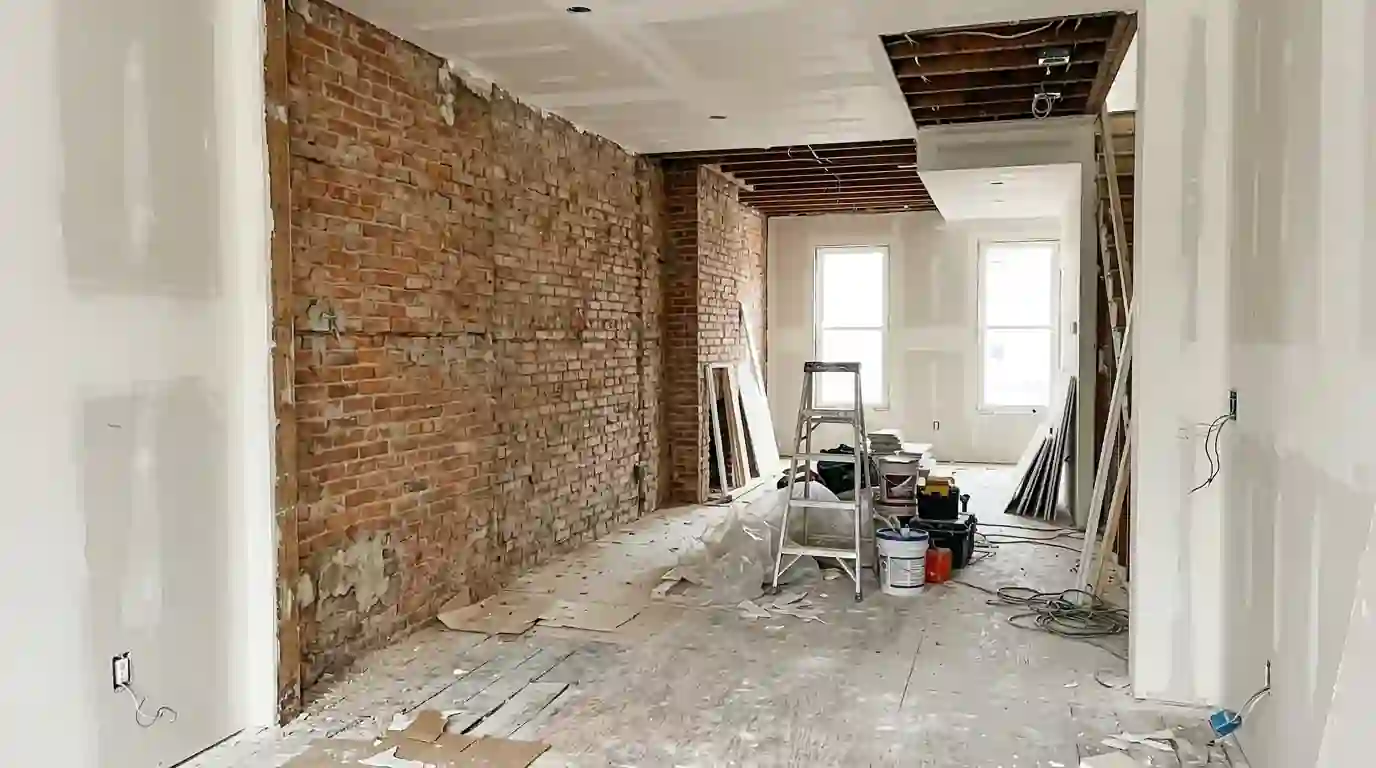
Bare drywall to move-in ready: the sequence we follow
On a typical rowhouse gut renovation, painting runs about one to three weeks, split between first coats and a final pass after flooring and fixtures.
- Coat 01
Drywall finish walk
Before any primer, we walk the rooms with a raking work light and mark ridges, open seams and sanding scratches. Flagging them now costs the finisher an hour; finding them after paint costs a full repaint of the wall.
- Coat 02
Mask and protect new work
Windows, new floors, cabinets, plumbing fixtures and HVAC registers are covered with plastic, paper and floor protection boards. On many sites we go in before floors and cabinets, which saves masking.
- Coat 03
Prime with PVA or a high-build primer
New drywall gets a PVA or high-build drywall primer sprayed and back-rolled to even out porosity between paper and mud. Patched plaster and fresh skim coat get a primer rated for both.
- Coat 04
Caulk, fill and sand millwork
Nail holes in base, casings and crown are filled, and joints are caulked with paintable caulk. Raw MDF and pine trim gets sanded, primed and sanded again for a smooth enamel finish.
- Coat 05
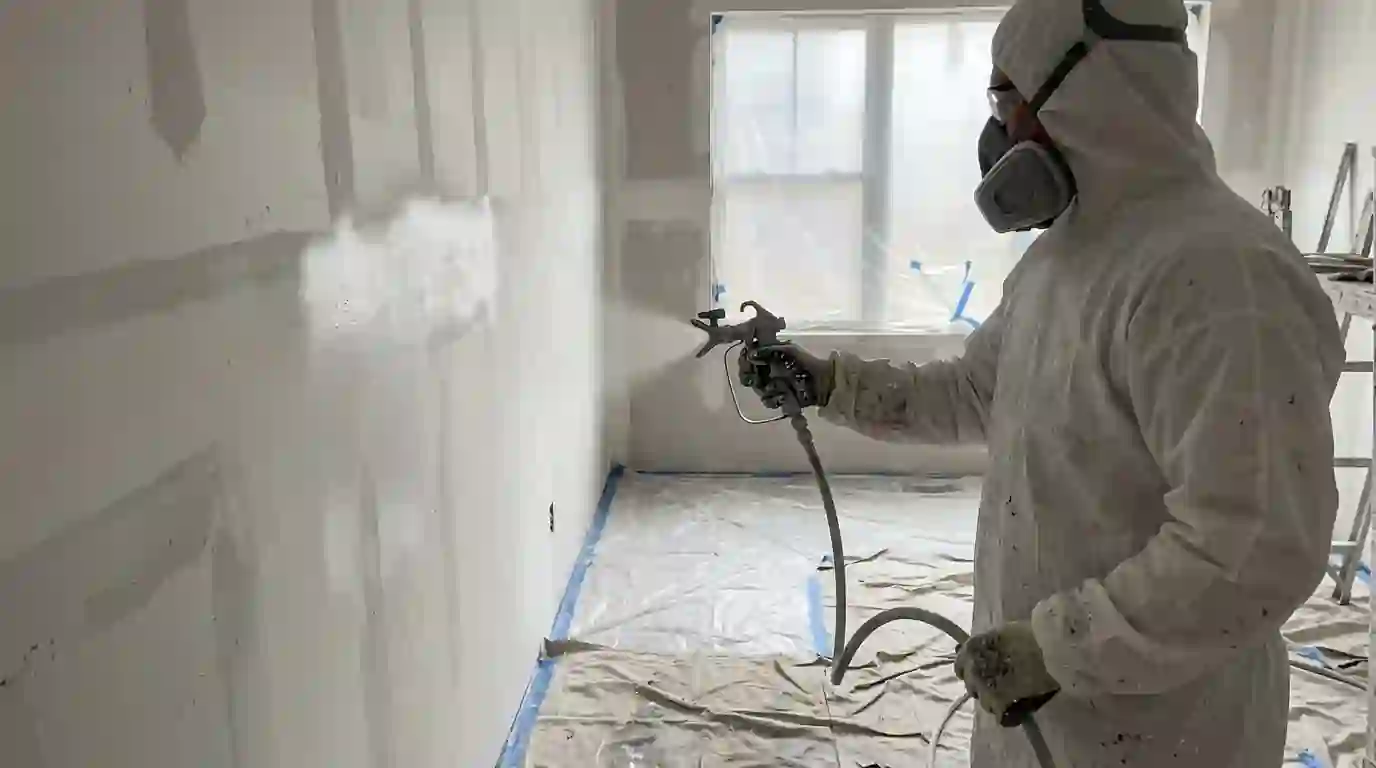
Spray ceilings and walls
With empty rooms, we spray ceilings flat and walls in two coats with an airless rig, then back-roll for an even texture. Colors go room by room according to the finish schedule.
- Coat 06
Enamel trim and doors
Doors and trim get semi-gloss or satin enamel, sprayed where rooms are empty and brushed where other work is already in place. Doors can be laid out and sprayed flat for the smoothest finish.
- Coat 07
Final punch list after other trades
After flooring, electrical, plumbing and hardware go in, we come back to touch up dings, cut in new outlet plates and fix scuffs from the last week of construction.
What renovation painting costs in the DC market
These ranges cover the most common renovation jobs we price for homeowners and general contractors.
| Renovation scope | Typical range | What moves the price |
|---|---|---|
| Whole-house renovation, walls, ceilings and trim | $2.40 to $4.90 per sq ft of floor | Number of rooms, ceiling heights, trim style, color count and empty versus furnished rooms |
| New drywall, prime and two coats only | $1.65 to $2.95 per sq ft of wall | Finish quality of the drywall, spray access and number of color changes |
| Kitchen or bath addition | $1,450 to $3,850 | Cabinet masking, tile edges, moisture-resistant paint and ceiling details |
| New interior doors, primed and enameled | $165 to $310 each | Slab or prehung, number of panels and whether doors are sprayed off site |
| Punch list and touch-up visit | $385 to $940 | Number of rooms, extra coats needed after damage and matching custom colors |
| Plaster patching in a partial renovation | $185 to $640 per area | Size of holes, delamination around new openings and texture matching |
These are typical ranges, not a quote; a site visit and the finish schedule set the final price.
Old house, new walls: DC renovation quirks
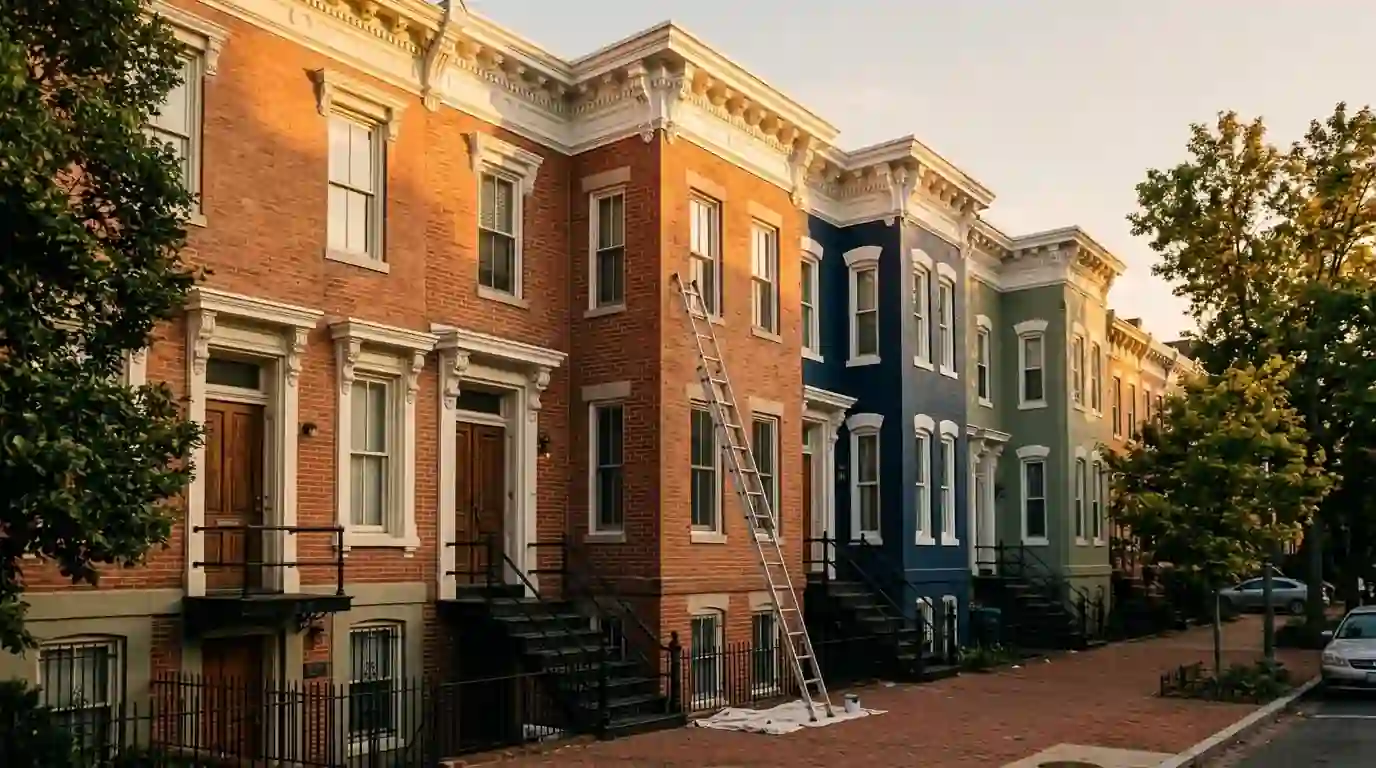
A lot of renovation work here happens inside pre-war rowhouses, where new drywall meets old plaster in the same room. The two surfaces absorb paint differently and age differently, so we prime them separately and feather the transitions. Seams where new framing meets an original brick party wall crack easily as the house settles, and we use flexible caulk and mesh tape details there rather than hoping paint will hide them.
Gut renovations on Capitol Hill and in Petworth often uncover lead paint on the trim and windows that stay. Any disturbance of paint in homes from before 1978 has to follow EPA RRP lead-safe work practices, and we coordinate with the general contractor so containment and cleanup line up with other trades. Our lead-safe painting page covers that in detail.
Scheduling is the other DC reality. Street parking is tight, permit parking zones limit where trucks stay, and DDOT emergency no-parking signs help on busy blocks. In condo buildings, most associations ask for work hours, elevator bookings and insurance certificates for every trade, including painters. We work these into the overall renovation schedule early.
Who usually hires us on a renovation
Renovation painting comes to us from a few directions, and we fit the paperwork and timing to each.
General contractors
We work from the GC's schedule and finish list, attend site walks and plan our two passes around drywall, flooring and trim carpentry. A single point of contact keeps questions moving.
Homeowners managing their own remodel
When you're running trades yourself, we help set the order of work so painting happens at the right time and doesn't get damaged by the next trade.
Investors and flippers
Speed and durable, neutral finishes matter most here. We spray whole houses in a single color scheme and return for quick touch-ups before listing photos.
Architects and designers
Specified products, custom colors and special finishes like limewash or high-gloss lacquer get mocked up as samples and approved before the full rooms are painted.
Primers, paints and spray gear for new work
New drywall drinks paint unevenly, so primer choice matters more than the topcoat. We often use a high-build drywall primer from Sherwin-Williams or Benjamin Moore to even out seams and mud, and Zinsser stain blockers wherever old water marks or knots show through. On millwork we use a sandable primer and a hard-curing enamel for trim and doors, which resists the bumps a new house gets in its first year.
For speed and finish quality we spray empty rooms with Graco airless rigs and back-roll walls with quality covers, keeping brushes for cut lines. Designers sometimes specify premium finishes such as Fine Paints of Europe on doors and trim, which we apply carefully in thin coats. If you need help choosing colors that work across a whole renovated house, a color consultation can be scheduled early in the project.
How to keep painting on schedule during a renovation
Most delays come from timing, not painting itself. These steps help.
- Book the painter when drywall starts, not when it finishes, so primer can go on right after the last mud coat dries.
- Finalize paint colors and sheens before priming, since tinted primer under deep colors saves a coat.
- Plan our first pass before flooring and cabinets go in, and the final pass after.
- Keep dust-producing work like tile cutting and sanding out of rooms after the finish coat is on.
- Leave a list of every custom color with product names and formulas so later touch-ups match exactly.
- Hold one walkthrough near the end with the GC, homeowner and painter together to agree on the punch list.
Where we do this work most often
We take this job across the District and close-in Maryland and Virginia. These are the neighborhoods and cities we cover most, with a ZIP for each.
Questions we hear about this
When should a painter come in during a DC renovation?
Usually right after the final drywall coat is sanded and before flooring, cabinets and trim installers finish. That lets us prime and spray efficiently, then return for a final pass and touch-up after other trades finish. We coordinate with the general contractor on the exact dates.
Can you paint new drywall that meets old plaster walls?
Yes. We prime each surface separately because they absorb paint differently, feather the transition and use flexible patching details where cracks are likely. In older homes, the plaster may also need plaster repair before painting so the old wall matches the new one.
Can you paint a renovated condo unit under building rules?
Yes. Most condo buildings in DC ask for insurance certificates, set work hours and elevator reservations for every trade on a renovation. We line those up with the manager, spray only where the building allows it and roll elsewhere to keep overspray and odor out of the hallways. Our guide to condo building rules lists what to clear first.
How long should fresh drywall mud dry before you prime it?
Generally at least 24 hours for setting compound and longer for ready-mix mud in cool or humid weather. Thick seams can take several days in a damp DC basement. We check with a moisture meter and by feel before priming, because wet mud under primer can crack or flash through.
Can you handle the punch list after the other trades leave?
Yes, and it's a big part of the job. After floors, fixtures and hardware go in, we walk each room and touch up scuffs, dings and new cuts around switches and outlets. Call (771) 247-4038 to set a site visit, and if you're also redoing a kitchen, ask about cabinet painting at the same time.