Paint and tools we reach for on DC jobs, from Sherwin-Williams and Benjamin Moore to Farrow & Ball and Romabio limewash.
Sherwin-Williams
Benjamin Moore
PPG
Farrow & Ball
Fine Paints of Europe
Romabio
Zinsser
Cabot
Sikkens
Rust-Oleum
Purdy
Wooster
Graco
Festool
Sherwin-Williams
Benjamin Moore
PPG
Farrow & Ball
Fine Paints of Europe
Romabio
Zinsser
Cabot
Sikkens
Rust-Oleum
Purdy
Wooster
Graco
Festool
Sherwin-Williams
Benjamin Moore
PPG
Farrow & Ball
Fine Paints of Europe
Romabio
Zinsser
Cabot
Sikkens
Rust-Oleum
Purdy
Wooster
Graco
Festool
Painting in the District
What hiring a painter in DC should look like
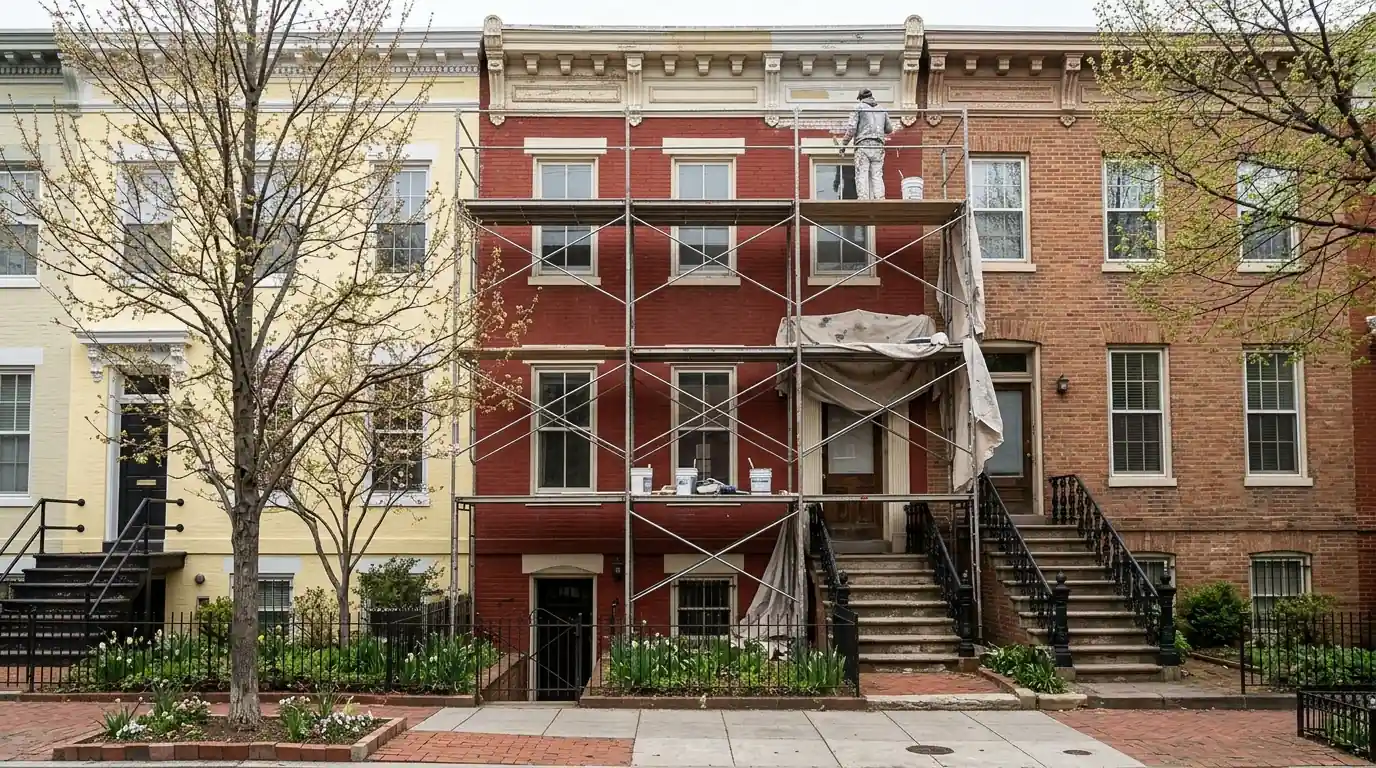
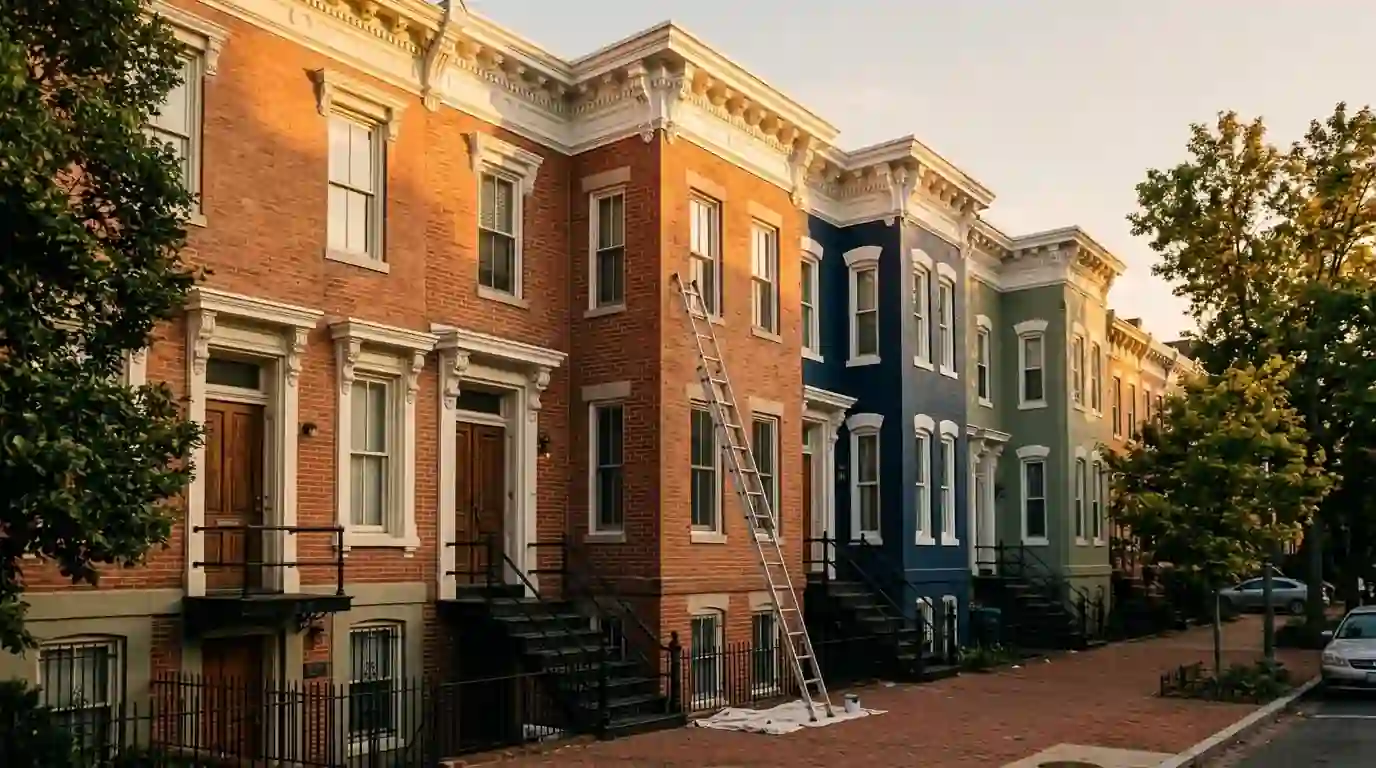
Most houses in the District are older than the people living in them. That changes the job. A Petworth porch front built in the 1920s, a Capitol Hill rowhouse with layers of paint on its cornice, a Chevy Chase Colonial with original wood windows: each one needs prep that a quick roll-and-go crew skips, and skipped prep is why paint peels within two summers.
Muller Painting works out of Brookland, a few blocks from the Brookland-CUA Metro, and paints across DC and the close-in suburbs of Maryland and Virginia. We scrape and sand before we prime, fix cracked plaster instead of hiding it under caulk, and treat pre-1978 paint with lead-safe work practices. Rooms are covered, furniture is moved and put back, and you know each evening what happens tomorrow.
The phone is answered around the clock. Painting happens on a normal work schedule, but if a leak has stained a ceiling or a tenant moves out on short notice, you can reach a person at 2 a.m. and have a walkthrough on the calendar by morning.
Short answer
Muller Painting paints interiors, exteriors, cabinets and rowhouse facades across Washington, DC from a Brookland office on Edgewood St NE. A walkthrough comes first, then a written price. Typical DC jobs run $485 to $860 for a bedroom and $2,350 to $6,900 for a rowhouse front, depending on prep and access.
37 services
Everything we paint, patch and seal
Thirty-seven services grouped by the way DC homeowners usually describe the job. Each page explains the work step by step, lists typical prices and answers the questions we hear on walkthroughs.
What your house's build year means for the paint job
Most of the prep on a DC job is decided by when the house was built. Pick the era closest to yours to see what we usually find under the old paint and what we plan for before the first coat.
Built before 1900
Federal and Victorian rowhouses
Typical on Capitol Hill, in Georgetown and along the older blocks of Shaw and Bloomingdale.
What we usually find
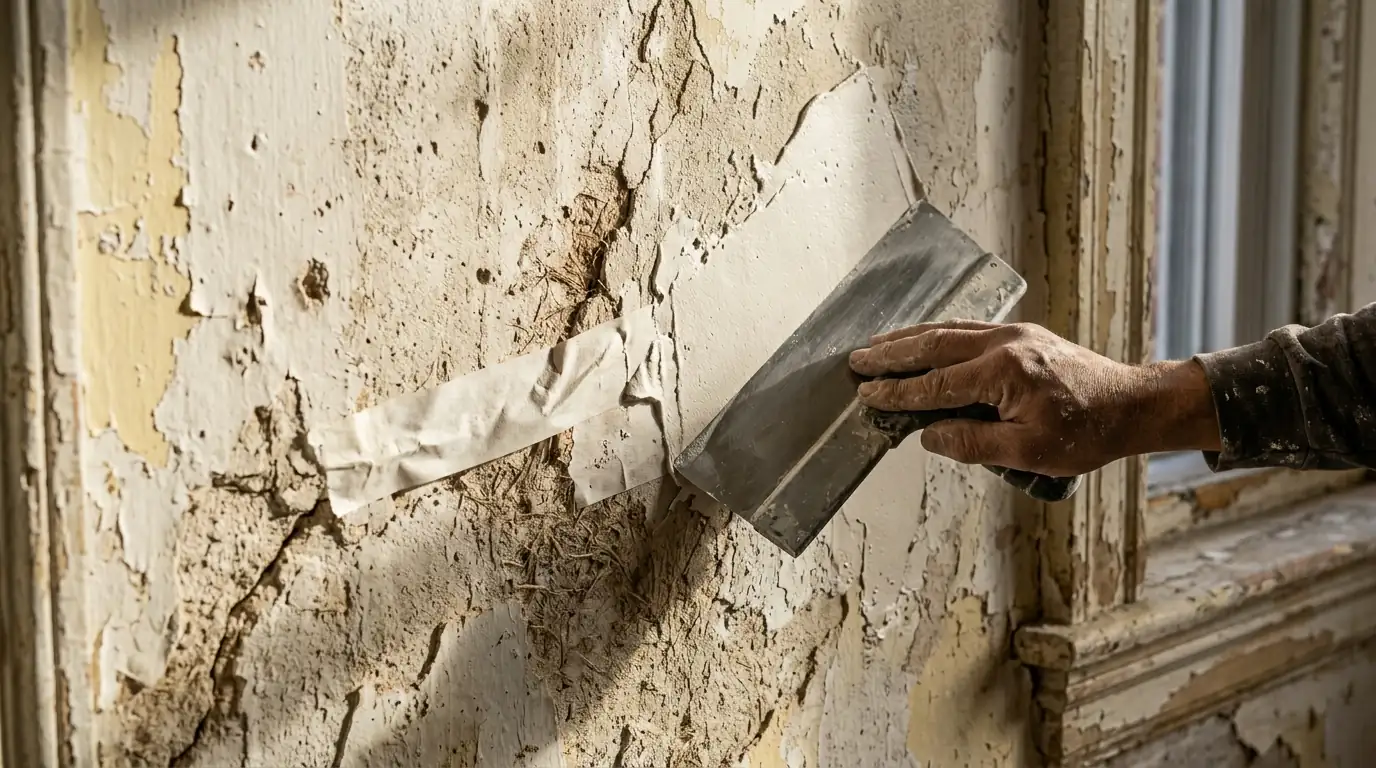
Walls: lime plaster on wood lath, often with old cracks and patched layers
Trim: old-growth wood carrying many coats, the lower ones almost always lead
Exterior: soft brick and lime mortar that need breathable coatings
Prep we plan for
Containment and wet scraping before any old paint is disturbed
Re-anchoring loose plaster and skim coating instead of covering cracks
Limewash or mineral paint on brick, and a historic district check for unpainted masonry
Age, climate and city rules all shape a paint job here. These are the six things we plan around on almost every DC house.
Plaster, not drywall
Pre-war walls are lime or horsehair plaster on lath. Cracks need re-anchoring and skim coats, so plaster repair comes before the first coat of paint.
Lead in older paint
Homes built before 1978 often have lead somewhere under newer coats. We contain, wet scrape and HEPA clean when we disturb it. See lead-safe painting.
Humid summers
July humidity slows drying and traps moisture under fresh film. We watch dew points, schedule exterior coats for drier windows and give paint the hours it needs.
Historic district review
Painting unpainted brick in a historic district generally needs a look from the DC Historic Preservation Office. We flag it during the walkthrough so you can check first.
Iron and masonry
Stoop railings rust and brick fronts hold water. Each needs its own primer and coating, covered on our iron railing and brick pages.
Building rules
Condos ask for insurance certificates, elevator bookings and quiet hours. We plan around them so a condo repaint does not stall at the front desk.
Layer by layer
How a Muller job runs from first call to final walkthrough
Every job follows the same order, whether it is one bedroom or a three-story facade. Each step is its own layer, and the finish coat only looks as good as the layers under it.
Coat 01
Walkthrough and written price
We look at every surface, test old paint where it matters, take notes on access and parking, and send a written price with the scope spelled out.
Coat 02
Protect and contain
Floors, furniture, plants and neighbors' steps get covered. In pre-1978 homes we set up plastic containment before anything is scraped.
Coat 03
Scrape, sand, patch and caulk
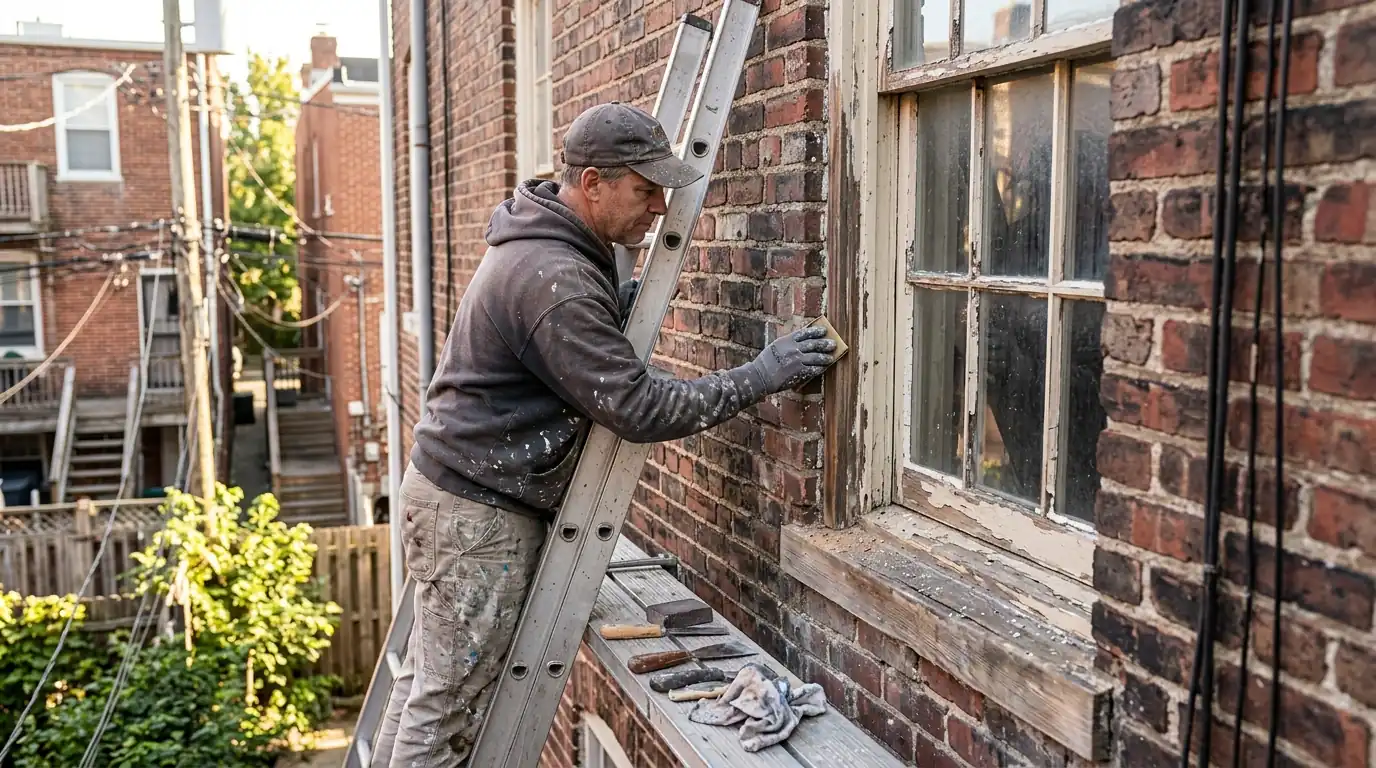
Loose paint comes off, edges get feathered, cracks are filled and joints are caulked. This is where most of the hours go.
Coat 04
Prime what needs it
Bare wood, stains, patches and rusted iron get a primer matched to the surface, from oil-based stain blockers to rust converters.
Coat 05
Two finish coats
We cut in by hand and roll or spray two coats, letting each dry fully. Color and sheen are confirmed in your light before the first one.
Coat 06
Final walkthrough
We walk the job with you in daylight, mark anything you want touched up and fix it before the drop cloths leave.
Coverage
Where we paint around the capital
Our office sits in Brookland, and we paint across all of DC plus nearby Silver Spring, Bethesda, Alexandria and the counties around them. Pick your area for local details, or check your ZIP.
Typical ranges for planning only, not a quote. A walkthrough sets the price.
Answers
Questions DC homeowners ask before they book
Do you paint houses in every part of Washington, DC?
Yes. We paint in all eight wards, from Georgetown and the Palisades to Capitol Hill, Brookland and Congress Heights, and in nearby Maryland and Virginia. Our office is in Brookland, so Northeast and Northwest jobs are the shortest drive, but we schedule work across the whole District.
How soon can a painter come look at my house?
Most walkthroughs happen within a few days of your call, often sooner for small interior jobs. Calls are answered 24/7, so you can call at night and have a time set by morning. Larger exterior projects are booked by season, so spring and early fall fill up first.
Do I need to be home while you paint?
Not for the whole job. We need access at the start of each day and someone to walk the finished work with us. Many clients leave a key or a lockbox code. For condos we coordinate with the front desk or building manager.
Can you paint a DC house built before 1978?
Yes, and most of the houses we paint are that old. We assume older layers may contain lead, set up containment, wet scrape and clean with HEPA vacuums when old paint is disturbed. Our lead-safe painting page walks through it.
Do you help pick colors?
We do. A color consultation visit puts large samples on your walls in your own light, and we talk through sheen for each room. Many people find the color that looked right in the store reads very differently in a north-facing DC rowhouse.
What time of year is best for exterior painting in DC?
Roughly April through October, with late spring and early fall being the easiest. Midsummer works with early starts and careful timing around humidity and storms. Our guide on the DC exterior painting season covers temperatures and dry times.
Mid-April through October is the DC exterior painting window, but the best weeks are narrower. Here is how temperature, dew point and humidity decide each painting day, and when to book yours.
Painted or unpainted brick, historic district or not, mortar and moisture: the checks that decide whether a DC rowhouse facade should be painted, limewashed or left alone, with typical costs.
Most pre-war DC homes still have plaster on wood lath. Here is how to read the cracks, when re-anchoring and skim coating beat replacement, and when drywall really is the better call.
Tell us about the rooms, the facade or the trim that needs work. We answer 24/7, set a time to see it, and give you a written price before anything is scheduled.