Short answer
Removing a popcorn ceiling in DC starts with an asbestos test, since textures applied before the 1980s may contain it. If the sample comes back clear, we seal the room, wet the texture, scrape it off, repair the board, skim coat, prime and paint. Typical cost runs $2.10 to $4.60 per square foot. Positive results go to an asbestos abatement specialist.
Reasons DC homeowners scrape the popcorn off
Most of the popcorn ceilings we see are in mid-century houses, 1970s condo buildings and basements finished in the same era.
Yellowed or stained texture
Popcorn absorbs smoke, cooking grease and roof leak stains. It can't be scrubbed, and painting over it often makes it flake or clump.
Dust and cobwebs that won't clean
The rough surface catches dust in every crevice. A smooth ceiling can be wiped or vacuumed; popcorn just sheds when you try.
Patches that never blend
After a leak or a light fixture change, patched popcorn always shows. Removing it lets the whole ceiling be repaired evenly.
Dark rooms and dated look
Flat, smooth ceilings bounce light better. In a Shepherd Park split-level or an older condo, the change makes a room look larger and newer.
Updating before a sale
Buyers notice popcorn ceilings and often price in removal. Taking it off before listing removes a question from the inspection report.
Asbestos, lead and older DC ceilings
Spray-on acoustic textures were common from the 1950s through the 1970s, and many applied before the 1980s contain asbestos. You cannot tell by looking. Before we wet or scrape any popcorn ceiling, a small sample is taken and sent to an independent testing lab. Only when the result shows no asbestos do we start removal.
If the test comes back positive, we do not remove it. That work belongs to an asbestos abatement specialist with the containment and disposal systems the law requires. Once they clear the room, we can come back for the skim coat, priming and painting. Some homeowners choose instead to leave a positive ceiling in place and encapsulate it with paint, which we can discuss with you.
Ceilings from before 1978 may also have lead in the paint layers above or below the texture. We follow EPA RRP lead-safe work practices when that applies, and our post on lead paint in pre-1978 homes explains what that means for you during the job. Humidity matters too; in a damp DC summer, skim coats on a large ceiling can take an extra day to dry.
Removing popcorn texture, start to finish
A typical bedroom ceiling takes two to three days, mostly because skim coats need to dry between passes.
- Coat 01
Sample and test
We take a small sample from an inconspicuous spot and send it for lab testing. Work only goes ahead with a clear result in hand, and we keep a copy for your records.
- Coat 02
Empty and seal the room
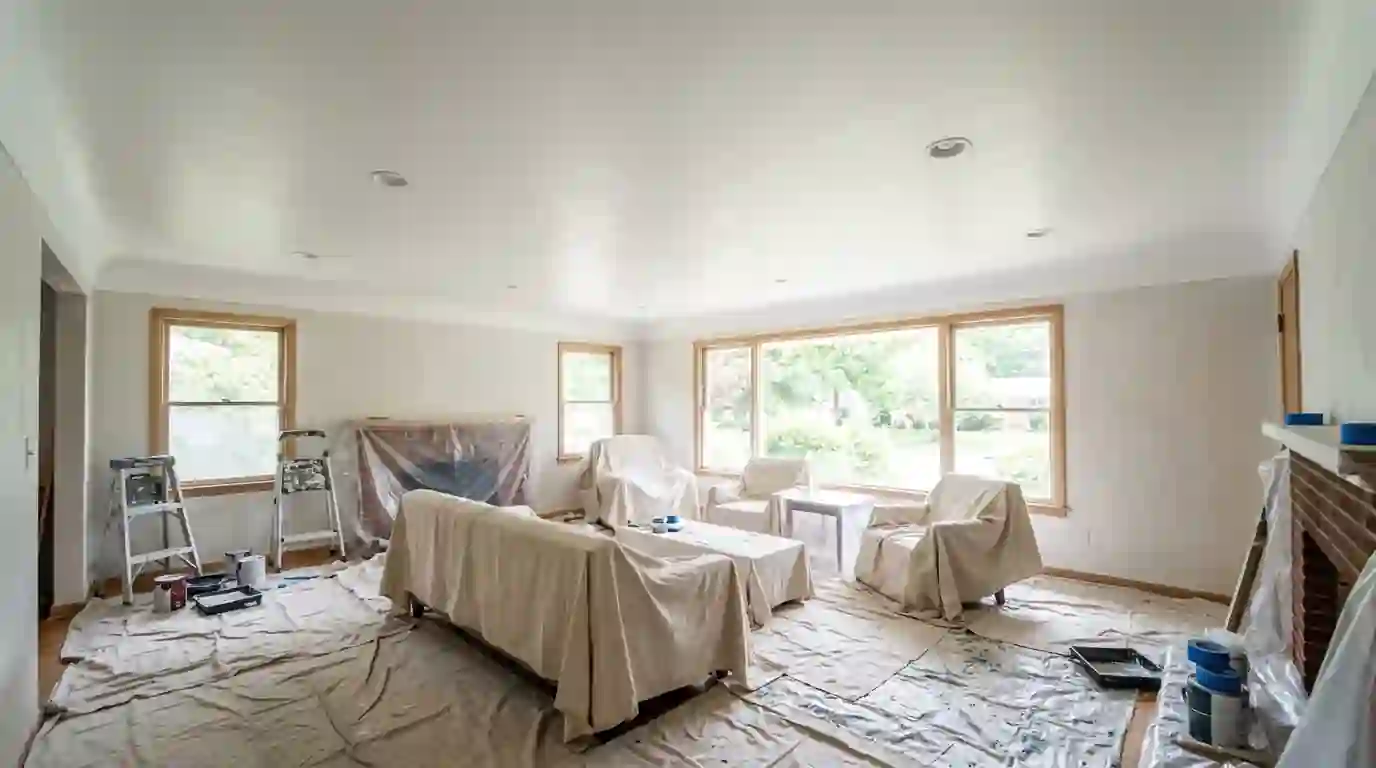
Furniture comes out, floors get plastic and rosin paper, and walls are draped in plastic taped near the ceiling line. Vents and light fixtures are sealed or removed so wet texture and dust stay contained.
- Coat 03
Mist and soak the texture
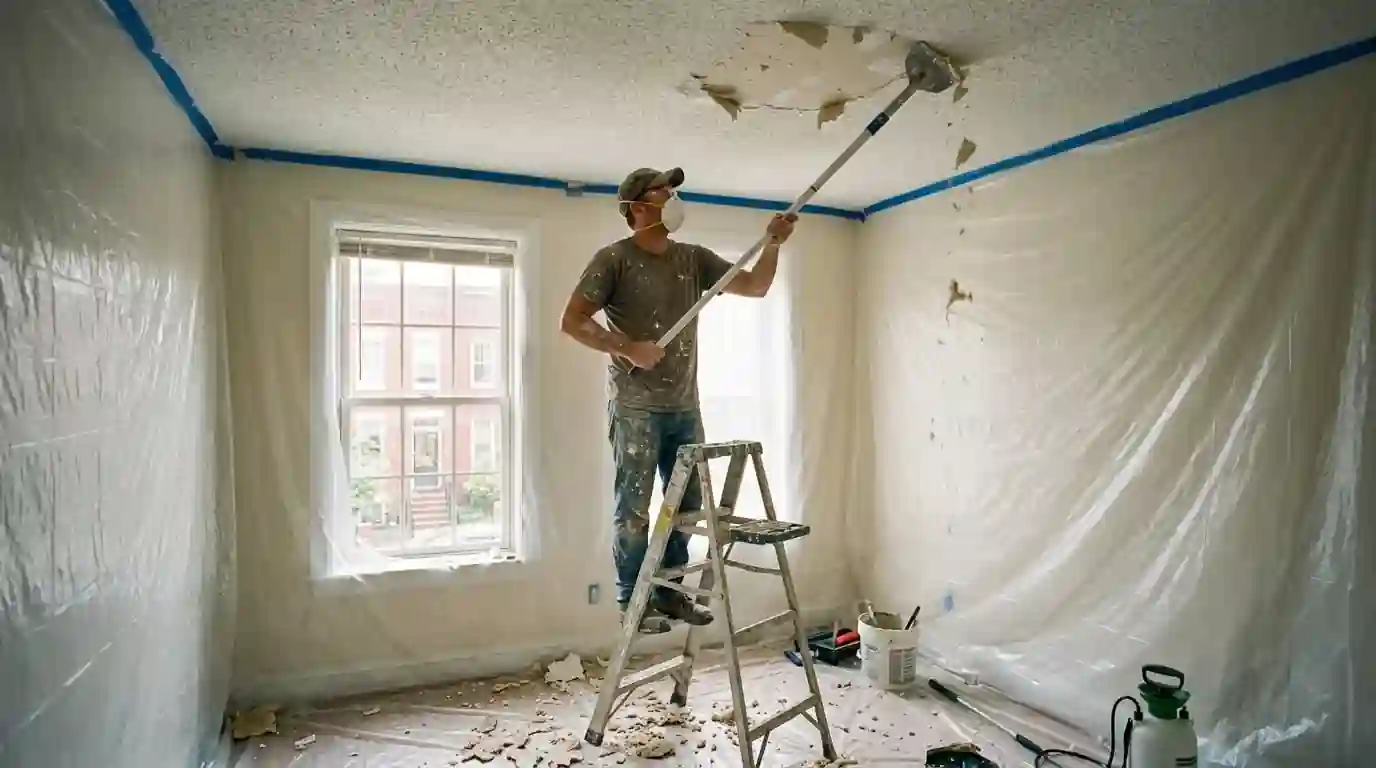
We spray the popcorn with water, sometimes with a little dish soap, and let it soak about 15 minutes. Wet texture softens and comes off in clumps instead of dry dust.
- Coat 04
Scrape in sections
With a wide scraper or a pole scraper, we work a few feet at a time, re-wetting as needed. Care is taken not to gouge the drywall face paper underneath.
- Coat 05
Repair the bare board
Gouges and torn paper are sealed with a shellac-based primer, then seams and dings are taped and filled. Many popcorn ceilings were never finished well, so seams often need full re-taping.
- Coat 06
Skim coat and sand
Two thin coats of lightweight compound are troweled across the whole ceiling, then sanded with a vacuum-connected sander. The goal is a flat surface under raking light.
- Coat 07
Prime and paint flat
A drywall primer seals the compound, and two coats of flat ceiling paint finish the job. See our ceiling painting page for how we roll ceilings without lap marks.
What popcorn ceiling removal costs in DC
Most of the cost sits in the skim coat and finishing, not in the scraping itself.
| Job | Typical range | What moves the price |
|---|---|---|
| Popcorn removal, skim and paint | $2.10 to $4.60 per sq ft | Ceiling height, seam condition, prior paint on texture |
| Small bedroom, about 120 sq ft | $410 to $760 | Light fixtures, closet ceilings, furniture moved |
| Living room, about 280 sq ft | $870 to $1,490 | Vaulted areas, beams, skim coats needed |
| Whole condo, one bedroom | $1,640 to $3,180 | Building rules, elevator time, hallway ceilings |
| Asbestos lab test, per sample | $45 to $95 | Number of rooms with different textures |
| Paint-only encapsulation of popcorn | $1.15 to $2.30 per sq ft | Texture condition, stain blocking, height |
These are typical DC ranges, not a quote; your actual price is set after a walkthrough and test result.
Tools and coatings for a smooth ceiling
Ceilings are unforgiving, so we pick materials for flatness and low shine.
- Pump sprayer and wide ceiling scrapers with rounded corners to protect the board.
- Shellac-based primer, such as Zinsser B-I-N, over torn paper or stains left by old leaks.
- Lightweight joint compound for skim coats, because it is easy to sand overhead.
- A pole sander or vacuum-connected sander to keep dust out of the house.
- A dedicated flat ceiling paint, such as Benjamin Moore Waterborne Ceiling Paint, which hides minor flaws.
- A raking work light held at a low angle to check for ridges before primer goes on.
If your walls need patching too, we often schedule drywall repair during the same visit.
What to expect in the room while we work
Popcorn removal is messy, but it stays inside the containment.
- The room will be empty and sealed in plastic for two to three days.
- Expect the HVAC vent in that room to be closed and covered during the work.
- Light fixtures and smoke detectors come down and go back up when we're done.
- Wet scraping makes little airborne dust, but it is noisy and wet underfoot.
- Skim coats need dry air; running a dehumidifier helps in humid weeks.
- Walls next to the ceiling may need touch-up or full repainting afterward.
Where we do this work most often
We take this job across the District and close-in Maryland and Virginia. These are the neighborhoods and cities we cover most, with a ZIP for each.
Questions we hear about this
Do you test popcorn ceilings for asbestos before removal in DC?
Always. Any popcorn ceiling applied before the 1980s may contain asbestos, so we take a sample and send it to an independent testing lab before any scraping. With a clear result, we proceed. If asbestos is found, an asbestos abatement specialist must handle removal, and we can return afterward to finish and paint the ceiling.
Can you paint over a popcorn ceiling instead of removing it?
Yes, painting is an option, especially if the texture tests positive and you want to leave it in place. We spray rather than roll so the texture doesn't pull off. The downside is that painted popcorn is harder to remove later, since water won't soak through the paint easily.
How messy is popcorn ceiling removal in a condo?
Inside the room it's very messy, but everything is contained in plastic. Most DC condo buildings ask for set work hours and elevator reservations, which we plan for. Wet texture is bagged and carried out, and the hallway stays clean. Our condo painting service explains how we work around building rules.
Will removing popcorn reveal damage on my ceiling?
Often it does. Popcorn was sometimes used to hide poor taping, stains and uneven seams. After scraping, we fix what's underneath: re-taping seams, sealing stains and skim coating. That is why the price includes finishing, not just scraping, and why the result looks better than a plain scrape.
How long until I can use the room after popcorn ceiling removal?
Usually two to four days, depending on ceiling size and humidity. Scraping takes a few hours; skim coats need drying time between passes, then primer and two coats of paint. In a Shepherd Park split-level or similar house, we often move room to room so you only lose one space at a time.