Short answer
Interior painting in DC covers moving and covering furniture, repairing plaster or drywall, spot priming stains and patches, then two finish coats on the walls, with ceilings and trim if you want them. A typical bedroom runs $485 to $860 for two wall coats, and a whole interior lands around $3.40 to $6.10 per square foot of floor.
Signs your rooms are past a touch-up
Touch-ups stop working once paint has aged or the wall under it has moved. These are the conditions we see most in DC houses that tell us a full repaint is the better spend.
Cracks that return every winter
Hairline cracks running from door and window corners usually mean the plaster keys have loosened. Painting over them buys a season at most. We open, tape and fill them first, and bigger failures go to our plaster repair work.
Dull patches where touch-ups landed
Touch-up paint rarely matches aged paint, so spots flash dull or shiny when afternoon sun crosses the wall. Once a room has more than a handful of these, a full coat costs less than chasing them one by one.
Flat paint that won't wash
Older flat finishes burnish and smear when you scrub them, which is why hallway and stair walls look gray at hand height. A scrubbable matte or eggshell fixes that for the next decade of fingerprints and backpacks.
Yellowing near kitchens and baths
Cooking grease, old oil-based coats and bathroom steam leave walls yellowed or tacky. Those surfaces need degreasing and a bonding primer, or the new latex peels in sheets the first time someone sticks tape to it.
Colors that fight your light
North-facing rowhouse rooms swallow cool grays, and south light can turn a warm beige pink by late afternoon. If a room never looks right at any hour, a new palette from a color consultation is usually the fix.
What DC houses ask of an interior painter
Most of the houses we paint were built before 1950, and many still have their original horsehair or lime plaster. Plaster is harder than drywall and it moves differently. It cracks along lath lines, bulges where keys have broken and holds onto decades of paint layers. Rolling fresh color over that without repairing it just paints the cracks a new color. On a typical Capitol Hill rowhouse, a third of our interior time goes to the walls before any finish coat.
Age also means lead. Any home built before 1978 may have lead paint somewhere, most often on trim, doors and window parts rather than broad wall surfaces. When our prep will sand or scrape those surfaces, we follow EPA RRP lead-safe work practices, with plastic containment, misting and HEPA cleanup. Our lead-safe painting page explains what that adds to a job and why it matters with kids in the house.
Then there's the layout. Narrow rowhouse stairs, tight back halls and furniture that came in before the banister went up all shape how we stage a job. Summer humidity matters too. Latex dries slowly on a muggy August afternoon, so we run your air conditioning or a dehumidifier and space coats further apart rather than trapping a soft film under the second coat.
From cleared room to dry second coat
Every room follows the same order, so nothing gets painted before the surface under it is ready.
- Coat 01
Stage and protect
We move furniture to the center, wrap it in plastic, and cover floors with rosin paper and canvas runners from the front door to the room. Switch plates, vent covers and outlet covers come off and go into a labeled bag.
- Coat 02
Read the walls in raking light
A work light held flat against the wall shows cracks, nail pops and old patch ridges that overhead light hides. We mark each defect with a small piece of painter's tape so nothing gets missed during repair.
- Coat 03
Repair, then sand clean
Cracks get mesh tape and setting compound, which hardens chemically and shrinks less than premixed mud. Dents and old anchors get filled and feathered. We sand with a Festool sander tied to a dust extractor, so fine dust stays out of the rest of the house.
- Coat 04
Spot prime what will bleed
Water stains, marker and smoke shadows get a shellac primer such as Zinsser BIN, and every patch gets primer so it doesn't flash through the finish. Glossy old enamel gets scuff sanded and a bonding primer.
- Coat 05
Cut in and roll the first coat
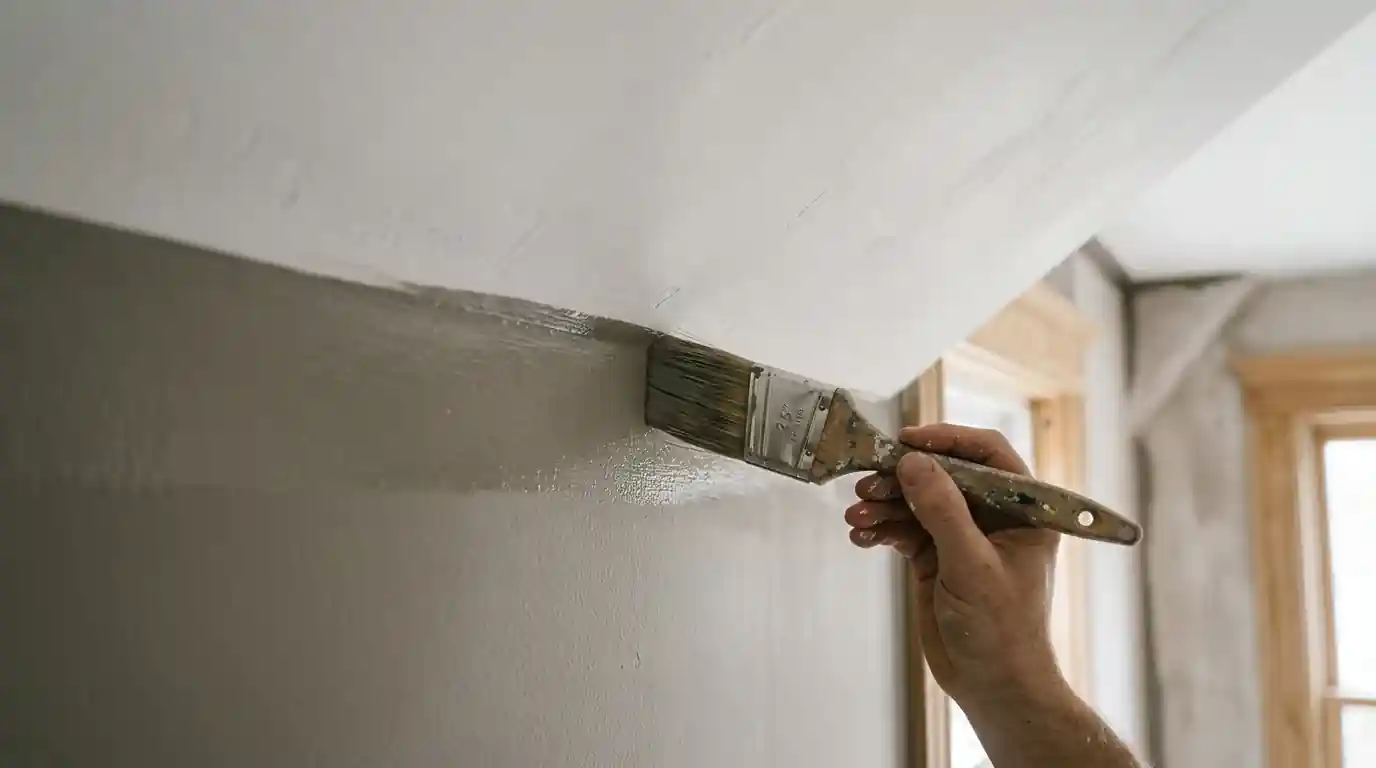
We cut ceiling lines and corners with an angled brush, then roll each wall wet edge to wet edge with a 3/8-inch nap cover. Most latex wall paints need two to four hours before recoat, longer on a humid day.
- Coat 06
Second coat and a room walk
The second coat goes on in the same order. When it's dry we pull tape, reinstall covers, put furniture back and walk the room with you under daylight and lamp light, fixing anything either of us spots.
What a DC interior repaint typically costs
These ranges reflect recent work in DC rowhouses, detached homes and condos. The condition of the walls moves the number more than the square footage does.
| Job | Typical range | What moves the price |
|---|---|---|
| Bedroom walls, two coats | $485 to $860 | Ceiling height, number of windows and doors, amount of crack repair |
| Living or dining room with 9 to 10 foot ceilings | $730 to $1,340 | Tall walls need ladders or planks, and open plans add cut lines |
| Whole interior, per sq ft of floor | $3.40 to $6.10 | Whether ceilings, trim and closets are included, plus color changes |
| Ceiling, per room | $240 to $520 | Stains that need blocking, texture, and stairwell access |
| Plaster crack and patch area | $185 to $640 | Loose plaster that needs re-anchoring rather than filling |
| Lead-safe containment, per job | $380 to $1,450 | How many pre-1978 painted surfaces our prep will disturb |
These are typical ranges, not a quote; we set your price after a walkthrough of the rooms.
Picking paint and sheen for rooms people live in
For most walls we use a premium acrylic in matte or eggshell, such as Benjamin Moore Regal Select or Sherwin-Williams Emerald. Both hide well in two coats and wash without burnishing. Old plaster with lots of patching looks best in a true matte, because sheen picks up every ripple once light rakes across it. Hallways and kids' rooms can step up to eggshell for easier cleaning.
Kitchens and baths get a satin or a paint made for moisture so steam doesn't blister it. Trim and doors take a semi-gloss or satin enamel that levels out brush marks. If you're stuck between finishes, our guide to picking sheen by room walks through it, and we'll bring drawdowns to the walkthrough so you can see the difference on your own wall.
Before our painters arrive
A little prep on your side shortens the job and keeps your things safe.
- Take down art, mirrors and wall-mounted TVs, or tell us which ones you'd like us to remove.
- Empty shelves, dressers and anything breakable from the rooms on that day's schedule.
- Clear a path to the rooms and a spot near the door where we can stage drop cloths and buckets.
- Let us know about pets, napping kids or a home office, and we'll plan the room order around them.
- If you're on a residential permit parking block, tell us so we can plan where the van goes.
- Keep the thermostat between 65 and 80 degrees so paint dries and cures on schedule.
Questions about the schedule before day one? Call us at (771) 247-4038 any hour and we'll walk through it.
Where we do this work most often
We take this job across the District and close-in Maryland and Virginia. These are the neighborhoods and cities we cover most, with a ZIP for each.
Questions we hear about this
How long does it take to paint the interior of a DC rowhouse?
A typical two-story rowhouse with three bedrooms takes our painters about five to eight working days for walls, ceilings and trim. Plaster repair is the swing factor: a house with sound walls moves fast, while one with sagging ceilings or many cracks adds two or three days. After the walkthrough we give you a room-by-room schedule so you know which rooms are out of use each day.
Can you paint over the original plaster walls, or do they need replacing?
Almost always we paint them. Sound plaster is a better wall than drywall: harder, quieter and more fire resistant. Cracks get taped and filled with setting compound, loose areas are re-anchored with plaster washers, and badly worn walls can be skim coated. Replacement only makes sense when a wall is crumbling across most of its surface, and we'll tell you plainly if that's the case.
Do I need to move out while you paint my interior?
No. We work one or two rooms at a time and put furniture back at the end of each day, so bedrooms are usable at night. Today's low-VOC wall paints have little odor after a few hours with a window cracked. The exception is lead-safe work, where we ask that kids and pregnant family members stay out of the contained area until cleanup and our final check are done.
Is it cheaper to paint only the walls and leave ceilings and trim alone?
It's cheaper on the day, often by a third or more, because trim is slow brush work. The catch is that fresh walls make tired trim look worse, especially yellowed oil-based enamel. If the budget is tight, we suggest walls now and trim and baseboards later, since doing them in that order doesn't create any extra work.
What happens if you find lead paint during interior prep?
If your home was built before 1978, we assume painted trim and doors may contain lead unless a test says otherwise. When prep will disturb those surfaces, we set up plastic containment, mist surfaces before scraping, avoid open-flame or high-heat removal, and finish with HEPA vacuuming and wet wiping. It adds cost and usually a day, and we price it up front so there's no surprise.