How likely is lead paint in your DC house?
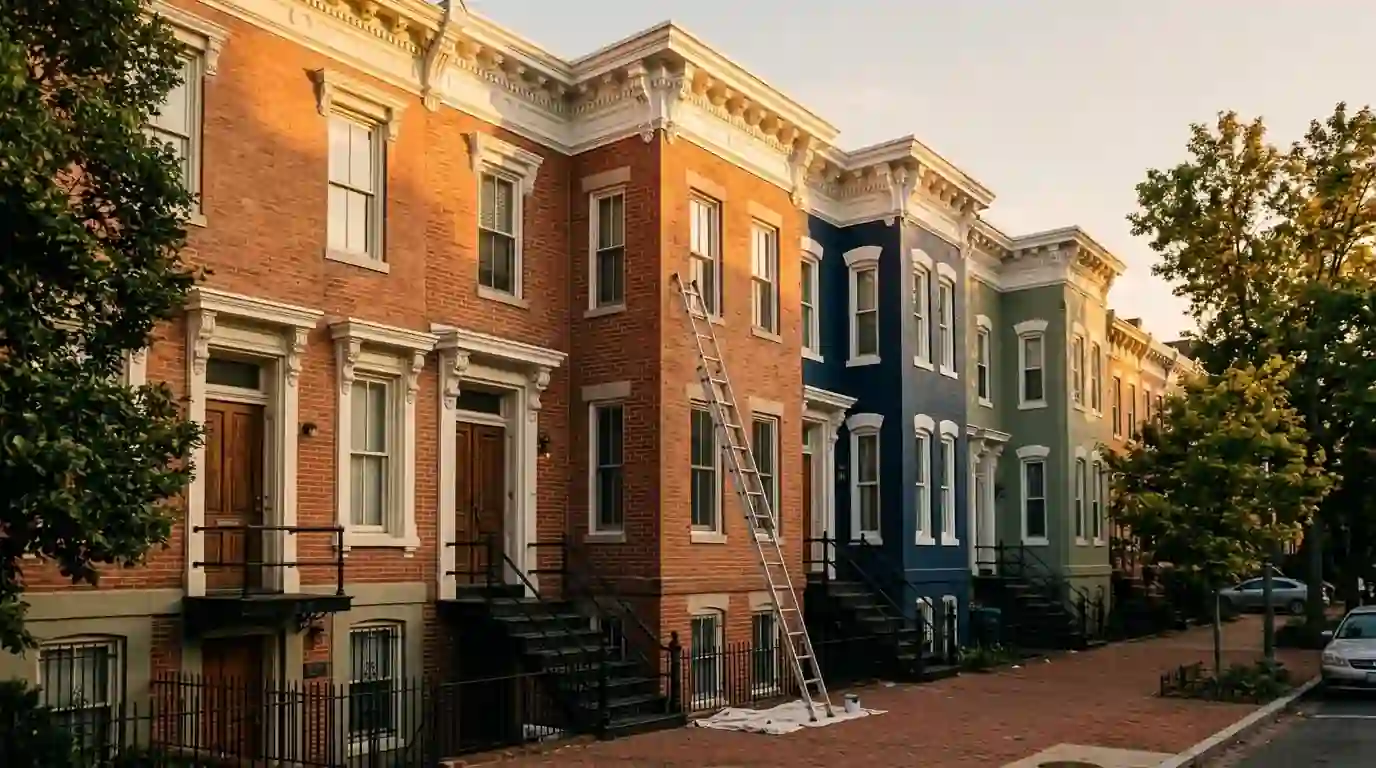
If your home was built before 1978, assume there is lead somewhere until a test says otherwise. Lead-based residential paint was banned that year, and houses built before 1950 are the most likely to have it, often under several newer layers. In a city where a large share of homes predate 1950, from Petworth porch-front rowhouses to Capitol Hill Victorians, that covers most of the houses we walk through.
Lead in an intact, painted-over layer is not an emergency. The risk comes when it is disturbed: scraped, sanded, cut or ground into dust and chips. That is exactly what prep for a repaint does, which is why the way a painter works on an older house matters more than the paint they put on top.
There are two common ways to find out. EPA-recognized test swabs give a quick yes or no on a specific surface. An XRF reading from a lead inspector or risk assessor measures lead through all the layers and is the better choice before a big project or in a home with young children.
What lead-safe painting looks like on the job
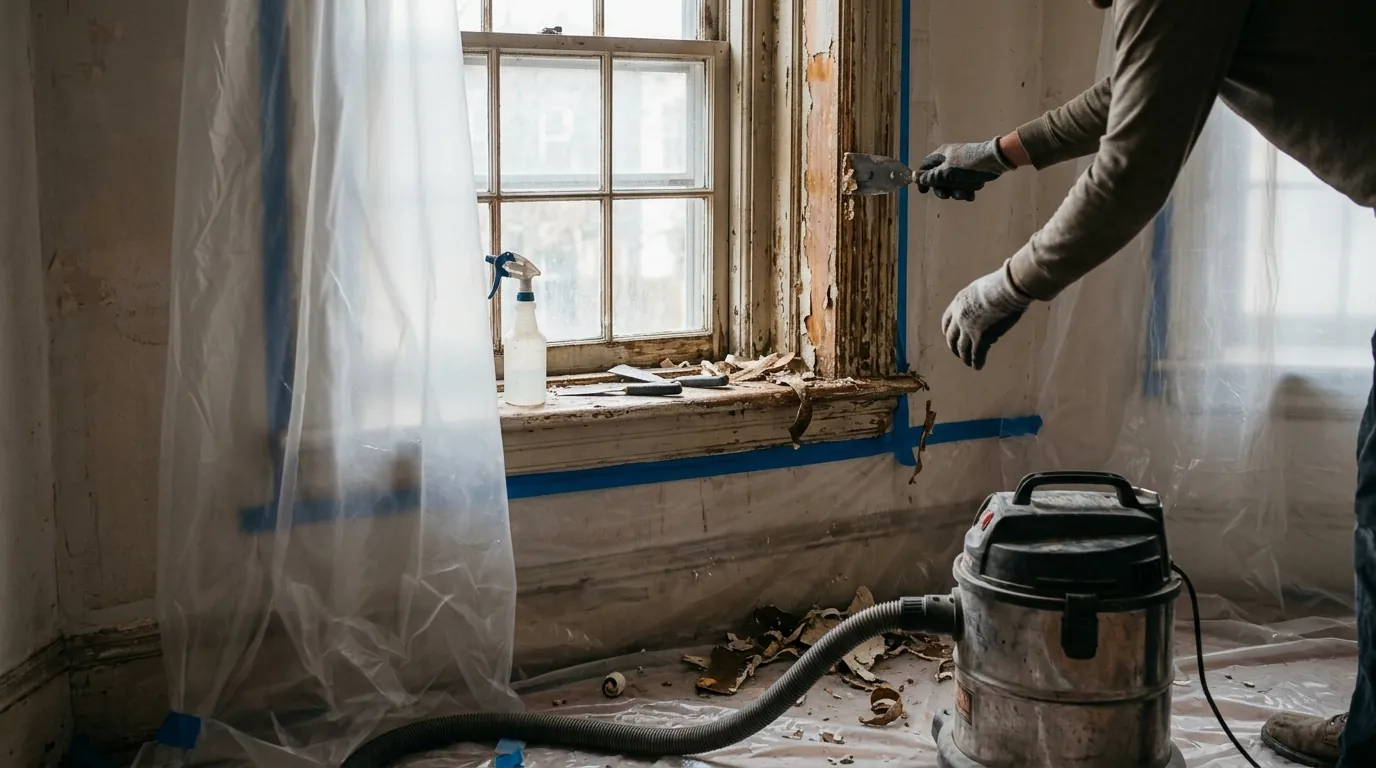
We follow EPA RRP lead-safe work practices on pre-1978 homes. Here is what that means in practice, so you know what you should see.
- Warning signs go up at the work area, and anyone not working on the job, especially children and pregnant family members, stays out of it.
- Floors are covered with 6-mil plastic extending at least six feet past the work surface, taped at the seams and edges.
- Doorways are sealed with plastic sheeting, and HVAC vents in the room are closed and covered so dust doesn't travel through the ducts.
- Scraping and sanding are done wet and by hand, with a misting bottle, instead of dry scraping that throws fine dust.
- There is no open-flame burning, no power sanding or planing without a HEPA-shrouded tool, and no heat gun above 1,100 F.
- Debris is misted, bagged in heavy plastic and sealed at the end of each day rather than swept into a pile.
- Every surface is HEPA vacuumed, then wet wiped, then checked with a cleaning verification cloth against a reference card.
How a lead-safe interior repaint runs from start to finish
This is the usual order on a room-by-room interior job in an older home.
- Coat 01
Test the surfaces
We test the trim, doors, windows and walls we plan to disturb, or rely on an existing inspection report. Only the parts we will actually scrape or sand need answers, which keeps testing quick.
- Coat 02
Empty and seal the room
Furniture comes out or goes to the middle under plastic. We seal doorways, cover vents and lay floor plastic, then put up signs. Setup adds roughly an hour or two per room.
- Coat 03
Prep with wet methods
Loose paint is wet scraped, edges are feathered with wet sanding sponges and debris is collected as we go. Friction spots such as window jambs and door edges get the most attention.
- Coat 04
Prime and paint
Bare spots get a bonding primer, then two finish coats go over everything. Encapsulating old lead layers under sound new paint is the normal goal for a repaint, not stripping to bare wood.
- Coat 05
Clean in stages
Plastic is misted, folded inward and removed. Every horizontal surface is HEPA vacuumed and wet wiped, working from the top of the room down to the floor, with fresh water and cloths as we go.
- Coat 06
Verify the cleanup
Windowsills and floors are wiped with cleaning verification cloths and compared to a reference card. Any surface that fails is cleaned again and rechecked before you move back into the room.
What does lead-safe work add to a DC paint job?
Lead-safe practices add setup and cleanup time, not a different paint. These are typical DC figures.
| Job | Typical range | What moves the price |
|---|---|---|
| Lead-safe containment add-on | $380 to $1,450 per job | Number of rooms or elevations, floor area covered and cleanup time |
| Interior bedroom walls, 2 coats | $485 to $860 | Trim scope, plaster repair and how much old paint is failing |
| Window sash, each | $135 to $290 | Friction surfaces, glazing condition and whether sashes are stuck |
| Door with frame | $165 to $310 | Layers of old paint, panel detail and hinge-edge buildup |
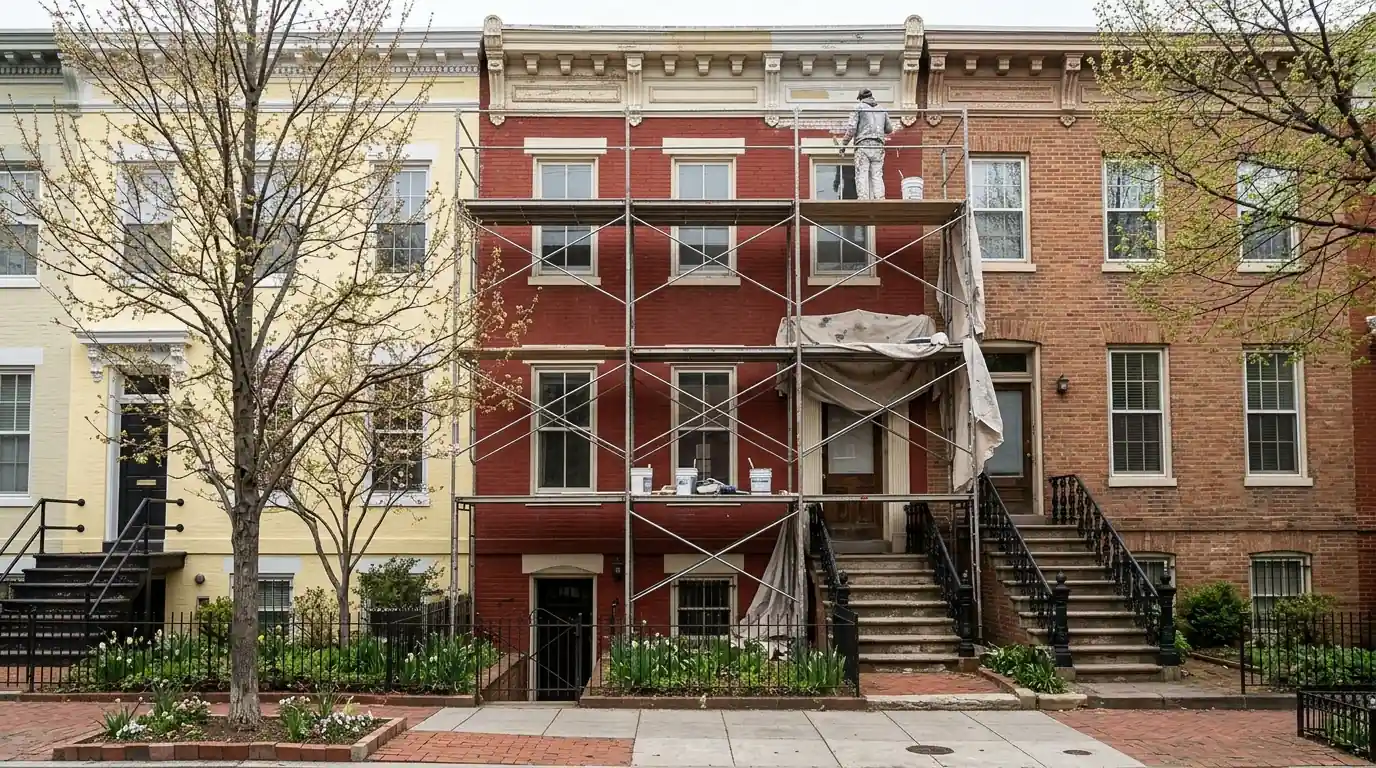
| Rowhouse front facade | $2,350 to $6,900 | Sidewalk containment, cornice height and amount of scraping |
These are typical ranges, not a quote; we set the price after walking through your home.
Which parts of an old house carry the most lead risk?
Not every surface is equal. Wear and friction turn a stable lead layer into dust.
Double-hung windows
Sashes rubbing in their tracks grind old paint into dust every time they open. Original DC windows are usually the top lead source in a house, which is why we treat window sash and trim work with full containment.
Doors and jambs
Hinge edges and strike plates rub the frame daily. Built-up layers there are often the oldest paint in the room and chip easily when a door is planed or sanded to stop sticking.
Porch floors and steps
Foot traffic wears through to lower layers, and chips get tracked inside. Exterior porch work on a pre-1978 house gets ground cover, careful wet scraping and daily cleanup.
Stair treads and banisters
Hands and shoes wear the finish on rails, newel posts and risers, so these surfaces often show the oldest layers well before the walls do.
Exterior trim and cornices
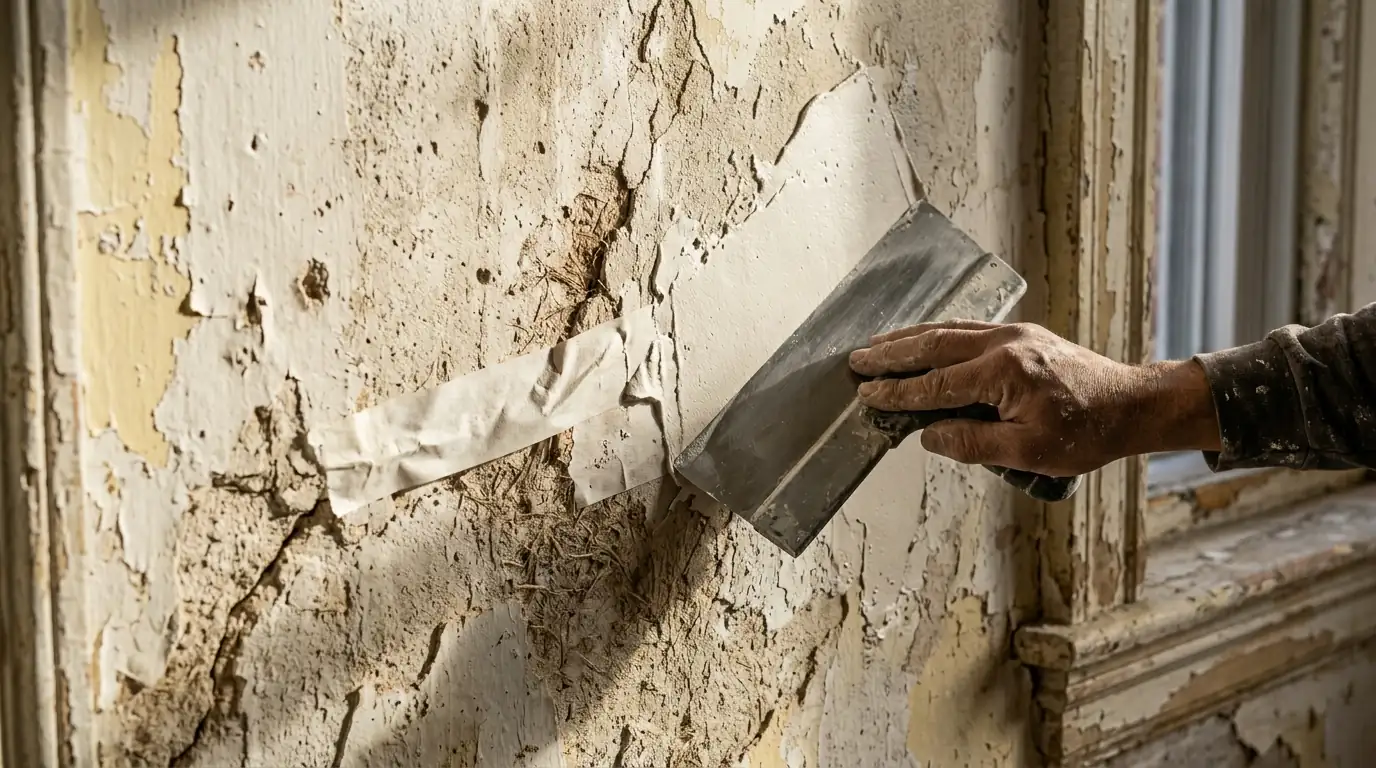
Sun and freeze-thaw cycles crack old oil paint into alligator patterns that flake onto the soil below. We cover the ground, collect chips and avoid dry scraping entirely.
Walls and ceilings
Usually lower risk if intact, since nothing rubs them. Cracked plaster repair does disturb paint, though, so patching gets the same wet methods. See plaster or drywall repair for what that work involves.
Can you stay in the house during the work?
Usually, yes, as long as you stay out of the sealed area. On an interior job we work room by room, so a family can live in the rest of the house while one bedroom or the stairwell is contained. We keep a clean path to the kitchen and a bathroom, and the contained room stays closed until cleanup passes verification.
There are exceptions. If you have a child under six or someone pregnant at home and we are working on windows or doors throughout the house, a few nights away can make sense. Exterior work rarely requires leaving, but keep windows on that side closed. Our lead-safe painting page lists what we do on each surface, and you can reach us 24/7 at (771) 247-4038 to set up a walkthrough.
Services mentioned in this guide
Lead-Safe Painting
Containment, wet scraping and HEPA cleanup when older paint is disturbed in homes built before 1978.
Historic Home Painting
Pre-war plaster, old-growth wood trim and original windows painted with methods that respect the house.
Window Sash & Trim Painting
Glazing checked, sashes and frames painted, and windows left operable instead of painted shut.
Follow-up questions
Do I need a lead test before repainting a 1920s rowhouse in DC?
If you plan to disturb paint, it helps. Without a test, we treat the job as if lead is present and follow lead-safe practices anyway, which is the safe default for a house that old. A test becomes worth paying for when you want to know whether a specific part, such as trim added in a 1990s renovation, actually contains lead and can be prepped normally.
Is removing all the old lead paint better than painting over it?
For most repaints, no. Full stripping creates far more dust and debris, costs several times as much and usually isn't needed when the old paint is still stuck tight. Encapsulating sound lead layers under fresh primer and paint is the normal approach. Stripping makes sense on friction surfaces, on trim where layers are so thick the detail is lost, or when a door or sash keeps failing.
How much time does lead-safe cleanup add to a one-room paint job?
Plan on about half a day more than a standard repaint for one room: an hour or two to set up containment and three to four hours for HEPA vacuuming, wet wiping and verification at the end. On a larger historic home painting project the setup is shared across rooms, so the added time per room drops noticeably.