Short answer
Exterior house painting in DC means washing, scraping and sanding loose paint, fixing rot and failed caulk, priming bare wood, then brushing and rolling two coats of 100 percent acrylic on siding, trim, soffits and porches. A detached house typically runs $5,600 to $14,800 depending on size, height, condition and lead-safe needs, with the final price set at a walkthrough.
What DC weather does to exterior paint, and how we plan around it
Washington summers swing between muggy mornings and hard afternoon storms, and winters bring repeated freeze-thaw cycles. Both work on exterior paint. Moisture gets behind a cracked film, freezes, expands and lifts the coating away from the wood. That is why we start most exterior jobs in spring or early fall, when overnight lows stay in the 50s and the siding has a chance to dry out between rains.
Humidity matters as much as temperature. A coat that looks dry by lunch can still be soft at dusk, and dew settling on it overnight leaves surfactant streaks, those tan, sticky drips you sometimes see under eaves. We stop applying paint early enough in the afternoon for each side to skin over before the dew point arrives, and we watch the radar more than the calendar.
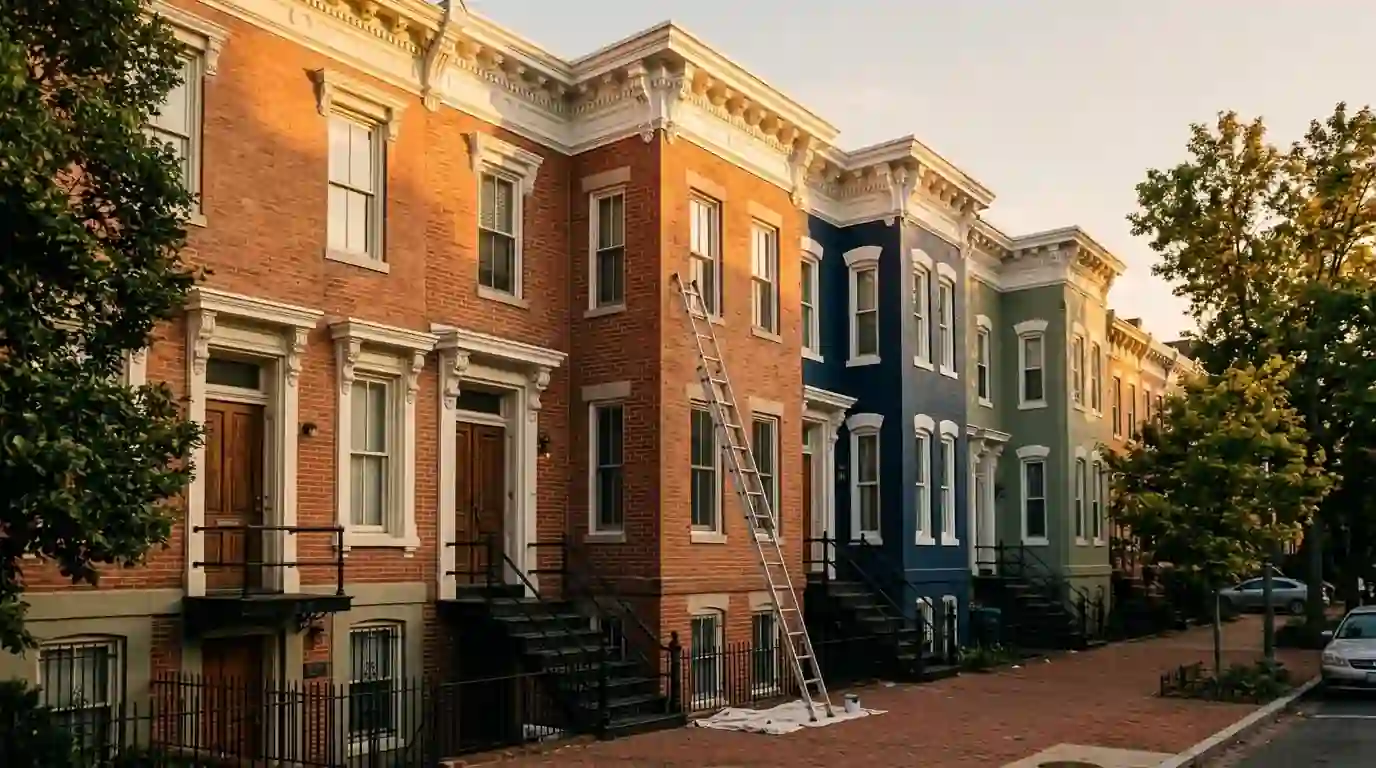
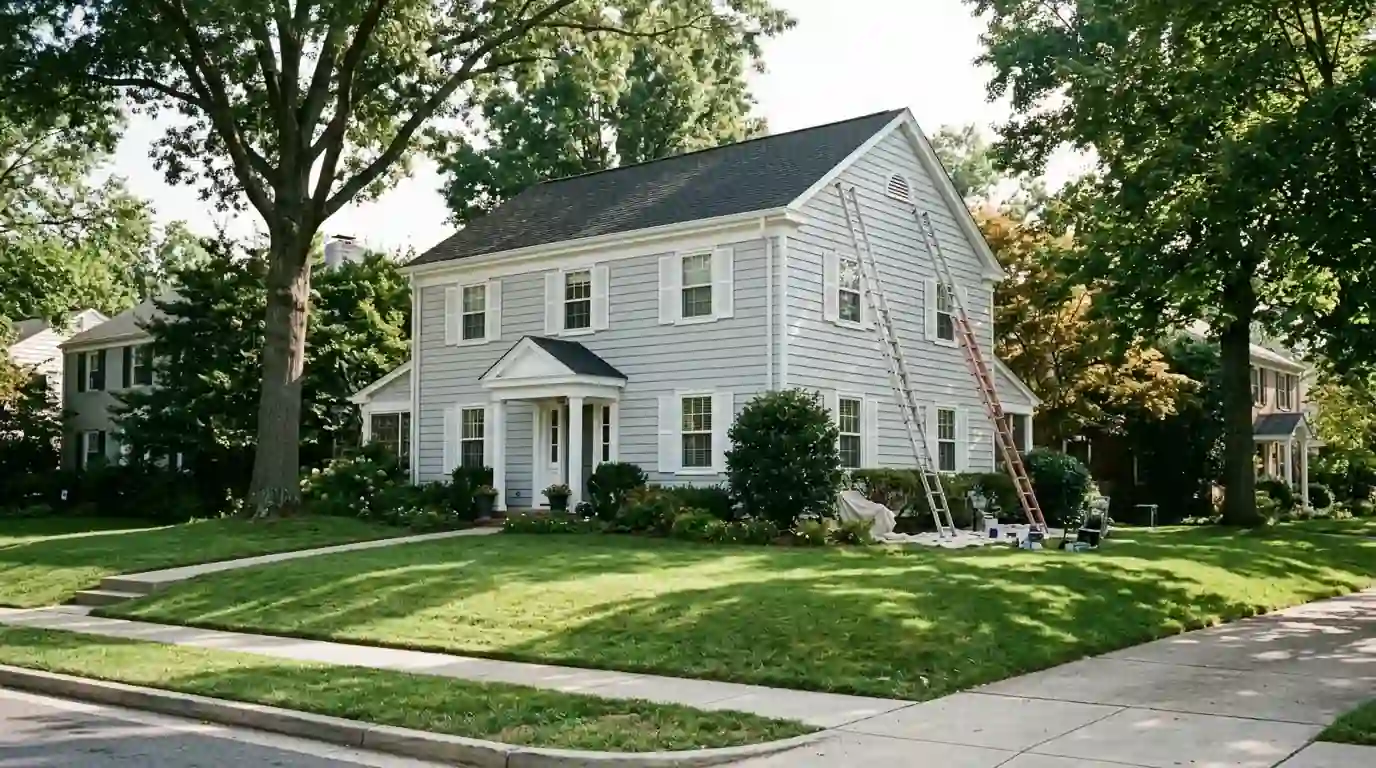
The housing stock adds its own work. Much of the city was built before 1950, so we usually find several generations of oil and latex on the same board, original old-growth siding on Colonials in Shepherd Park, and shingle or clapboard on hillside houses in the Palisades where ladder setups take longer. Pre-1978 paint also means lead-safe prep is part of the plan, not an afterthought.
Signs your siding and trim are past due
Walk around the house on a dry afternoon and look for these. Any two of them usually mean the paint has stopped protecting the wood.
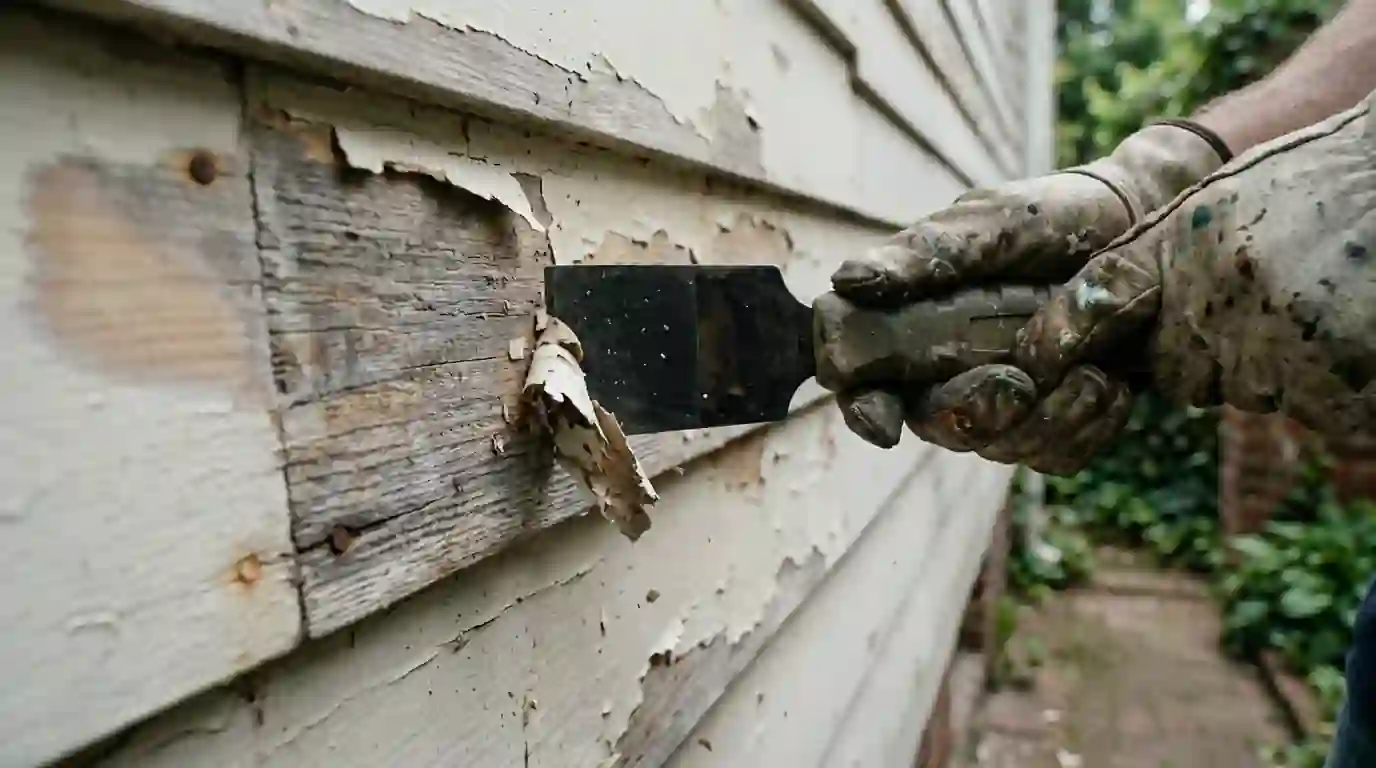
Paint lifting in sheets
When paint peels down to bare wood, moisture is usually getting behind it from inside the wall or through a failed joint. We find the source before painting, because new coats will not stick to wood that stays wet.
Chalk on your fingertips
Rub the siding and a white or colored powder comes off. That is the binder breaking down under sun. Chalky paint has to be washed off and often primed with a bonding primer before topcoats will grip.
Soft sills and fascia
Push a screwdriver into a window sill or the board behind the gutter. If it sinks in, the wood is rotting. We handle rot repair on sills and fascia as part of the job so paint is not wasted on mush.
Open joints and gaps
Cracked caulk at corner boards, window casings and siding laps lets rain run behind the paint. Each open joint is a future peeling spot, especially on south and west walls that bake and then soak.
Mildew on the north side
Black or green spotting on shaded walls means mildew is feeding on the surface. It has to be killed and rinsed, not painted over, or it grows straight back through the new coat within a season.
From the first wash to the last coat on a DC exterior
A full exterior follows the same order every time, because skipping ahead is what makes paint fail early.
- Coat 01
Walkthrough and adhesion test
We walk every elevation with you, check paint adhesion with a tape pull, probe trim for rot and note what was built before 1978. You get a written scope that lists each surface, the primer it gets and the number of coats.
- Coat 02
Wash, then wait
We clean siding with a low-pressure rinse and a mildew wash rather than blasting water into joints. The house then gets at least 48 hours to dry, longer after a stretch of storms, before any scraper touches it.
- Coat 03
Scrape, sand and feather
Loose paint comes off with carbide scrapers, and the edges are sanded so old layers do not telegraph through the new finish. Where lead is likely we mist the surface, lay ground sheeting and contain debris.
- Coat 04
Repair and seal joints
Rotted trim is cut out or rebuilt, nail heads are set and spotted, and failed joints are raked out and filled with a paintable elastomeric sealant. We leave the bottom laps of siding uncaulked so trapped water can drain.
- Coat 05
Prime bare and problem areas
Bare wood gets an oil-based or bonding primer, and tannin-heavy cedar or redwood gets a stain-blocking primer so brown bleed does not show through. Most primers need about four hours before topcoat in good weather.
- Coat 06
Two finish coats, shade first
We brush and roll two coats of exterior acrylic, following the shade around the house, staying out of direct midday sun and stopping by mid-afternoon in humid weeks. Trim, doors and shutters follow in satin or semi-gloss.
- Coat 07
Walk the house and clean up
We walk each side with you, touch up anything you point out, pull masking, reinstall shutters and fixtures and leave labeled leftover paint for future touch-ups.
Typical exterior painting prices around the District
These figures come from the kinds of houses we paint most often in DC and the close-in suburbs.
| Job | Typical range | What moves the price |
|---|---|---|
| Detached house, full exterior | $5,600 to $14,800 | Square footage, number of stories, trim detail and how much scraping the old paint needs |
| Rowhouse front facade only | $2,350 to $6,900 | Cornice and bay work, iron railings and whether sidewalk staging is needed |
| Trim, soffits and fascia only | $1,860 to $4,750 | Linear footage, height and rot found once old paint comes off |
| Pre-wash before painting | $285 to $640 | House size, mildew load and hard-to-reach upper walls |
| Full exterior caulking | $560 to $1,850 | Window count, siding type and how much old caulk must be raked out |
| Lead-safe containment add-on | $380 to $1,450 | Surface area disturbed, ground sheeting runs and cleanup verification |
These are typical DC ranges, not a quote; we set your price after walking the house with you.
Paints and tools we reach for outside
Product choice follows the surface, not habit. Here is what usually ends up on site for a full exterior.
- Premium 100 percent acrylic exterior paint, such as Sherwin-Williams Duration or Benjamin Moore Aura, for siding that has to flex through hot and cold seasons.
- Oil-based primer on bare old-growth wood, where it soaks in deep and gives acrylic topcoats something firm to grab.
- Stain-blocking primer on cedar shingles and redwood trim so tannins stay put.
- Paintable elastomeric sealant for joints that move, and a harder glazing compound for window putty.
- Purdy angled sash brushes for trim and Wooster roller frames for lap siding, with an airless sprayer kept for soffits and porch ceilings.
- A mildewcide wash on north and shaded walls before anything else goes on.
If your siding is fiber cement or aluminum rather than wood, our siding painting page covers the primers those materials need.
What to sort out before our painters arrive
A little clearing before day one saves hours of moving things around once ladders are up.
- Move grills, planters and patio furniture about six feet away from the walls.
- Trim shrubs and vines back so a ladder can sit flat and plants are not crushed under drop cloths.
- Let us know about outdoor cameras, motion lights or alarm contacts on window frames.
- Keep windows closed on the side we're working and run the air conditioning instead of opening sashes.
- If you park on the street in a permit zone, tell us, since we may request DDOT no-parking signs for the work vehicle.
- Keep pets inside or away from the side being scraped and painted.
Where we do this work most often
We take this job across the District and close-in Maryland and Virginia. These are the neighborhoods and cities we cover most, with a ZIP for each.
Questions we hear about this
How many days does an exterior paint job take on a DC house?
A two-story detached house usually takes five to nine working days once prep starts, and a rowhouse facade often two to four. Rain, high humidity and the amount of scraping are what stretch the schedule. We tell you up front which days need dry weather and change the order of sides if a storm rolls in.
Can you paint the exterior of a DC house in winter?
Sometimes, for small jobs. Some exterior acrylics are rated down to 35 F, but the surface has to stay above that through drying, and short winter days leave little time before dew. For full houses we book April through October and use colder months for interior work. Our guide to the exterior painting season covers the timing.
Does every house exterior in DC need two coats of paint?
On a color change, a chalky surface or bare repaired wood, yes. Two coats build a film thick enough to resist sun and freeze-thaw. If the existing paint is sound and we are repainting the same color, one coat over primed spots can be enough on sheltered walls, and we will say so at the walkthrough.
What happens if you find rot or lead paint on my house exterior?
We show you before the scope changes. Small rot is usually cut out and patched during prep; larger areas are priced separately. For homes built before 1978 we treat painted surfaces as lead-containing unless tests say otherwise and follow the practices described on our lead-safe painting page.
Do I need to be home while you paint the outside of my house?
No. Most homeowners are at work while we're on site. We need an outdoor spigot and outlet, unlocked gates and a way to reach you if we find something. Call (771) 247-4038 to book a walkthrough; we answer around the clock, and painting itself runs on normal daytime hours.