Short answer
Painting stucco in DC involves washing off dirt and mildew, routing and filling cracks with a flexible patch, priming chalky or new areas with a masonry primer, then applying two coats of either elastomeric or breathable masonry paint. Typical pricing is $2.60 to $5.10 per square foot, depending on crack repair, texture, height and the coating you choose.
What stucco painting usually costs in the DC area
Stucco takes more paint per foot than smooth siding, and crack work can add up. These figures are typical for our area.
| Job | Typical range | What moves the price |
|---|---|---|
| Repaint stucco walls, per sq ft | $2.60 to $5.10 | Texture depth, height, number of trim openings |
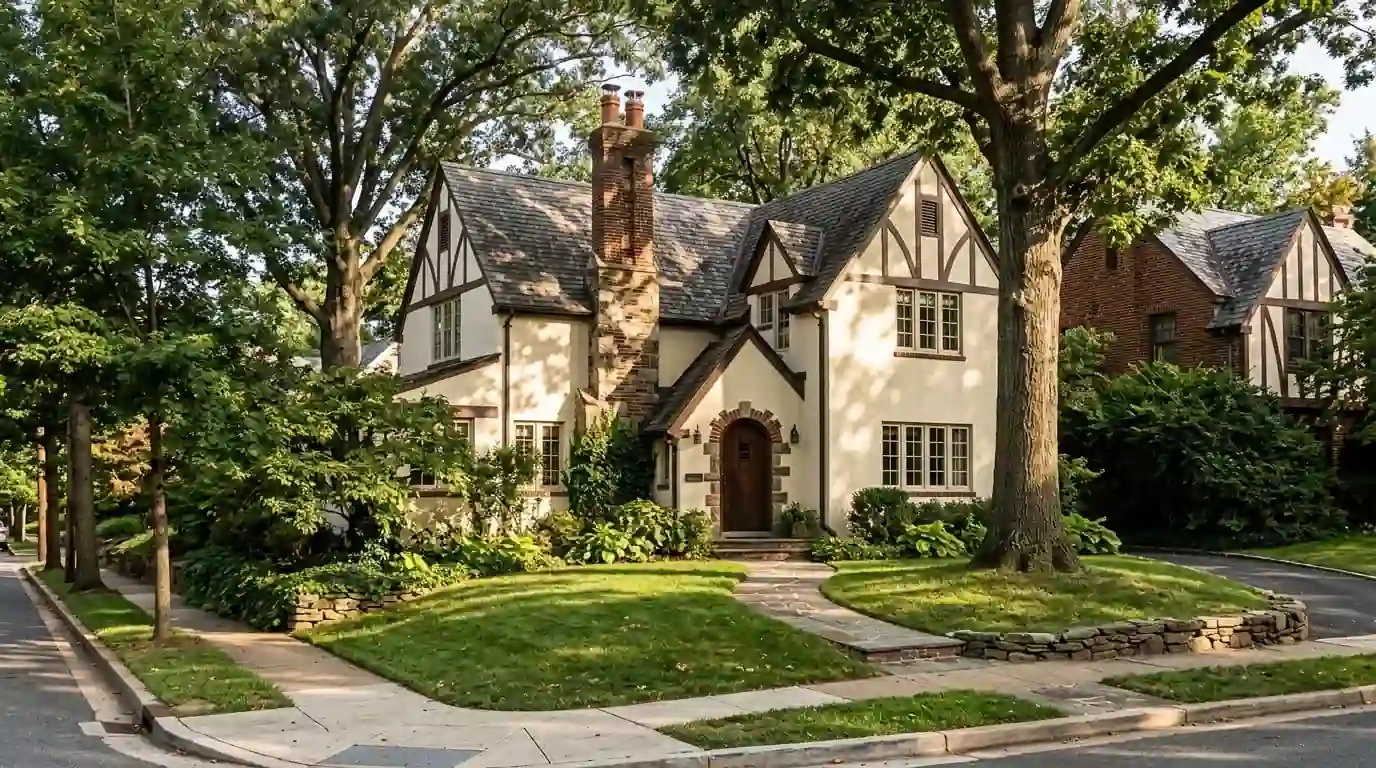
| Stucco Tudor or Colonial, full exterior | $6,180 to $14,300 | Half-timbering detail, chimneys, wood trim condition |
| Hairline crack fill, per wall | $215 to $590 | Crack count and width, matching texture |
| Elastomeric upgrade, per sq ft | $0.65 to $1.40 extra | Thicker film, extra coat, careful priming |
| Stucco foundation or garden wall | $540 to $1,870 | Length, height, efflorescence, plantings to protect |
| Pre-wash and mildew treatment | $285 to $640 | House size, shaded walls, staining from gutters |
These are typical figures for DC, not a quote; we set the price after walking the house.
Stucco problems that point to a repaint
Some issues are cosmetic and some mean water is getting in. These are the ones we look for first.
Spiderweb hairline cracks
Thin cracks under about 1/16 inch are common as stucco cures and moves. They're mostly cosmetic but let rain in over time, so we fill them before paint.
Dark streaks under sills
Water running off sills and caps stains stucco and feeds mildew. Cleaning, adding drip edges where possible and repainting stops the streaking from returning so quickly.
Chalk coming off on your hand
Old paint breaking down leaves a powder that new coatings won't stick to. It needs washing and a masonry conditioner or primer.
Bubbles and soft spots
Blistered paint or stucco that sounds hollow when tapped can mean moisture behind the surface. We probe and mark these areas before deciding on repair or coating.
Faded and uneven color
Patches from earlier repairs show as different shades on older stucco. Two full coats even it out across the whole wall.
How a stucco repaint comes together
Every step aims at one thing: a continuous coat that sheds water but doesn't trap it.
- Coat 01
Tap, probe and moisture check
We tap walls to find hollow sections, check readings near grade and below windows, and note where gutters overflow. Delaminated stucco gets marked for repair before the painting scope is fixed.
- Coat 02
Wash and kill mildew
A mildewcide wash and a low-pressure rinse clean the texture without blasting into cracks. The wall then dries for at least two days before any patching or coating.
- Coat 03
Open and fill cracks
Hairline cracks get a brush-grade elastomeric patch worked in. Wider cracks are opened slightly with a grinder, filled with a flexible stucco patch and textured with a sponge or trowel to match the surrounding finish.
- Coat 04
Prime the problem areas
Patches, chalky sections and any new stucco get a masonry primer. New stucco should cure for several weeks before painting, so we schedule around that if repairs were extensive.
- Coat 05
Apply two coats with back-rolling
We spray or roll the first coat and back-roll it into the texture so every pocket is covered. The second coat goes on after the first is dry, usually the next day in humid weather.
- Coat 06
Trim and detail last
Wood half-timbering, window trim and doors are painted after the stucco so edges stay crisp. We finish with a walk-around to check coverage at corners and around fixtures.
Stucco on DC houses: what's different here
Stucco in Washington is mostly found on 1920s and 1930s Tudors and Mediterranean revivals in Chevy Chase DC, Shepherd Park and Crestwood, and on additions to older homes. Many of those walls are traditional three-coat stucco over masonry or lath, not the foam-backed EIFS systems common in newer suburbs. The difference matters, since traditional stucco is heavier, more porous and needs to breathe.
Our climate puts stucco through a lot of movement. Summer storms soak the wall, heat drives the moisture out, and winter freeze-thaw opens any crack that's holding water. That's why crack repair matters more than the topcoat itself. A beautiful coat over open cracks will look fine for one season and then show lines again.
Choosing between elastomeric and masonry paint depends on the wall. Elastomeric coatings stretch over hairline cracks and shed water well, which helps on walls that crack repeatedly. On older lime-based stucco that needs to dry out, a breathable masonry paint is often the safer choice. If your stucco sits next to brick that's painted or wood trim, we coordinate products so each surface gets what it needs. Homes in Crestwood and Chevy Chase DC often have exactly this mix.
Elastomeric or breathable masonry paint?
Both are good products for the right wall. Here's how they compare on DC stucco.
Elastomeric coating
A thick, rubbery film that bridges hairline cracks and resists wind-driven rain. Best on sound modern stucco that cracks seasonally. It's less breathable, so we avoid it on damp walls or old lime stucco.
Breathable masonry paint
A thinner acrylic or mineral coating that lets vapor escape. Best on older stucco, walls near grade and anywhere moisture readings are high. Cracks must be filled well, since the coat won't bridge them.
Mineral silicate finish
Bonds into the stucco and stays very vapor open, with excellent color hold. A good fit for historic walls and owners who want the look of limewash and mineral paint with more durability.
Clear water repellent
Used on unpainted stucco to reduce water absorption without changing the look. It doesn't hide stains or cracks and usually needs reapplying every few years.
Products that usually end up on a stucco job
We choose coatings by wall condition, not by habit.
- Sherwin-Williams Loxon masonry primer on new patches and chalky areas.
- Elastomeric wall coating, applied at the film thickness the label requires, for crack-prone modern stucco.
- PPG or Benjamin Moore exterior masonry paint where breathability matters more than stretch.
- Flexible acrylic stucco patch and brush-grade crack filler for repairs.
- Graco airless sprayers paired with thick-nap rollers for back-rolling deep texture.
Where we do this work most often
We take this job across the District and close-in Maryland and Virginia. These are the neighborhoods and cities we cover most, with a ZIP for each.
Questions we hear about this
Can you paint stucco in DC without fixing the cracks first?
You can, but the cracks will show again within a season or two, and water will keep getting in. Filling cracks with a flexible patch is a small part of the cost and the biggest factor in how long the paint lasts. We include crack repair in every stucco scope.
Is elastomeric paint right for a 1920s stucco Tudor?
Often it isn't. Older stucco over masonry tends to hold moisture and needs to dry outward. A thick elastomeric film can trap water and cause blistering. We usually recommend a breathable masonry or mineral coating on houses of that age and save elastomeric for newer, sound stucco.
How long does stucco paint last on DC homes?
A good stucco repaint typically lasts 8 to 12 years, longer for elastomeric on sound walls and shorter on sunny or wet exposures. Gutter maintenance and keeping sprinklers off the walls make a real difference. Our post on how long exterior paint lasts compares surfaces.
Do you repair damaged stucco before painting it?
We handle hairline and moderate cracks, small chips and texture matching as part of the paint job. Large delaminated sections or failed lath need a stucco plasterer, and we'll tell you if we find that at the walkthrough. Call (771) 247-4038 to set up a visit.
Can stucco be painted a much lighter or darker color?
Yes. A big shift in color may need a tinted primer or a third coat for even coverage on deep texture. Very dark colors on sun-facing stucco absorb more heat, which can increase movement and cracking, so we'll talk through how dark you want to go.