Short answer
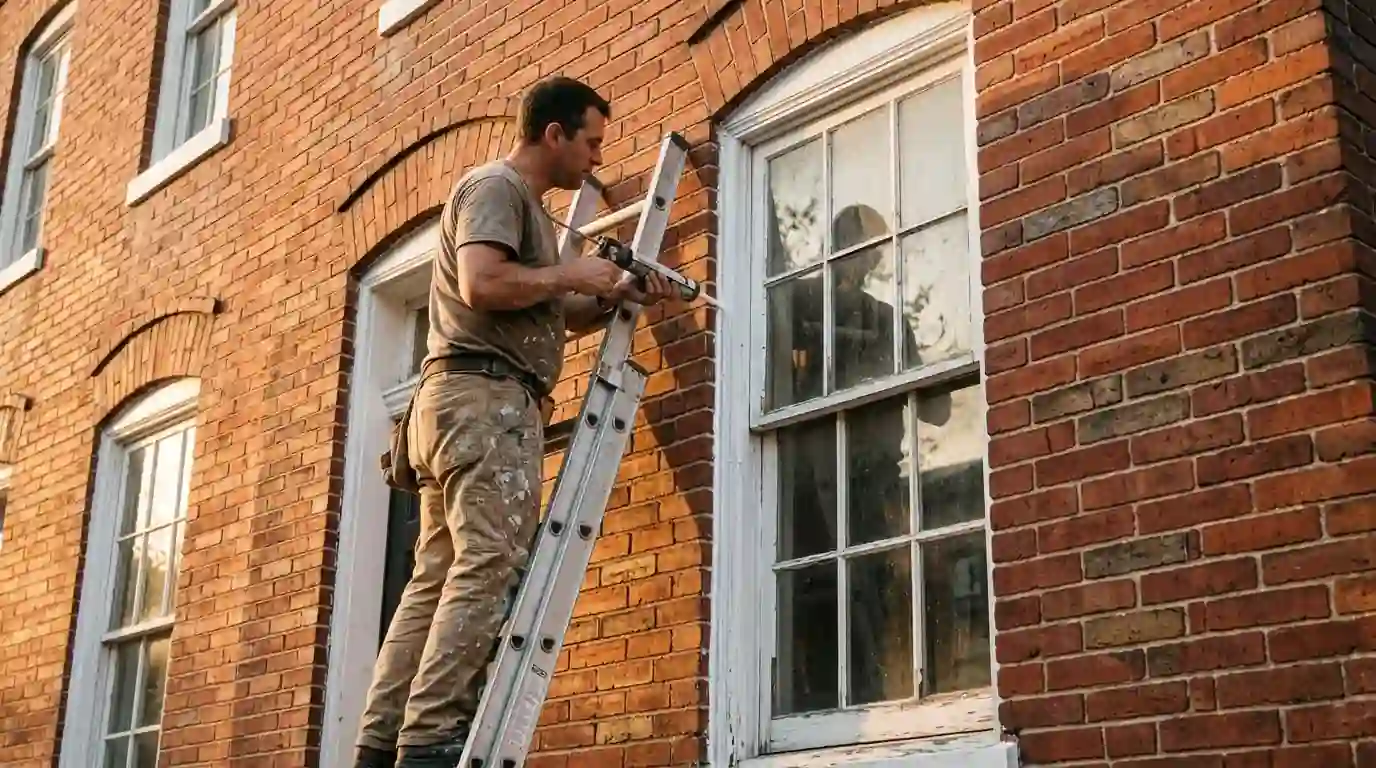
Exterior caulking in DC means walking the house to find open joints, cutting out old dried caulk, cleaning and priming the joint, installing backer rod in wide gaps, then applying a paintable elastomeric or hybrid sealant and tooling it smooth. Paint follows once it cures. Full exterior caulking typically costs $560 to $1,850, depending on house size and how much old caulk must come out.
Joints we seal and the ones we leave open
Good weatherproofing is about knowing which gaps to fill and which ones the house needs to breathe and drain.
- Gaps between window and door casings and the siding or brick around them.
- Corner boards and vertical trim where they meet siding.
- Butt joints in fascia, rake boards and long runs of trim.
- Gaps around exterior outlets, hose bibs, vent hoods and cable entries.
- The joint between wood trim and brick on rowhouse fronts.
- We leave the bottom edges of lap siding uncaulked, because they let trapped moisture drain out.
- We leave weep holes in brick and the drip edges above windows open too.
Caulking the wrong joints traps water, so this is where experience matters most.
Signs your caulk has given up
Caulk usually fails long before paint does. These are the things we spot on a walkaround.
Cracks along the bead
Old latex caulk dries, shrinks and splits along its center. A cracked bead looks like it's sealed from the street but lets water through every storm.
Caulk pulling away from one side
When a bead separates from the trim or siding on one side, it's lost adhesion. Often this happens because it was never primed or the joint moves more than the caulk can stretch.
Gaps you can slide a card into
Corner boards and window casings shrink away from siding over time. A gap wide enough for a business card is wide enough for wind-driven rain.
Peeling paint beside a joint
If paint peels near a joint but not elsewhere, water is getting in behind it. The caulk joint is usually the cause.
Drafts at window trim
Feeling cold air around a window frame in winter often points to failed exterior caulk, not just the window itself.
How we reseal a house, joint by joint
Caulking is often done during exterior prep, after washing and scraping but before primer and paint.
- Coat 01
Walk and mark the joints
We walk every side of the house, noting failed caulk, open gaps and joints that should stay open. Marking them first keeps the work focused on what actually leaks.
- Coat 02
Cut out the old caulk
Old, hard caulk is cut out with a hook knife or an oscillating tool. Sealing new caulk over cracked old caulk only gives a few months before it fails again.
- Coat 03
Clean and prime the joint
Joints are brushed and wiped clean of dust and loose paint. Bare wood in the joint gets primer, because sealant sticks far better to primed wood than to raw grain.
- Coat 04
Add backer rod in deep gaps
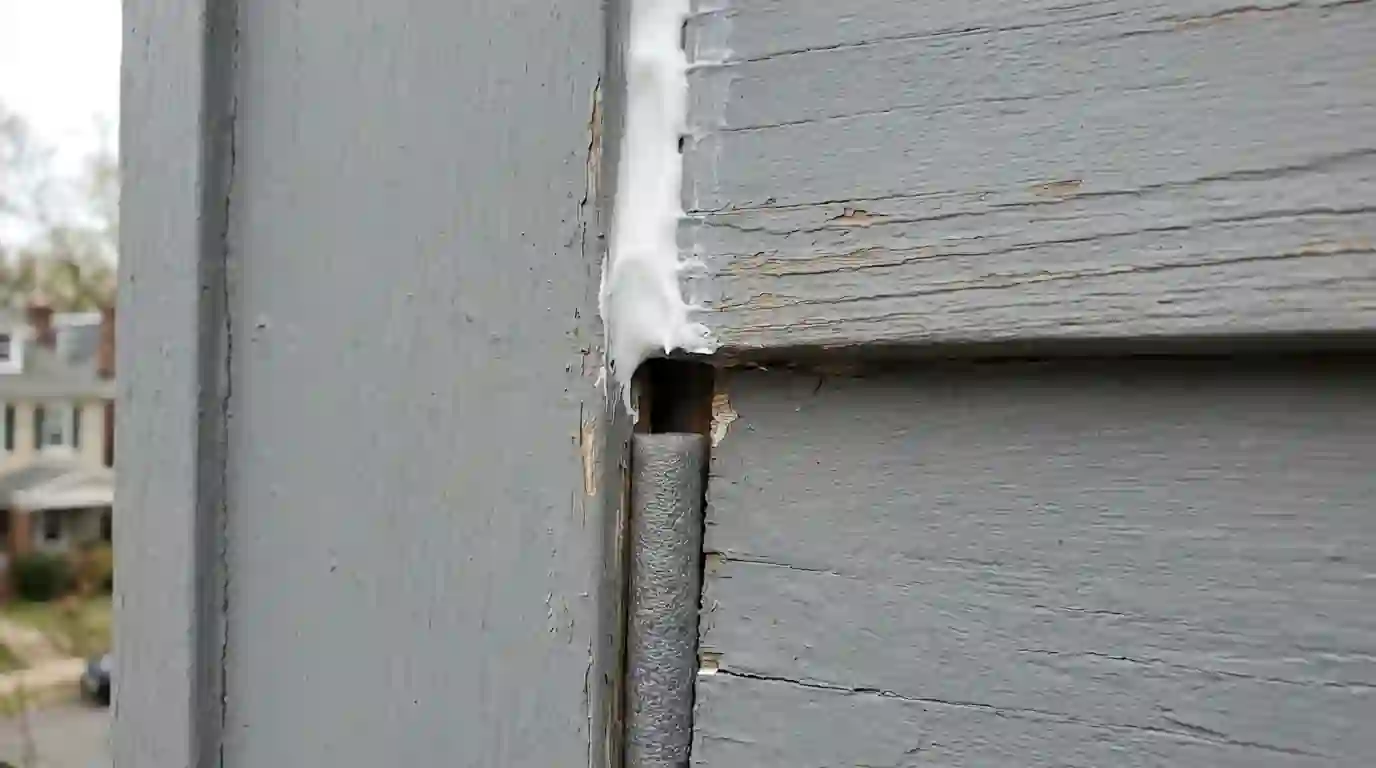
Gaps deeper than about a quarter inch get a foam backer rod pushed in first. It sets the right depth so the caulk can stretch and doesn't stick to the back of the joint.
- Coat 05
Apply and tool the bead
We run a continuous bead of sealant and tool it with a rounded tool or finger so it fills the joint and bonds to both sides. Excess is wiped off before it skins.
- Coat 06
Let it cure, then paint
Most elastomeric sealants can be painted within a few hours to a day, depending on humidity. Painting over the bead protects it from UV and helps it last much longer.
Caulk in a city of freeze-thaw winters and summer storms
DC is hard on caulk. Summer sun bakes south and west faces, which dries out cheap latex caulk within a few seasons. Afternoon storms drive rain sideways into every open joint. Then winter freeze-thaw cycles push and pull at the trim, opening gaps a little more each year. A sealant that can't stretch with this movement cracks quickly.
Rowhouses have their own weak spots. On Capitol Hill, in Bloomingdale and in Petworth, the joint where wood window trim meets brick is often the first place water gets in. Brick and wood expand at different rates, so the sealant here needs to stay flexible. We use a sealant rated for masonry and wood, not a general-purpose latex.
Detached houses in the Palisades and Shepherd Park have more siding and trim per house, so the job is about scale and order. We seal the most exposed sides first. For historic homes, caulk color can matter; we choose paintable sealants and paint them so the joint blends in rather than showing as a bright line.
Typical caulking and sealing prices in DC
Price depends mostly on the amount of old caulk to remove and how high the joints sit.
| Job | Typical range | What moves the price |
|---|---|---|
| Full exterior caulking, average house | $560 to $1,850 | House size, old caulk removal, height |
| Rowhouse front facade joints | $340 to $780 | Window count, cornice, brick-to-wood joints |
| Per window, exterior perimeter | $45 to $115 | Gap size, backer rod, removal of old caulk |
| Trim and corner board runs | $1.30 to $3.10 per linear ft | Joint depth, priming, ladder access |
| Penetrations: vents, outlets, hose bibs | $25 to $70 each | Gap size, material, access |
| Caulking plus trim repaint | $1.85 to $3.90 per linear ft | Profile, peeling, number of coats |
These are typical DC ranges, not a quote; the actual price is set after we walk the house.
Sealants that last on DC exteriors
Not all caulk is equal, and the label on a cheap tube rarely tells the full story.
- Elastomeric acrylic sealants, such as Sherwin-Williams SherMax, that stretch with trim movement.
- Hybrid polymer sealants for brick-to-wood joints, since they bond well to both materials.
- Closed-cell foam backer rod sized a little larger than the gap.
- An exterior oil primer on bare wood in the joint before sealing.
- Paintable sealants only, so the bead can be covered and protected from UV.
- Never silicone on surfaces that will be painted, since paint won't stick to it.
Caulking pairs naturally with wood rot repair and siding painting, since all three keep water out of exterior wood.
Where we do this work most often
We take this job across the District and close-in Maryland and Virginia. These are the neighborhoods and cities we cover most, with a ZIP for each.
Questions we hear about this
How often should exterior caulking be redone on a DC house?
Quality elastomeric sealant, painted over, typically holds five to ten years on DC exteriors, longer on shaded sides. Cheaper latex caulk can fail in two or three. We usually recommend checking joints each spring and resealing the worst areas, with a full recaulk during each exterior repaint. Our blog on how long exterior paint lasts covers timing in more detail.
Can you caulk my house without painting it?
Yes. We often do caulking as a stand-alone weatherproofing visit, especially in spring or fall. We still recommend painting over new caulk, even if only a touch-up on the joint, because paint protects it from UV and helps it last longer. We can match your existing trim color for those spots.
What is the best caulk for brick and wood trim on a DC rowhouse?
For brick-to-wood joints, we use a hybrid polymer or polyurethane-based sealant that bonds to both materials and stays flexible. General-purpose latex caulk tends to crack there within a year or two. If the brick has a historic mortar or old paint, we clean and prime before sealing for the best bond.
Is fall a good time to recaulk exterior trim in Washington, DC?
Fall is a great time. Most sealants need temperatures above about 40 F to cure well, and dry fall days are ideal. Sealing before winter keeps water out during freeze-thaw cycles. Spring works too. We avoid the hottest summer afternoons, since sealant can skin too fast on sun-baked trim.