Short answer
Door painting means removing or masking hardware, cleaning, sanding, priming bare or glossy areas and applying two enamel coats on both faces and the edges, plus the frame if you want it. In DC a door with its frame typically runs $165 to $310, and an exterior front door with weather exposure and deep color often lands near the top.
When a door needs more than a wipe-down
Doors take more hands and bumps than any other painted surface. These are the clues that a fresh finish is due.
Gray around the knob
Hand oils darken paint near knobs and edges, and scrubbing only spreads it. A degreasing wash, light sanding and a new enamel coat bring a door back to clean.
Doors that stick shut
Paint built up on edges and stop moldings makes doors stick in humid DC summers. We sand the edges back, paint thin, and let the finish cure before the door closes tight.
Cracked, alligatored front doors
South and west-facing front doors bake in summer sun. Old paint cracks into a pattern like reptile skin and lets water into the wood. It needs scraping to a sound base before new paint.
Dated stained doors
Orange-stained flush or six-panel doors from the 1980s look tired next to updated rooms. Primer that blocks wood tannins lets them go white or any color you want.
A curb appeal refresh
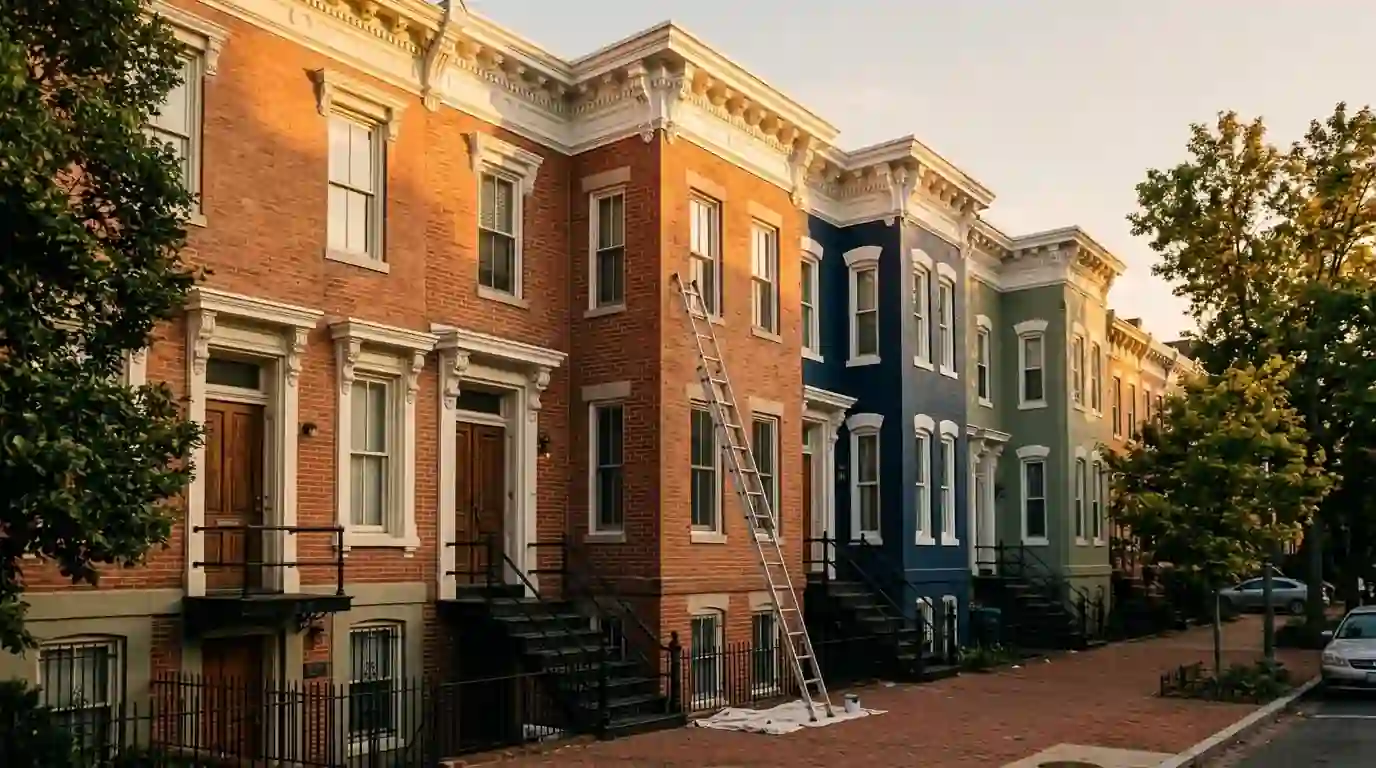
A new front door color is one of the cheapest changes you can make before listing a house. It often pairs with iron railing painting on DC stoops.
How a door gets its smooth finish
Doors look best when paint is laid flat and allowed to level. Here's how we get there.
- Coat 01
Decide on or off the hinges
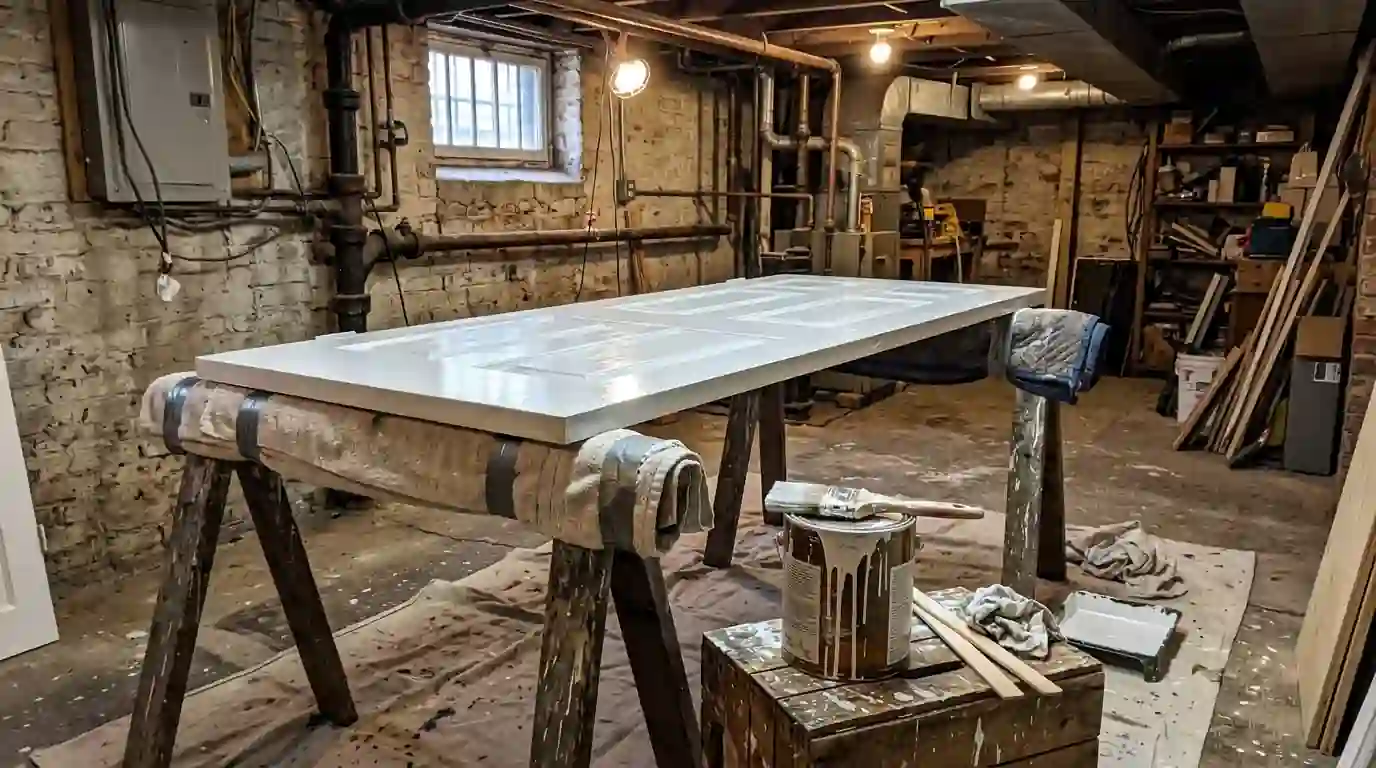
Interior doors usually come down and go onto padded sawhorses so both faces can be painted flat. Front doors in rowhouses often stay hung for security, and we paint them in place in the morning so they're dry to close by evening.
- Coat 02
Pull or mask hardware
Knobs, strike plates and kick plates come off where possible. Hinges and historic hardware we can't remove get careful masking. Every screw goes into a labeled bag for its door.
- Coat 03
Wash, sand and fill
We wash with a degreaser, then sand with 150 to 220 grit. Dents and old hinge holes get filler. Built-up drips on panel edges get sanded flat so the new coat doesn't look lumpy.
- Coat 04
Prime what needs it
Bare wood, filled areas and slick oil enamel get a bonding primer. On exterior doors we use an exterior-rated primer, and on stained wood we use shellac to block tannin bleed.
- Coat 05
Follow the panel sequence
On paneled doors we paint the panel recesses first, then the center stiles, then rails, then outer stiles, so brush strokes follow the grain of each part. Flush doors get a fine foam roller pass and a light brush tip-off.
- Coat 06
Second coat and rehang
After the first coat dries overnight we sand lightly and apply the second. Once cured enough to handle, doors are rehung, hardware goes back, and we check that each one swings and latches cleanly.
Doors in DC homes come with their own quirks
Interior doors in pre-war DC houses are often solid wood four or five panel doors, heavier and more detailed than modern hollow doors. They usually carry many coats of paint, including early layers that may contain lead in homes built before 1978. Sanding those edges and panels without containment can spread lead dust through the house. When testing calls for it, we follow EPA RRP lead-safe work practices and explain any added cost first.
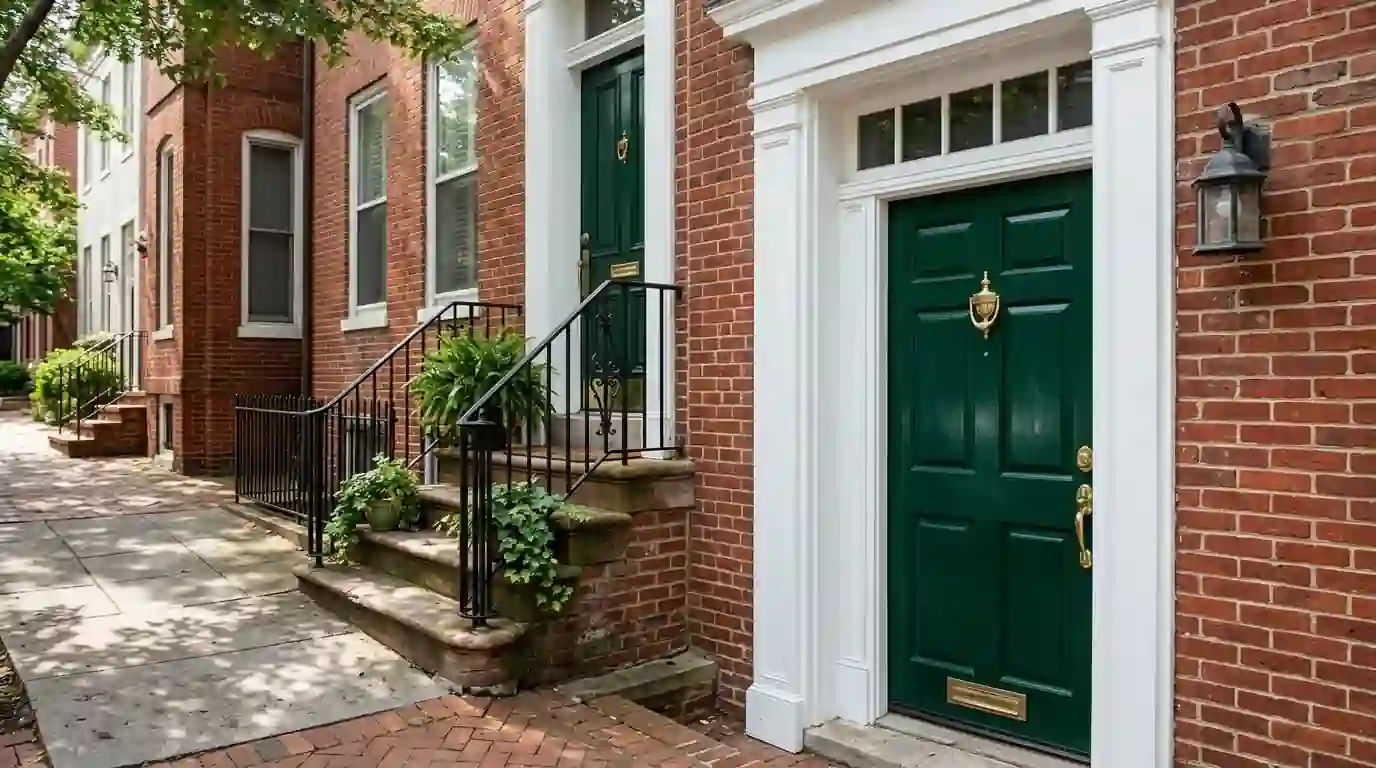
Front doors face more. Rowhouse doors on Capitol Hill and in Bloomingdale often sit right on the sidewalk with a transom above and a narrow stoop below. Afternoon sun heats dark colors fast, and painting in direct sun can leave lap marks and blisters. We schedule front doors for the shaded part of the day and avoid days below the paint's minimum temperature.
Many owners in historic districts ask whether a new door color needs approval. Repainting an already painted wood door in a new color is generally not reviewed in DC, but rules differ for other changes. If you live in Georgetown or another historic district and plan anything beyond color, check with the preservation office before work starts. Our historic home painting page goes into this further.
Door painting prices in Washington, DC
Door work is priced per door, and the type of door matters more than the color.
| Job | Typical range | What moves the price |
|---|---|---|
| Flush interior door with frame | $165 to $215 | Number of hinges and whether frames are included |
| Paneled interior door with frame | $195 to $265 | Panel count, molding detail and paint buildup |
| Front entry door, one side plus frame | $235 to $310 | Weather damage, color change and transom or sidelights |
| French door with glass lites | $265 to $395 | Muntins to cut in by hand and glass to scrape clean |
| Closet bifold or sliding pair | $185 to $290 | Panel and louver count, plus track hardware to remove |
| Lead-safe containment if needed | $380 to $1,450 | How many pre-1978 doors and frames we'll sand |
These are typical ranges, not a quote; we look at each door and confirm the price at a walkthrough.
Picking a finish for each kind of door
The right enamel and sheen depend on where the door lives and what it goes through.
Interior doors in satin or semi-gloss
We often use Benjamin Moore Advance, which flows out like oil paint and cures hard. Semi-gloss suits busy family homes, while satin looks softer in bedrooms and older houses with imperfect surfaces.
Front doors in high gloss
A deep glossy black, red or green on a DC front door is a classic look. Fine Paints of Europe and similar high-gloss enamels give a lacquer-like finish but need careful prep and more coats.
Steel and fiberglass doors
Metal doors need cleaning, rust treatment where needed and a direct-to-metal primer. Fiberglass takes a light scuff and a bonding primer. Both hold up well once painted.
Doors that match walls
Painting doors the wall color in a higher sheen is a quiet, modern look for small rooms. We can test it beside contrasting white during a color consultation.
Where we do this work most often
We take this job across the District and close-in Maryland and Virginia. These are the neighborhoods and cities we cover most, with a ZIP for each.
Questions we hear about this
How long does a freshly painted front door need before I can close it in DC?
Most waterborne enamels are dry enough to close carefully in four to six hours in good weather. In humid summer weather it can take longer, and the door edges may feel slightly tacky. We paint front doors early in the day, leave the weatherstrip edges thin, and sometimes place a small wedge so the door doesn't seal against fresh paint overnight.
Can a stained wood interior door be painted white?
Yes. Stained wood needs cleaning, sanding to remove any gloss, and a shellac or other stain-blocking primer so tannins don't bleed yellow through the white. Then two enamel coats finish the job. It's a common upgrade in DC houses remodeled in the 1980s, and it pairs well with trim and baseboard painting for a complete look.
Do you paint both sides of an interior door?
Yes, both faces plus all edges are included in our door pricing. Painting only one side leaves a mismatch you'll see every time the door opens, and unsealed edges can let moisture in. Door frames and stops are included in the per-door price unless you tell us to skip them.
What is the best paint for a DC rowhouse front door?
For wood front doors we like a high-quality exterior enamel such as Benjamin Moore Regal exterior or Sherwin-Williams Emerald exterior, or a high-gloss option for a classic look. Dark colors fade and heat up faster in direct sun, so we suggest colors with good light-fastness. Proper priming on bare spots matters more than brand choice.
Can you paint my apartment door in a DC condo building?
Interior unit doors, yes. The hallway side of a condo entry door usually belongs to the building, and most buildings set the color. We can paint the corridor side only with board approval. For full condo projects see our condo and apartment painting service.