Short answer
Wallpaper removal in DC means testing how the paper is attached, scoring and soaking or steaming it off, stripping the backing, washing every trace of paste, then sealing torn drywall or plaster with a solvent primer and skim coating where needed. Typical cost runs $1.35 to $3.20 per square foot of wall, with repairs and painting priced separately after we see the walls.
Before the paper comes down in your house
A few small steps before we arrive make removal faster and cleaner.
- Clear furniture away from the walls, or let us know so we can plan time to move it.
- Take down pictures, mirrors, shelves and anything mounted to the papered walls.
- Tell us if you know the wall type: plaster in the older part of the house, drywall in an addition.
- Expect the outlet and switch covers to come off and power to be shut off in that room.
- Keep the room free for two to three days if it needs repairs and a skim coat afterward.
- Plan the paint color now so we can follow removal straight into painting.
Wallpaper on DC plaster and drywall
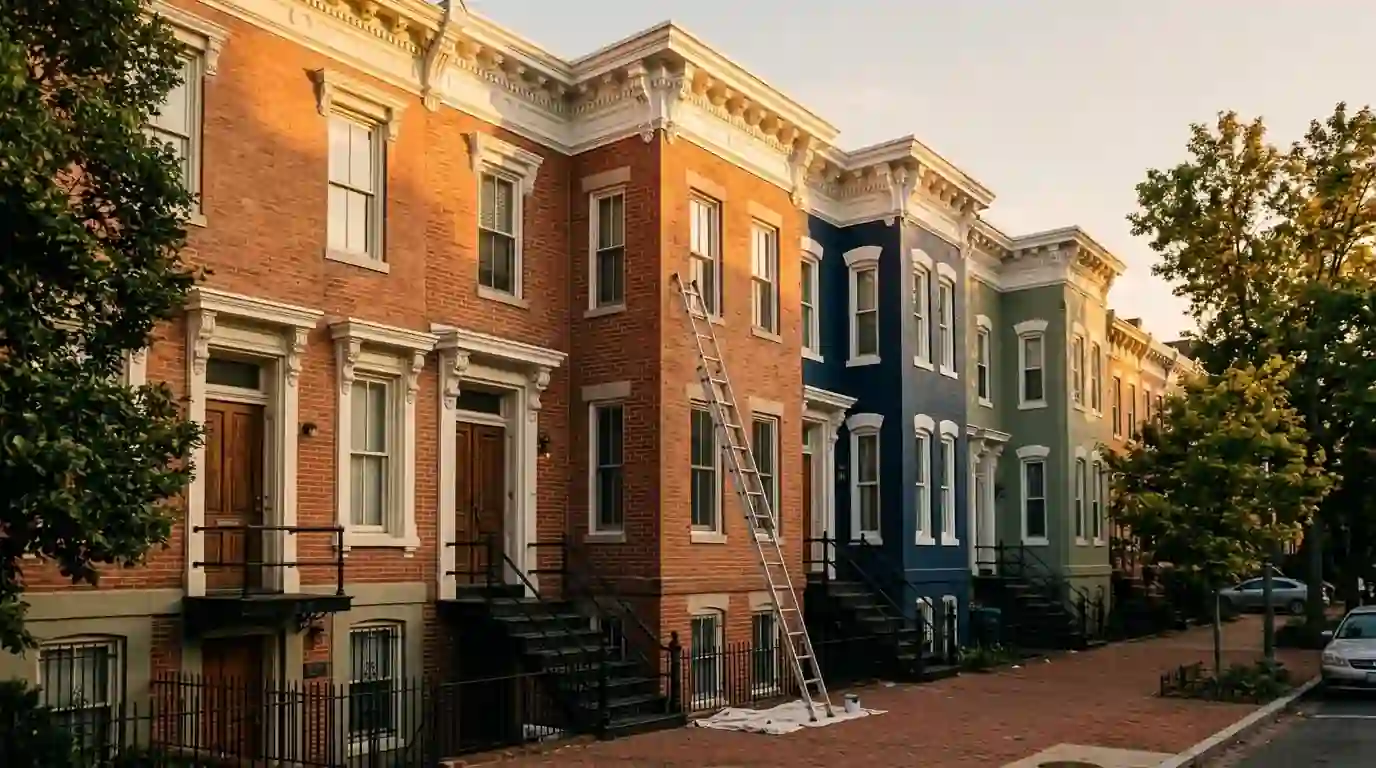
In pre-war DC houses, wallpaper was often hung directly on lime or gypsum plaster, sometimes over layers of older paper and paint. Plaster stands up well to water, so soaking and scraping work cleanly in most Victorian and early 1900s rooms. The catch is age: sizing and paste from the 1920s to the 1950s can be stubborn, and older papers sometimes hide cracks or loose plaster we then repair through plaster repair.
Drywall is a different story. If the walls were never primed before papering, which happened often in 1970s and 1980s remodels, removal can pull the drywall's face paper right off. We test a hidden corner first to see how the paper releases, then choose between soaking, steaming or leaving a stuck layer in place and skim coating over it.
Lead is another factor. In a pre-1978 home, the paint under or over old wallpaper may contain lead, so we follow EPA RRP lead-safe work practices when scraping. Humid summers help removal by keeping paste soft, but they slow drying afterward, so we give sealed walls extra time before paint.
Our way of stripping paper and paste
Removal is patient work. Rushing it is how walls end up gouged.
- Coat 01
Test a hidden corner
We lift the paper behind a door or a piece of furniture to see whether it is strippable vinyl, coated, or old paper glued to unprimed board. That test decides our method for the whole room.
- Coat 02
Protect floors and outlets
Floors get waterproof plastic and towels along the baseboard. Power is shut off at the breaker, and outlets and switches are covered, because we'll be using a lot of water.
- Coat 03
Peel the face layer
Strippable vinyl faces usually lift off dry, leaving the paper backing behind. On coated papers, we use a scoring tool lightly so water can reach the paste without scratching the wall.
- Coat 04
Soak or steam the backing
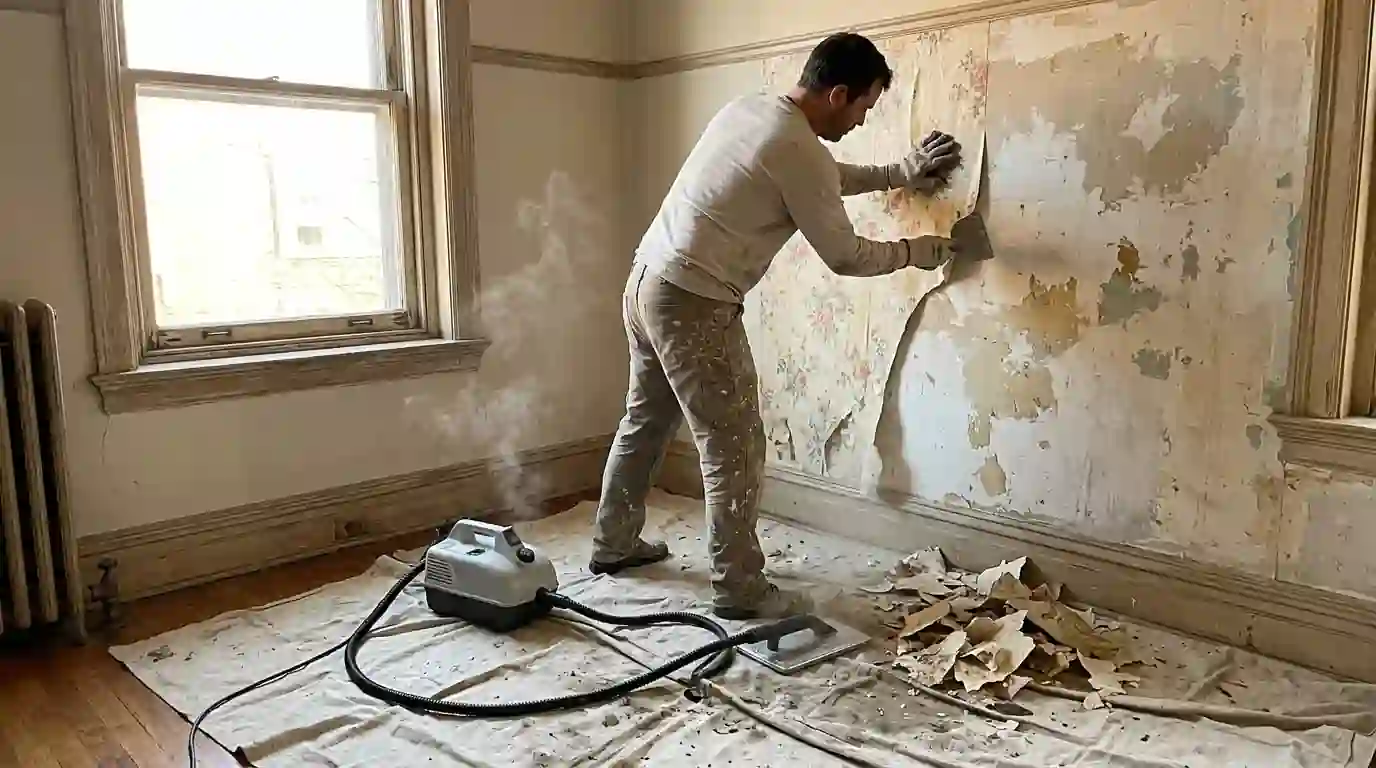
We spray warm water with a paste-dissolving enzyme solution and let it work, or use a wallpaper steamer on thick and layered paper. The backing then slides off with a wide plastic or flexible metal scraper.
- Coat 05
Wash off the paste
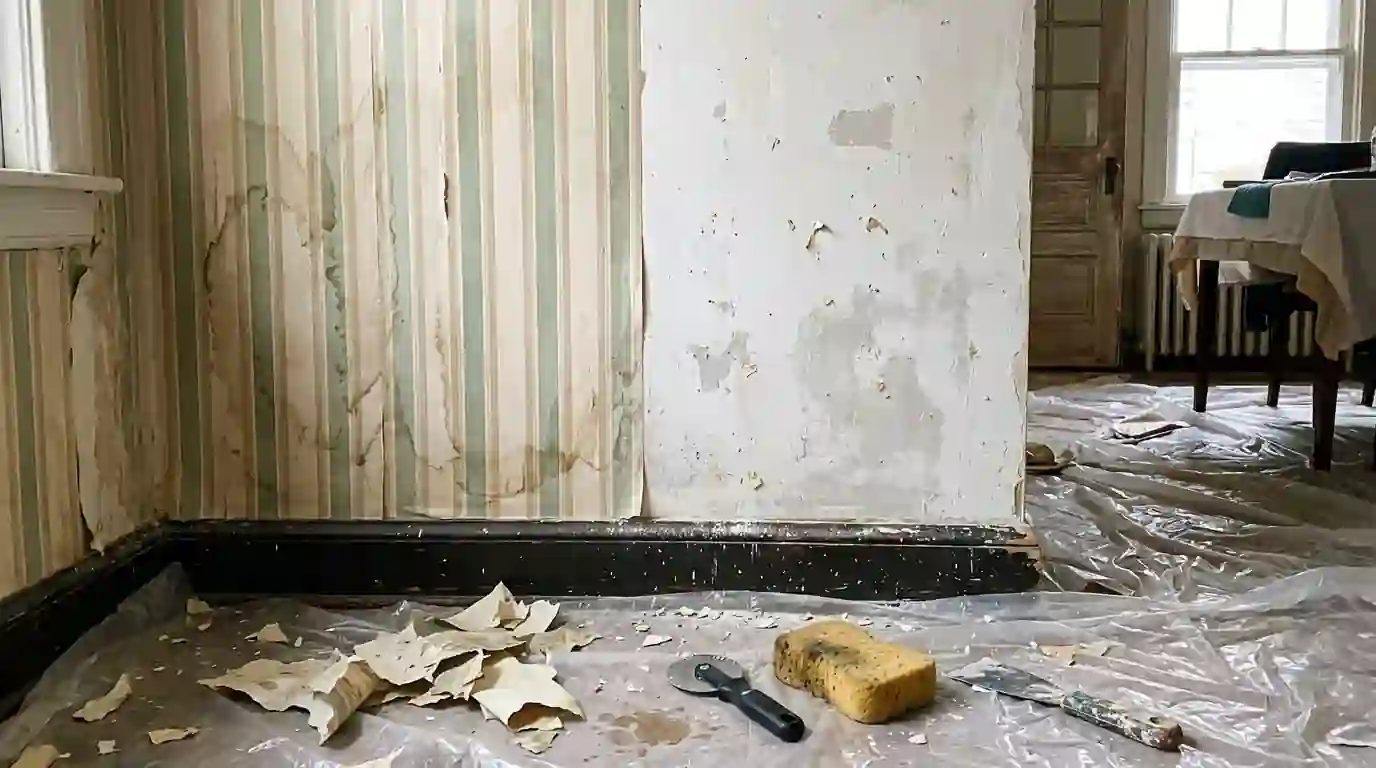
Leftover glue is the hidden problem. We wash the walls with warm water and a sponge until they no longer feel slick. Paint over paste residue will crack and peel in weeks.
- Coat 06
Seal and repair
Once dry, walls get a solvent or shellac primer, such as Zinsser Gardz, which locks down any torn paper or leftover glue. We fill gouges and skim coat where needed before painting.
Typical wallpaper removal costs in DC
The type of paper and the condition of the wall underneath matter more than the room size.
| Job | Typical range | What moves the price |
|---|---|---|
| Wallpaper removal per sq ft of wall | $1.35 to $3.20 | Paper type, layers, wall surface |
| Powder room or small bath | $340 to $690 | Cutting around fixtures, vanity, toilet |
| Average bedroom, four walls | $680 to $1,560 | Layers, borders, height |
| Stairwell or two-story foyer | $1,240 to $2,870 | Scaffolding, height, plaster condition |
| Seal and skim coat after removal | $460 to $1,280 per room | Torn paper, gouges, finish level |
| Paint after removal, one room | $485 to $860 | Color change, ceiling and trim included |
Typical DC ranges only, not a quote; a walkthrough and a test patch set the price.
Strip it, skim it or paint over it?
Removal isn't the only option. Here are the three paths we discuss with owners.
Full removal
Best for most papers. It leaves the wall bare so repairs, primer and paint bond properly. On plaster, it is usually straightforward; on unprimed drywall it takes more care.
Remove the face, skim the backing
When the backing won't release from unprimed drywall, we strip the face, seal the backing with a solvent primer and skim coat over it. The result is smooth and stable.
Paint over the paper
We rarely recommend it. Seams can lift, paste can bubble and later removal gets much harder. It's only a fit for well-attached paper you plan to cover long term.
Remove and hang new paper
If you just want a new pattern, we strip the old paper, prime with a wallpaper primer and hang the new one. Our wallpaper installation page has details.
Products that make removal cleaner
None of these are exotic, but each one solves a specific removal problem.
- A light scoring tool, used gently so water reaches the paste without scarring the wall.
- An enzyme-based paste remover mixed with warm water to break down old adhesives.
- A wallpaper steamer for thick, layered or painted-over paper.
- Wide plastic and flexible steel scrapers, chosen based on how soft the wall is.
- Zinsser Gardz or a shellac primer to seal torn face paper and leftover glue.
- Lightweight compound for skim coats, followed by a quality interior paint such as Benjamin Moore Regal.
Once walls are clean and sealed, most owners move straight on to interior house painting with us.
Where we do this work most often
We take this job across the District and close-in Maryland and Virginia. These are the neighborhoods and cities we cover most, with a ZIP for each.
Questions we hear about this
How long does wallpaper removal take in an older DC house?
A single bedroom usually takes one long day for removal and paste washing, then a second day for sealing and repairs. Layered paper from several decades, painted paper or stairwells can add a day or more. Plaster walls in older homes are often faster than unprimed drywall, because they handle water well.
Will removing wallpaper damage my plaster walls?
Plaster usually comes through well, but it can reveal cracks or loose sections the paper was holding together. We repair those as we go. If paper was hung over badly crumbling plaster, we'll show you before going further, since that may call for plaster repair as a separate step.
Can you remove wallpaper in a bathroom with a lot of humidity?
Yes. Bathroom paper is often vinyl, which helps it come off, but steam and moisture may have weakened the wall behind it. We check for soft spots and mold before sealing. Afterward, we use a moisture-resistant primer and a satin or semi-gloss paint suited to bathroom humidity.
Do you remove wallpaper in Hyattsville and other Maryland suburbs too?
Yes. Many 1920s to 1950s houses in Hyattsville still have layered wallpaper over plaster, and we remove it the same way we do in DC. The process, products and pricing ranges are similar across the area we serve.
Should I paint right after wallpaper removal, or wait?
Wait until the walls are fully dry and sealed. After soaking off paper and washing paste, walls hold moisture for a day or more, longer in humid DC weather. We seal with a solvent primer, repair and skim coat as needed, then paint. Rushing this step is the most common reason paint cracks over old wallpaper areas.