Short answer
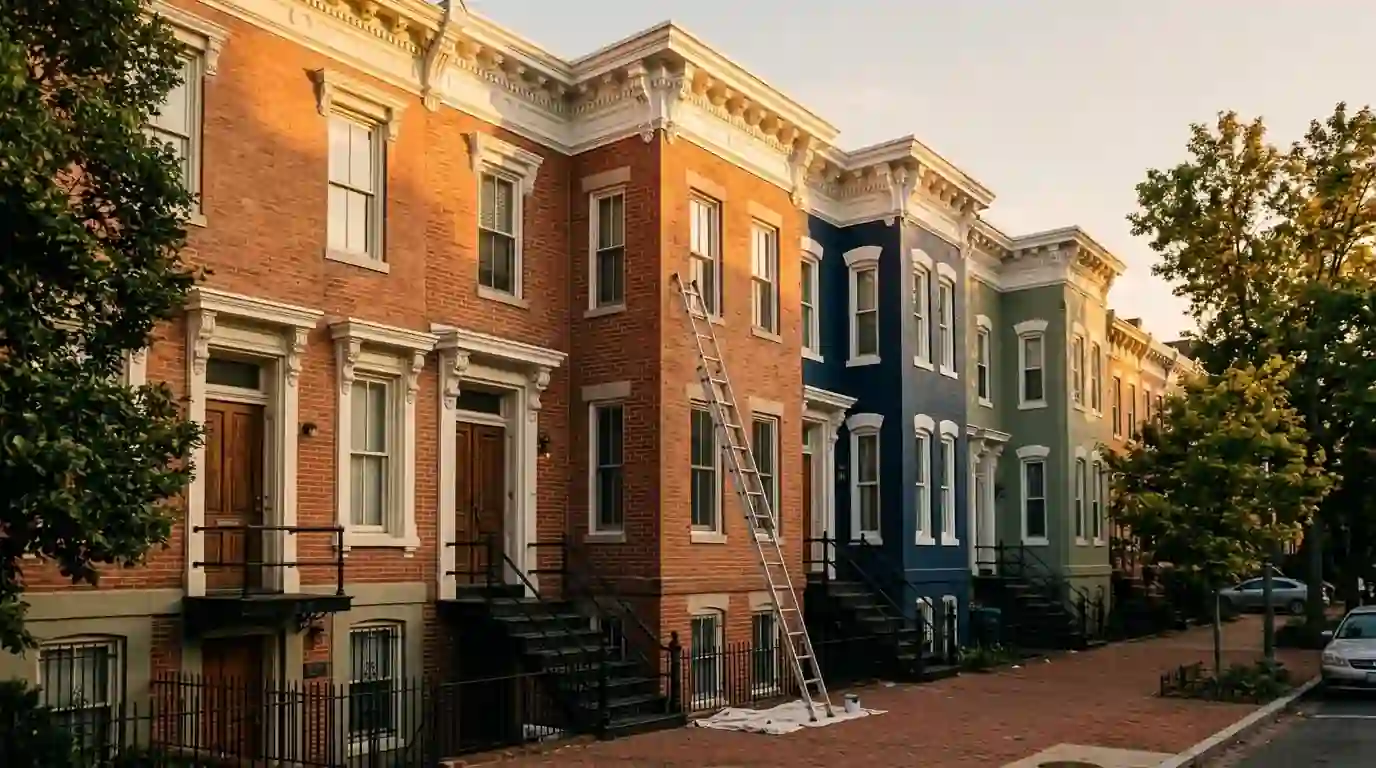
Painting a DC rowhouse exterior usually covers the front facade, cornice, bay window, porch front, door and iron railings, and sometimes the rear wall and alley side. A front facade typically costs $2,350 to $6,900, rising with cornice repair, lead-safe containment, sidewalk staging and third-story height. We set the price at a walkthrough.
Facade problems we fix on attached houses
Rowhouse fronts fail in predictable places. These are the ones we see most from Capitol Hill to Petworth.
Cornice paint flaking off
Pressed-metal and wood cornices sit at the top of the wall, where sun and rain hit hardest. Paint cracks, water gets in, and brackets start to rust or rot. We scrape, treat rust, rebuild loose wood and prime before topcoats.
Bay window trim splitting
Projecting bays have seams and flat tops that hold water. We open failed joints, replace soft trim boards and paint the bay so its corners shed rain instead of pooling it.
Painted brick blistering
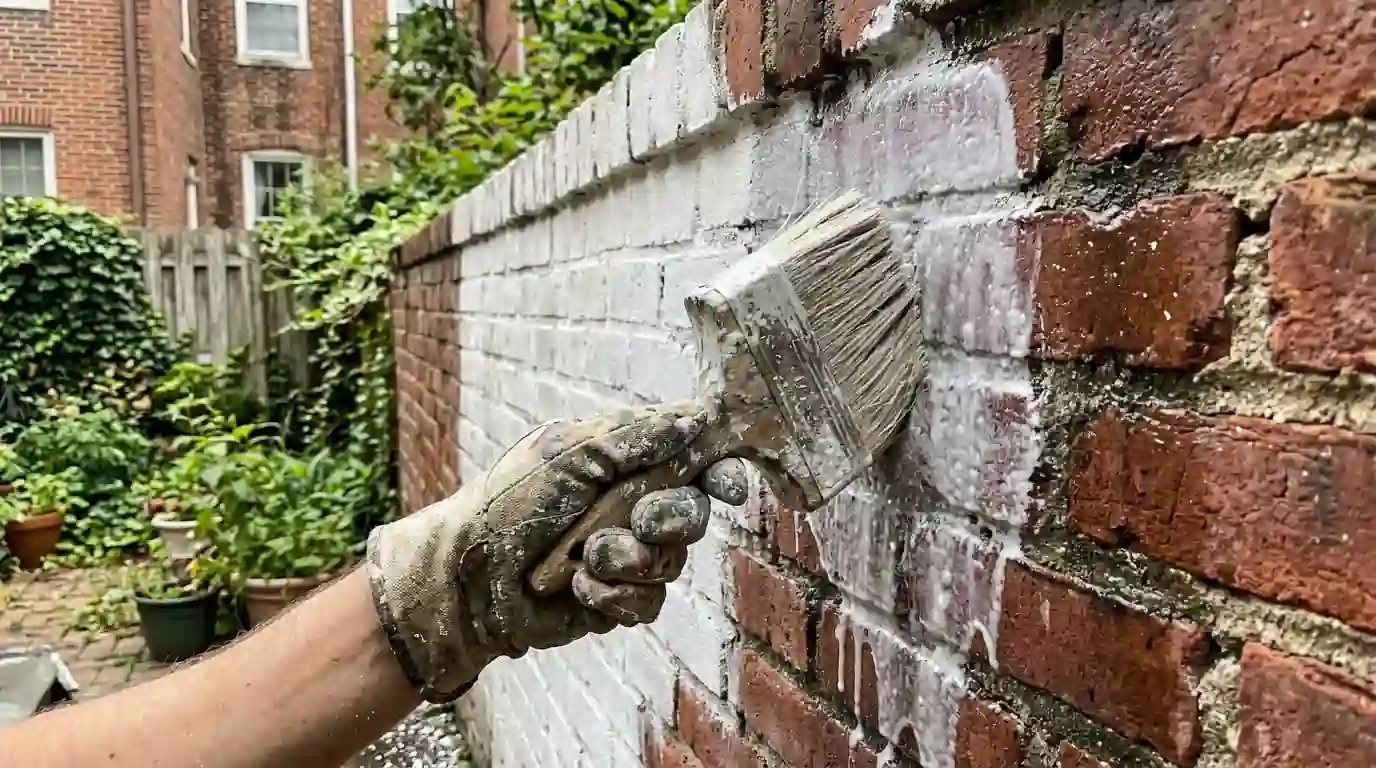
When a brick front was painted with the wrong product, trapped moisture pushes it off in bubbles. We remove loose coating and recoat with a breathable masonry paint system rather than another layer of house paint.
Rusting stoop rails
Iron railings bleed rust onto steps and brick. We grind, convert and prime them before enamel, the same way we handle wrought iron railing painting as a separate job.
Porch fronts gone gray
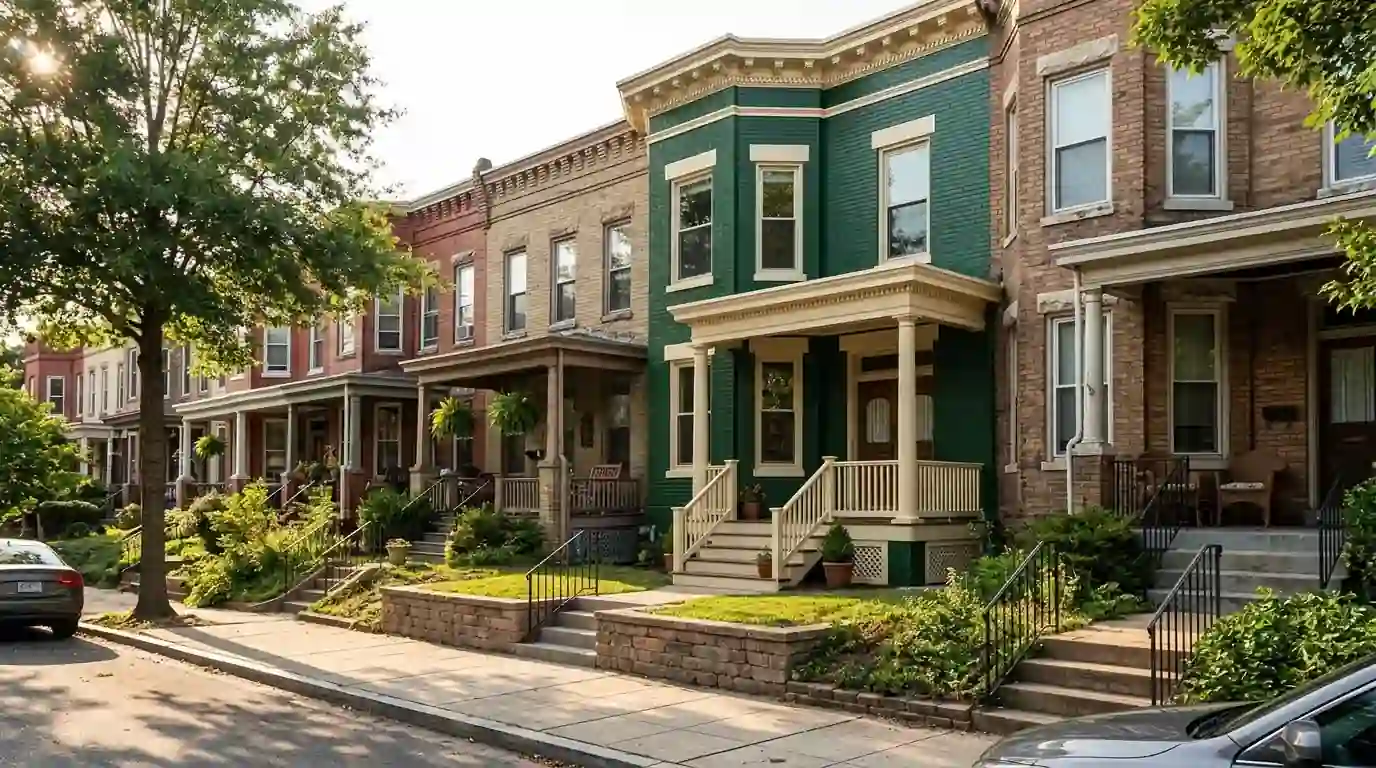
Petworth and Brookland porch fronts with square columns and wood skirting lose paint at the bottom first. We repair the base trim and repaint columns, rails and lattice together.
Rear walls nobody looks at
Alley-side walls often have the worst paint on the house. Including the rear in the same visit costs less than a second mobilization later.
Why a DC rowhouse is a different job from a detached house
The obvious difference is the party wall. Your facade ends at a line you share with a neighbor, and that line is often a downspout, a pilaster or nothing at all. We tape and cut a clean edge, talk to you about whether the neighbor should know we're coming, and never let overspray or drips drift onto their brick or windows. Where two houses share a cornice run, we paint only your section and feather the transition.
Access is the second difference. Most fronts sit on a narrow yard or right on the sidewalk, so ladders and planks have to leave a clear path for people walking by. In residential permit parking zones we often request DDOT emergency no-parking signs so the work vehicle can load near the house. Third-story cornices on Capitol Hill and Bloomingdale frequently need staging or a lift rather than a ladder, which shows up in the price.
Finally, many rowhouses sit inside historic districts. Repainting wood trim, a door or already-painted brick in a new color is generally not reviewed in DC, but painting brick that has never been painted generally does need review by the DC Historic Preservation Office, and Georgetown has the Old Georgetown Board. If your plan touches unpainted masonry, check with the preservation office first, and read our note on painting brick in a historic district.
How a facade repaint runs, top to bottom
We work from the cornice down so nothing we scrape falls onto a fresh coat.
- Coat 01
Measure, photograph, note the edges
At the walkthrough we photograph the facade, measure height to the cornice, note where your section meets each neighbor, and check whether brick is painted or bare. You get a scope that names every element, from brackets to basement window grates.
- Coat 02
Set up access and protection
We set ladders or staging, sheet the sidewalk area and steps, and cover neighbor windows close to the edge. If lead is likely, we add ground containment that extends past the work area.
- Coat 03
Strip the cornice first
Cornices get hand scraping and wire brushing, rust converter on pressed metal and epoxy consolidant on soft wood. Open seams are sealed with a high-grade sealant so the top of the facade stops leaking into the wall below.
- Coat 04
Work down through bays and windows
Bay panels, sills and window casings are scraped and spot primed, glazing is checked, and failed joints are recaulked. Painted brick gets loose coating removed and any open mortar noted for repointing.
- Coat 05
Prime, then two topcoats
Bare wood and metal get primer matched to the material. We then apply two coats of exterior acrylic on wood and a breathable masonry coating on painted brick, letting each coat cure in dry weather before the next.
- Coat 06
Door, rails and final details
The front door, stoop railings and house numbers come last so they're not handled during the rest of the work. We pull tape at the party-wall edges, clean the sidewalk and walk the facade with you.
What rowhouse fronts tend to cost in DC
Rowhouse pricing depends more on height and detail than on width.
| Job | Typical range | What moves the price |
|---|---|---|
| Two-story front facade, wood trim and painted brick | $2,350 to $4,380 | Bay window, cornice condition, number of windows |
| Three-story front with cornice | $3,970 to $6,900 | Staging or lift, pressed-metal repair, lead containment |
| Rear wall and alley side | $1,740 to $4,260 | Access through the house or alley, deck or addition attached |
| Porch front, columns and skirting | $865 to $2,140 | Column count, rot at the bases, lattice versus solid skirting |
| Stoop railing, per linear foot | $14 to $38 | Rust depth, scroll detail, whether it's removed for work |
| Front door and frame, exterior side | $218 to $465 | Paneling, glass lites, color change from dark to light |
Typical DC ranges only, not a quote; the walkthrough sets your price.
Materials that suit an attached city house
A rowhouse front mixes wood, metal and masonry within a few feet, so one product rarely covers it all.
- A breathable masonry coating, such as Romabio or a 100 percent acrylic masonry paint, on brick that's already painted.
- Rust-Oleum or a similar direct-to-metal primer and enamel on pressed-metal cornice parts and railings.
- Exterior acrylic in satin for wood trim, bays and porch columns, and a semi-gloss or high-gloss enamel for the front door.
- Epoxy wood consolidant and filler for soft bracket ends and sill noses, where full replacement would mean custom millwork.
- Wooster and Purdy brushes for cutting party-wall edges by hand, since spraying near a neighbor's brick isn't worth the risk.
Talking to neighbors and the building side before we start
These small steps keep a facade job friendly on a block where everyone shares walls.
- Let your adjoining neighbors know the dates, especially if ladders will briefly cross in front of their windows.
- Ask whether a shared cornice or downspout is being painted on both sides, since matching colors can save each of you a setup.
- Move cars and bikes off the front pad, and tell us if your block has street sweeping days.
- Keep the front door usable by telling us which day you need it; we paint it on a day you can leave it ajar or use the rear door.
- If you're in Capitol Hill or Bloomingdale and changing brick from bare to painted, check with the DC Historic Preservation Office before we book.
Where we do this work most often
We take this job across the District and close-in Maryland and Virginia. These are the neighborhoods and cities we cover most, with a ZIP for each.
Questions we hear about this
Do I need my neighbor's permission to paint my rowhouse facade?
You don't need permission to paint your own section, but it helps to let them know, because ladders and drop cloths may sit near their steps for a day or two. We keep all paint on your side of the party line and protect their windows. Shared features like a common cornice are worth discussing with them first.
Can you match the color of the rowhouse next door on a shared cornice?
Usually, yes. We can take a chip from a hidden spot on your section and have it matched, or work from the neighbor's leftover paint if they have it. Weathered paint fades, so a fresh match may look slightly different for a season until it ages to the same tone.
Is a rear rowhouse wall cheaper to paint than the front?
Often it is, because it has less trim detail and no cornice. Access can cancel that out. If the only way in is through the house or a narrow alley, setup takes longer. Painting front and rear in one visit is usually the better value than two separate jobs.
How do you stage a three-story rowhouse front on a busy sidewalk?
We use pump jacks, a rolling tower or a small lift depending on height and sidewalk width, and keep a clear walking path with cones and sheeting. Where parking is tight we request temporary no-parking signs from DDOT for the work vehicle. Call (771) 247-4038 and we'll look at your block during the walkthrough.
What color changes on a historic district rowhouse generally need review?
In DC, repainting already-painted wood or trim in a different color is generally not reviewed. Painting brick or stone that has never been painted generally is, and Georgetown changes go before the Old Georgetown Board. Rules vary, so check with the DC Historic Preservation Office before you pick a scheme that touches bare masonry.