Short answer
An epoxy floor in DC starts with a slab moisture test, then diamond grinding, crack and pit repair, an epoxy base coat, optional decorative flake and a clear topcoat. Typical cost is $4.20 to $8.90 per sq ft. A one-car garage takes two to three days; the floor needs about a week before cars drive on it.
Is your slab a good candidate for epoxy?
Most garage and basement floors can be coated. A few conditions decide whether we go ahead or fix something first.
- Concrete is at least 28 days old and solid, without crumbling or loose surface layers.
- A moisture test shows vapor coming through the slab within what the coating can handle, or we plan a moisture-blocking primer.
- Cracks are hairline to moderate and not shifting; heaved or sinking slabs need concrete work first.
- Old paint, sealers or glue can be ground off fully so the epoxy bonds to bare concrete.
- The space can stay closed off for several days while the coating cures.
- There's ventilation to the outside, by garage door, window or fan, for the application day.
If your slab doesn't meet one of these, we'll explain the fix and whether it's worth doing before coating.
Grinding, base coat, flake, clear: how the floor goes down
Prep is most of the job. The coats themselves go on quickly once the slab is ready.
- Coat 01
Calcium chloride or RH moisture test
We place a moisture test on the slab a day ahead, or use an in-slab probe. High readings on a basement floor call for a moisture-mitigating epoxy primer before anything else.
- Coat 02
Diamond grind and vacuum
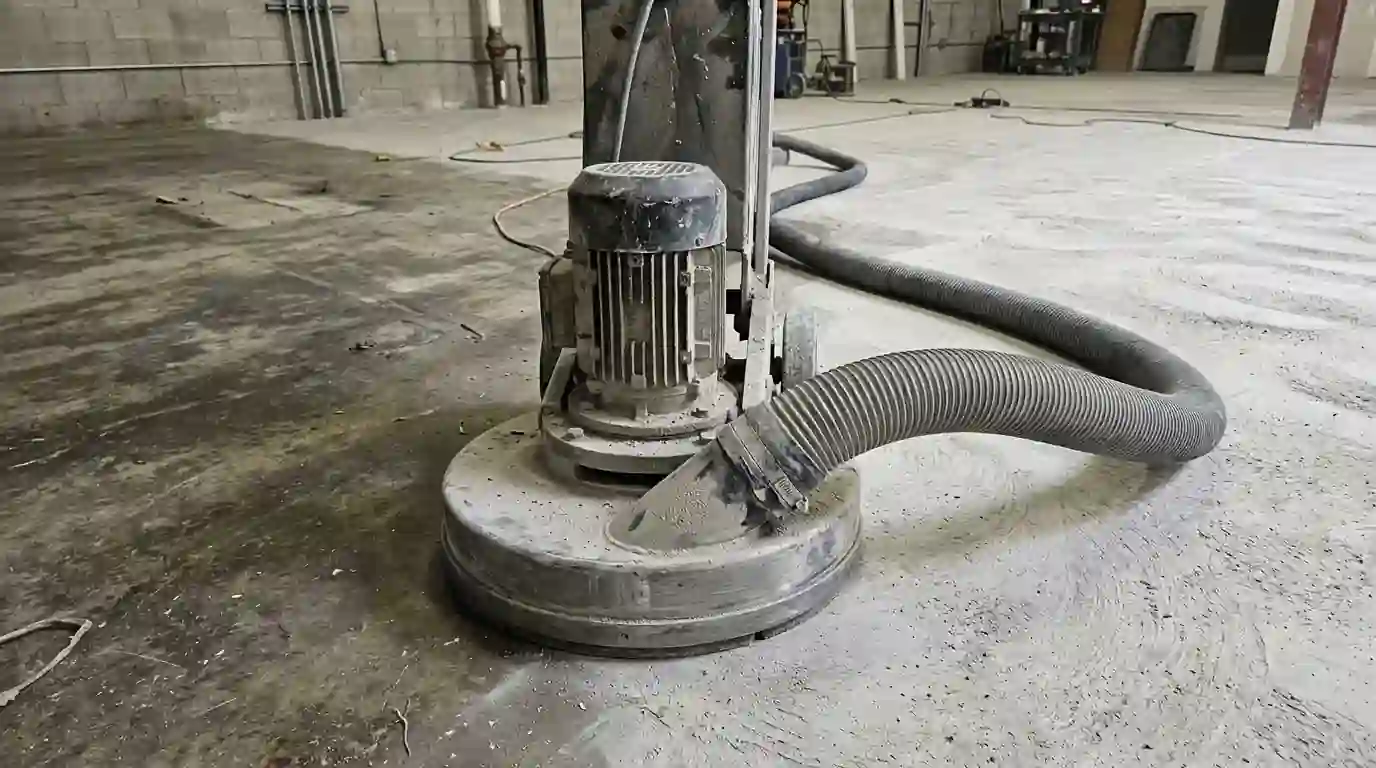
A walk-behind grinder with diamond tooling opens the concrete to a texture like medium sandpaper, connected to a HEPA dust extractor. Acid etching is a weaker option and we use it only on small spots.
- Coat 03
Fill cracks, pits and control joints
Cracks are chased with a grinder and filled with an epoxy or polyurea crack filler, then ground flush. Pits and spalled spots get an epoxy mortar so the floor ends flat.
- Coat 04
Roll the base coat
A 100 percent solids epoxy base coat goes down with a squeegee and back-rolled with a 3/8 inch roller. We work in sections so there are no lap lines, wearing spiked shoes on the wet coat.
- Coat 05
Broadcast flake if you want it
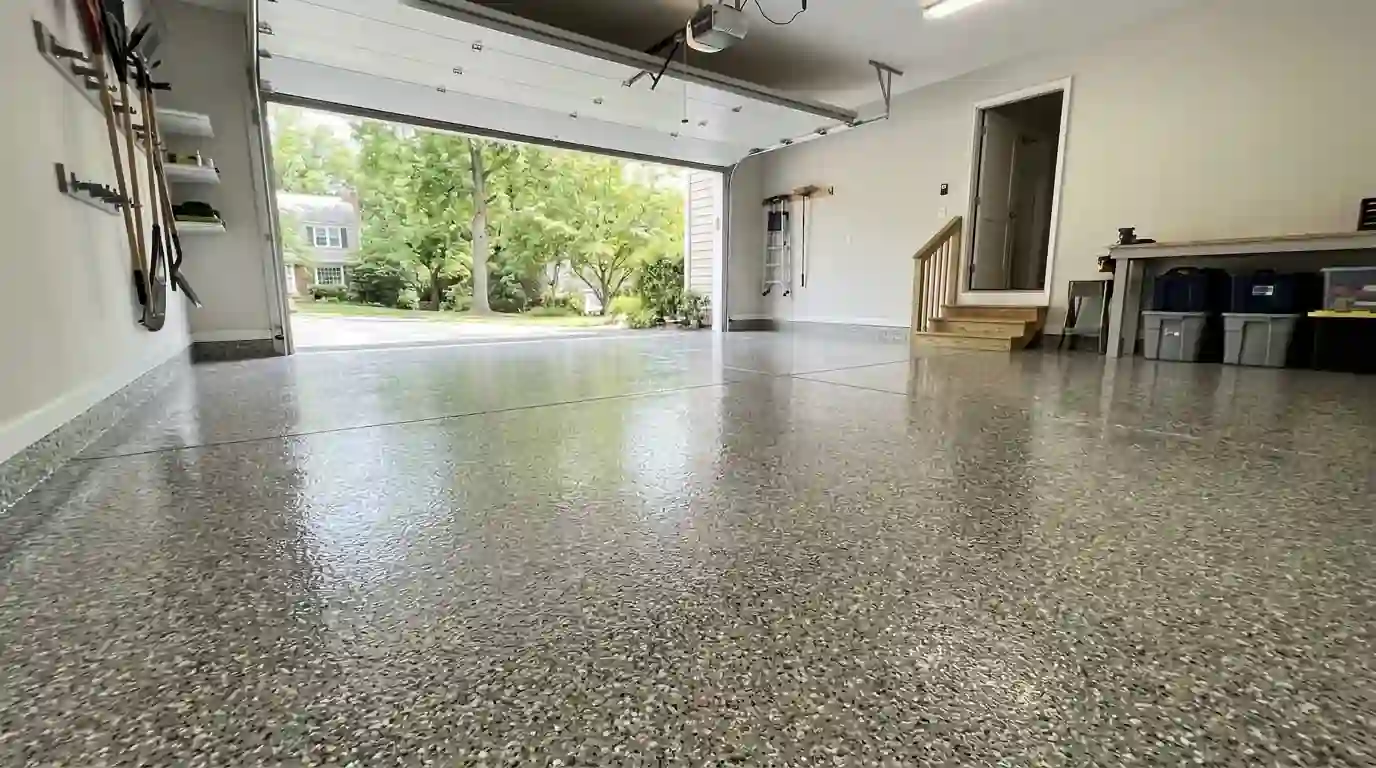
Vinyl color flake is thrown by hand into the wet base, light or to full coverage. Full broadcast hides slab flaws best, and the excess is scraped and vacuumed once the base sets.
- Coat 06
Clear topcoat
A clear epoxy or polyaspartic topcoat seals the flake and sets the final texture. We can add a fine grit for grip on garage floors and basement stairs landings.
- Coat 07
Cure and return
Foot traffic is usually fine after 24 hours, light items after 48 and car tires after about seven days. Cool basement air slows the cure, so we may extend those numbers in winter.
Epoxy, polyaspartic or a simple floor paint?
Each one makes sense for a different floor. Here's how they compare in a DC garage or basement.
100 percent solids epoxy
Thick, hard and strong at bonding to ground concrete. It's slower to cure and can yellow in direct sun, so we often top it with a UV-stable clear coat in garages with an open door.
Polyaspartic topcoat
Cures in hours, stays clear in sunlight and resists hot tire pickup. It's pricier and less forgiving to apply, so it's usually used over an epoxy base rather than alone.
Water-based epoxy kit paint
Thin, easy and cheap, but it peels under hot tires and road salt. Fine for a basement storage room, not for a car garage.
Concrete stain and sealer
Penetrating stains and clear sealers keep the concrete look and stop dusting. They won't hide cracks or stains, and they need resealing more often.
Typical epoxy floor pricing in the DC area
Price follows prep. A clean, sound slab costs less to coat than one with old paint, cracks or moisture.
| Floor job | Typical range | What moves the price |
|---|---|---|
| Garage floor, epoxy base, full flake, clear top | $4.20 to $8.90 per sq ft | Slab size, crack repair, flake coverage and epoxy versus polyaspartic topcoat |
| One-car garage, about 260 sq ft | $1,185 to $2,340 | Old sealers to grind off, oil stains, drains and stem walls |
| Two-car garage, about 480 sq ft | $2,145 to $4,280 | Same factors plus color choice and grit for traction |
| Basement floor with moisture-blocking primer | $5.35 to $9.85 per sq ft | Moisture readings, pipe and post penetrations, and access to an English basement through a front areaway |
| Crack and spall repair add-on | $165 to $585 per area | Length and width of cracks, spalled patches and control joint filling |
These are typical ranges, not a quote; your price is set after a walkthrough and moisture test.
Salt, humidity and below-grade slabs: DC realities
Winter road salt is the main enemy of a garage floor here. Cars drip slush that soaks into bare concrete, crystallizes and slowly flakes off the surface layer. A sealed coating keeps salt on top where it can be mopped away. Garages in places like Chevy Chase DC and out in Montgomery County that see daily use benefit the most.
Basements are trickier because the slab often sits on damp clay with no vapor barrier underneath, especially in pre-war houses. Moisture coming up through the slab is what makes cheap floor coatings blister and peel. That's why we test before quoting and use a moisture-mitigating primer when the numbers call for it. If the basement walls need attention too, our basement painting service treats the masonry around the floor.
Summer humidity matters as well. Epoxy shouldn't go down when the slab is within a few degrees of the dew point, or moisture condenses under the coat. On muggy days we run dehumidifiers ahead of time, and in winter we may need to heat a cold garage to bring the slab into range.
Materials that go into a coated floor
We use professional, 100 percent solids epoxies and polyaspartic topcoats rather than big-box kits, matched to the slab and how the room is used. For lighter-duty basement and storage floors, a coating from Rust-Oleum's professional line or Sherwin-Williams' concrete coatings can be a sensible step down in cost. Color flake comes in many blends, and we'll bring chip samples so you can see them against your walls and cabinets.
Edges matter as much as the field. We coat a few inches up the stem wall or baseboard area to create a cove that's easy to clean, and we tape around drains and posts. If the walls and doors in the garage are getting refreshed as well, our garage door painting can be done in the same visit after the floor cures.
Where we do this work most often
We take this job across the District and close-in Maryland and Virginia. These are the neighborhoods and cities we cover most, with a ZIP for each.
Questions we hear about this
Will an epoxy garage floor get slippery when wet?
A smooth clear coat can be slick with water or snowmelt. That's why most of our garage floors get decorative flake, which adds texture, and we can mix a fine grit into the topcoat for more grip. Basement floors near laundry areas get the same option.
How long before I can park on a new epoxy garage floor?
Plan on about a week before car tires, longer if the garage is cold. Hot tires pull at a coating that hasn't fully cured. You can walk on it the next day and set light items down after two days.
Can epoxy go over a basement floor that gets damp?
Only if the moisture test results are within what a moisture-blocking epoxy primer can handle. Standing water or seasonal flooding needs drainage work first. We test before quoting and won't coat a slab that will push the coating off within a year.
Is diamond grinding dusty inside the house?
Our grinders run with HEPA vacuums attached, which captures most dust at the source. We seal off doors into the house with plastic and run fans to exhaust air outside. In English basements we plan the route in and out so dust doesn't travel through the rest of the unit.
How long does an epoxy and flake floor last?
A properly ground and coated garage floor typically holds up for many years under normal car traffic. Topcoats can be scuffed and recoated without starting over. Call (771) 247-4038 to book a moisture test, and see our note on how long exterior paint lasts for how coatings wear in DC weather.