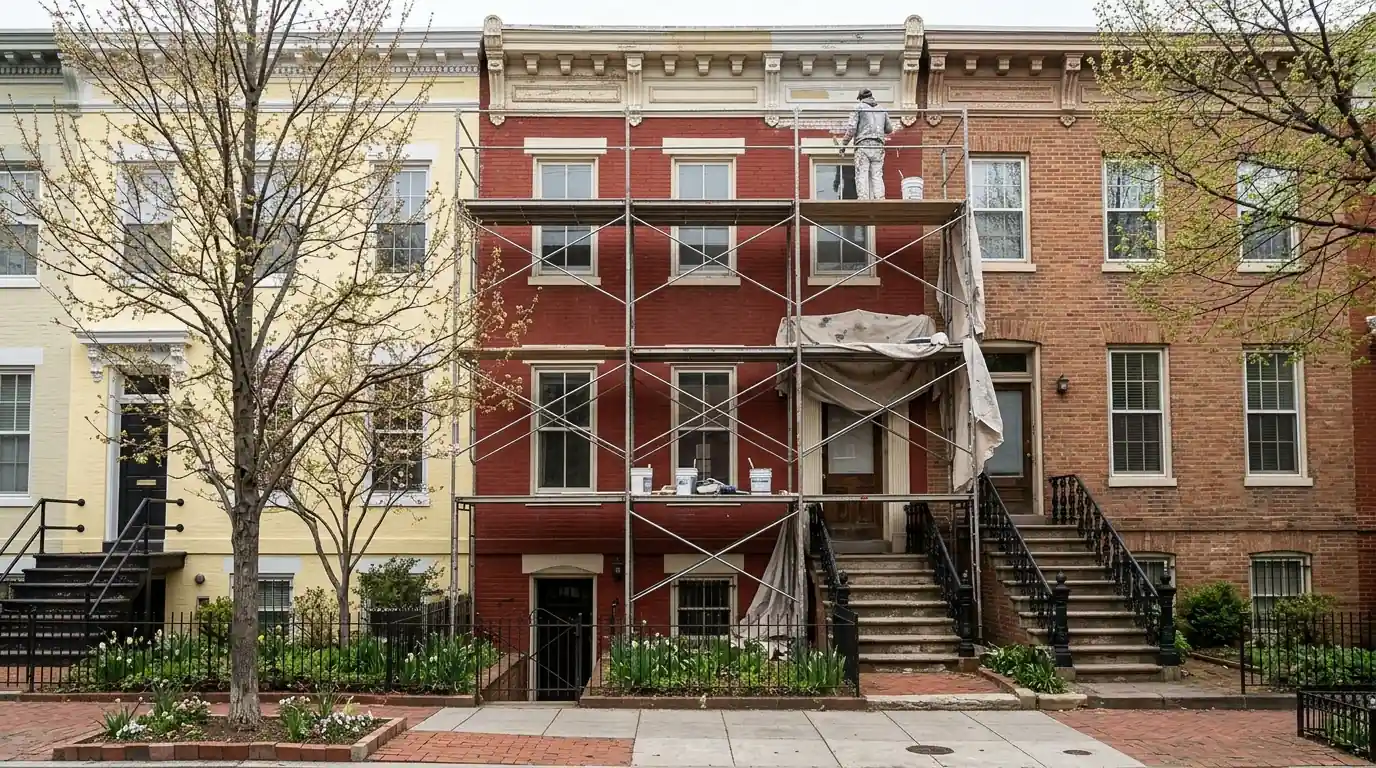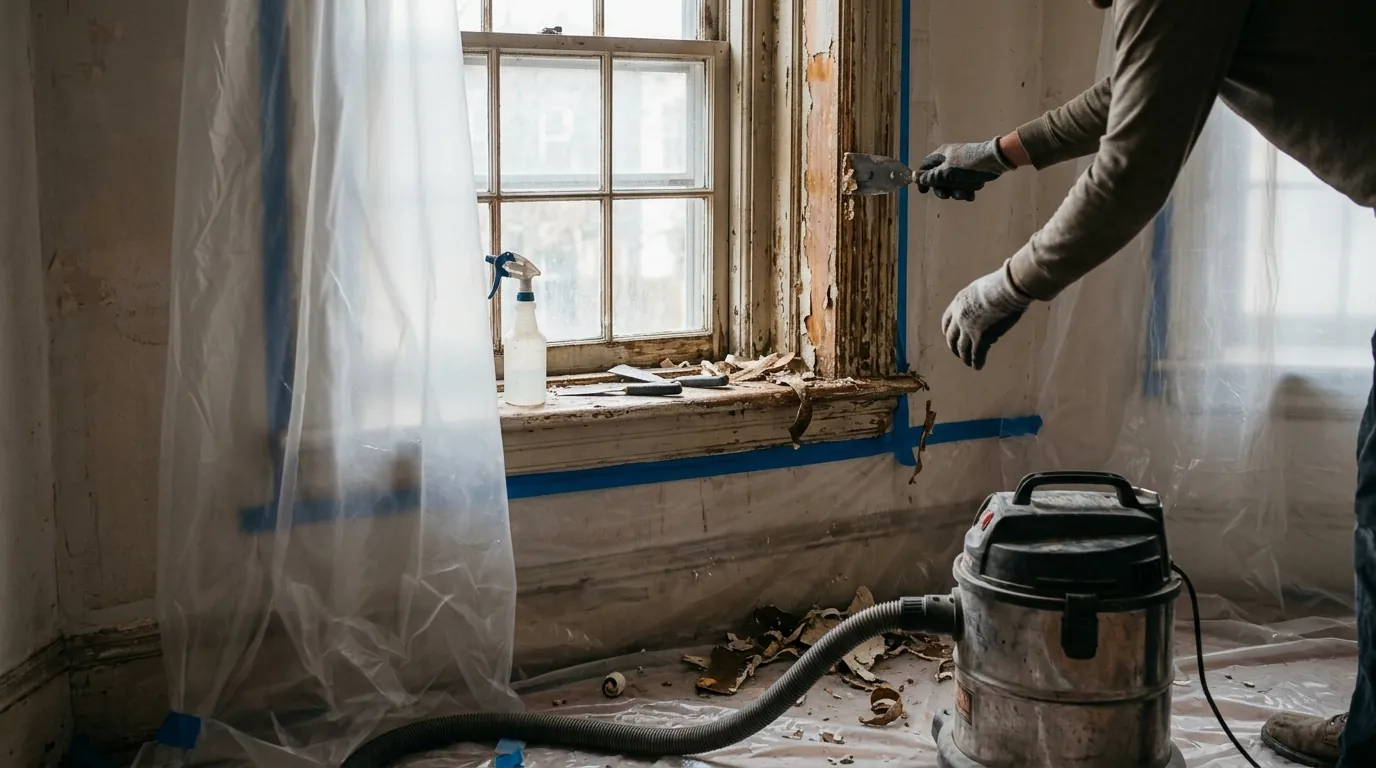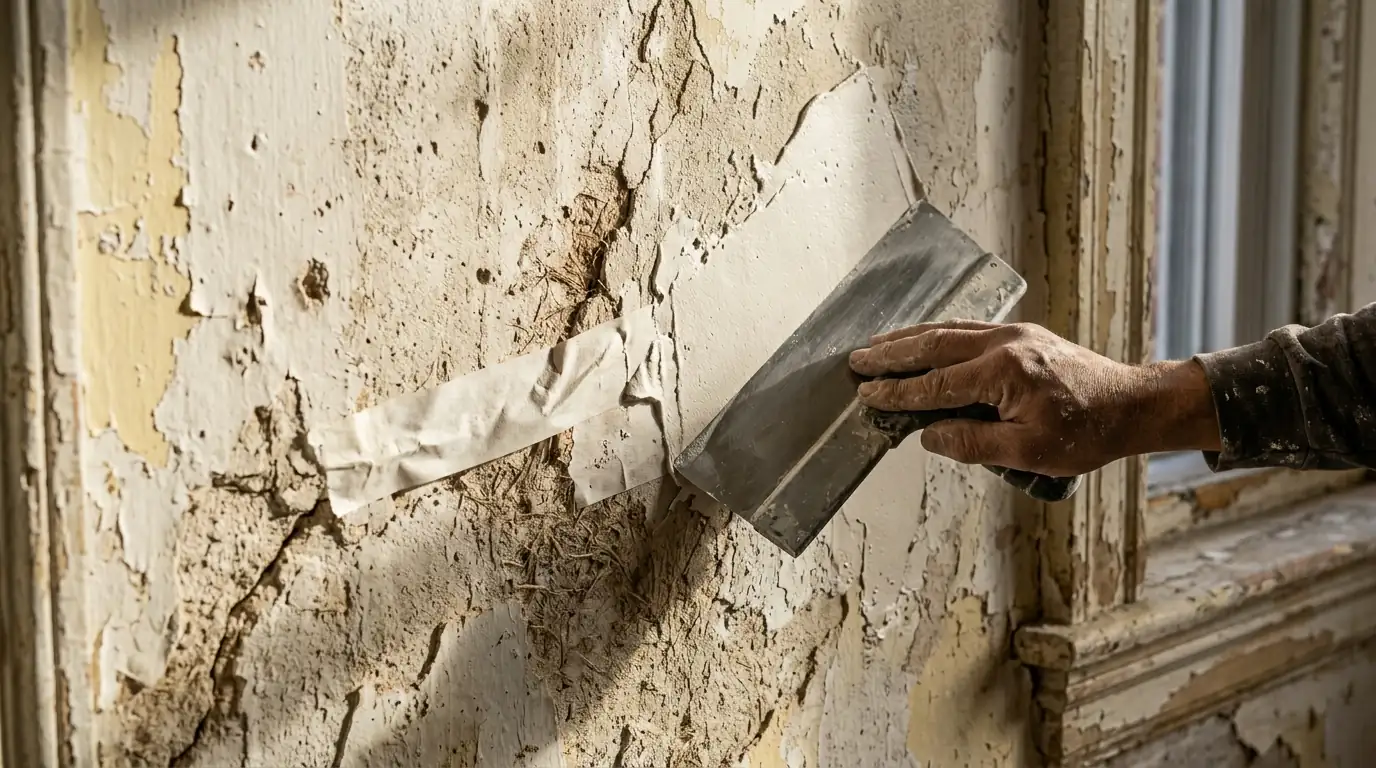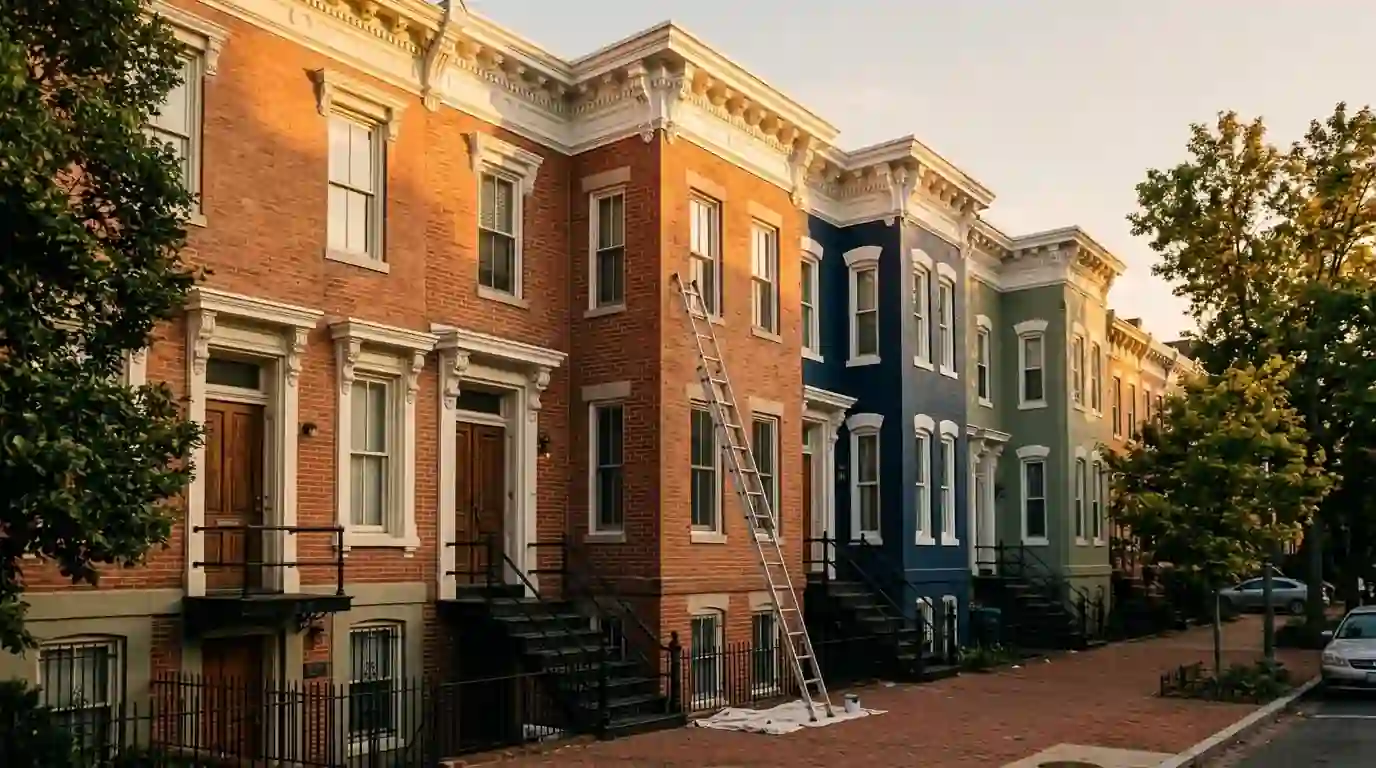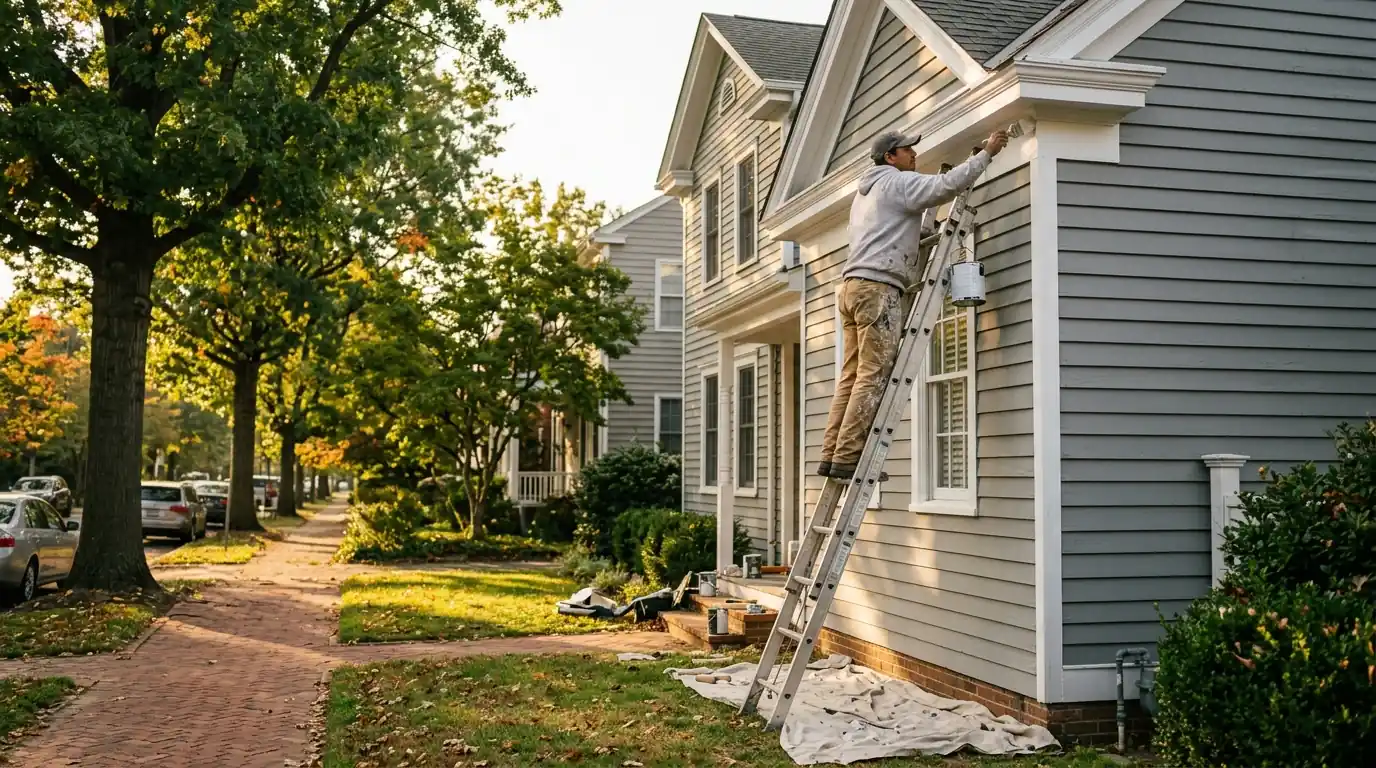
Which months give exterior paint the best start in DC?
Most exterior painting in Washington runs from about mid-April through October. That window is not about comfort for the painters. It is about what the paint needs to cure: surface and air temperatures in the 50s or higher for most latex products, no rain for several hours after application, and nights that don't drop so low that dew settles on a film that is still soft. Some premium acrylics are rated down to 35 F, but that rating is the floor, not a good day.
DC makes the calendar trickier than the averages suggest. Spring swings hard, with a 74 F afternoon followed by a 41 F night. July and August bring humidity above 70 percent and storms that roll in around 4 p.m. September and early October are usually the steadiest stretch of the year, which is why that slot fills first. If you want a fall date, the honest advice is to call by late June.
Weather also decides how long the job takes. A detached Colonial in Shepherd Park that would take nine working days in September can stretch to fourteen in July once storm afternoons and slow morning dew are counted. We build those lost hours into the schedule up front, so the start date you get is one we expect to hold.
How each part of the DC season treats fresh paint
Here is how we read the calendar for exterior work on houses, rowhouses and porches around the District.
Late March to mid-April
Daytime highs reach the 60s, but nights still dip into the 30s. We use this stretch for prep: washing, scraping, caulking and wood repair. Finish coats go on only when the overnight forecast stays above about 45 F.
Late April through early June
Usually the best spring window. Mild temperatures and moderate humidity let latex film form properly. Pollen is the catch: we rinse surfaces the morning of painting so yellow oak and pine dust doesn't get trapped in the first coat.
Mid-June through August
Workable, but we paint the shaded side of the house in the hottest hours and start sunny elevations early. South-facing siding can pass 120 F in direct sun, which makes paint skin over before it levels and leaves lap marks.
September to mid-October
The most reliable weeks of the year in DC: warm days, cooler nights, lower humidity and fewer storms. Expect the longest booking lead time here, often six to ten weeks for a full exterior.
Late October and November
Short days are the real limit. Dew forms by late afternoon, so paint applied after about 1 p.m. may not set before moisture lands on it. We keep this period for small jobs: doors, railings, a single facade or touch-up.
December through February
Exterior coating mostly stops. Interior painting, plaster repair and cabinet work fill the winter, and it is a good time to book a spring exterior walkthrough while calendars are still open.
The daily weather checks we make before opening a can
Even inside the good months, every painting day passes or fails on a short checklist.
- Air and surface temperature both at or above the minimum on the product label, measured with an infrared thermometer on the actual wall, not read off a phone app.
- Surface temperature at least 5 F above the dew point, so moisture is not condensing on siding or trim while the coat is wet.
- No rain in the forecast for at least four hours after the last coat on any surface, and longer for oil primers and stains.
- Relative humidity under about 85 percent, since heavy air keeps latex soft for hours and can leave a sticky, streaked film.
- Wood moisture content under roughly 15 percent on a pin meter, checked after any rain on bare siding, sills and porch boards.
- Wind below the level where overspray drifts, which matters on tight rowhouse blocks where a neighbor's car sits ten feet away.
- Enough daylight left for the coat to firm up before evening dew, which on an October day means stopping by early afternoon.
How to book an exterior so it lands in a good window
Exterior schedules in DC fill by season, so timing the planning matters nearly as much as timing the paint.
- Coat 01
Call in winter or early spring
Walkthroughs in January through March are easy to schedule, and you get first pick of spring and fall dates. We look at the siding, trim, masonry and porches and note anything that needs repair before painting starts.
- Coat 02
Sort out repairs first
Soft sills, split fascia and failed caulk should be fixed before the paint date, not during it. Rotted trim and sills often add two to four days to a job, and that time is better spent in spring than in a tight October slot.
- Coat 03
Check any historic review
If you live in a historic district and plan to paint brick that has never been painted, check with the DC Historic Preservation Office first. Repainting wood trim a new color is generally not reviewed, but unpainted masonry usually is.
- Coat 04
Pick colors outdoors
Look at large samples on two or three sides of the house, in morning and late afternoon light. A gray that reads cool on a north wall can look tan on the south side by 5 p.m.
- Coat 05
Plan the wash day
We pressure wash the house two or three days before painting so siding and trim dry fully. Washing the day before rain is fine; washing the evening before a paint day is not.
- Coat 06
Leave room for weather days
A good schedule assumes some lost days. We plan roughly one rain day for every five working days in summer and treat any slip as normal, not as a reason to rush coats onto a damp surface.
What does an exterior repaint typically cost in DC?
Season does not change our pricing, but the size and condition of the house do. These are typical ranges across the District.
| Job | Typical range | What moves the price |
|---|---|---|
| Detached house exterior | $5,600 to $14,800 | Stories, siding type, amount of scraping and number of colors |
| Rowhouse front facade | $2,350 to $6,900 | Cornice height, bay windows, brick versus wood and sidewalk access |
| Full exterior caulking | $560 to $1,850 | Linear feet of joints and how much old caulk must be raked out |
| House pressure wash | $285 to $640 | House size, mildew load and whether brick needs a gentler wash |
| Rot repair per area | $240 to $1,150 | Depth of decay and whether trim is milled to match an old profile |
These are typical ranges, not a quote; the walkthrough sets the actual price for your house.
Timing mistakes that shorten an exterior paint job
The most common one is painting too late in the day in fall. The coat feels dry at 3 p.m., dew lands at 5, and a week later the finish shows tan streaks of surfactant leaching or a dull, chalky patch. That film never fully recovers. On our jobs, finish coats on the cold side of the season start by mid-morning and stop by early afternoon.
The second is rushing a recoat. Most acrylics need about four hours between coats at 77 F and 50 percent humidity, and that doubles on a cool, damp day. The third is painting over wet wood after a storm week. If you want to know how long the finished job should last, our guide on how long exterior paint lasts on each surface covers siding, trim, decks and masonry, and our exterior house painting page explains how we prep each one.
Services mentioned in this guide
Exterior House Painting
Siding, trim, soffits and porches scraped, primed and painted on a schedule built around DC weather.
Rowhouse Exterior Painting
Front facades, cornices, bays and porch fronts painted with shared party-wall edges and sidewalk access in mind.
Pressure Washing
Siding, brick, decks and porches washed at the right pressure so the next coat bonds to clean material.
Follow-up questions
Can a DC exterior be painted in November if the forecast looks mild?
Sometimes, for smaller pieces. A front door, a stoop railing or one rowhouse facade can go on during a stretch of 55 F days if we start late morning and stop by 1 p.m. A full detached house is riskier because it takes more days, and the chance of a cold, damp night landing on fresh paint grows with each one. We usually suggest moving a full exterior to April.
How long after a summer thunderstorm can painting restart on siding?
On painted siding in full sun, often the same afternoon or the next morning, once the surface reads dry and the meter shows wood moisture under about 15 percent. Bare wood, shaded north walls and porch floors take longer, sometimes a full day. We check with a meter rather than guessing, because paint over damp wood is the most common cause of blistering in the first year.
Does a rowhouse facade in DC need a different season than a detached house?
Mostly the same window, but facades are shorter jobs, often three to six working days, so they fit into gaps that a detached house cannot. Facades that face south on narrow streets get very hot in July, so we schedule those for spring or fall when possible. See our rowhouse exterior painting page for how we handle cornices and shared edges.