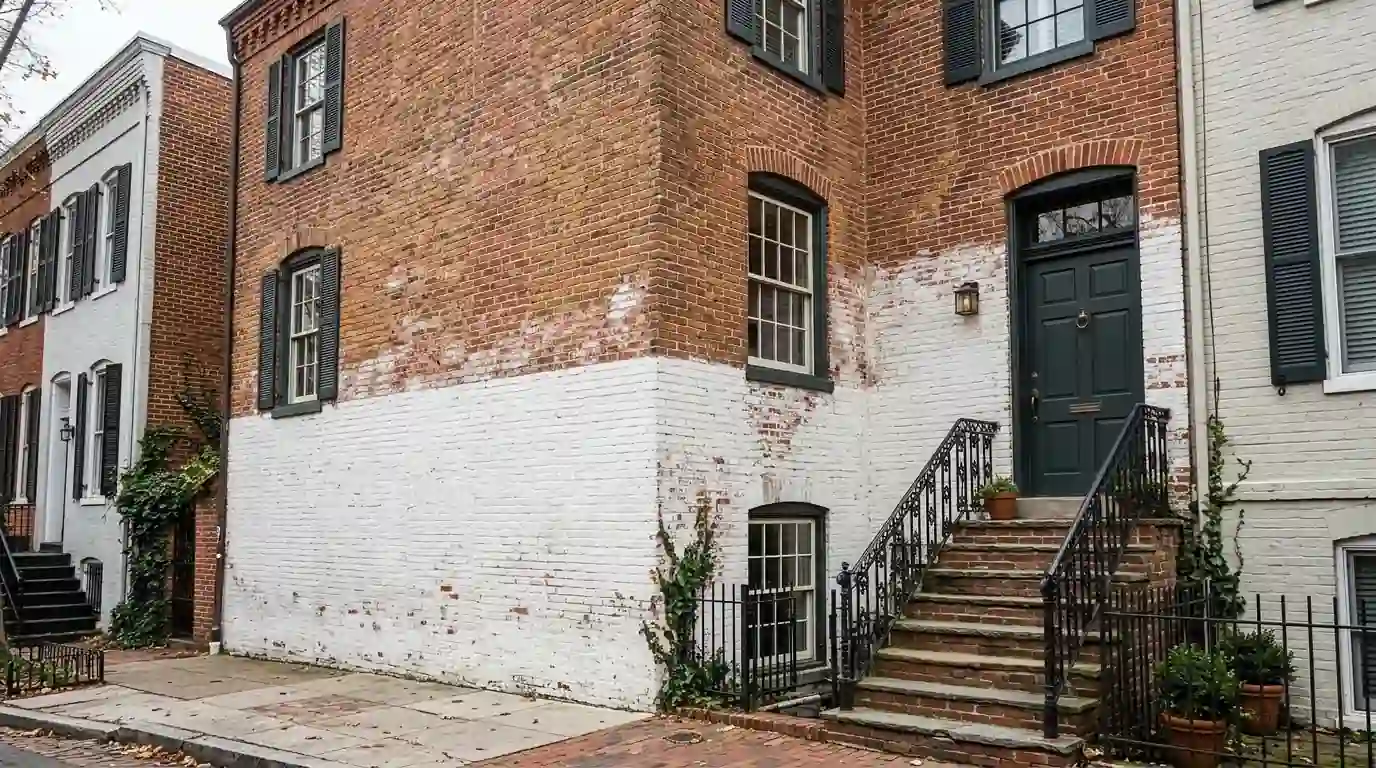
What limewash and paint actually do to brick
Limewash is slaked lime thinned with water, sometimes tinted with mineral pigment. It soaks into the face of the brick and hardens by pulling carbon dioxide from the air, turning back into a thin layer of limestone. There's no plastic film. Water vapor moves through it freely, and it wears away slowly from the surface instead of letting go in sheets.
Masonry paint is acrylic resin and pigment that dries into a continuous film sitting on top of the brick. Good masonry paints breathe better than house paint, but they still slow vapor down. Elastomeric coatings go further and are close to waterproof, which helps on cracked stucco and is risky on old soft brick.
A third option sits between them. Mineral silicate paints, such as the masonry lines Romabio sells, bond chemically with the brick and stay very vapor-open while giving a more even, opaque color than limewash. We use them when a client wants solid color but the brick needs to breathe.
How do limewash and paint look after 15 years?
This is how the two finishes typically age on a south or west-facing DC facade, which takes the most sun and storm exposure. North walls age more slowly.
| Age | Limewash | Acrylic masonry paint |
|---|---|---|
| First year | Chalky, mottled matte finish; some color shift as it cures and rain rinses the loosest lime | Even, solid color with a soft sheen; looks its best |
| Years 2 to 5 | Brick starts showing at edges, sills and spots where rain runs; many owners like the weathered look | Little visible change; some fading on the sunniest wall |
| Years 5 to 8 | Wear is clear; a fresh coat over the old one restores it without stripping | Hairline cracks and small blisters may start near downspouts, sills and grade |
| Years 8 to 12 | Second or third refresh; each coat adds depth | Peeling where moisture is trapped; scraping and spot priming before repainting |
| Taking it off | Scrubbing or a gentle wash removes most young limewash | Chemical stripping or careful abrasive work, slow and costly on soft brick |
Ages vary with exposure, brick condition and prep, so we judge your walls on a walkthrough rather than from a chart.
When we recommend limewash and when we recommend paint
Neither finish wins across the board. The brick, the house and what you want it to look like in ten years decide it.
Limewash: soft, unpainted brick
Old handmade or soft-fired brick laid in lime mortar needs to dry out after rain, and limewash lets it. If you want to lighten a never-painted facade and can live with brick showing through over time, it's the gentler choice.
Limewash: you want a worn look
Limewash looks best when it's allowed to wear. Owners who like an old European or farmhouse look tend to love it at year five. Owners who want crisp, uniform color tend to be disappointed.
Paint: brick that's already painted
Limewash can't soak into brick already sealed by acrylic paint. Unless you strip the facade, which is costly and hard on old brick, the realistic choice is a breathable masonry repaint.
Paint: an exact color
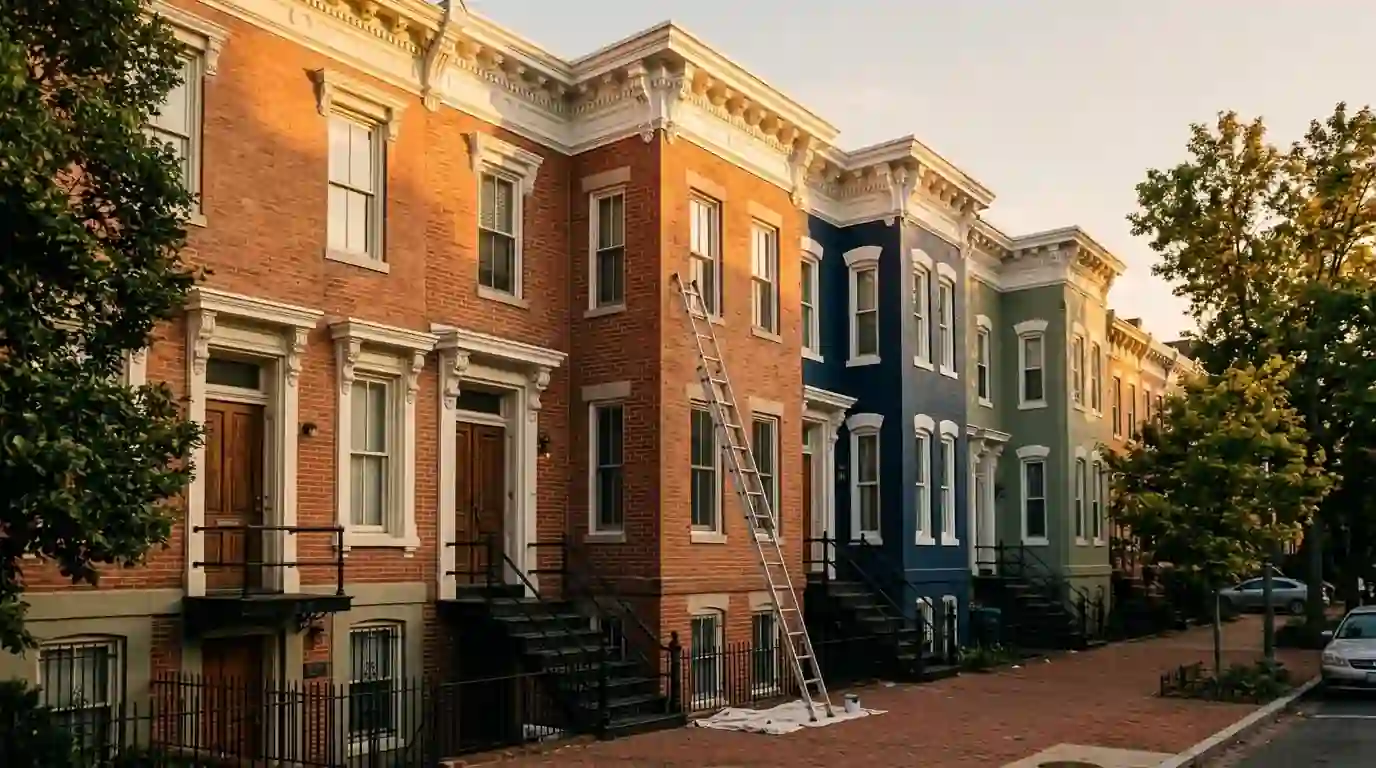
If you're matching a neighbor's trim or want a strong color like deep navy, paint gives exact, even color. Limewash shades shift with how much each brick absorbs, so the wall never reads as one flat tone.
Mineral paint: opaque but breathable
Silicate mineral paint suits unpainted brick when the owner wants solid, long-lasting color. On the right wall it can outlast acrylic, but it needs bare, clean masonry to bond and won't stick to old acrylic.
Neither yet: brick with moisture problems
Spalled faces, crumbling mortar and white salt bloom mean water is getting in. Any coating applied before the gutter, leak or mortar is fixed will fail early and waste the money spent on it.
Why moisture decides most brick finishes in DC
A lot of DC's pre-war rowhouse brick is softer than modern brick, and it was laid in lime mortar meant to be the weak point. Rain soaks in, then dries back out through the face. Seal that face with a tight film and the water leaves through the mortar or stays put. After a few freeze-thaw winters, trapped water pops the faces off bricks, which masons call spalling.
That's why we look at gutters, downspouts, sills and mortar joints before we talk color. White powdery salt on the brick, damp plaster on the inside of an exterior wall or loose joints all point to moisture to fix first. A low-pressure house wash, typically $285 to $640, also shows us how the brick behaves when wet.
Rules matter too. In historic districts such as Georgetown, Capitol Hill and Cleveland Park, coating previously unpainted masonry generally needs review, by the Old Georgetown Board in Georgetown and the DC Historic Preservation Office elsewhere. Limewash counts as a coating for that purpose, so check with them before anyone opens a bucket. Our post on painting brick on a DC rowhouse covers that review in more detail.
What limewash and brick painting typically cost
Limewash can cost a little more per square foot than paint because it goes on in thin, wet coats and often takes two or three passes. Over 15 years the totals often come out close.
| Job | Typical range | What moves the price |
|---|---|---|
| Limewash on unpainted brick | $3.10 to $6.20 per sq ft | Number of coats, how thirsty the brick is, ladder or lift access |
| Repainting previously painted brick | $2.70 to $5.40 per sq ft | Amount of scraping, peeling and spot priming |
| Rowhouse front facade, either finish | $2,350 to $6,900 | Height, cornice and bay detail, sidewalk and parking logistics |
| Limewash refresh coat at year 5 to 8 | $1.95 to $3.80 per sq ft | Wash and wet-down only; no stripping or primer needed |
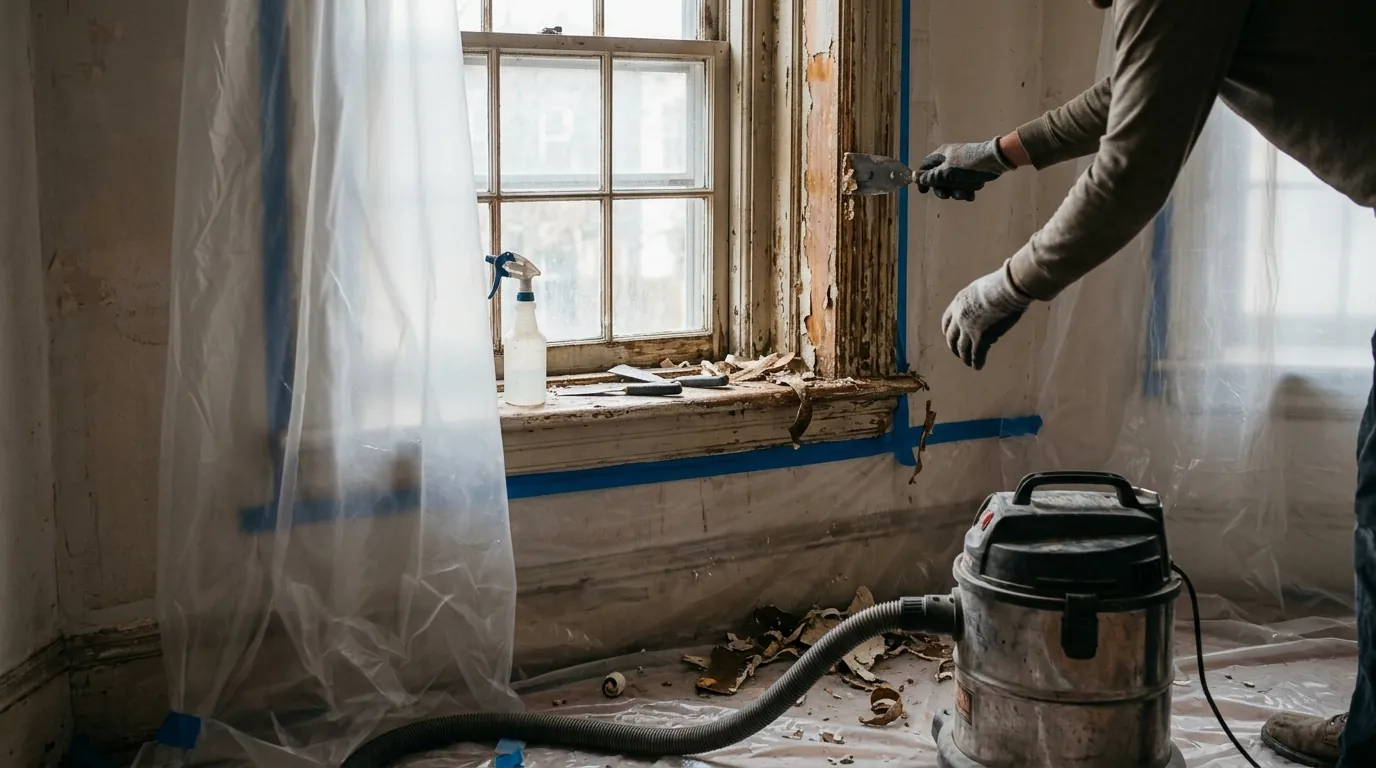
| Lead-safe containment on pre-1978 paint | $380 to $1,450 per job | Size of the work area and how much old paint is disturbed |
These are typical DC ranges, not a quote; the walkthrough sets your price.
Questions to answer before you choose
Run through these before deciding. If you can't answer one, that's the thing to check first.
- Has this brick ever been painted, sealed or treated with a clear water repellent?
- Is the house in a historic district where coating unpainted masonry needs review?
- Are the mortar joints sound, or do they crumble when you scratch them with a key?
- Do you see white salt bloom, spalled faces or damp plaster on the inside of the wall?
- Do you want brick to show through over time, or a uniform color that stays put?
- Would you rather refresh the finish every 5 to 7 years or repaint every 8 to 12?
- Will it bother you if the final shade drifts a little from the sample, as limewash usually does?
Once those are answered, the choice between limewash and brick painting is usually clear.
Services mentioned in this guide
Limewash & Mineral Paint for Brick
Soft, breathable limewash and mineral finishes for brick that should age gracefully rather than peel.
Brick & Masonry Painting
Previously painted brick cleaned, repointed where needed and coated with a breathable masonry system.
Historic Home Painting
Pre-war plaster, old-growth wood trim and original windows painted with methods that respect the house.
Follow-up questions
Can you limewash over brick that was painted years ago?
Not with traditional limewash. It needs bare, porous masonry to soak into, and on painted brick it sits on the film and rubs off. Some mineral limewash products are sold for painted surfaces over a special primer, but after that they behave like paint. The realistic options are stripping the old paint, which is slow and hard on soft brick, or repainting with a breathable masonry paint.
How soon can it rain on freshly limewashed brick?
Limewash likes to stay damp while it cures, so light mist the next day is fine, but a heavy downpour within 24 to 48 hours can rinse fresh lime and streak the wall. In DC summers we watch the afternoon storm forecast closely and apply in the morning, out of direct midday sun, and we avoid days much above 85 F or below about 40 F.
Is limewash a good fit for a historic Capitol Hill rowhouse?
Physically it's one of the kindest finishes for old soft brick. The open question is permission, not chemistry. Coating unpainted masonry in a historic district generally needs review, so check with the Historic Preservation Office before you plan the job. If the facade is already painted, a breathable repaint is generally the simpler path. Our historic home painting work starts with that question.