Why one house has five different paint lifespans
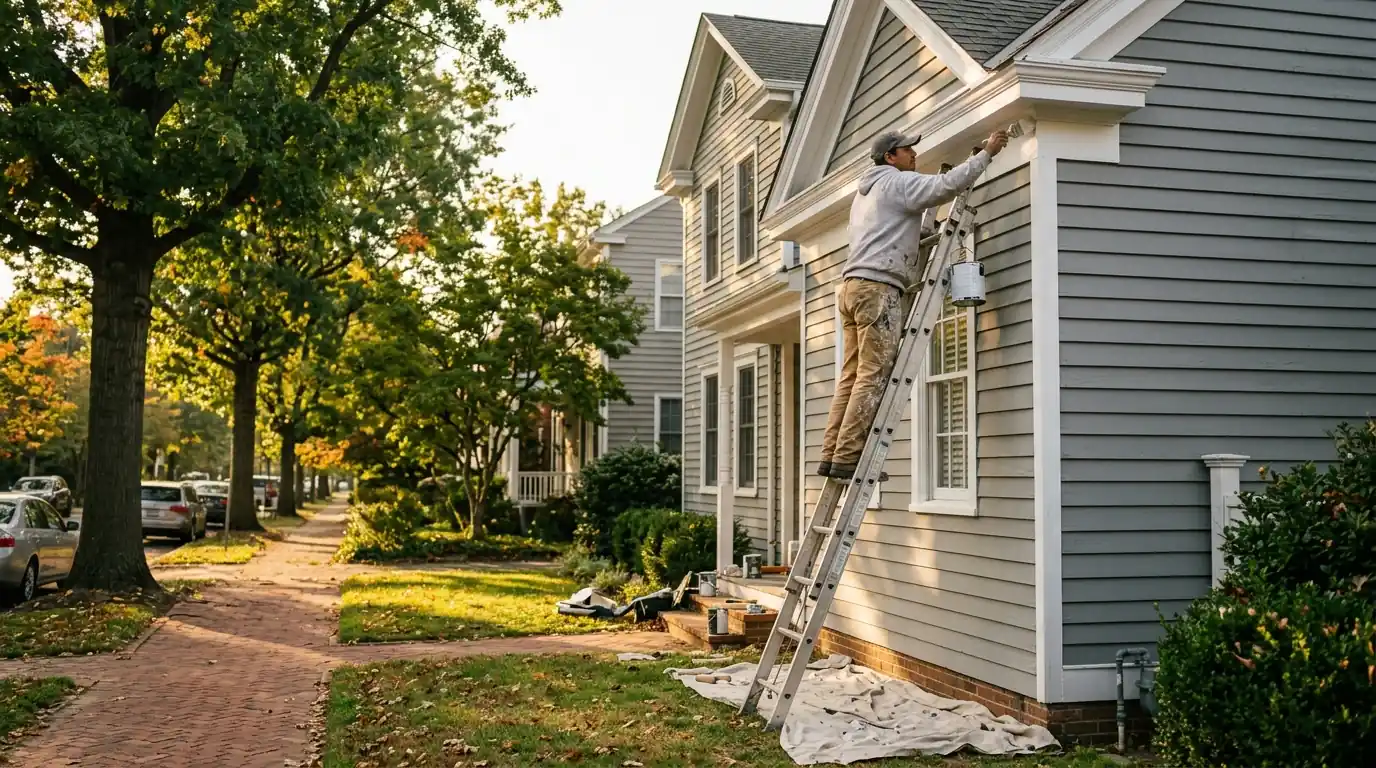
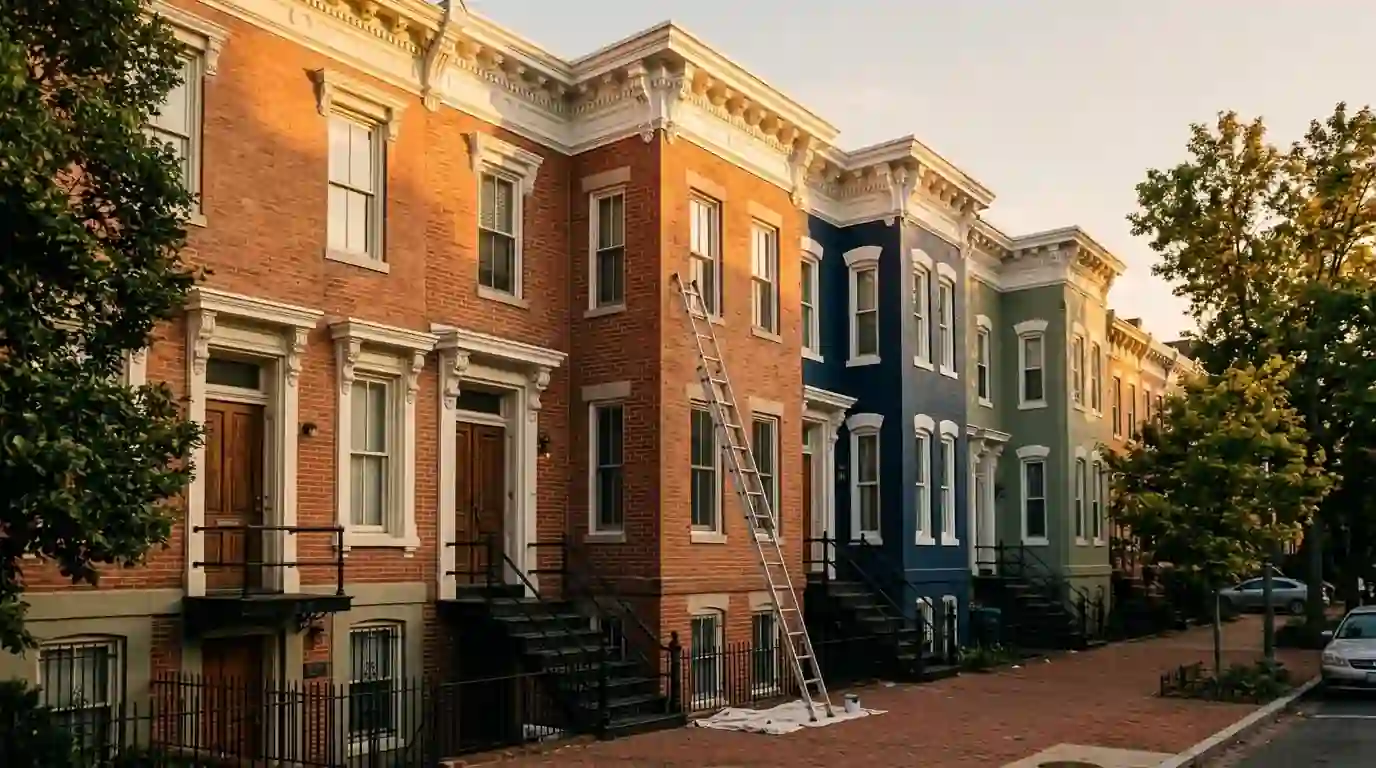
People ask how long an exterior paint job lasts as if the whole house ages together. It doesn't. The south-facing window sills on a Petworth rowhouse can be peeling while the north side looks new, and the porch floor can be worn through in four years on a house whose siding will go another six.
Three things set the clock on any surface: what it's made of, how much sun and water it takes and how well it was prepared. Prep matters most. Paint over a dirty, chalky or damp surface fails early no matter how good the can was. Two coats of a quality acrylic over properly primed wood will outlast one coat of anything.
DC weather is hard on paint. Summer sun and humidity, afternoon storms and freeze-thaw cycles all work at joints and edges. That's why the ranges below run shorter on south and west exposures and longer on shaded north walls.
How many years does each exterior surface typically get?
These are typical service lives for well-prepped, two-coat work in the DC climate. Shaded walls land at the top of each range; south and west exposures land at the bottom.
| Surface | Typical life | What shortens it |
|---|---|---|
| Wood siding and clapboard | 7 to 10 years | Bare wood left unprimed, failed caulk, gutters overflowing onto the wall |
| Fiber cement siding | 10 to 15 years | Painting over chalky factory primer, cut edges left unsealed |
| Painted brick and masonry | 8 to 12 years | Trapped moisture, crumbling mortar, non-breathable coatings |
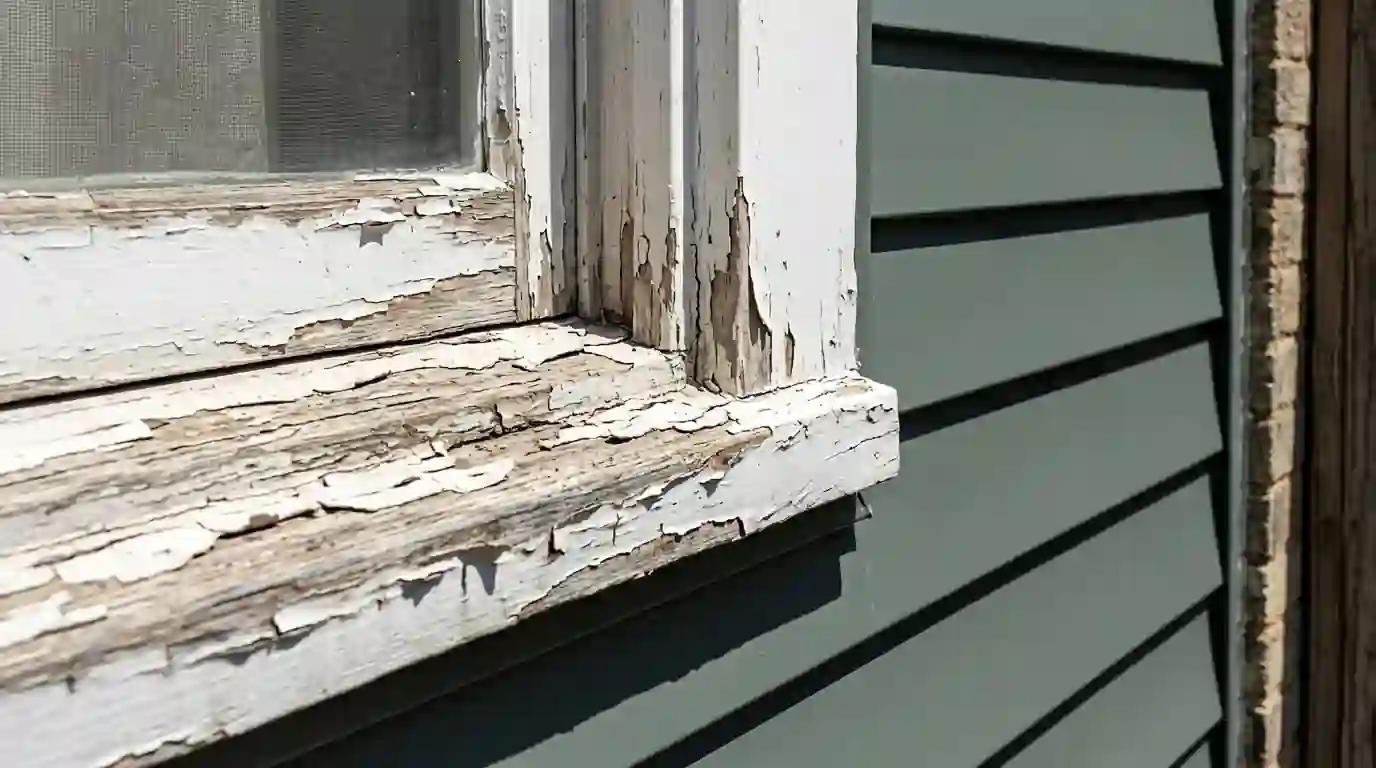
| Wood trim, sills and window sashes | 4 to 7 years | Sun on south sills, water sitting on flat surfaces, glazing failures |
| Wrought iron railings and fences | 3 to 6 years | Rust left under the new coat, bare spots at the base where water sits |
| Porch floors and steps | 2 to 4 years | Foot traffic, standing water, wall paint used instead of floor enamel |
| Decks with semi-transparent stain | 2 to 3 years for floors, 3 to 5 for rails | Full sun, no cleaning between coats, film-forming product on a walking surface |
Lifespans are typical, not promised; on a walkthrough we look at your exposure and the condition under the paint.
The surfaces that fail first on DC houses
When an exterior looks tired, it's usually a few spots dragging the whole house down. Catch these early and the rest of the paint keeps going.
South-facing window sills
Flat sills hold rain and take hours of direct sun. They're usually the first thing to crack and peel. Repainting sills and sashes alone every few years can stretch a full repaint by several seasons.
Stoop railings
Iron railings on rowhouse stoops rust where they enter the stone or concrete. Once rust lifts the paint, it spreads under it. Grinding, converting and priming the base every few years stops it.
Porch floors and stair treads
Tongue-and-groove porch floors in Brookland and Takoma take foot traffic, furniture and standing water. A floor-rated enamel, typically $2.40 to $4.80 per sq ft, holds up much longer than wall paint used by mistake.
Cornices and fascia
Pressed-metal and wood cornices sit high and catch water from roof edges. Failing gutters rot fascia from behind, and then no paint holds. Repair comes first, typically $240 to $1,150 per area.
Lower siding near grade
The bottom two courses of siding take splash-back from rain and mulch. Paint peels and wood softens there long before the upper wall shows any wear.
Signs it's time to repaint, not just wash
Walk around the house once a year in spring. Any of these on more than a small patch means the coating has reached the end of its life.
- Paint comes off on your hand as white powder when you rub it, which painters call chalking.
- Cracks run across the paint film in a pattern like dried mud, especially on trim and sills.
- Paint lifts in flakes or curls at the edges, showing primer or bare wood underneath.
- Caulk at window frames, corner boards and trim joints has split or pulled away from one side.
- Bare gray wood shows on sills, porch steps or the lower edges of siding boards.
- Orange rust bleeds through the paint on iron railings, gutters or metal roof edges.
- Color has faded so much that touch-up paint from the original can no longer match.
Chalking alone is often fixable with a careful wash. Peeling and bare wood mean prep and paint, and the sooner the better.
How to stretch the life of an exterior paint job
The cheapest paint job is the one you put off for three more years because the house stayed sound. A gentle wash every couple of years removes mildew and pollen that hold moisture against the paint. A low-pressure house wash typically runs $285 to $640, and it's also the moment to spot small failures before they spread.
Caulk is the next most useful thing. Water gets behind paint at joints, and once it's in, the paint blisters from behind. Raking out and resealing failed joints across a whole house typically costs $560 to $1,850, a small share of a full repaint. Keeping gutters clean and downspouts extended does more for paint life than any premium product.
Finally, touch up the weak spots. Sills, stair treads and railing bases can be scraped and recoated in an afternoon. We often do these as a short maintenance visit at the five-year mark on houses we've painted, so the full exterior repaint waits for the siding, not the trim.
What a repaint costs when the clock runs out
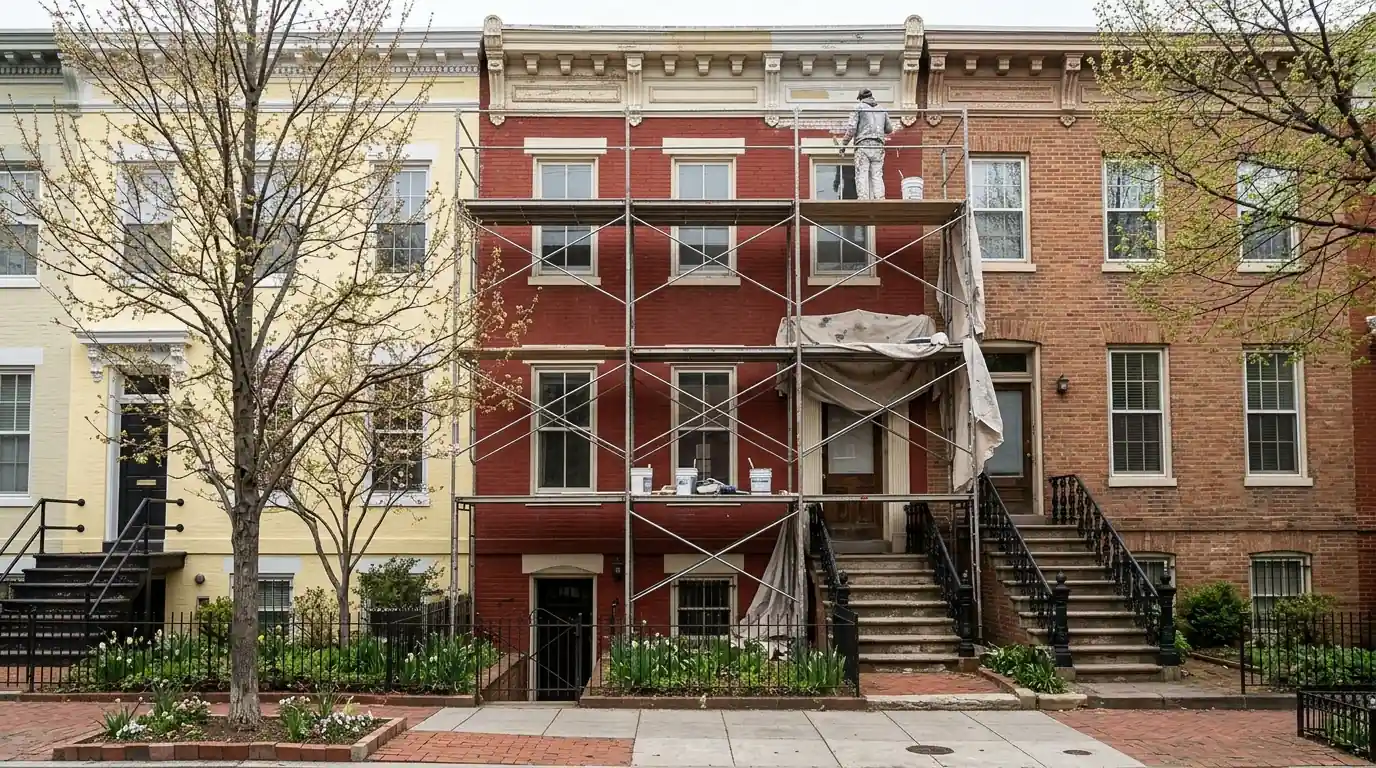
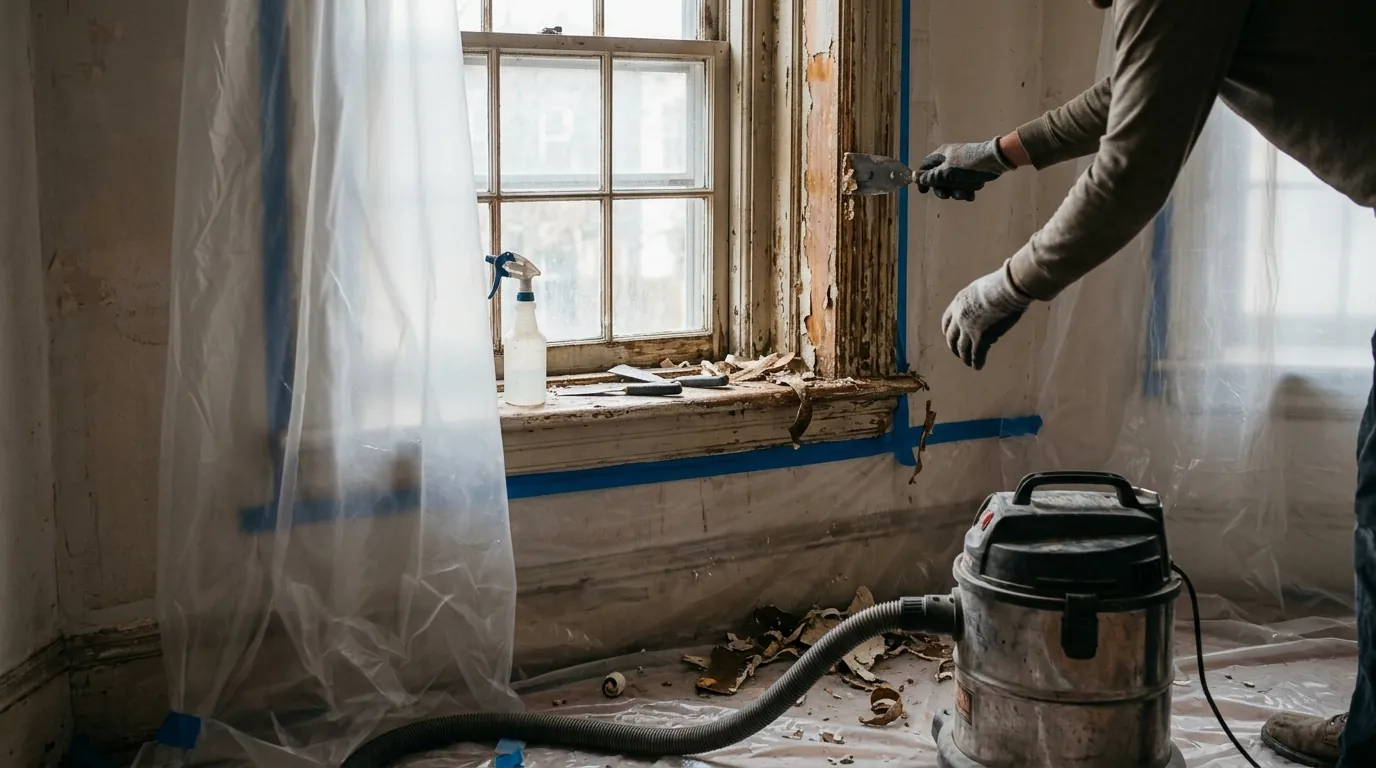
When the whole house is due, a detached exterior in DC typically runs $5,600 to $14,800, depending on size, height and how much scraping and repair the wood needs. A rowhouse front facade typically runs $2,350 to $6,900. Pre-1978 houses add lead-safe containment, typically $380 to $1,450 per job, when old paint is disturbed. Siding work alone typically runs $2.20 to $4.70 per sq ft.
Timing matters as much as budget. Most exterior work in DC runs from about April through October, when surfaces stay in the 50s or warmer. Our post on when to paint a house exterior in DC covers scheduling around heat, humidity and storms. If your sills and railings are failing first, you can often book those as a smaller job and push the full repaint out a few seasons.
Services mentioned in this guide
Exterior House Painting
Siding, trim, soffits and porches scraped, primed and painted on a schedule built around DC weather.
Window Sash & Trim Painting
Glazing checked, sashes and frames painted, and windows left operable instead of painted shut.
Iron Railing & Fence Painting
Rust ground off, converted and primed before stoop railings and iron fences get a durable enamel coat.
Follow-up questions
Does more expensive exterior paint really last longer on DC siding?
Up to a point. Moving from a contractor-grade acrylic to a top line from Sherwin-Williams or Benjamin Moore usually adds two or three years on wood siding, because the resin holds color and flexes better. Past that, prep decides it. Premium paint over unprimed bare wood or failed caulk peels just as fast as cheap paint. We'd rather spend the money on scraping and priming.
Why did my front door fade years before the rest of the trim?
Doors facing south or west take direct sun for hours, and deep colors like red, navy and black absorb the most heat and UV. They fade and chalk years ahead of white trim nearby. A door enamel with good UV resistance helps, and so does a storm door, though a glass storm door on a sunny side can trap heat. Front door painting every 3 to 5 years keeps it sharp.
How long does exterior stain last compared with paint on a fence?
On fences, solid stain typically lasts 4 to 7 years and semi-transparent stain 3 to 5, while paint over primed wood can go 6 to 9 years. Stain wears by fading rather than peeling, which makes recoating simpler, with no scraping. Paint lasts longer but peels when it fails. Most of our fence staining clients choose stain for that reason.