What does cabinet painting typically cost in DC?
Kitchen cabinet painting is usually priced per door and drawer front, with the boxes and any island folded in. These are typical ranges.
| Job | Typical range | What moves the price |
|---|---|---|
| Per door or drawer front | $95 to $165 | Panel style, grain filling and whether both sides are painted |
| Typical DC kitchen | $4,350 to $8,900 | Number of fronts, island size, color change and hardware work |
| Bathroom vanity | $640 to $1,380 | Fronts, open shelving and moisture damage at the sink base |
| Kitchen island only | $890 to $1,960 | Panels, end caps, seating overhang and decorative trim |
| Hardware holes filled and redrilled | $11 to $24 per hole | Switching from knobs to pulls or changing pull spacing |
These are typical ranges, not a quote; we price your kitchen after counting fronts on a walkthrough.
Why kitchen prices spread so far
A small galley in a Tenleytown condo with 18 flat-panel fronts and a white-to-white refresh lands near the low end. A 40-front kitchen in a Bethesda Colonial with an island, glass uppers and a switch from dark cherry stain to white sits near the top. The fronts drive most of the labor because each one is cleaned, sanded, primed and sprayed on both sides.
Oak adds cost. Its open grain shows through paint as a ribbed texture, and many owners want it smooth. Filling the grain adds a coat and a sanding pass, roughly 15 to 25 percent more time on oak doors. Dark-to-light color changes need an extra primer coat to stop tannins and old color bleeding through the new finish.
Hardware decisions matter too. Moving from knobs to pulls means filling old holes and drilling new ones on every front. It's worth deciding before the walkthrough so the price reflects it, and so new pulls can be ordered while the doors are being sprayed.
How a sprayed cabinet finish is built to last
Durability comes from adhesion and film build, not from the color coat alone. This is how we sequence a cabinet painting job.
- Coat 01
Remove and label
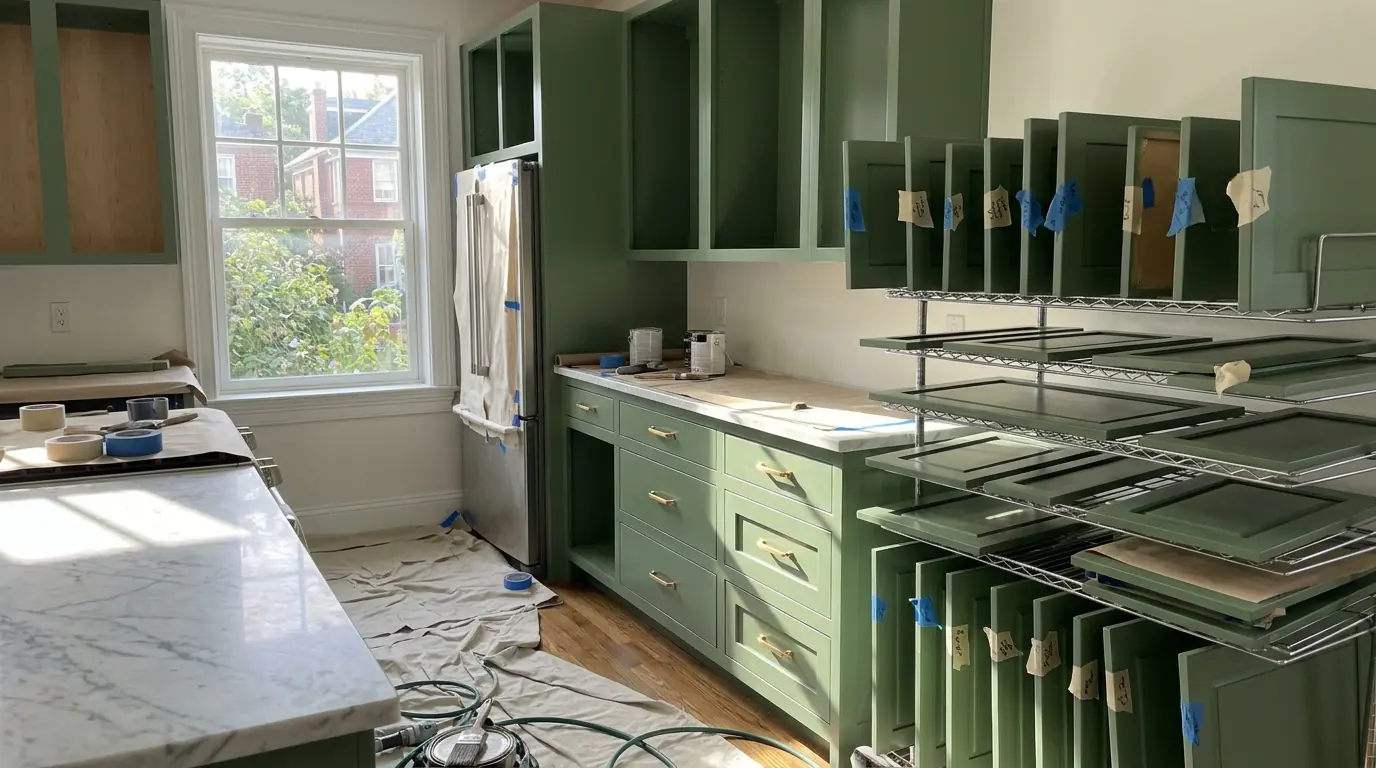
Doors and drawer fronts come off, get numbered with their hinge positions and go to a clean spray area. Boxes stay in place and are masked inside the kitchen with floors and counters covered.
- Coat 02
Degrease thoroughly
Kitchen grease is invisible and kills adhesion. Every surface, and especially the fronts near the range, sink and trash pull-out, gets a degreasing wash and a clean-water rinse before any sanding starts.
- Coat 03
Scuff and repair
We scuff sand with 180 to 220 grit, fill dings and open grain, and sand again. The existing finish is dulled, not stripped, so the primer has something to grip.
- Coat 04
Prime with a bonding primer
A shellac-based or bonding primer, such as one from Zinsser, seals knots and tannins and grips factory finishes. One coat goes on painted cabinets, two on dark stains or oak.
- Coat 05
Spray the finish coats
Two coats of a urethane alkyd or waterborne enamel go on with a fine-finish sprayer at about 1.5 to 2 mils dry each, for a total build near 4 mils with primer.
- Coat 06
Cure before rehanging
Fronts dry flat overnight and are rehung in two to four days. The finish reaches full hardness in two to four weeks, so we ask you to go easy on it at first.
How long painted cabinets last, part by part
A well-prepped enamel finish commonly holds up 8 to 12 years in a working kitchen. Wear is never even, though.
Door faces on uppers
The longest-lasting surfaces in the kitchen. Away from hands and splashes, upper door faces often look close to new after ten years with nothing more than occasional wiping.
Lower door edges
The first place to show wear, especially the edge closest to the handle and the bottom edge kicked by feet. Expect small chips in 3 to 5 years in a busy family kitchen.
Sink base and trash pull-out
Water and constant opening make these the hardest-worked fronts. A small touch-up jar of the exact color, kept from the job, handles most of the wear here.
Drawer fronts
Pulled many times a day, so the area around the hardware wears. Pulls protect the finish better than small knobs, which put fingertips right on the paint.
Toe kicks and end panels
Vacuums, mop buckets and shoes chip these low surfaces. Painting the toe kick a shade darker than the boxes hides most of that wear between touch-ups.
Island panels
Bar stools rub the seating side. A clear protective bumper or a darker island color keeps scuffs from showing as quickly on the side people sit on.
Habits that keep painted cabinets looking new longer
A few easy habits can add years before a touch-up visit.
- Wait two to four weeks before scrubbing doors or hanging damp towels over them, while the enamel finishes hardening.
- Clean with mild dish soap and a soft cloth, and skip melamine sponges and ammonia sprays that dull the sheen.
- Add felt bumpers to door and drawer corners so paint isn't striking paint every time something closes.
- Keep the door next to the dishwasher closed during the drying cycle, since steam softens painted edges over time.
- Keep the leftover paint, labeled with the room and date, so small chips can be touched up within a day or two.
- Choose pulls over knobs on heavily used drawers to keep fingers off the painted surface.
- Pick a satin or semi-gloss sheen; our post on sheen by room explains why flatter enamels scuff faster on cabinets.
When painting cabinets is the wrong call
Painting works on solid wood, MDF and sound factory finishes. It is a poor fit for peeling thermofoil, where the plastic skin is already lifting from heat near the range, and for particleboard boxes swollen by a sink leak. In those kitchens new doors or new boxes are the real fix, and paint only buys a season or two.
It is also the wrong time to paint if a layout change is coming within a few years. Cabinets painted in place and then moved will chip at every joint. When the boxes are staying and you want a new color, a color consultation with large sample boards in your own kitchen light is the best way to avoid repainting a front that looked right on a small chip.
Services mentioned in this guide
Cabinet Painting
Kitchen and bath cabinets degreased, sanded, primed and sprayed in a hard enamel that stands up to daily use.
Paint Color Consultation
Sample boards checked in your own light, with color and sheen picked room by room before any paint is bought.
Interior House Painting
Walls, ceilings and trim in occupied homes, with furniture moved, floors covered and rooms back in use each night.
Follow-up questions
Is painting cabinets cheaper than refacing or replacing them in DC?
Usually by a wide margin. A typical DC kitchen repaint runs $4,350 to $8,900, while refacing with new doors and veneer often costs roughly twice that, and full replacement several times more. Painting makes the most sense when the layout works and the boxes are sound. If the doors themselves are damaged, new doors painted on site can be a middle ground.
Can we use the kitchen while the cabinet doors are out for painting?
Yes. The boxes stay in place, so the sink, range and refrigerator work throughout. Expect two to four days without doors and drawer fronts, plus a day or so when the boxes are masked and sprayed and the kitchen is off-limits for cooking. Most families plan easy meals that week, and we clear the masking each evening where we can.
How soon will painted kitchen cabinets need a touch-up visit?
In a typical household, small chips on lower door edges and around the sink base start showing in 3 to 5 years. A short touch-up visit at that point, using the saved paint, usually keeps the kitchen looking fresh until a full recoat around year 8 to 12. Kitchens with young kids, pets or heavy cooking land at the shorter end of both ranges.